
FenceTrac’s modular fence system installs in about the same amount of time as a cap-and-trim style wood privacy fence. The difference is in how that time is spent. With a wood fence, the bulk of the labor goes into cutting, fitting, and fastening individual pickets to rails. With FenceTrac, the infill boards slide into pre-cut steel U-channels and lock together with tongue-and-groove joints, so most of the installation time is spent on post setting and concrete curing rather than panel assembly.
The Short Answer
Plan for roughly the same timeline as a cap-and-trim wood privacy fence of the same length and height. Post holes, concrete, and curing make up the longest phase of any fence installation. The FenceTrac panel assembly phase is fast because the frame components bolt together and the infill boards slide into channels without individual fastening.
What Determines Installation Time
Total installation time depends on the project scope and site conditions, not just the fence system itself. Two projects with identical fence lengths can take very different amounts of time depending on the variables below.
Post Setting and Concrete Curing
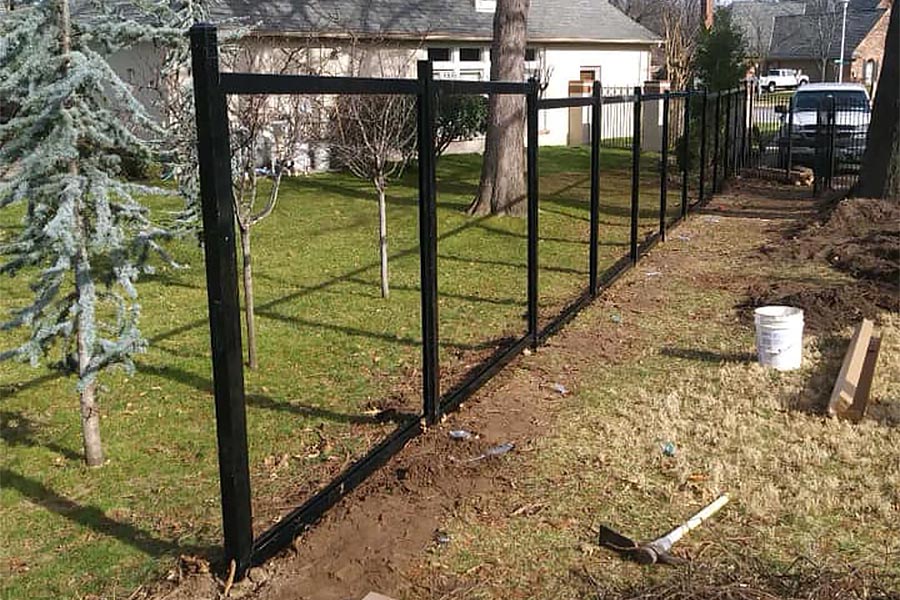
This is the longest single phase for any privacy fence installation, including FenceTrac. Each post requires a hole, concrete, and time to cure before the fence panels can be attached.
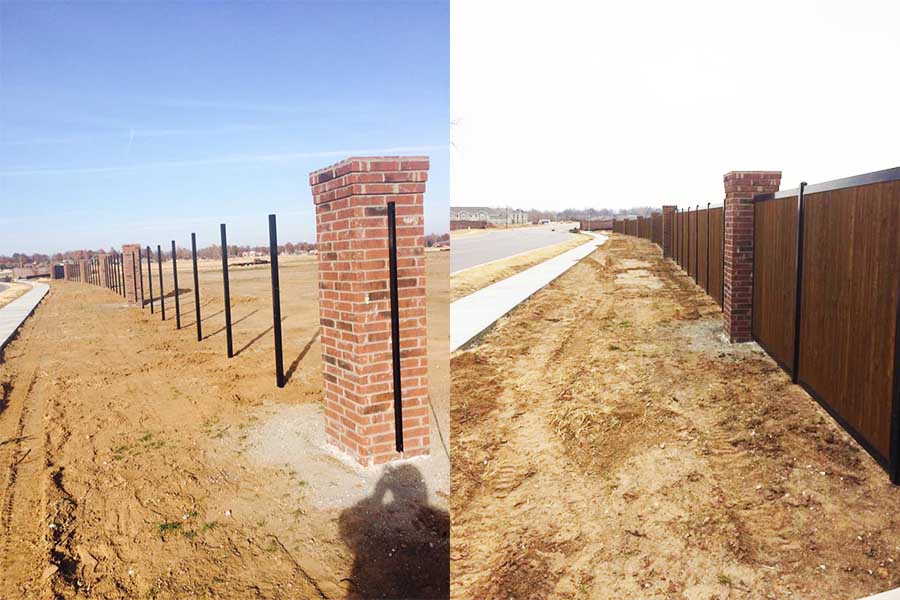
FenceTrac recommends a hole diameter of 4 times the post dimension (10 inches for a 2.5-inch residential post, 12 inches for a 3-inch commercial post). Concrete needs a minimum of 48 hours to cure before panels are hung. On large projects, installers typically set posts in sections so cured posts are ready for panels while the next section’s concrete is still setting.
This phase is identical in duration whether the fence uses FenceTrac steel posts or wood posts. The variable is soil type and digging conditions. Rocky or clay-heavy soil adds time. Sandy or loamy soil digs faster.
Panel Assembly
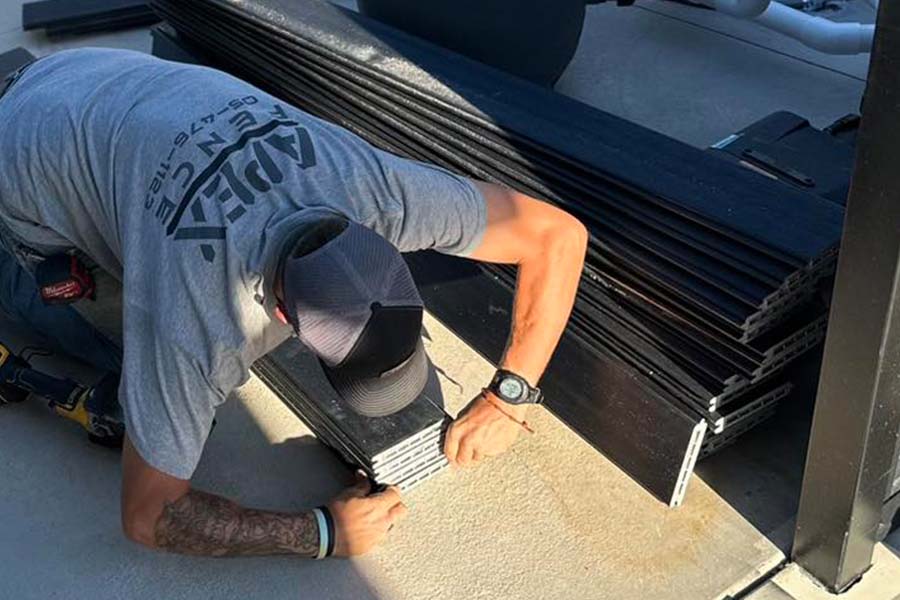
This is where FenceTrac gains efficiency over traditional wood construction. Each panel assembles from four frame channels (top, bottom, left side, right side) connected at the corners with carriage bolts. The side channels fasten to the posts with self-tapping screws. Infill boards slide into the top and bottom channels and interlock via tongue-and-groove joints.
There is no measuring, cutting, or individually fastening each board. The frame channels arrive pre-cut to the correct panel width and height. The infill boards arrive pre-cut to the correct length. A two-person crew can assemble and hang a single FenceTrac panel in a fraction of the time it takes to build a comparable wood panel on site.
Site Conditions
Slopes, obstacles, utility lines, and access all affect installation pace. FenceTrac panels are rackable up to 30 degrees, which means sloped terrain does not require stair-stepping in most cases. The panels follow the grade, and the installer adjusts the side channel angle during attachment. This saves time compared to stepped wood fences that require custom cuts at each grade change.
Tight access (narrow side yards, gated backyards with no vehicle entry) slows material handling for any fence type. FenceTrac components are lighter per linear foot than equivalent pre-built wood panels, which helps in tight-access situations.
Gate Installation
FenceTrac gate kits arrive as unassembled components and are designed for simple, no-weld assembly. The kit includes the top and bottom trac, vertical uprights, stainless steel hinges and latch, and screws. The gate width can be trimmed on site by cutting the top and bottom tracs. A standard single gate or double gate adds a manageable amount of time per opening.
Installation Timeline Comparison
The table below compares the general installation phases for a FenceTrac fence and a traditional cap-and-trim wood privacy fence of similar size. Times will vary by crew size, site conditions, and project complexity.
| Phase | FenceTrac | Cap-and-Trim Wood Fence |
|---|---|---|
| Layout and marking | Same | Same |
| Post hole digging | Same | Same |
| Post setting and concrete | Same | Same |
| Concrete curing (min 48 hrs) | Same | Same |
| Panel/picket assembly | Faster (slide-in infill, bolt-together frame) | Slower (individual pickets cut and fastened) |
| Gate installation | Kit assembly, no welding | Custom build or pre-hung |
| Cleanup and final adjustment | Same | Same |
The net result is that overall project timelines are comparable. FenceTrac saves time on the panel assembly phase, but post setting and curing, which account for the largest share of the total schedule, are the same for both systems.
Design Considerations That Affect Timeline
Certain design choices can add or reduce installation time. If you are planning a project and want to keep the schedule tight, consider these factors early.
Fence height affects post length and hole depth. An 8-foot fence requires 12-foot posts set deeper than a 6-foot fence with 9-foot posts. Deeper holes take longer to dig, especially in compacted or rocky soil.
Infill type does not change installation time. LuxeCore aluminum-core composite, UltraBlend PVC, aluminum boards, and cedar all slide into the same frame channels using the same method. The boards are the same width and use the same tongue-and-groove or square-edge connection.
Sloped terrain that stays within 30 degrees of grade adds minimal time because the panels rack in place. Slopes steeper than 30 degrees require stair-stepping, which adds time for layout adjustments and custom post heights at each step transition.
Tips for Contractors and Installers
Experienced fence contractors who have switched to modular fencing report that the learning curve is short. The assembly method is different from stick-built wood fencing, but the core skills (post layout, concrete work, level and plumb) are the same.
Pre-stage materials along the fence line before starting assembly. FenceTrac components arrive bundled by panel, which makes staging straightforward. Having the frame channels, infill boards, carriage bolts, and screws laid out at each post bay eliminates trips back to the truck.
Set all posts for a section first, let concrete cure, then assemble all panels in that section. This batch approach keeps the crew productive while concrete cures in the next section. On large commercial projects, this phased approach can keep the project moving without any downtime waiting on concrete.
Related Questions
Is it better to build from scratch or buy a fence kit? FenceTrac ships as a pre-engineered kit with pre-cut frame channels and infill boards. There is no on-site fabrication required. This is one of the reasons installation time is comparable to wood despite the steel-frame construction.
What is the correct spacing for FenceTrac fence posts? FenceTrac posts are spaced at 6-foot or 8-foot intervals to match panel width. Consistent post spacing simplifies layout and speeds up the post-setting phase.
How much concrete do you need per fence post? Concrete volume depends on post size, hole diameter, and hole depth. Having the correct number of bags on site before starting post-setting prevents delays mid-installation.
See Also
Watch FenceTrac assembly videos for a step-by-step walkthrough of the panel assembly process. The privacy fence assembly video shows the full sequence from post attachment through infill board installation.
Get a Quote for Your Fence Installation
FenceTrac ships fence systems nationally and has been manufacturing engineered fencing in the USA since 2012.
Every system carries a 20-year warranty and is engineered for long-term performance with minimal maintenance.