
FenceTrac’s modular fence system is becoming the preferred product for fence contractors who want to install faster, reduce callbacks, and offer their customers a finished product that outperforms wood over the long term. The shift from wood to modular fencing is driven by practical job-site realities: lumber quality has declined, labor costs have increased, and property owners are demanding fences that last longer without ongoing maintenance.
The Short Answer
Contractors switch to modular fencing because it solves the problems that make wood fence jobs unprofitable. Pre-cut steel frame components eliminate field-cutting errors. Factory-matched infill boards eliminate lumber grading headaches. The both-sided panel design eliminates the most common customer complaint about wood fences. And the 20-year frame warranty means contractors spend less time going back to fix fences they already installed.
The Problems with Wood That Push Contractors Away
Wood fencing has been the default for decades, but the economics and quality have shifted against it.
Lumber Quality Is Declining
Contractors who have been in the business for 10 or more years consistently report that lumber quality has dropped. Boards arrive with more warp, more knots, more splits, and higher moisture content than they did a decade ago. Culling rates on a pallet of fence pickets can run 10 to 15 percent or higher. That wasted material comes out of the contractor’s margin.
On site, warped boards require shimming, forcing, or replacing. Each one slows the crew down and introduces inconsistency into the finished fence line.
Labor Costs Keep Climbing
A scratch-built wood fence requires measuring, cutting, and individually fastening every picket. A skilled crew can install a wood privacy fence efficiently, but the work is repetitive and labor-intensive. Every board is a separate operation: position, level, nail or screw, move to the next one.
Modular systems reduce the per-panel labor because the frame is pre-cut and the infill slides into channels without face-nailing. The assembly process has fewer steps per panel, which means more linear feet per day with the same crew size.
Callbacks Eat Profits
The number one callback on a wood fence is boards warping, cracking, or pulling away from the rails within the first 1 to 2 years. Every callback costs the contractor a truck roll, labor time, and materials, none of which are billable. Over a year of jobs, callbacks on wood fences can consume a significant portion of the margin earned on those same jobs.
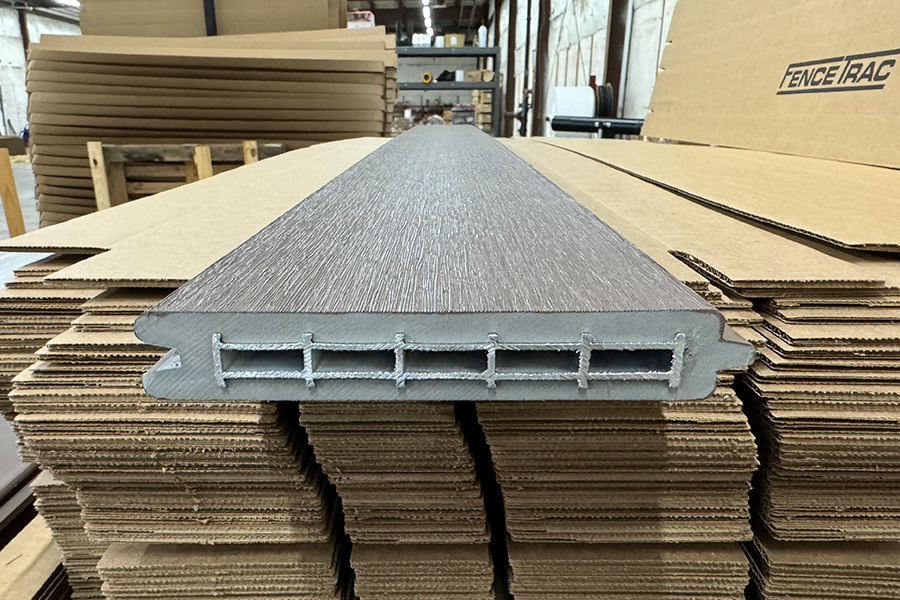
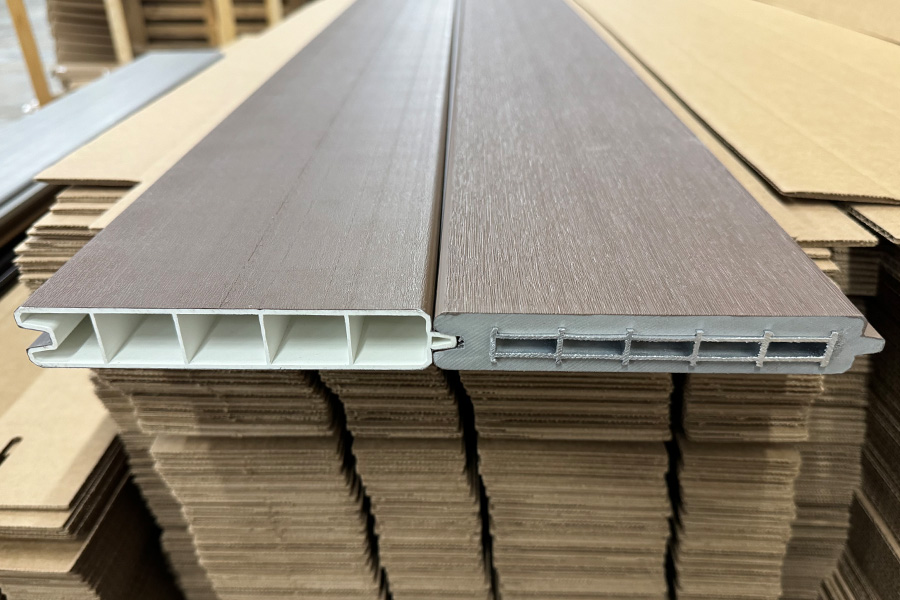
A FenceTrac fence does not generate these callbacks. The tongue and groove infill boards sit inside steel channels that hold them in position. The galvanized steel frame does not warp, rot, or shift. The powder-coated finish does not peel or fade. The warranty covers the frame for 20 years and the LuxeCore or UltraBlend infill for a Limited Lifetime.
What Modular Fencing Changes on the Job Site
The practical differences between a wood fence build and a FenceTrac modular build show up in crew efficiency, material handling, and finished quality.
Pre-Cut Components
FenceTrac frame kits arrive pre-cut to length. The top channel, bottom channel, and side channels match the specified panel width and height. There is no measuring and cutting rails on site, no miter saw setup, and no lumber waste from miscuts. The crew sets posts, attaches side channels, loads infill, and bolts the top and bottom channels. That is the entire assembly sequence.
No Face-Nailing
Wood fences require two to three nails or screws per picket per rail. On a 6-foot-tall fence with three rails, that is 6 to 9 fasteners per board. Over a 200-foot job, that is thousands of individual fastener operations. Every one is a point where the board can split, the fastener can miss, or the alignment can drift.
FenceTrac infill boards slide into the frame channels with no fasteners through the face. The four-sided steel channel frame holds every board in position by contact pressure. This eliminates split boards, missed nails, and the need to pre-drill hardwood infill.
Consistent Panel Quality
Every FenceTrac panel looks the same. The frame color is consistent because it is powder-coated in a controlled factory environment. The infill dimensions are consistent because they are manufactured to specification. There is no panel-to-panel variation caused by lumber grades, moisture differences, or builder skill variation within the crew.
For contractors who bid jobs based on photos of past work, this consistency is a sales tool. The portfolio shot looks like the finished job because the system produces the same result every time.

How Modular Fencing Helps Contractors Win More Jobs
The switch to modular fencing is not just about installation. It changes what the contractor can offer to the customer.
A contractor who installs FenceTrac can pitch a both-sided fence as a standard feature, not an upgrade. They can offer composite, PVC, aluminum, and cedar infill within the same frame system. They can provide the customer with a 20-year frame warranty backed by the manufacturer, not a 1- to 2-year workmanship guarantee that the contractor has to self-fund.
These are differentiators that win bids against the contractor down the road who is still building wood fences. The customer sees a better product, a stronger warranty, and a contractor who is using professional-grade materials. That combination moves fence design conversations from “cheapest bid” to “best value.”

Related Questions
How do contractors win commercial fence installation jobs? Modular systems give contractors an edge on commercial bids by offering faster timelines, manufacturer-backed warranties, and architect-ready specifications.
Is it better to build from scratch or buy a fence kit? For contractors, the kit approach reduces per-job labor and produces a more consistent finished product than scratch building.
See Also
Find a FenceTrac supplier to set up a contractor account, or visit architect specifications for project documentation.
Start Installing FenceTrac
FenceTrac ships fence systems nationally and has been manufacturing engineered fencing in the USA since 2012.
Every system carries a 20-year warranty and is engineered for long-term performance with minimal maintenance.