
Horizontal privacy fences are a sleek, contemporary choice for homeowners looking to combine style with functionality. Unlike vertical fences, these designs use side-by-side boards running parallel to the ground, creating clean, uninterrupted lines.
Here’s the deal: these fences aren’t just about looks. They’re built for durability, with steel U-channel frames that prevent sagging and warping. Plus, you can choose from various infill materials – composite, PVC, cedar, or aluminum – to match your home’s aesthetic.
Key Highlights:
- Durable Frames: Galvanized steel U-channels ensure long-lasting performance.
- Customizable Designs: Mix and match board widths, gaps, and materials for a personalized look.
- Low Maintenance Options: Composite and aluminum boards require little upkeep.
- Privacy and Style: Full-height panels (6–8 ft) provide privacy while maintaining a modern vibe.
Whether you’re fencing in a pool, defining outdoor spaces, or marking property lines, these fences offer a polished, modern solution. Ready to learn more? Explore our [privacy fence ideas] (https://www.fencetrac.com/privacy-fence-ideas/) or dive into the details below.
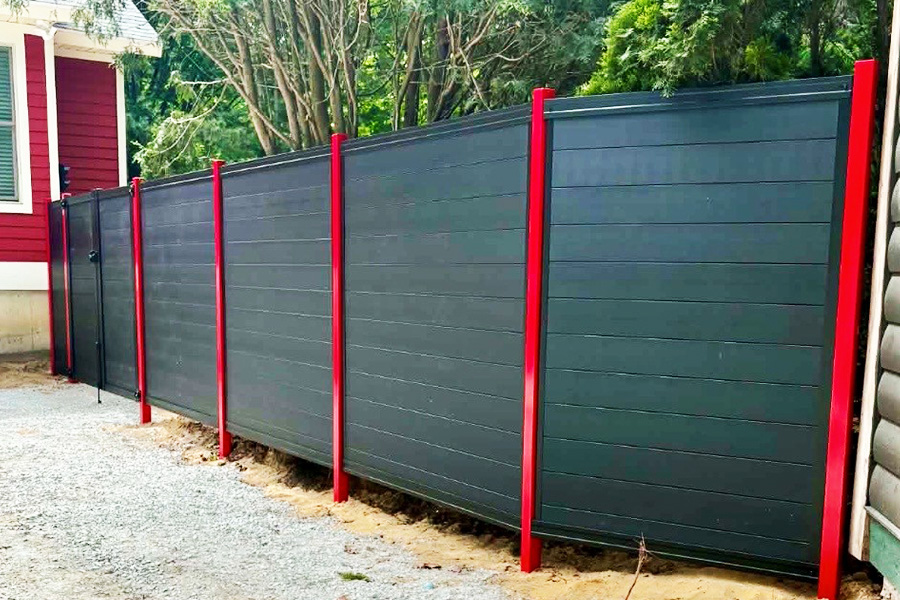
Key Design Choices for Horizontal Privacy Fences
Board Orientation and Layout Options
To complement the polished look of the U-channel frame, you can experiment with different board orientations to personalize your design.
For maximum privacy, go with a full horizontal, tight-board layout where boards are installed without any gaps. If you prefer a slightly lighter feel, a ⅛–¼ inch gap between boards allows airflow while maintaining privacy. For areas like front or side yards where a more open feel might be desirable, wider gaps of ¼–½ inch create a semi-private, louvered effect.
The width of the boards also plays a big role in the overall aesthetic. 6–8 inch wide boards create a bold, modern look, while 3–4 inch narrow slats offer a more intricate, layered appearance. FenceTrac’s standard infill profiles come in 5‑7/8 inch and 2‑7/8 inch widths. Mixing these sizes in alternating bands can add visual interest, especially for long fence runs.
Frame and Post Configurations
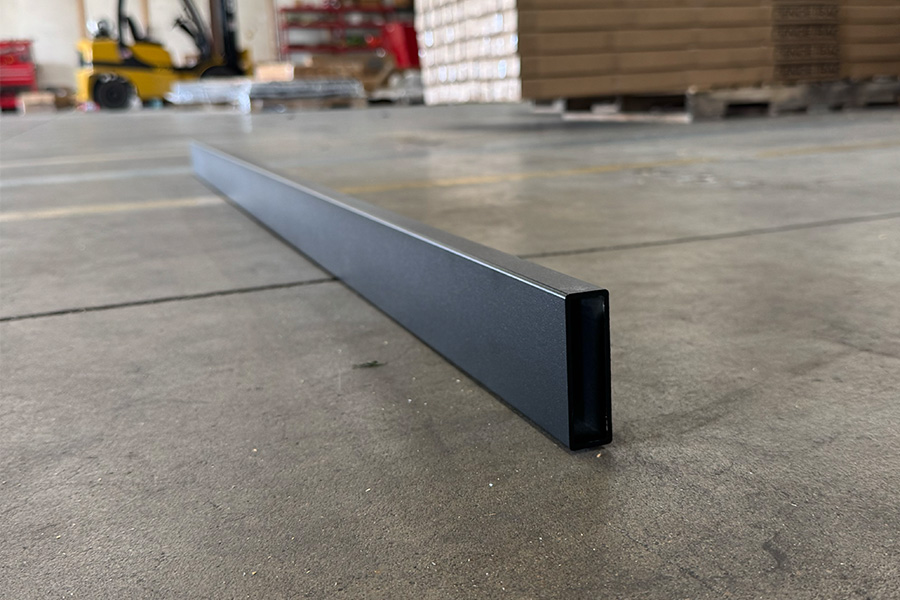
When it comes to horizontal fences, the frame is the backbone of the design. Unlike traditional wood rails that can sag over time, the FenceTrac steel U-channel system secures each board along all four edges. This design effectively transfers the weight to the steel frame, ensuring durability and aligning with the clean lines of contemporary homes.
For standard installations, use 2.5-inch square galvanized steel posts spaced 6–8 feet apart. In areas with high winds or when using heavier composite materials, upgrade to 3–4 inch posts with 6-foot spacing. If your property has slopes, the frame can be stair-stepped between posts, keeping panels level while accommodating grade changes.

"The fence is an architectural element, not just a boundary marker." – FenceTrac
Color and Finish Options
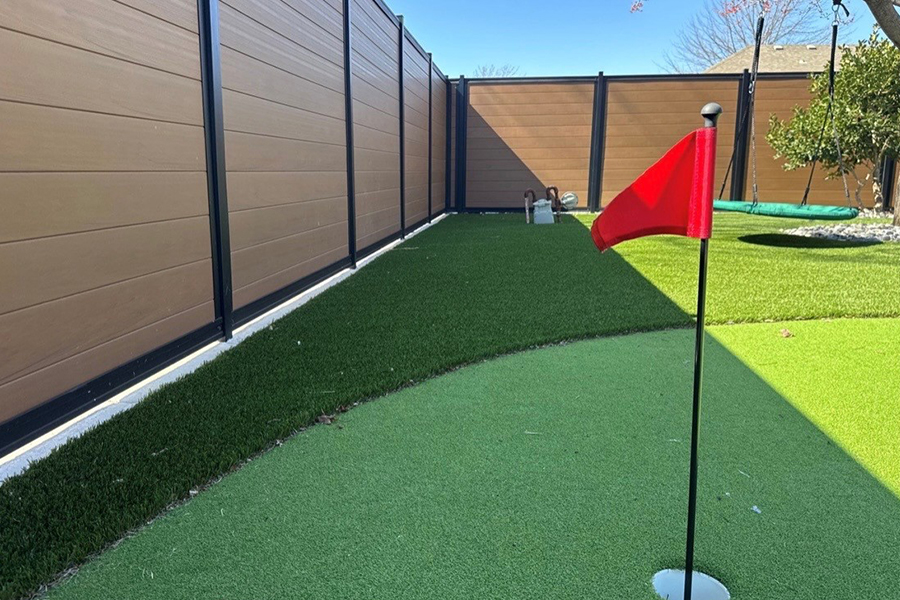
The color of your fence can dramatically influence its final appearance. A popular choice in the U.S. is a black powder-coated steel frame paired with light or warm-tone infill, such as natural cedar, Harbor Gray composite, or light tan PVC. A black frame ties in beautifully with modern features like window mullions, door hardware, and garage doors, giving the fence a cohesive, architectural vibe.
For a more subdued look, consider monochromatic schemes like a dark charcoal frame paired with matching dark gray composite boards. This lets the fence blend into the background, allowing your landscaping or home’s architecture to take center stage. Bronze frames work particularly well with desert contemporary or modern farmhouse styles, complementing warm materials like stone and stucco. Whatever you choose, aim to match the frame’s finish with other exterior metal elements for a unified design.
The table below highlights popular frame and infill combinations and their best architectural matches:
| Frame Color | Infill Pairing | Best Architectural Match |
|---|---|---|
| Black powder-coated | Light cedar, Harbor Gray composite, light gray PVC | Modern, contemporary, modern farmhouse |
| Black powder-coated | Black Onyx composite or aluminum | Ultra-modern, minimalist, concrete/glass homes |
| Bronze | Timber Brown or Tropical Teak composite | Desert contemporary, modern farmhouse, warm stucco |
| White or silver | Light PVC or natural wood tones | Coastal, traditional-modern, lighter façades |
With your frame and board design locked in, the next step is selecting the right infill materials to complete the look.
How to Build an Easy Modern Horizontal Fence Using a Slat Fence Kit
Infill Material Options for Horizontal Privacy Fences
Infill boards play a big role in defining the texture, color, and overall character of a fence. The FenceTrac U-channel frame is designed to accommodate any rigid infill up to 1 inch thick, offering plenty of flexibility. Each material option has its own balance of style, durability, and upkeep.
Composite Boards
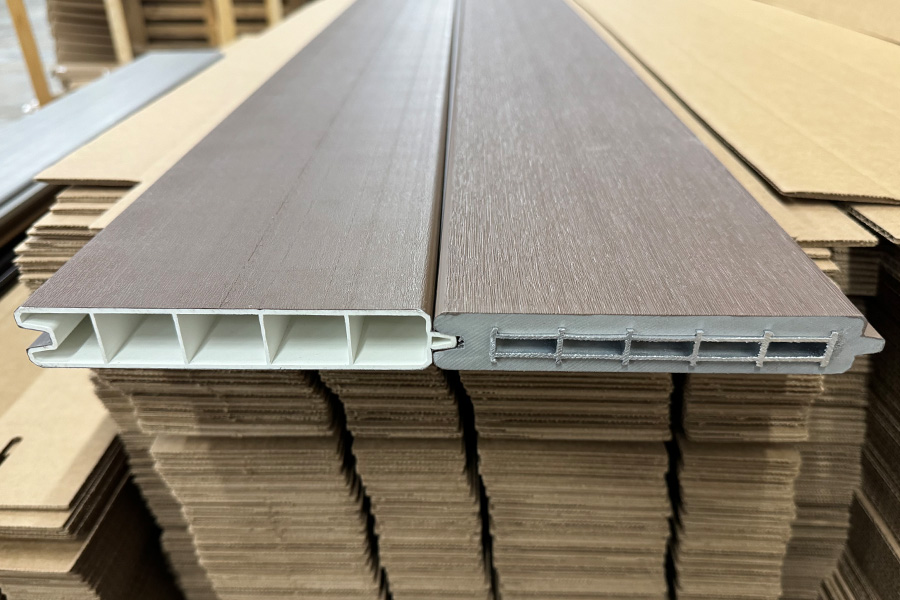
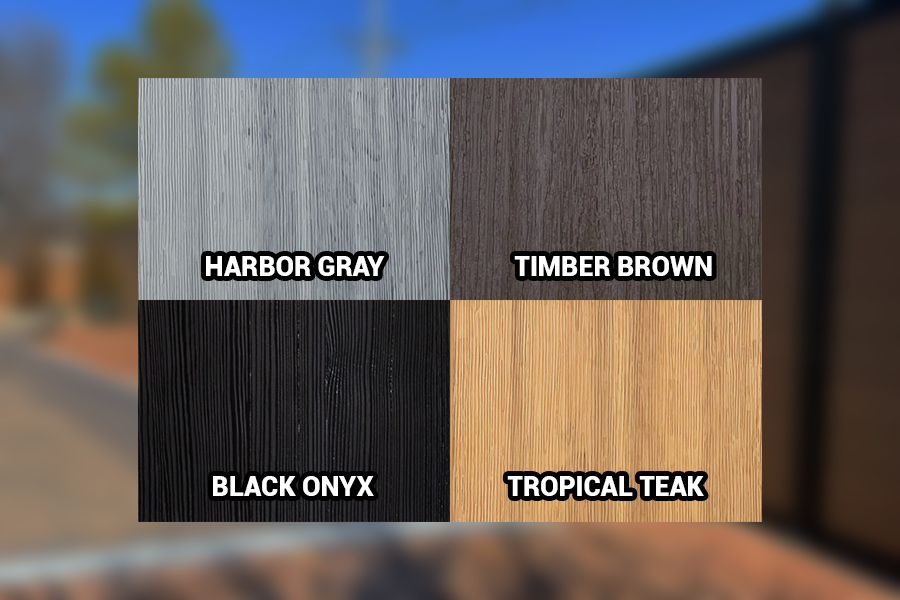
FenceTrac’s LuxeCore Composite boards provide the appearance of wood without the headaches of maintaining it. These boards feature a three-layer construction: an aluminum core, a cellular PVC middle, and an ASA resin exterior. This combination makes them resistant to warping, UV fading, and moisture. LuxeCore boards come in four colors – Black Onyx, Harbor Gray, Timber Brown, and Tropical Teak – and are tested to withstand a design wind load of 55.0 psf. Both the boards and frame are backed by a Limited Lifetime Warranty.
"LuxeCore’s aluminum structural core resists this deflection, keeping every board straight for the life of the fence." – FenceTrac
Although composite boards expand when exposed to sunlight, the design accounts for this thermal movement. However, darker colors may amplify this effect, so they should be chosen carefully. For another low-maintenance option, consider the UltraBlend PVC line.
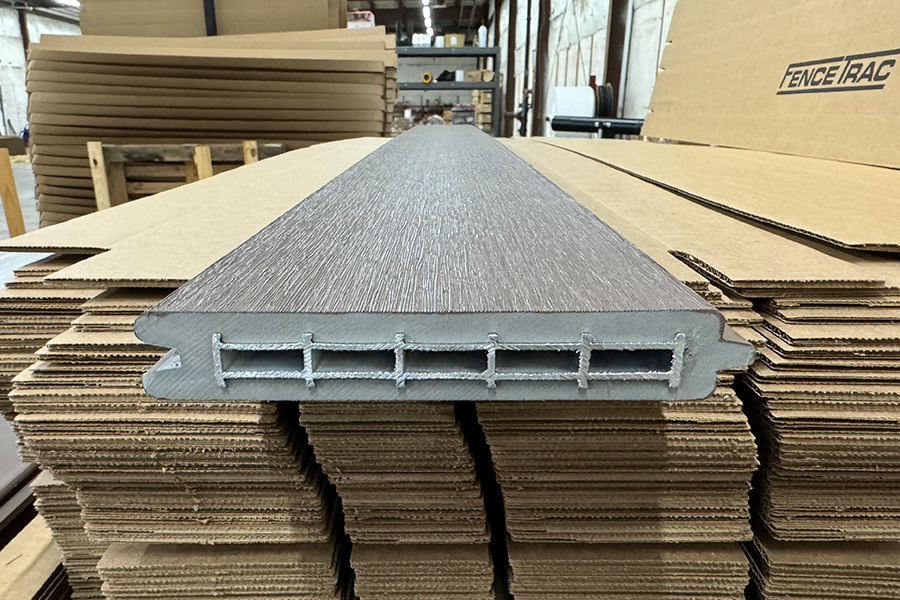
PVC Fence Boards
The UltraBlend PVC boards offer a sleek, modern appearance with a smooth finish. These ASA-encapsulated hollow PVC boards feature internal webbing for added strength, making them resistant to rot, insects, and moisture. They don’t require painting, which makes them perfect for areas like pools, HOA communities, or other low-maintenance settings.
Available in lighter colors such as Harbor Gray, these boards pair nicely with black powder-coated frames. Lighter tones also reflect more heat, helping the boards maintain their finish longer in sunny environments.
For those who prefer a natural aesthetic, wood infill provides a timeless option.

Cedar and Natural Wood
Cedar brings warmth and natural variation to a fence. Western Red Cedar is the go-to choice for wood infill because it naturally resists decay, moisture, and insect damage.
To keep cedar looking its best, it needs staining or sealing every 2–5 years to prevent graying. Clear or semi-transparent stains in natural tones are ideal for maintaining the grain while giving the fence a clean, modern appearance.
"A wood fence that grays and warps within a few years looks out of place next to a home designed to last generations." – FenceTrac
If low maintenance is a priority, aluminum boards are an excellent alternative.

Aluminum Boards
Aluminum boards deliver a crisp, modern look with minimal upkeep. FenceTrac’s aluminum infill is made from 6063-T5 extruded aluminum and finished with a powder coating. It comes in four colors – Black, White, Silver, and Bronze – and is naturally resistant to corrosion, making it a great choice for coastal or humid areas. The boards also meet the ASTM E84-24 Class A fire rating with a Flame Spread Index of 0, which is particularly beneficial in Wildland-Urban Interface (WUI) zones where fire safety is a concern.
These boards are available in two widths: 5‑7/8 inches for a solid look or 2‑7/8 inches for a semi-private slat design. Adjustable spacers allow for custom spacing. When paired with a black powder-coated frame, matte black aluminum boards create a sleek, almost seamless appearance from a distance.
Mixed-Material Panels
The modular FenceTrac frame makes it easy to combine different materials in a single fence. A popular approach for luxury estates is to use composite boards for the main sections and add cedar or aluminum accents for texture and visual interest.
To achieve a cohesive look, stick to one dominant material and use the secondary material sparingly, such as for entryways or feature sections. For instance, a long fence with Harbor Gray composite boards and narrow aluminum accents every few feet can create a striking, architectural feel. The shared U-channel frame ensures everything ties together seamlessly.
These various infill options provide the flexibility to design a fence that complements any modern home.

| Infill Material | Maintenance | Warranty | Best For |
|---|---|---|---|
| LuxeCore Composite | None | Limited Lifetime | Premium residential, coastal, high-wind zones |
| UltraBlend PVC | None | Limited Lifetime | Residential, HOA, pool areas |
| Aluminum | None | 20-year (system) | Fire-rated applications, coastal, modern aesthetic |
| Western Red Cedar | Periodic stain/seal | None | Natural wood look, budget-conscious projects |
| Mixed Materials | Varies by combo | Varies | Luxury estates, custom architectural designs |
sbb-itb-908b3eb
Planning and Installation Considerations
Site Planning for Custom Homes and Estates
Once design choices are finalized, careful planning ensures the installation goes smoothly. Start by obtaining an updated property survey to confirm legal boundaries, easements, and any potential encroachments. With these details in hand, review local zoning ordinances and HOA covenants for rules on height limits, setbacks, and approved materials. For instance, many upscale neighborhoods require black metal frames with neutral infill – knowing this upfront helps avoid expensive redesigns later.
Use stakes and string lines to map out the fence’s path, connecting it to driveways, gates, outdoor spaces, and landscaping. For driveways and motor courts, align the fence and entry gate parallel or perpendicular to the driveway to maintain the clean lines that modern horizontal fences provide. Around patios and pool areas, position panels to define outdoor rooms, aligning them with hardscape edges for a seamless transition. Before digging, contact 811 (Call Before You Dig) to mark underground utilities and avoid any mishaps.

Structural and Code Requirements
For a standard 6-foot privacy fence, use 8-foot posts embedded at least 2 feet in concrete. In areas prone to frost or high winds, increase the embedment depth to 30–36 inches. FenceTrac documentation suggests a post hole depth of 38 inches with a footing diameter of no less than 6 inches. Spacing posts 6–8 feet apart typically works for horizontal panels, though closer spacing adds stability in windy conditions.
Solid privacy panels act like wind sails, so structural integrity is key. FenceTrac systems with LuxeCore infill are tested to withstand a 55.0 psf design wind load under ASTM E330. Coastal or hurricane-prone regions, where wind speeds can hit 130–150 mph, may require an engineered footing plan approved by local building departments. If the fence is part of a pool barrier, it must comply with the International Swimming Pool and Spa Code (as adopted locally). This usually means a minimum height of 48 inches, self-closing and self-latching gates, and no horizontal elements that could be used for climbing.

Using FenceTrac Systems on Your Project
FenceTrac’s modular design simplifies installation by treating each bay as a standardized module rather than a custom build. You can plan around post spacing and panel dimensions, with the steel U-channel frame ensuring proper alignment and load distribution. This approach makes material calculations straightforward, particularly for larger estate installations.
For outdoor spaces and pool enclosures, the FenceTrac Privacy system offers solid horizontal screening. For areas where airflow or filtered light is needed – like side yards or front approaches – the semi-privacy configuration uses stackable spacers starting at 3/4 inch, allowing controlled visibility while meeting privacy standards. For high-profile areas like motor courts, the luxury estate system features heavier posts and double gate kits in 8-foot or 12-foot widths, providing a polished solution for vehicle access.
The modular design also offers flexibility for future upgrades. Since the U-channel frame can accommodate any rigid infill up to 1 inch thick, you can swap out materials like cedar for composite or aluminum later without replacing the posts or frame. This ensures that today’s structural investment remains adaptable for years to come.
Design Inspiration and Project Examples
Video: Modern Horizontal Fence Designs in Action
The video below showcases completed FenceTrac installations across a variety of property types. It provides close-up views of material combinations and highlights how the patented U‑channel steel frame delivers sleek, uninterrupted horizontal lines. This is a great resource if you’re deciding on infill materials or trying to picture how a fence might enhance your home’s exterior.
Design Scenarios by Property Type
If you’re looking for inspiration, here are a few design ideas tailored to different property types.
For urban custom homes on smaller lots, a 6–7 ft horizontal privacy fence works well along side and rear property lines. Pairing a black powder-coated steel frame with cedar or light composite infill creates a striking contrast that complements modern architecture. The dark frame serves as a clean outline, making the fence feel intentional and stylish. In private areas like patios or hot tubs, solid infill works best, while semi-privacy layouts or shorter panels near sidewalks or streets help maintain an open, welcoming feel.
Large suburban and estate properties often benefit from a layered approach. A primary perimeter fence, 6–8 ft tall, with composite or aluminum infill offers low-maintenance privacy over long stretches. In outdoor living spaces – like pool courtyards or outdoor kitchens – solid 8 ft panels provide extra seclusion. Warm-toned composite infill pairs beautifully with natural stone columns or masonry bases at entryways, blending seamlessly with the estate’s design. Around pools, aluminum slats with controlled spacing meet safety codes while maintaining a cohesive look.
For front-yard projects, the focus shifts to curb appeal and property definition, as many municipalities limit fence heights to 3–4 ft. A 4 ft frame with 1" × 3" aluminum slats and 3/4-inch spacers creates a clean, louvered appearance that defines the yard without obstructing the view of the home’s façade. This design typically satisfies HOA requirements for openness.

Project Comparison Table
Here’s a quick reference table summarizing material and height choices for common fence projects:
| Property Type | Infill Material | Typical Height | Privacy Level | Maintenance Needs |
|---|---|---|---|---|
| Urban custom home (rear/side) | LuxeCore Composite – Black Onyx or Harbor Gray | 6–7 ft | Full privacy | None – no staining/sealing |
| Large suburban/estate | LuxeCore Composite – Tropical Teak or Timber Brown | 6–8 ft | Full privacy | None – UV resistant |
| Estate pool enclosure | Aluminum slats in black steel frame | 4–6 ft (per code) | Semi-privacy, code-compliant | None – powder-coated |
| Front-yard project | 1" × 3" aluminum slats with 3/4" spacers | 4 ft | Semi-privacy with airflow | None – powder-coated |
Matching the frame and infill colors to your home’s exterior is key. For homes with dark window frames, a black steel frame with dark composite infill creates a unified, modern look. If your home features warm wood or stone accents, a bronze frame paired with warm-toned infill provides a balanced, harmonious aesthetic without clashing.

Conclusion: Key Takeaways
Modern horizontal privacy fences do more than just enclose your yard – they integrate beautifully with your home’s overall design. The horizontal lines mirror architectural features like rooflines, windows, and deck edges, creating a sense of harmony that vertical fences simply don’t achieve. Instead of acting as just a barrier, a horizontal fence becomes a deliberate design feature.
Key design elements such as board orientation, frame color, infill materials, and panel height work together to shape the fence’s visual impact. For example, pairing a black powder-coated frame with light-colored infill creates a bold, modern contrast. On the other hand, warm-toned composite or natural wood blends seamlessly with properties featuring stone or brick accents. Mixed-material fencing ideas can add an extra layer of visual interest, perfect for courtyards and entryways. These choices not only enhance the look but also ensure durability.
Low-maintenance materials like composite and PVC, often backed by limited lifetime warranties, are excellent for those looking to avoid regular upkeep. Aluminum offers a sleek, maintenance-free option, while cedar is ideal for those who value natural warmth and the flexibility to refinish over time. With the FenceTrac steel U-channel frame, you can incorporate any of these materials, allowing you to update the design without starting from scratch.
The uniform design approach – whether for full-privacy backyard sections or front yard panels – ensures a polished look throughout, with concealed fasteners and a finished appearance on both sides.
Want to bring these ideas to life? Check out the FenceTrac privacy, semi-privacy, luxury estate, and front yard fencing systems for detailed specs and layout ideas. For more inspiration, the best fence design for modern homes guide is a great resource for homeowners and architects planning their projects.
FAQs
How do I choose between full-privacy and semi-privacy spacing?
For full privacy, go with 6-foot or 8-foot horizontal panels made from LuxeCore composite in black or gray. Pair these with tongue-and-groove infill to ensure complete coverage without any gaps.
If you prefer semi-privacy, choose black aluminum horizontal slats with 3/4-inch standard spacers or stackable spacers in 1-inch increments. Adjust the spacing to strike the right balance – closer gaps provide more privacy while still allowing airflow and light.
What post size and spacing should I use for high-wind areas?
For areas prone to high winds, opting for 6-foot panels can help reduce the wind load on each post. While residential installations usually use 2.5-inch square posts, commercial-grade projects benefit from sturdier 3-inch or 4-inch posts. When digging post holes, aim for a depth of at least 38 inches with a diameter of 6 inches, unless an engineer specifies otherwise. Be sure to consult local building codes to ensure compliance with wind-load requirements.
Can I swap infill materials later without rebuilding the fence?
Yes, you can change the infill materials without tearing down the fence. Thanks to the modular steel frame, you simply remove the top channel, slide out the old boards, and insert the new ones. The frame stays in place as a durable structure, while the infill acts as the decorative element. This setup allows you to use any rigid material up to 1 inch thick, giving you plenty of options to update the fence’s appearance.