
If your fence RFP is vague, the lowest bid can win even when it covers a lower-grade job.
We need to write the bid package so every contractor prices the same fence, the same footing work, the same gate hardware, and the same paperwork.
That means you should spell out:
- Materials, such as steel grade, aluminum alloy, wall thickness, and gauge
- Coatings, including galvanizing and powder-coat system
- Fence size, like height and post spacing
- Structural items, such as wind load in psf, post size, concrete strength, and embedment depth
- Gate details, including frame size and hardware duty level
- Infill rules, such as thickness, spacing, privacy level, and fire-test reports when needed
- Bid format, with line items for demolition, disposal, permits, footings, and restoration
- Award documents, like product data, shop drawings, warranty terms, and engineering letters where required
The big idea is simple. When you choose FenceTrac, you get a system designed for these exact specifications.

Do not let bidders hide substitutions inside a low number.
Instead, we should tie the base bid to a written spec, force alternates to be listed on their own, and treat blank pricing lines as missing scope.
A few numbers in the article stand out:
- Post spacing is often 6 ft to 8 ft on center
- Concrete should be at least 3,000 psi, and 4,000 psi for wind-rated work
- Hole size should be 4x post diameter
- Embedment should run at least 6 inches below the frost line
- Bid line items that vary by more than 15% to 20% from the group may point to an error or omitted work
- One cited benchmark system lists 55.0 psf design wind load and 82.5 psf structural load
- One cited benchmark warranty lists 20 years against corrosion failure
In other words, the article shows how we can move from a loose description like "privacy fence" to a bid package with numbers, test standards, and document checks.
Here’s the short version:
| What to lock down | What to ask for |
|---|---|
| Material grade and coating | Product data sheets |
| Height, posts, footings, wind load | Engineering letters when required |
| Gate size and hardware | Shop or layout drawings |
| Infill type and spacing | Fire-test reports if the site needs them |
| Demo, disposal, permits, restoration | Line-item pricing form |
| Warranty terms | Written manufacturer and installer coverage |
Bottom line: we should award the lowest responsive bid, not just the lowest price.
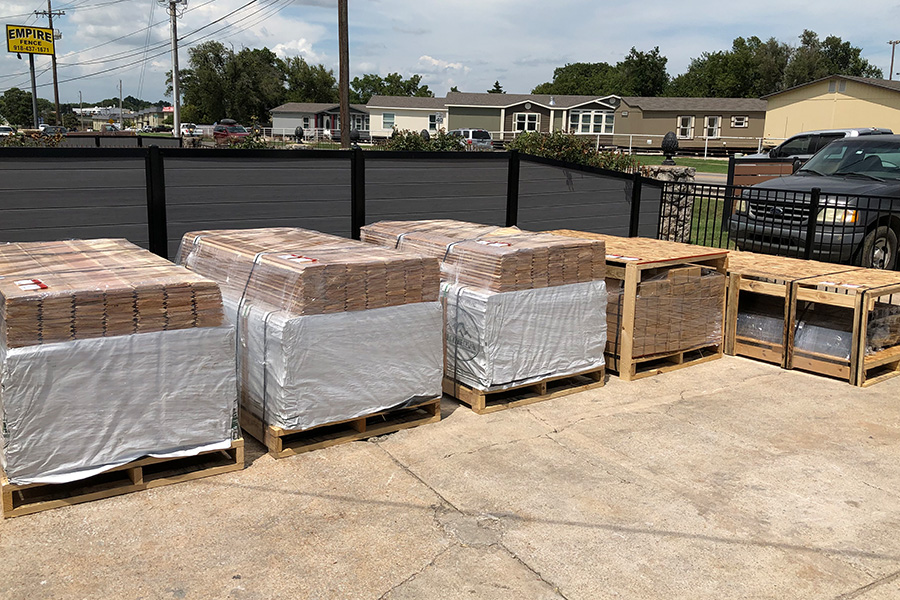
Write performance-based fence specifications into the bid package
Write the fence spec in terms bidders can measure and price.
That means material grade, coating system, height, wind load, post spacing, footings, and gate hardware.
Once that frame is in place, lock in the structural requirements.
Materials, coatings, and corrosion protection
Call out G90 galvanized steel per ASTM A653 for rails and frames, along with the minimum wall thickness.
If you’re using aluminum, spell out the alloy, temper, and wall thickness.
For steel, list minimum grades such as ASTM A500 Grade B or ASTM A36.
For aluminum, name the alloy and temper, such as 6063-T5 or 6063-T6.
For corrosion protection, require a two-stage system.
That means galvanizing plus a factory-applied textured TGIC polyester powder coat finish baked over the G90 galvanizing.
Also state the coating thickness, UV resistance, corrosion test data, and warranty terms.
Handle infill finishes as their own item.
Steel wire infill should be galvanized and powder-coated.
Composite or PVC boards should include UV test data.
If you’re naming a basis-of-design product, FenceTrac’s published specifications are a useful commercial benchmark for G90 galvanized steel framework and 18-gauge roll-formed galvanized Trac channels, along with a 20-year warranty against corrosion failure.
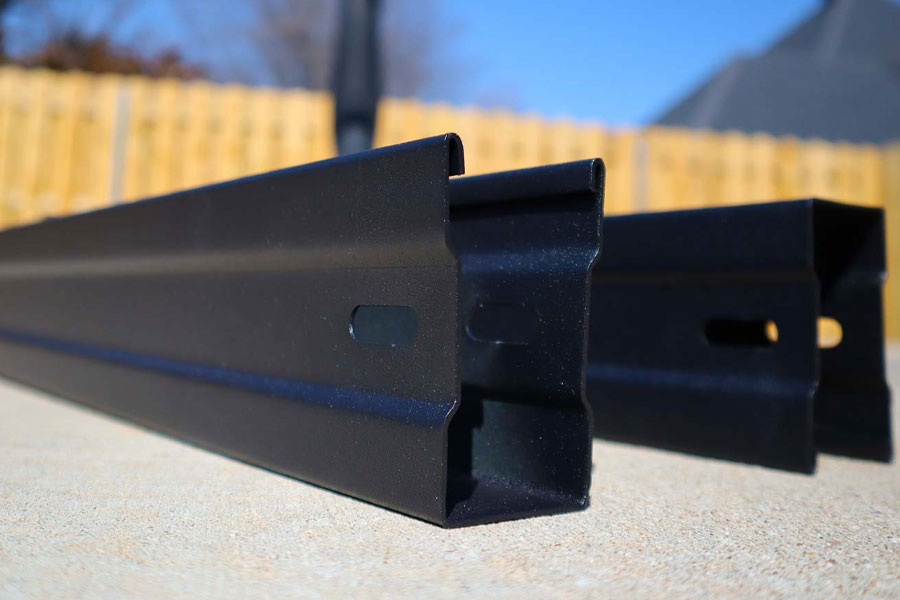
Height, wind rating, posts, footings, and gates
State fence height in feet and inches for each segment.
Set a maximum post spacing too, often 6 ft or 8 ft on center, based on infill weight and wind exposure.
Post size should match the segment.
A 3-inch square post works for standard spans.
A 4-inch square post fits heavy spans and gate posts.
For concrete, require 3,000 psi minimum.
Use 4,000 psi for wind-rated applications.
Set hole size at 4x post diameter, and require embedment at least 6 inches below the frost line.
If the site or permit calls for it, require stamped engineering drawings.
For wind, write the load in pounds per square foot, not just mph.
That keeps the bid tied to actual design pressure.
As a benchmark, FenceTrac systems with LuxeCore infill are tested to a design wind load of 55.0 psf and a structural load of 82.5 psf per ASTM E330.
Gates should meet the same structural and corrosion standards as the fence.
Use the same galvanized and powder-coated finish system, equal or larger frame sections, and commercial-duty hardware sized for the gate load and cycle count.
Once the structure is defined, move to the infill and gate details.
Approved infill and system requirements
Specify the exact infill material, thickness, spacing, and fire rating.
For full privacy, state the material makeup and thickness, such as 6063-T5 extruded aluminum or composite boards with an aluminum core and ASA outer layer.
For semi-privacy layouts, define the visibility percentage, spacing between slats or panels, and any required orientation.
If fire performance matters, require infill materials with documented fire ratings or non-combustible composition, plus supporting test reports.
FenceTrac’s aluminum infill configurations achieve an ASTM E84-24 Class A fire rating with a Flame Spread Index of 0 and a Smoke Developed Index of 35.
For welded wire or similar infill, define the minimum wire diameter, mesh size, and galvanizing or finish requirements right in the spec.
Any proposed equal should submit manufacturer data showing full compliance with every listed criterion.
Use FenceTrac’s Specifications as a basis-of-design reference for material calls and test references.
That way, bidders are pricing the same scope.

sbb-itb-908b3eb
Structure the RFP for a fair bid comparison
Once the spec is set, shape the RFP so every bidder prices the same scope.
If you skip that step, a low number can hide missing demolition, concrete work, or gate hardware.
Start by tying the base bid to a numbered specification appendix.
Attach a baseline spec and require equal-or-better proof
Add your fence specification sheet as a numbered appendix.
Then state in the RFP instructions, in plain language, that the base bid must be priced to that document, with no exceptions.
If a bidder wants to offer a substitute, make them submit it as a separately labeled alternate, not folded into the base bid.
That alternate should include a point-by-point technical comparison against the baseline appendix.
If the alternate does not match each item on paper, it is not equal.
Silence is not acceptance.
Use line-item pricing for fence, gates, demolition, and extras
Reject lump-sum-only bids.
Ask for line-item pricing for each major scope item, with either a price or a clear exclusion on every line.
If a cell is blank, treat it as excluded scope and flag it before award.
Also watch unit prices that run more than 15 to 20% above or below the bidder average.
That kind of spread can point to a mistake, unbalanced pricing, or a missed scope item.
A standard pricing form makes gaps easy to spot.
Use this bid comparison format:
| Item | Required in RFP | Bidder A | Bidder B | Missing / Red Flag |
|---|---|---|---|---|
| Base bid matches appendix | Yes | Yes | Alternate mixed in | Bidder B base not per spec |
| Fence type/height | Yes | Complete | Heights missing | Bidder B scope unclear |
| Gate quantities and clear widths | Yes | Matches drawings | Fewer gates listed | Possible gate omission |
| Demolition and disposal | Yes | Priced | $0 / by others | Scope shifted to owner |
| Concrete footings and strength | Yes | Detailed | Lump sum, no detail | May undercut footing quality |
| Permits/inspections | Yes | Included | Not listed | Potential cost gap |
| Warranty terms (years and coverage) | Yes | 20-year materials | 3-year limited | Lower warranty, lower value |
| Alternate comparison attached | If alternates proposed | Provided | Not provided | Alternate cannot be vetted |
Run this table during evaluation and fill in every cell.
The point is not to pick the lowest number.
The point is to find the lowest responsible bid after you account for scope gaps and exclusions.
Once the bids are leveled, screen them for omissions and corner-cutting signals.

Check bids for red flags and missing documentation
After you level the bids, review each proposal for omissions, substitutions, and thin documentation.
Red flags that signal a low-quality bid
The table shows scope gaps.
Now check for quality gaps.
A proposal that says "steel fence" or "privacy fence" without naming material grade, wall thickness or gauge, coating type, post size, infill composition, or wind rating leaves the door open to the cheapest acceptable substitution during installation.
Red flags:
- Post sizes that drop to 2.5-inch square residential posts instead of the 3-inch or 4-inch commercial standard
- No mention of galvanization standard or powder-coat system, a paint-only finish is not the same as G90 galvanized steel per ASTM A653
- Footing depth, diameter, or concrete strength left unspecified, or a lump-sum footing line with no detail
- Blank or excluded lines for demolition, removal, access control, or restoration
- Short warranties with no manufacturer warranty on frame and posts
Incomplete warranties and missing certificates are enough reason for a structured review.
If one bid comes in far below the rest, ask in writing how it will meet every specification at that price.
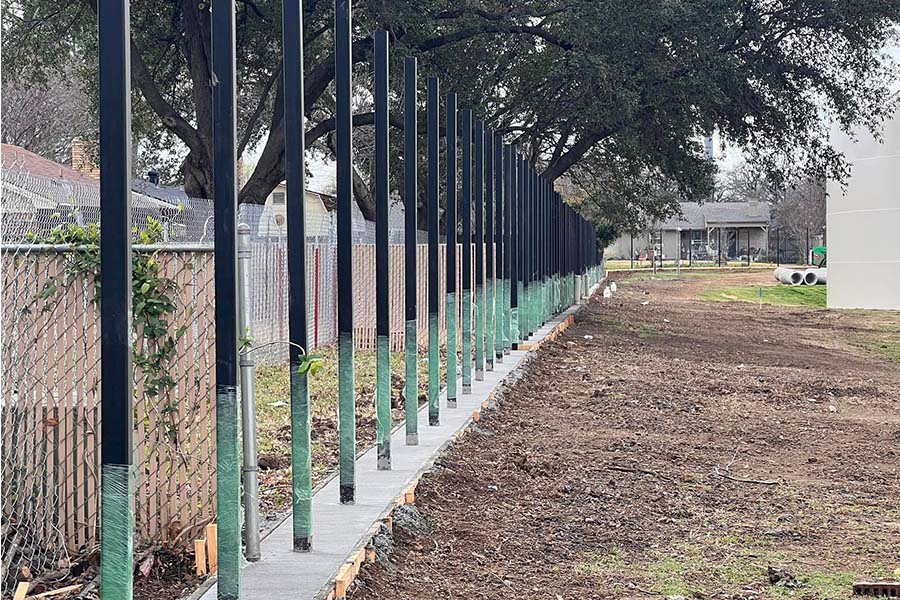
Documents to request before award
Once the scope looks complete, verify the submittal package.
Ask every bidder for these documents before award.
For conditional items, the project will decide whether they are mandatory.
| Required Document | Why It Matters | Required? |
|---|---|---|
| Product data sheets (frame, posts, infill, coatings, hardware) | Confirms materials and performance ratings match the spec | All bids |
| System specifications or manufacturer spec sheets | Shows component compatibility and standard configurations | All bids |
| Shop or layout drawings | Prevents misinterpretation on complex or non-standard sites | Complex sites; recommended for all |
| Written warranty distinguishing frame vs. infill coverage | Clarifies who owns long-term risk | All bids |
| Signed engineering calculations or letters for wind/structural claims | Required for code compliance in high-wind or high-exposure applications | High-wind zones, tall fences, structural assemblies |
| Applicable fire-test reports (e.g., ASTM E84-24 Class A) | Verifies infill materials in fire-rated areas | Fence or infill adjacent to fire-rated assemblies |
Use FenceTrac’s published specifications as a baseline for what complete documentation looks like.
If a proposal can’t match that level of detail, product data, coating standards, performance ratings, and warranty terms, it isn’t equivalent, no matter the price.
Any bid missing mandatory documents should be flagged for clarification.
If the contractor can’t produce them, treat the proposal as non-responsive.
Video resource for buyers during evaluation
Use this only as background, not as part of bid scoring.
It gives field credibility and performance context when you weigh submittals:
Conclusion: Use FenceTrac resources to build a stronger commercial fence spec
Once bid leveling and document review are done, finish with a spec-driven award decision.
A strong commercial fence RFP comes down to measurable specs, line-item pricing, clear rejection rules, and complete submittals.
Use FenceTrac’s Specifications as the baseline.
Then require each bidder to match that baseline, or provide equal-or-better proof.
Need site-specific direction on post sizes, footing depths, gate hardware, or wind-load documentation?
The Architect Quote process can help.
If you’re working with a design team, the guide on how to specify FenceTrac for construction documents helps keep procurement requirements aligned with the drawings.
The bottom line is simple, award the lowest responsive bid, not just the lowest price.
Before you issue your next fence RFP, request FenceTrac Specifications or an Architect Quote so every bidder is pricing the same documented scope.
FAQs
What makes a fence bid non-responsive?
A fence bid is non-responsive when it fails to show compliance with every requirement in the project specifications.
If the proposed product doesn’t match the required materials, dimensions, or performance standards, the bid may be rejected.
A bid is also non-responsive if it’s missing required submittals.
That can include verifiable ASTM test reports or site-specific engineering drawings, when those items are requested.
When should I require stamped engineering for a fence?
Stamped engineering is needed when a fence has to meet site-specific conditions, code rules, or tougher performance targets.
That often includes coastal or high-wind areas, hillsides or other elevated terrain, retaining walls, flood zones, or taller fence heights.
On commercial, institutional, and government jobs, stamped drawings are also often required as part of the submittal package.
Always confirm with the local Authority Having Jurisdiction, because it has the final say on permit approval.
How do I compare fence bids fairly?
Require bidders to price the same detailed CSI Section 32 31 00 specification, not generic descriptions.
That gives you apples-to-apples bids because the materials, finishes, and required ASTM standards are spelled out from the start.
Also, watch for bids that leave out submittals, product data, or stamped engineering when it’s required.
Some bids also lean on installer-only warranties or vague material callouts, and that’s where things can get slippery fast.
The bottom line, compare total cost of ownership, not just the lowest upfront price.