
FenceTrac does not have one set price. We can only price it by your fence height, total footage, infill choice, gate count, and site conditions.
Here’s the short answer.
If we price a FenceTrac project in 2026, the kit cost usually starts with the steel frame, then moves up based on the infill you choose, with cedar as the lowest upfront option and aluminum board as the highest.
Just know this.
The kit price is not the full project price.
In many cases, you still need to budget for:
- Installation labor
- Concrete for posts
- Permits
- Old fence removal
- Disposal
- Grading or slope work
- Stain or sealer for cedar
The big tradeoff is simple.
Cedar can cost less on day one, but more over time if you stain it every 2 to 3 years or replace damaged boards.
Low-upkeep infill, like UltraBlend, metal panel, LuxeCore, and aluminum board, usually costs more upfront, but can cut future work and repeat spending.
Here’s the order of upfront infill cost, from low to high:
| Infill | Upfront Cost | Upkeep |
|---|---|---|
| Cedar | Lowest | High |
| UltraBlend PVC | Mid | Low |
| Metal Panel | Mid-to-high | Low |
| LuxeCore Composite | High | Low |
| Aluminum Board | Highest | Low |
One more thing.
A wood fence may need a full rebuild in about 10 to 15 years, while a steel-frame system can avoid that full-frame replacement cycle.
So when we compare costs, we should look at both:
- Upfront price
- 20-year cost
If you want an exact number in U.S. dollars, we should use the FenceTrac Pricing page and Price My Fence tool with your:
- Linear footage
- Fence height, 4 ft., 6 ft., or 8 ft.
- Infill type
- Gate size and count
- Slope, corners, and pool-code hardware needs
That gives you the clearest estimate fast. For more details on installation and materials, see our frequently asked questions.
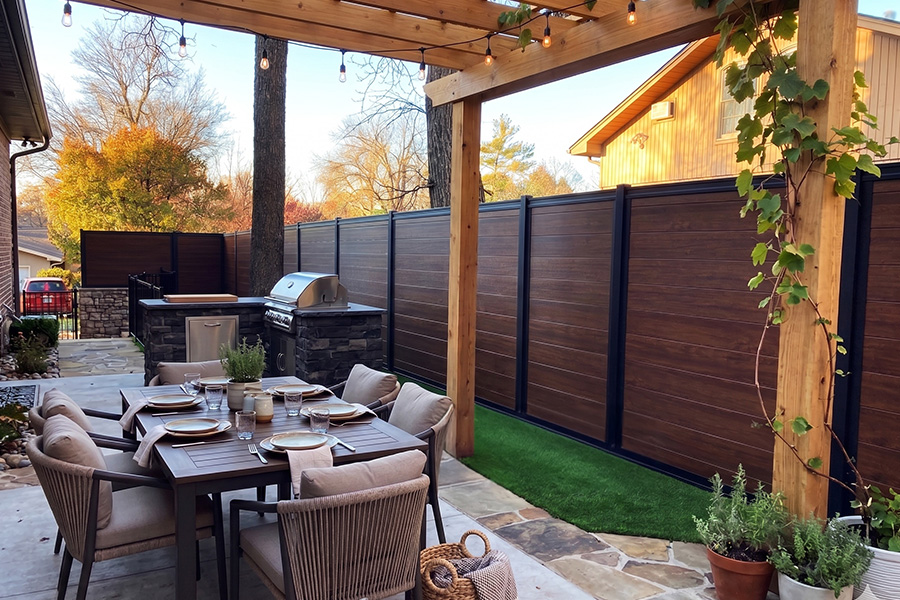
Why FenceTrac Has No Single Price
FenceTrac pricing is a configuration issue, not a one-number answer.
It’s a modular system, so the total depends on your exact fence height, layout, infill, and gate choices.
The 4 biggest cost drivers
Four choices move the price more than anything else: fence height, total linear footage, infill material, and gate count.
Height affects how much steel and infill each panel needs.
Linear footage decides how many times that panel-and-post pattern repeats around your property.
Infill choice changes the material cost in a big way.
Cedar is the lowest-priced option, followed by UltraBlend, metal panel, LuxeCore, and aluminum board.
Gates push the total up because they need hinges, latches, and extra framing.
That’s why two neighbors with the same footage can get very different totals.
One might install a single walk gate, while the other adds two walk gates plus a drive gate.
Same footage, very different final number.
Why online averages rarely match real quotes
Generic online averages usually miss the details that shape a FenceTrac quote.
They often leave out the steel-frame system, higher-end infill, and the site conditions that make one yard different from another.
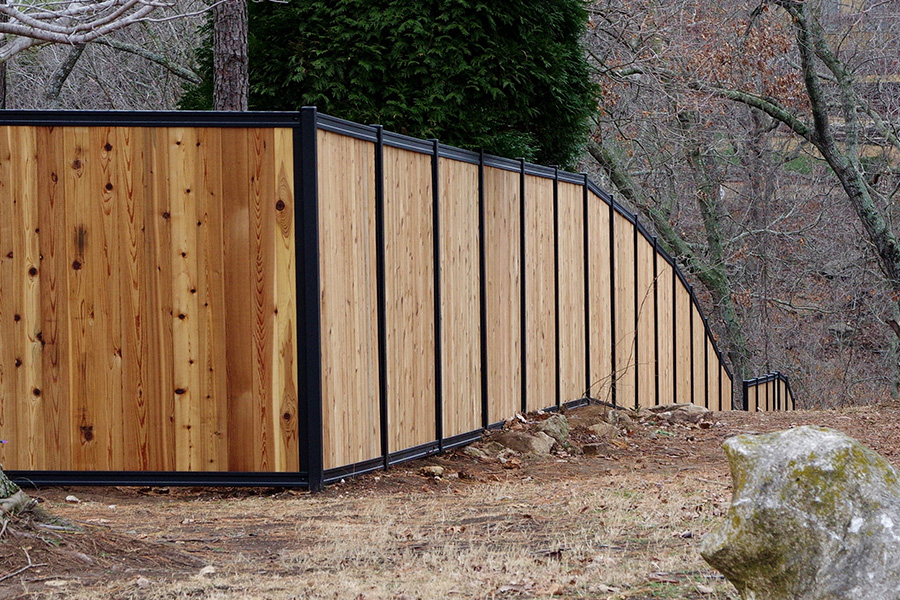
A sloped yard may need stepped panels or tighter post spacing.
Extra corners mean more posts.
And a short fence run between two obstacles can use almost as many parts as a full-length panel.
Once those details are clear, the next step is simple: look at what the order includes, and what it doesn’t.

sbb-itb-908b3eb
What Actually Changes Your FenceTrac Price
Here’s what moves a FenceTrac price the most.
Fence height and total linear footage
Height and footage set the starting price before infill and gates go on.
More height means more steel, more infill, and taller posts across every panel.
So a 6-ft or 8-ft backyard privacy fence will always cost more per linear foot than a 4-ft front-yard decorative fence, even if the infill stays the same.
Linear footage is your total fence length.
More footage means more posts, more rails, and more infill.
And if your yard has slopes, corners, or obstacles, the price can climb fast.
Why?
Because those conditions mean extra cuts, extra posts, and more labor.
Infill material: from lowest to highest upfront cost
The steel frame stays the same.
The infill is what drives most of the price gap.
From lowest to highest upfront material cost, the lineup is: cedar → UltraBlend → metal panel → LuxeCore → aluminum board.
Here’s the quick breakdown:
| Infill Option | Upfront Cost | Maintenance |
|---|---|---|
| Cedar | Lowest | High (stain/seal every 2–3 years) |
| UltraBlend PVC | Moderate | Low to none |
| Metal Panel | Mid-to-upper | Low |
| LuxeCore Composite | Higher | Low to none |
| Aluminum Board | Highest | Minimal |
Cedar is easier on the wallet at the start.
But over time, staining and re-staining add up.
That’s the tradeoff.
A lower upfront price can still lead to a higher total cost later, which is why the maintenance gap matters when you compare options.
Gates and special hardware
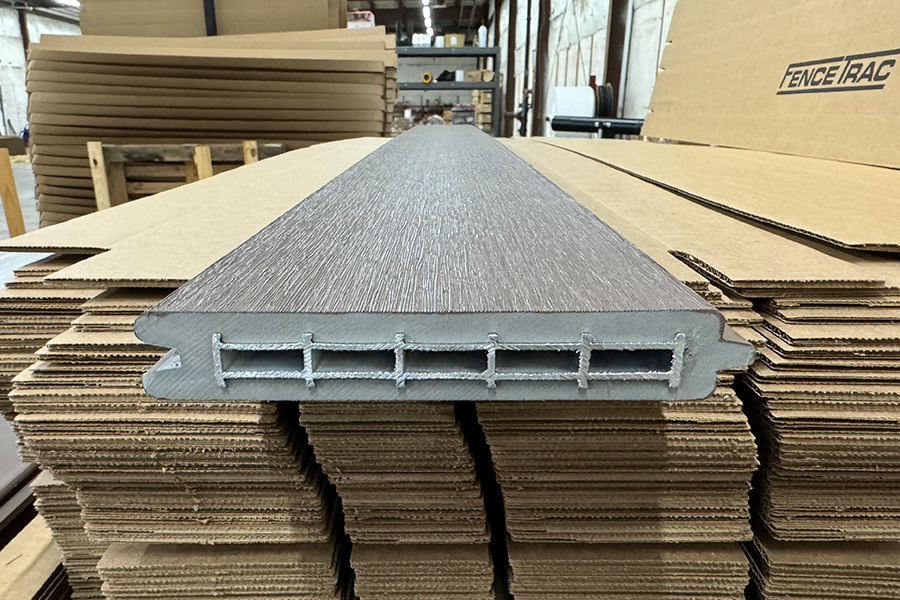
Each gate adds its own frame, hinges, latch, and reinforced posts.
A double drive gate adds even more, with heavier-duty posts, stronger framing, and hardware made to hold a much larger opening.
If you need pool-compliant hardware, expect the price to go up again.
Gates are one of the biggest add-ons in a FenceTrac order.
That’s why the total can jump fast once you start adding gates or special hardware.

What a FenceTrac Order Includes and What It Does Not
Once you know what affects FenceTrac cost, the next step is simple: understand what comes in the kit and what you’ll pay for on the side.
That’s where a lot of budget surprises happen.
What is typically included in the material order
A standard FenceTrac kit usually includes the steel frame parts.
That means galvanized, powder-coated steel posts, channels, and fasteners.
It can also include the horizontal fence infill boards you picked.
If you order a gate kit, it usually comes with the gate frame, hinges, and latch.
So, the material order covers the core fence system itself.
What is usually not included in the kit price
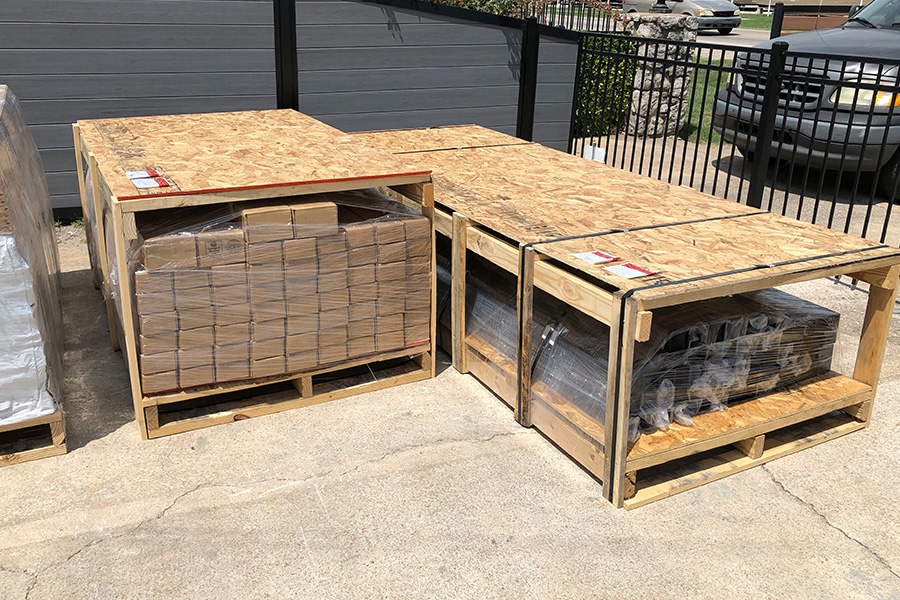
The kit price usually covers shipped materials only.
Concrete for footings is not included.
Labor, permits, removal, disposal, and grading are usually billed separately.
Cedar stain or sealer is not included either.
This matters because the sticker price on the kit is only part of the full project cost.
If you’re comparing quotes, make sure you’re looking at the total job, not just the fence package.
Upfront Price vs. Long-Term Fence Cost
Sticker price is only one piece of the bill.
The bigger issue is what the fence will cost you over the next 20 years.
How a steel frame changes the long-term cost picture
Once we look past the day-one price, the frame is what tells us how often a fence will need work, or a full rebuild.
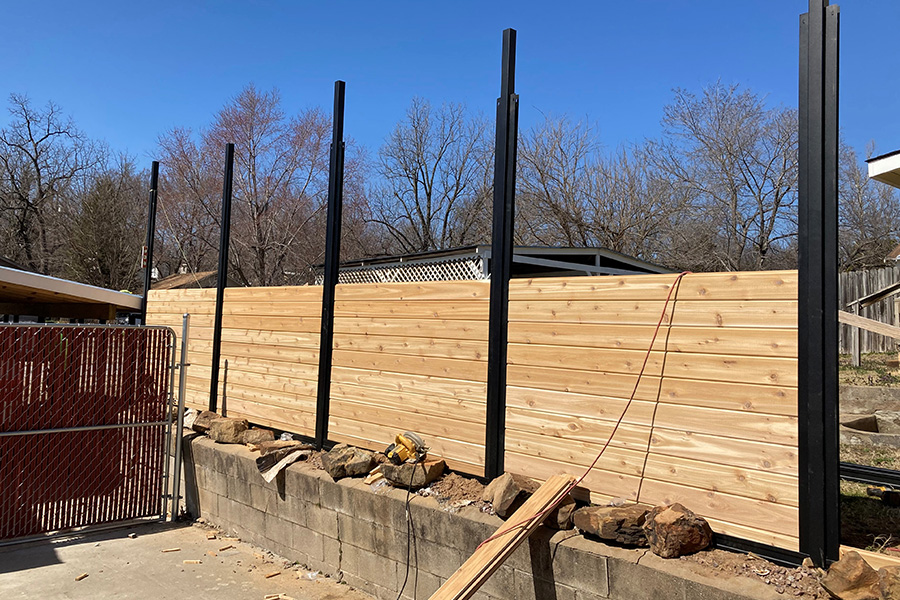
Wood fences tend to fail in familiar ways: posts rot, rails loosen, and boards warp.
FenceTrac’s steel frame resists rot, sag, and warp, so most long-term replacement needs stay limited to infill boards.
That matters because the frame stays straight through years of weather and soil movement.
So if a board needs to be replaced later, you replace the board, not the posts, not the rails, and not the entire panel.
For a closer look at how the two systems compare, the steel frame fence vs wood guide and the why choose FenceTrac page walk through the details.
Maintenance differences by infill option
A long service life only pays off if the infill doesn’t pull you into a steady cycle of upkeep.
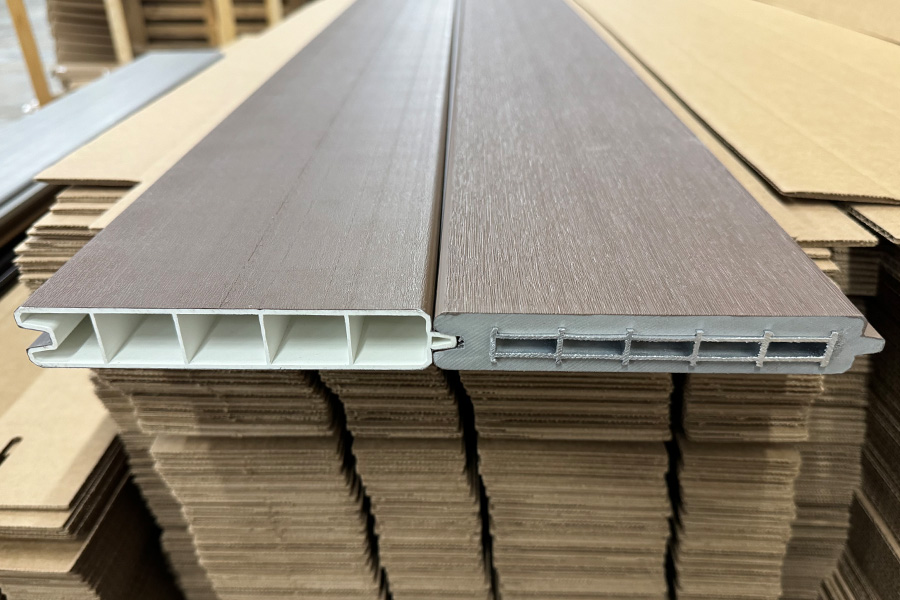
UltraBlend (PVC) and LuxeCore composite and metal panels are made to cut down on that work.
They don’t need staining, they don’t absorb moisture, and they won’t warp.
Metal panel and aluminum board infill are similar.
In most cases, periodic cleaning is all they need.
Cedar is a different story.
It needs staining or sealing every 2 to 3 years, which adds both cost and time over the life of the fence.
| Infill | Maintenance | Long-Term Value |
|---|---|---|
| Cedar | High – stain/seal every few years | Lower unless regularly maintained |
| UltraBlend PVC | Low – periodic cleaning | Better |
| Metal Panel | Low – periodic cleaning | Better |
| LuxeCore Composite | Low – periodic cleaning | Best |
| Aluminum Board | Low – periodic cleaning | Best |
Once maintenance is clear, the next move is getting your exact fence price.
Why replacing a wood fence twice can cost more in the long run
This is where lifetime cost starts to stand out more than the day-one number.
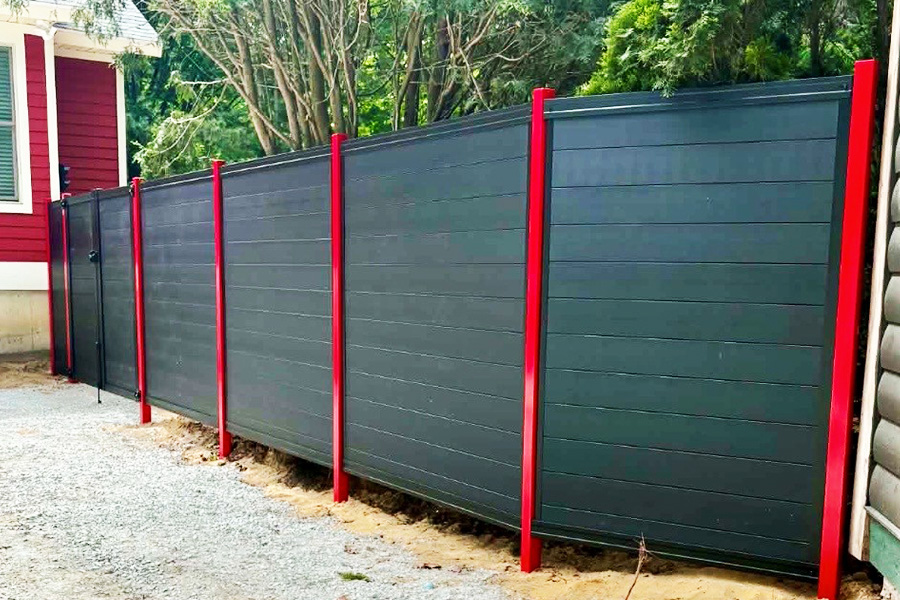
A wood fence may need a full rebuild within 10 to 15 years.
A steel-frame FenceTrac system avoids frame replacement and usually needs only occasional infill replacement.
Add up two full wood-fence cycles, repeat upkeep, and repair materials, and the 20-year total can end up higher than one FenceTrac installation.
So even if the upfront price is higher, the cost per year of use can end up lower over the fence’s actual lifespan.

How to Get Your Exact FenceTrac Price
Your exact price comes down to your layout.
FenceTrac pricing is based on how your fence is set up, so the tool needs a few project details before it can give you a number.
Have these ready:
- Total linear footage – measure each fence run, then add them together
- Fence height – FenceTrac systems come in 4-foot, 6-foot, and 8-foot heights
- Infill material – cedar, UltraBlend, metal panel, LuxeCore, or aluminum board
- Gate count and width – single gates run 4 or 6 feet wide; double gates run 8 or 12 feet wide
- Special conditions – slopes, pool-code hardware requirements, or unusual terrain
Better measurements lead to a tighter estimate.
Count every gate, too.
Each one adds hardware and framing.
Use the Pricing page and Price My Fence tool
Once you have those details, you can get a project-specific estimate.
Go to the Pricing page and use the Price My Fence tool to turn your measurements into a project-specific number.
Conclusion: The clearest path to your fence cost estimate
Cedar has the lowest upfront infill cost.
But if you stain cedar, the upfront cost moves closer to UltraBlend or metal panel, and cedar still needs restaining later.
Because the steel frame resists rot and warp, the long-term value often outweighs the higher upfront price.
Use the Price My Fence tool with your actual measurements for an exact quote.
FAQs
How accurate is the Price My Fence estimate?
The Price My Fence tool gives you a precise estimate based on your project details, including total linear footage, fence height, and your chosen infill material.
Those factors have a big impact on the final cost.
So instead of guessing, you can configure your system to match your layout and get a clear, personalized quote.
Which infill offers the best long-term value?
LuxeCore composite and UltraBlend PVC give you the best long-term value.
Yes, they cost more upfront than cedar.
But they also come with a Limited Lifetime Warranty and need little more than occasional cleaning.
Cedar is a different story.
It needs regular staining, sealing, and, at some point, replacement.
Those upkeep and labor costs add up.
Over time, they can end up costing more than the starting price of a maintenance-free system.
Can FenceTrac work on a sloped yard?
Yes. FenceTrac can work on a sloped yard.
Its modular, galvanized steel frame gives you a steady base that can be adjusted to fit your yard’s natural slope.
For project-specific details, use the Price My Fence tool to get an exact quote based on your site conditions.