
Steel-framed fences last longer, require less maintenance, and perform better in harsh weather compared to wood fences. A properly maintained wood fence may last 15–20 years, while steel-framed fences can exceed 50 years. Here’s why:
- Durability: Steel frames resist rot, pests, and warping, unlike wood, which is prone to moisture damage and insect infestations.
- Weather Resistance: Steel posts and frames handle wind (up to 150 mph), rain, and temperature changes better than wood, which can crack, twist, or decay over time.
- Maintenance: Steel fences need minimal upkeep, while wood requires frequent staining, sealing, and repairs.
- Lifespan: Steel posts last 25–40+ years, far outpacing wood posts, which often fail after 10–15 years.

Quick Comparison
| Feature | Steel-Framed Fence | Wood Fence |
|---|---|---|
| Lifespan | 50+ years | 5–20 years |
| Wind Resistance | Up to 150 mph | Up to 60 mph |
| Weather Durability | Resists rust, warping, pests | Prone to rot, warping, pests |
| Maintenance | Minimal | Regular staining/sealing needed |
| Posts | Steel: 25–40+ years | Wood: 10–15 years |
Steel-framed fences are a long-term investment, offering strength, stability, and lower maintenance costs. While wood fences may have a lower upfront cost, their vulnerability to weather and pests makes them less reliable over time.
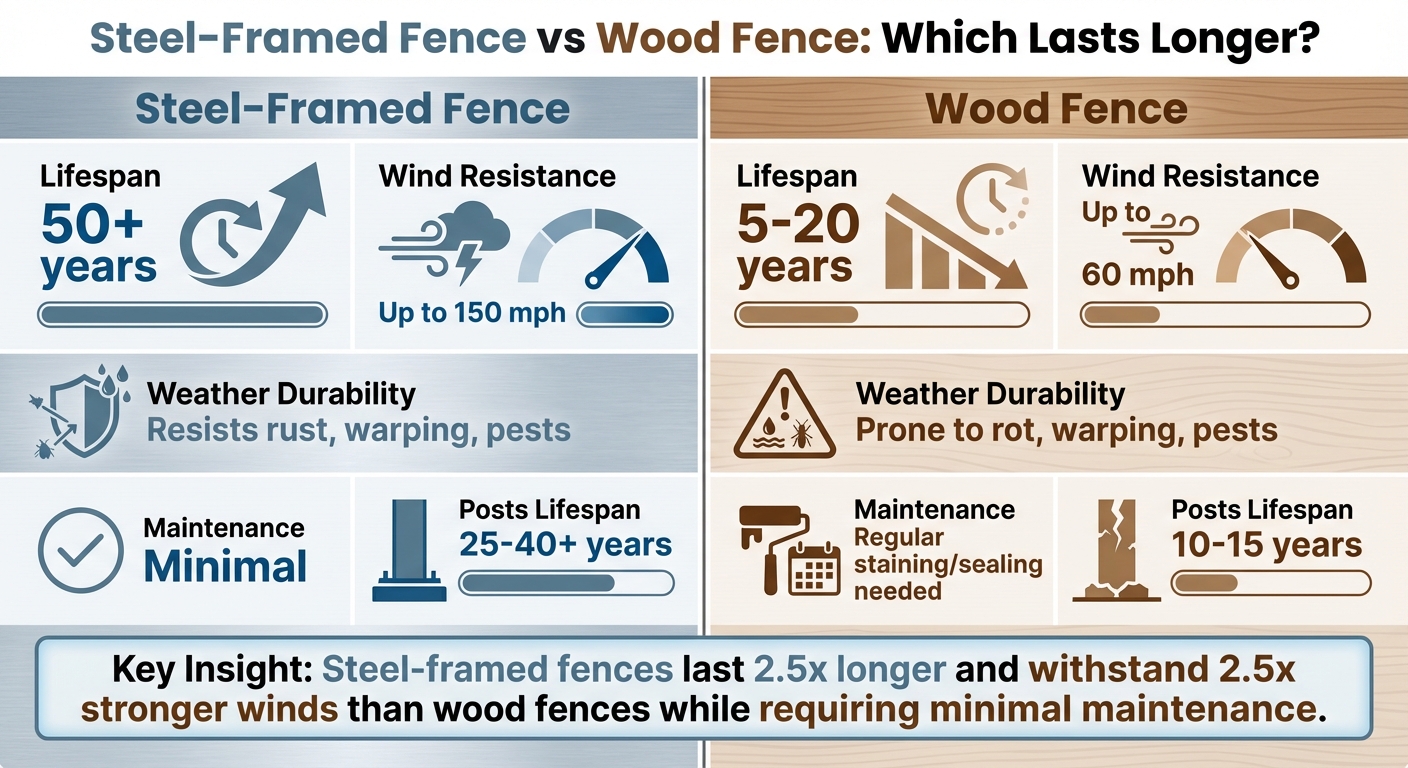
Steel vs Wood Fence Comparison: Lifespan, Wind Resistance, and Maintenance
How FenceTrac Steel Framed Fences Hold Up Over Time
Wind Resistance
FenceTrac’s patented U-channel system is built to handle tough conditions, using 18-gauge galvanized steel to create a rigid frame that can withstand winds up to 150 mph. Unlike traditional wood fences, which rely on numerous fasteners that can fail under pressure, FenceTrac panels are secured with a 4-bolt assembly and self-tapping screws for a firm and reliable hold.
The system’s heavy-duty steel posts – available in sizes ranging from 2″ to 4″ square – are designed to anchor deeply into the ground, providing superior stability compared to wood posts. In areas prone to high winds, like Kansas City, steel posts are a popular choice because they can flex slightly under pressure without splitting or cracking.

Thanks to its modular design, the steel frame can adjust to sloped terrain while maintaining its strength. This flexibility eliminates gaps or weak spots, which are common in wood fences that have been modified to fit uneven ground.
These wind-resistant features are paired with advanced weather protection, ensuring the fence remains durable for years to come.
Weather Resistance
FenceTrac is designed to handle more than just strong winds – it’s built to stand up to various weather challenges.
Each component goes through a rigorous multi-stage treatment process, including zinc phosphate pre-treatment and a baked-on TGIC polyester powder coat. This industrial-grade finish provides a high level of weather protection. In fact, the coating is tested to resist 1,000 hours of salt spray (ASTM B117) without failing.
The galvanized steel base is treated with a G-90 coating designation (0.90 oz per sq ft), which ensures protection even if the outer finish gets scratched. This combination of treatments prevents rust and corrosion, two issues that often plague untreated metal. Additionally, the steel framework, with a minimum yield strength of 45,000 psi, remains stable regardless of changes in humidity or temperature. By comparison, wood frames tend to warp, twist, or crack as they age, leading to structural weaknesses over time.
Lifespan and Maintenance
The FenceTrac system is built to last, offering impressive durability and requiring very little upkeep.
With proper installation, FenceTrac fences can last 50+ years, while their steel posts remain structurally sound for 25–40+ years. This lifespan far exceeds that of wood posts, which often need replacing after just 10–15 years due to rot or insect damage at ground level.
"Because the frame and post are metal, they will last for many years to come." – Rick Dodson, President, Dodson & Associates
Maintenance is straightforward. Unlike wood fences that require staining or sealing every few years, FenceTrac’s powder-coated steel frame only needs occasional cleaning. The steel components won’t rot, warp, or twist, eliminating the common failure points of traditional fencing.
If an infill board is ever damaged by weather or debris, repairs are simple. All you need to do is remove the top rail, slide out the damaged board, and replace it – no need to dismantle entire sections or wrestle with rusted fasteners. This ease of repair adds to the system’s long-term appeal.
How Wood Fences Hold Up Over Time
Wind Resistance
Wood fences face unique challenges when it comes to high winds. Unlike steel frames, they catch the wind much like sails, putting extra strain on the structure. A well-constructed wooden fence can typically handle winds up to 60 mph without major damage. However, privacy fences often start showing signs of stress at wind speeds exceeding 30 mph. Taller fences are particularly susceptible, especially in winds over 40 mph, where inadequate bracing can lead to structural failure.

Over time, factors like rot, warping, and insect damage weaken the integrity of wood fences, increasing the likelihood of failure. Posts that aren’t buried deep enough – less than a third of the fence’s height – or the use of nails that loosen with age are common weak points. When failure occurs, it often manifests as leaning fences, detached panels, or complete collapses.
These wind-related vulnerabilities often set the stage for additional weather-related wear and tear.
Weather Resistance
Rain and snow are harsh on wood fences, promoting rot, mold, and fungal growth, especially when moisture is retained by vegetation or soil. Contact with the ground can shorten a fence’s lifespan by up to three years.
"Wood fence panels and pickets that touch the ground become affected by moisture and that can reduce the life by up to three years." – East Coast Fence
Sunlight also takes a toll, as UV rays cause wood to fade, crack, and weaken over time. Temperature swings lead to expansion and contraction, which can loosen fasteners and result in sagging or instability. Without regular staining or sealing, most wood species eventually weather to a grayish color. Posts, which are constantly exposed to ground moisture, generally last only 10 to 15 years. In areas with clay soil, the cycle of wet and dry conditions can cause posts to shift or loosen, especially if they’ve already been weakened by rot at the soil line.
"The biggest enemy of wood posts isn’t time – it’s moisture. Ground contact creates the perfect environment for rot and insect infestation, starting from the soil line and working up." – Emerson Beck, Author
Together, wind and weather significantly reduce the lifespan of wood fences.
Lifespan and Maintenance
The lifespan of a wood fence largely depends on the type of wood used. Pressure-treated pine typically lasts around 15 years, while more durable options like cedar, cypress, and redwood can last up to 25 years. For even greater longevity, composite fencing offers a synthetic alternative that resists rot entirely. On the other hand, less durable wood types, such as spruce, may only last 4 to 7 years.
Proper maintenance is essential for extending the life of a wood fence. Applying a water-repellent stain or sealer every 2 to 3 years helps protect the wood from water damage and UV rays. Annual inspections are also important to catch early signs of trouble, such as spongy wood, insect damage, or leaning posts, allowing for repairs before issues escalate. Additionally, trimming vegetation near the fence improves air circulation and minimizes moisture buildup.
Despite these efforts, repair and replacement costs for wood fences can add up over time. This highlights the durability advantages of FenceTrac steel-framed fences, which offer a sturdier alternative.
WOOD vs STEEL – Which Fence Post Should YOU Use?
sbb-itb-908b3eb
Side-by-Side Comparison: FenceTrac Steel Framed Fence vs Wood Fence
The FenceTrac modular steel-framed fence system offers commercial-grade strength by utilizing 18-gauge roll-formed galvanized steel. This design prevents the warping and twisting that often plague traditional wood fences. Wood fences, on the other hand, are prone to ground-level rot and decay, making them more likely to snap or lean during high winds. FenceTrac’s design ensures greater structural stability, even in harsh weather conditions.
What sets FenceTrac apart is its use of steel posts combined with a patented U-channel frame. This frame securely holds various infill materials, creating a sturdy structure built to handle severe weather. Unlike solid wood panels, which bear the full force of wind, the steel frame acts as a strong skeleton that can pair with different infill types to better manage wind loads. Additionally, the system features a textured TGIC polyester powder coat, offering exceptional resistance to the elements.

While wood fences require regular staining or treatment every two years to combat damage from moisture and structural wear, FenceTrac eliminates this hassle. Its powder-coated finish is virtually maintenance-free, designed to resist rust and withstand extreme weather. Moreover, FenceTrac is 100% termite and insect-proof, addressing a common weakness of wood fences. These advantages highlight why FenceTrac stands out as a more durable and reliable fencing option.
Comparison Table
The table below summarizes the key differences between FenceTrac steel-framed fences and traditional wood fences:
| Feature | FenceTrac Steel Framed Fence | Traditional Wood Fence |
|---|---|---|
| Lifespan | 50+ years | 5–20 years (varies by wood type/treatment) |
| Wind Performance | Designed for high winds; steel frame prevents snapping | Prone to leaning or snapping due to rot and weakened posts |
| Weather Resilience | Rust-proof powder coat; resists warping, twisting, and sagging | High risk of rot, warping, twisting, and bowing over time |
| Maintenance | Minimal; powder-coated finish resists rust | Requires frequent staining, sealing, and board replacement |
| Resistance to Pests | 100% termite and insect-proof | Highly vulnerable to insect damage and wood-boring pests |
| Warranty | 20-year limited manufacturer’s warranty | Typically none or very limited coverage |
Why FenceTrac Steel Framed Fences Last Longer
FenceTrac’s steel construction offers a durability that wood simply can’t match. The 18-gauge galvanized steel frame is resistant to rot, warping, and pests – three of the biggest culprits behind the early failure of wooden fences. Unlike wood, steel doesn’t absorb moisture or attract insects, which means it can last significantly longer. In fact, steel framing boasts an impressive average lifespan of 50 to 100 years, compared to the 40 to 60 years you might get from properly maintained wood. For untreated wood, the timeline is even shorter, making it a less dependable choice for the long haul.
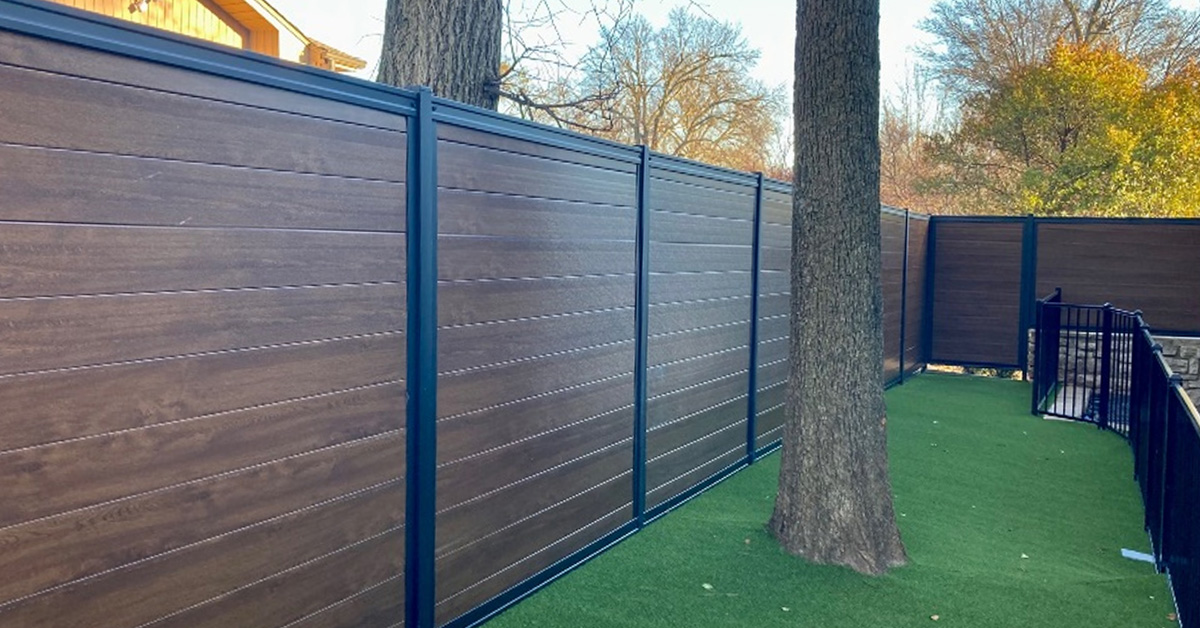
What really sets FenceTrac apart is the industrial-grade coating applied to the steel. This finish provides strong protection against moisture and UV damage, far outlasting the wood stains or sealants typically used to preserve wooden fences. While wood fences need re-staining every two years or repainting every four years to keep decay at bay, the FenceTrac system requires minimal upkeep, saving time and effort.
Although steel fencing may come with a higher upfront cost, its lower lifetime maintenance and repair expenses make it a smart investment. Repairs are simpler thanks to the modular design, and steel posts set in concrete eliminate the risk of ground-level rot – a common issue for wood fences in wet climates. In fact, when wood pickets come into direct contact with the ground, their lifespan can be cut short by as much as three years. FenceTrac’s steel posts completely avoid this problem, ensuring the fence remains structurally sound for decades.
FAQs
How well do steel-framed fences hold up against extreme weather compared to wood fences?
Steel-framed fences are designed to endure tough weather conditions, including strong winds, heavy rain, and shifts in temperature. Their durability comes from their ability to resist rust, warping, and moisture damage, ensuring they retain their shape and strength over time. Unlike wood fences, which may warp, rot, or even fail under similar circumstances, steel frames provide a sturdy and reliable alternative.
For a fence that stands up to the elements and remains strong for years, steel-framed options are a solid and dependable choice.
What kind of maintenance do steel-framed fences need compared to wood fences?
Steel-framed fences, such as those built with the FenceTrac system, are built to last with minimal effort required for upkeep. These fences feature steel posts that are either powder-coated or galvanized, providing strong resistance to rot, warping, and insect damage. Caring for them is straightforward – just inspect the fence once or twice a year to look for any coating damage or debris. If you spot any surface rust, it’s easy to fix with light sanding and a quick application of protective coating. Unlike wood fences, steel-framed fences don’t need staining, sealing, or frequent repainting, saving you time and hassle.
Wood fences, by comparison, require more hands-on maintenance to protect them from moisture, sunlight, and pests. This involves applying a sealant or stain every 2–3 years, repairing any split or rotting boards, and addressing potential termite issues. Additionally, fasteners like nails or screws can loosen over time and may need tightening or replacement. Overall, maintaining a wood fence demands more time and effort than a steel-framed alternative.
Are steel-framed fences more durable and cost-effective than wood fences over time?
Steel-framed fences might come with a higher upfront cost than wood fences, but they often save money in the long run. Unlike wood fences, which need regular maintenance like staining or sealing and are prone to issues like rot, warping, or insect damage, steel fences are designed for durability. When properly coated, steel resists rust, pests, and weather damage, often lasting 30–50 years with little upkeep. In contrast, wood posts typically last only 10–15 years.
This durability translates into fewer repairs, replacements, and maintenance over time, making steel-framed fences a smart long-term investment. While the initial cost may be a few thousand dollars higher, the extended lifespan and reduced maintenance costs typically offer better overall value over a 20- to 30-year period.