
If you want a fence that lasts longer, steel posts beat wood posts.
We found the core difference fast: wood loses strength as it sits in soil, while steel keeps its shape and load rating for years.
For you, that means a simple tradeoff.
- Wood posts can rot, crack, warp, lean, and loosen around fasteners
- Steel posts do not rot, stay straight, and hold up better in wind
- A 4×4 wood post can drop from 996 lb of lateral force capacity to about 440 lb after 10 years
- A 3-inch, 12-gauge steel post holds about 1,130 lb
- Wood posts often last 10 to 20 years
- Steel posts often last 30 to 75+ years
The short version?
Wood usually fails at the ground line. Steel usually avoids that problem.
That matters most when you have solid fence panels, wet soil, poor drainage, or high wind.
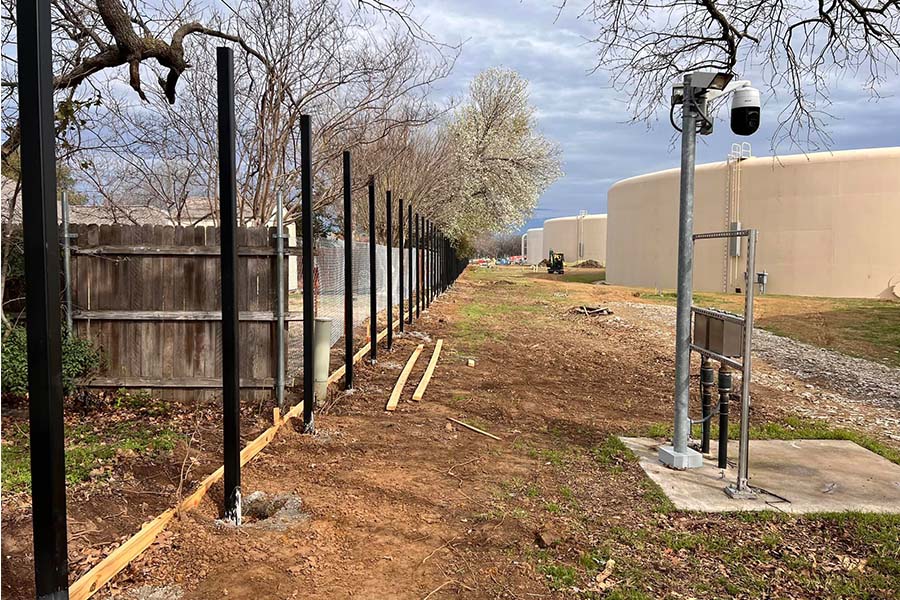
Wood Fence | Why Steel Posts Make For Better Wood Fences
sbb-itb-908b3eb
Quick Comparison
| Factor | Wood Posts | Steel Posts |
|---|---|---|
| Rot | Yes, especially at ground line | No rot |
| Shape over time | Can warp, crack, and move | Stays straight |
| Wind performance | Loses strength with age | Holds strength over time |
| Common failure | Snap, lean, or decay at soil line | Bend before full failure |
| Lifespan | 10 to 20 years | 30 to 75+ years |
In other words, wood may cost less up front, but steel usually gives you more years with fewer post problems.
Wood Posts: How They Fail Over Time
The first weak spot usually shows up at the ground line.
Rot at the Ground Line
Wood often fails first right at the ground line, where soil and moisture keep the post damp.
That spot matters for strength too, because it also sees the highest bending stress.
As rot eats away at the wood, the post’s working cross-section gets smaller, and its bending strength drops fast.
Ground-line decay can reduce bending capacity in a hurry.
Pressure-treated wood slows rot, but it does not stop it.
Warping, Cracking, and Fastener Loosening
Wet-dry cycles create cracks that move inward through the post.
As those cracks spread, the post gets less stiff, and the fence can start to drift out of line.
Nails and screws that once held tight begin to loosen.
Wind makes this worse by applying repeated force over time, which works fasteners loose bit by bit.
This tends to show up most where rails meet posts at the cut end, which is a weak connection point.
"Wind does not usually snap fence boards in half. It exploits the weakest connection in the system and works outward from there." – FenceTrac
The post-to-footing connection takes a hit too.
As wood swells and shrinks, it can break the seal between the post and its concrete footing, which lets water collect right at the ground line.

Bending, Leaning, and Footing Failure in Wind
Under load, weak footings and softened wood can start to rotate or lean.
If footings are too shallow, too narrow, or set in loose soil, the post may rotate in the ground.
That lean often grows over time, especially in areas with soil movement or footing trouble.
Unlike steel, wood posts can fail without much warning at the ground line.
They often snap at a knot or a pocket of decay.
In high winds, weakened wood posts often fail at the ground line.
Poor footing design and bad drainage speed up this process.
Expansive clay soils can heave the footing and open gaps that let moisture reach the post.
These problems tend to pile on each other, turning a small shift into full post failure.
| Footing/Drainage Issue | Impact on Wood Post Performance |
|---|---|
| Shallow or narrow footings | Leads to lateral post rotation and leaning under wind load |
| Expansive clay soil | Causes seasonal heaving and opens gaps for moisture intrusion |
| No gravel at the base | Allows the post bottom to sit in standing water, speeding up rot |
| Flat concrete tops | Collects water at the ground line, the most vulnerable decay point |
That failure path is what steel posts avoid.

Steel Posts: Strength and Stability Over Time
Steel behaves differently from wood.
It doesn’t soak up moisture, so it doesn’t twist, warp, shrink, or swell through wet and dry cycles.
That means straighter fence lines and hardware that stays lined up when the wind starts pushing.
No Rot, No Warp, and Straighter Fence Lines
Steel stays straight through rainy seasons and dry stretches because moisture doesn’t get into it.
When posts stay straight, fence lines look straight, gates swing the way they should, and rails stay where you put them year after year.
More Consistent Bending Strength Under Load
Here’s where the gap gets hard to ignore.
A 4×4 wood post that loses just 1/4 inch of effective material on each face from ground-line decay loses 37% of its original bending capacity.
After 15 to 20 years in ground contact, that same post often drops to below 25% of its day-one strength.
Steel posts keep their rated strength for the life of the fence.
And a 3-inch commercial steel post is 2.5 times stiffer than a standard 4×4 wood post, which helps fence lines stay in place under wind pressure.
Wood posts also tend to fail in a harsher way.
They can snap at knots or hidden decay pockets.
Steel usually bends first, which gives you warning before failure instead of sudden total breakage.
| Post Type | Lateral Force (at 3 ft) | Failure Mode |
|---|---|---|
| 2-1/2″ × 2-1/2″ 14ga Steel | 569 lb | Bends, stays intact |
| 3″ × 3″ 12ga Steel | 1,130 lb | Bends, stays intact |
| 4×4 SYP Wood (3.5″ actual) | 996 lb | Snaps, total failure |
| (Source: FenceTrac Engineering Values [1]) |
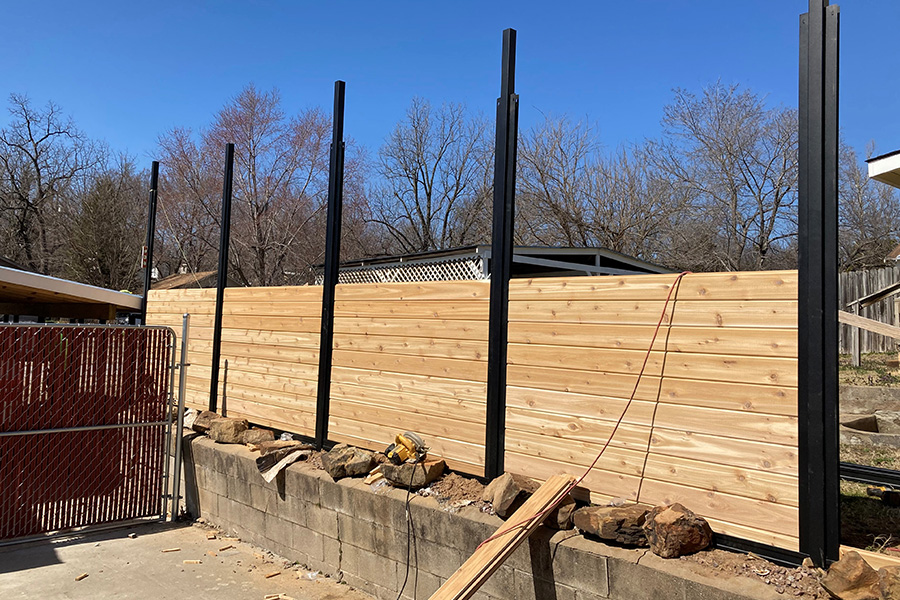
Corrosion Control and Steel-Frame Fence Systems
Strength only matters if the post can keep that strength over time.
That’s where coatings and footing details come in.
G90 galvanization, which is 0.90 oz of zinc per square foot, puts a sacrificial layer over the steel to protect it from rust.
A powder-coated finish adds another layer, helping shield the zinc from UV exposure, moisture, and chemicals in the air.
Used together, these coatings can give galvanized steel posts a functional lifespan of 40 to 75+ years, compared with 7 to 20 years for pressure-treated wood.
The install details matter too.
A gravel drainage base at the bottom of the post hole helps stop water from sitting around the post base, which is the most common failure point if the coating gets scratched during installation.
Post depth also plays a big role.
Setting posts at least 24 to 30 inches deep, and up to 36 inches in wet or expansive clay soils, helps keep them from rotating under load.
FenceTrac uses these same steel-post ideas in its patented U-channel steel frame system.
Heavy-duty steel posts anchor the frame, and testing showed the system could withstand an 82.5 psf structural load with no damage to fasteners.
The infill can change without changing the frame strength.
Those structural differences become clearer in the side-by-side comparison next.

Wood Posts vs. Steel Posts: Side-by-Side Structural Comparison
Put them next to each other, and the gap shows up fast.
The biggest differences come down to moisture, movement, and how each post deals with wind load.
| Factor | Wood Posts (4×4 Treated) | Steel Posts (Galvanized/Powder-Coated) | Common Failure Point | Effect on Fence Lifespan |
|---|---|---|---|---|
| Moisture and Shape Stability | Swells, shrinks, warps, and cracks with moisture cycles; high susceptibility to ground-line rot | Not affected by rot; dimensionally stable and stays straight | Transition zone where air, moisture, and soil meet | Rot and warping shorten post life and pull fence lines out of alignment |
| Connection Stability | Nails and screws loosen from cyclic fatigue; shrink-swell cycles loosen the concrete footing bond | Steel connections stay tight under wind load; consistent profile keeps the footing bond intact | Repeated wind gusts and moisture cycling over time | Loose connections and footing gaps lead to leaning and rotation in wind |
| Bending Strength | 996 lb at installation; about 440 lb after 10 years of ground contact | 1,130 lb for a 3-inch, 12-gauge post, maintained over time | Ground-line decay reduces cross-section | Strength loss accelerates as decay advances |
| Lifespan | Typically 10–20 years | Typically 30–75+ years | – | Steel posts maintain structural capacity long after wood posts require replacement |
The table gives you the short version.
The hard part is what happens later, because the gap gets bigger with time.
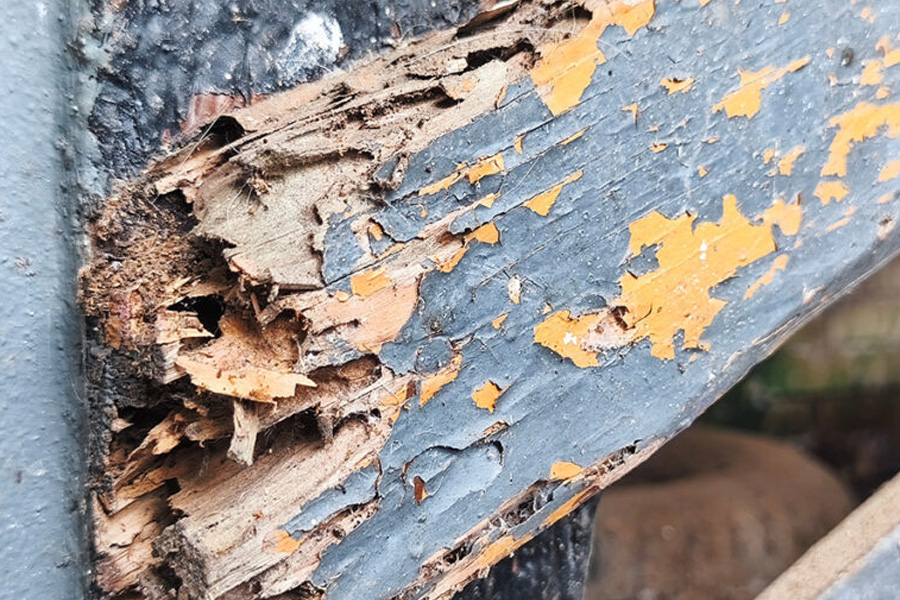
Rot, Warp, and Fastener Pullout
Wood starts losing the structural case before the first major storm hits.
The trouble begins at the ground line, where air, moisture, and soil meet.
That area takes the most abuse, and it’s where decay usually starts.
A loss of just 1/4 inch of effective wood per face cuts a 4×4 post’s bending capacity by 37%.
That’s not some rare edge case.
It’s a normal result of repeated moisture exposure.
Then warping joins the party.
As wood expands and contracts through wet and dry seasons, fasteners get pushed and pulled over and over.
Over time, nails and screws loosen through cyclic fatigue.
Once that starts, rails shift.
Panels move.
Gaps open.
And the fence can look old long before it should.

"The wood post’s advantage comes from its bulk… Wood loses cross-section as it decays, so strength drops." – FenceTrac
Bending Strength, Footing Support, and Wind Resistance
The numbers here are hard to ignore.
At installation, a standard 4×4 Southern Yellow Pine post can handle 996 lb of lateral force.
After 10 years in the ground, that same post drops to about 440 lb.
That’s less than half.
A 3-inch, 12-gauge steel post holds a 1,130 lb rating over time.
In other words, steel doesn’t slowly give away its edge just from sitting in the soil.
Footing depth still matters.
Setting posts at least 24 to 30 inches deep helps resist rotation.
For corner, end, and gate posts in clay or wet soils, 30 to 36 inches is recommended.
But there’s a catch.
Wood changes size as moisture changes.
That movement can loosen the bond with the concrete footing.
Steel keeps the same profile, so the footing stays tight.
That steady load path matters more than it sounds.
A small weakness at the post can turn into full fence failure after enough storms.

How Early Post Failure Raises Long-Term Costs
Wood often wins on sticker price at the start.
A 4×4 treated post usually costs less in materials than a steel post.
But the math changes once repairs start stacking up.
Sealing adds labor and upkeep.
Loose fasteners mean callbacks.
A leaning or failing post can lead to a much bigger repair than the post alone.
That’s the part many buyers don’t see on day one.
Steel avoids much of that cycle by holding its strength and shape for the long haul.
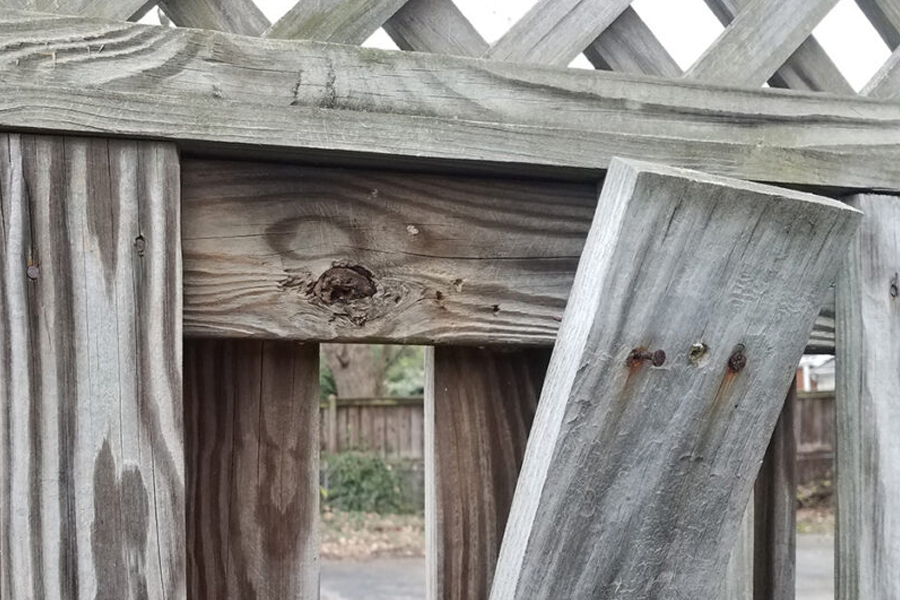
Conclusion: Which Post Type Supports a Longer-Lasting Fence
Steel posts support a longer-lasting fence.
Across rot, warp, footing support, and wind load, the pattern is clear: steel lasts longer.
Wood posts tend to fail where the stress is highest, right at the ground line.
That’s where moisture builds up, bending pressure hits hardest, and problems like rot, warp, and loose fasteners usually begin.
Steel avoids those weak points.
It doesn’t soak up moisture, it doesn’t decay, and it keeps its rated strength over the life of the fence.
"The performance gap between steel and wood is modest at installation. After a decade of moisture cycling, rot, and insect exposure, the gap is not close." – FenceTrac
Footing design still matters no matter which material you pick.
Posts set at the right depth, with proper drainage, handle shifting soil and high winds better.
But there’s a catch.
Even when a wood post is installed well, it’s still wood, and wood decays in the ground in ways steel simply does not.
For long-term ownership, steel usually brings a lower total cost because it helps you avoid repeat repairs and full post replacement.
Steel posts typically last 30 to 75+ years, while wood posts usually last 10 to 20 years.
For a fence system built around that idea, FenceTrac pairs steel posts with a patented U-channel steel frame system.
You also get infill options like composite, PVC, aluminum, cedar, and more.
That gives homeowners and contractors design flexibility without giving up durability.
Steel helps hold alignment, resists wind load, and extends fence life.
That makes FenceTrac a strong fit for fence designs built to last.
FAQs
Are steel fence posts worth the higher upfront cost?
Yes. Steel fence posts are usually the better long-term investment, even if they cost more at the start.
Wood posts are cheaper upfront.
But they’re more likely to rot, warp, and get hit by termite damage.
That often means repairs or full replacement within 10 to 15 years.
Steel posts hold up better against those problems.
And they can last 30 to 50 years with almost no maintenance.
How can I make wood fence posts last longer?
To make wood fence posts last longer, focus on the main cause of failure, ground-line rot.
Pressure treatment slows decay, but it does not stop the moisture cycle that breaks down wood fibers over time.
Use proper installation standards and set posts at the right depth.
Keep the concrete footing crowned above grade so water drains away instead of pooling around the post.
Trim nearby vegetation so the area can dry out.
Apply a water-repellent stain or sealer every 2 to 3 years.
Do steel posts need concrete and drainage too?
Yes.
Steel posts sit in concrete footings so the fence has the stability it needs to handle wind loads and ground movement.
Just like wood posts, they still need to be installed the right way.
The big difference is that galvanized steel keeps its shape over time, which helps it hold a tight bond with the concrete for the life of the fence.
Related Blog Posts
- Composite vs. Wood Fence Infill: Which Lasts Longer?
- Steel Framed Fence vs Wood Fence – Which Option Lasts Longer in Wind, Weather, and Time
- Why Wood Fences Warp, Lean, and Sag and How the FenceTrac Steel Fence Frame Solves the Problem
- Why Contractors Are Switching to Steel Framed Fence Systems for Fewer Callbacks