
Vinyl fencing is quickly becoming the go-to choice for commercial properties. Why? It lasts longer, requires almost no maintenance, and handles harsh weather better than wood or metal. Plus, it saves money over time.
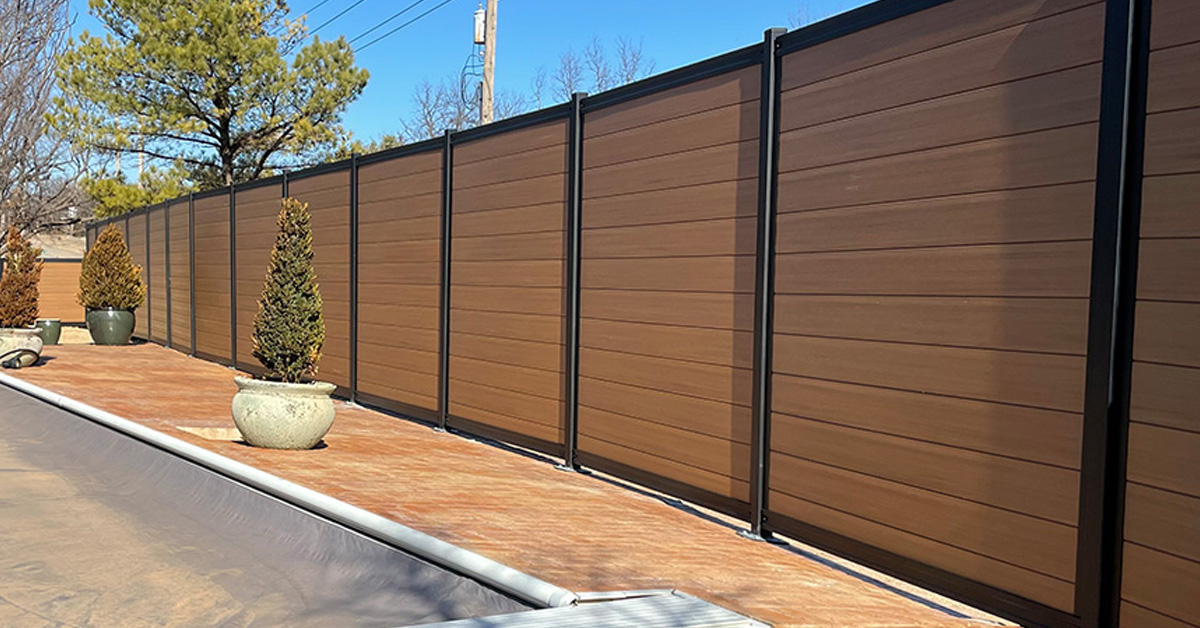
Here’s the big picture:
- Durability: Resists UV fading, rot, rust, moisture, and insects.
- Low Maintenance: No painting, staining, or rust-proofing needed – just rinse it occasionally.
- Cost Savings: Higher upfront cost, but 35–50% cheaper over 20 years.
- Design Options: Wide range of colors, finishes, and layouts (vertical, horizontal, or privacy panels).
- Faster Installation: Modular systems like FenceTrac cut labor time by up to 75%.
FenceTrac takes it further with a steel frame system, boosting strength and wind resistance while simplifying installation. It even works on uneven terrain without custom builds.
For developers, this means fewer headaches, faster timelines, and long-lasting results.
Problems with Wood and Metal Fencing in Commercial Projects
Frequent Repairs and Short Service Life
Wood fencing doesn’t hold up well against moisture, temperature changes, or insect damage. These issues lead to frequent repairs and ongoing maintenance, which can disrupt business operations. Metal fencing, while sturdy at first, is prone to rust in harsh weather or coastal areas. In high-risk zones, property owners may also require fire-rated fencing to ensure safety and compliance. This means regular repainting and protective treatments are necessary. Both options typically need to be fully replaced every 10–15 years, making them expensive to maintain over time.

Limited Design Flexibility for Commercial Spaces
Traditional wood and metal fences often fall short when it comes to design versatility. While wood can be stained, it doesn’t offer the wide range of colors and finishes that modern commercial properties demand. Metal fencing, on the other hand, lacks the ability to provide fully enclosed privacy or adapt to diverse aesthetic needs. This lack of flexibility is a drawback for spaces like multifamily housing, corporate campuses, or industrial sites, where appearance plays a key role in attracting tenants, clients, or investors.
Time-Consuming Installation and Higher Labor Costs
Installing wood or metal fences is a time-intensive process. Wood requires each board to be placed and treated individually, while metal often involves welding and precision work. These factors lead to delays and increased labor costs. For commercial projects with tight deadlines – like multifamily developments or corporate expansions – these extended timelines can strain project budgets.
These challenges emphasize the need for fencing solutions that simplify maintenance and installation, making vinyl an appealing alternative for commercial projects.
sbb-itb-908b3eb
Benefits of Vinyl Fencing for Commercial Properties
Weather Resistance and Minimal Upkeep
Vinyl fencing stands out as a reliable solution for commercial properties that want to avoid the hassles of frequent repairs common with wood and metal fences. It resists rot, warping, and pest damage, ensuring durability even during extreme weather or daily temperature swings. Thanks to ultraviolet inhibitors, vinyl maintains its color under harsh sunlight and withstands exposure to chemicals or pollutants, making it especially practical for industrial settings. Maintenance is a breeze – an occasional rinse with water is all it takes. This eliminates the ongoing costs of painting, staining, or sealing, leading to lower long-term expenses.
More Design and Color Choices
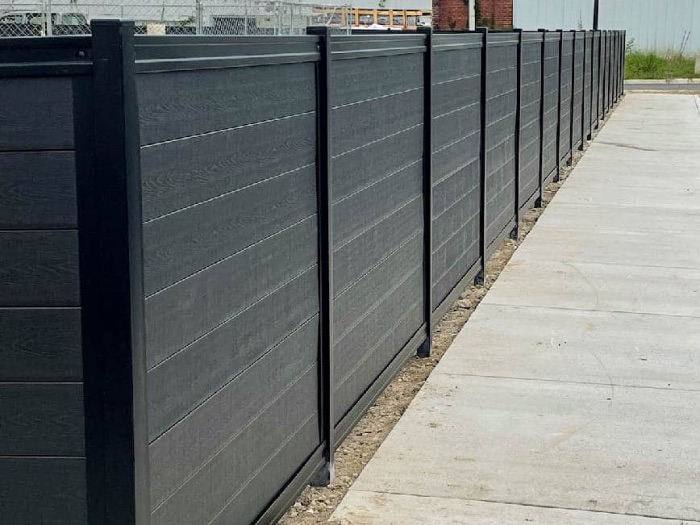
Traditional fencing materials often lack flexibility in design, but vinyl changes the game with a variety of options tailored for commercial needs. Whether you prefer the charm of a white picket fence, the sleek look of horizontal designs, or the privacy fence options, vinyl can match your vision. This adaptability allows property owners and developers to align fencing with their branding or architectural style, whether it’s for multifamily housing, corporate campuses, or industrial facilities. With a range of colors, finishes, and wood-grain textures available, vinyl fencing enhances the property’s appearance without compromising functionality.
Lower Total Ownership Costs
While vinyl fencing may require a larger upfront investment, the long-term savings more than make up for it. Its durability and low maintenance needs cut down on recurring costs, such as painting, staining, sealing, or rust prevention, which are common with wood and metal alternatives. A well-kept vinyl fence can also boost property value, offering a solid return on investment. For commercial developers working within tight budgets, vinyl provides an effective way to ensure lasting performance and reduce operational expenses. These benefits make vinyl fencing a smart choice for businesses focused on long-term results.
FenceTrac: Modular Steel Frame System for Commercial Vinyl Fencing
Vinyl fencing is already known for its durability and low-maintenance benefits, but the FenceTrac U-channel steel frame system takes it a step further for commercial use. This modular system replaces traditional wood posts and rails with heavy-duty, powder-coated steel posts and galvanized U-channel frames. The result is a patented, rigid structure that secures infill materials while eliminating issues like rot, warping, sagging, and decay.

Built for Strength and Wind Resistance
The FenceTrac system isn’t just durable – it’s built to handle extreme conditions. Its steel framework has been tested to withstand winds up to 150 mph when installed correctly, far exceeding the 90–110 mph range where standard vinyl fences typically fail. This strength comes from 14-gauge steel U-channels designed to handle high loads, making it a reliable choice for areas prone to strong winds, such as coastal regions and industrial zones. Additionally, its design allows for faster and more cost-efficient installation.
Efficient Assembly with Versatile Infill Options
Time is money in commercial projects, and FenceTrac’s modular design speeds up installation by 30–40% compared to traditional welded systems. The process is straightforward: set the posts, clip horizontal U-channel rails into place (no welding required), and insert the infill materials. This simplicity can lower labor costs by as much as 50%. The system supports a variety of infill materials, including UltraBlend composite-vinyl boards for privacy, LuxeCore for added security, and other materials for semi-privacy needs. This adaptability makes it suitable for a wide range of commercial applications.
Adapts to Challenging Layouts
Commercial properties often have uneven terrain, and FenceTrac is designed to handle these challenges with ease. Its rackable frames adjust to slopes and irregular ground without requiring custom fabrication. The system also supports both horizontal and vertical board orientations, giving architects the flexibility to create either modern or traditional designs within the same framework. Standardized connectors make it easy to integrate gates, corners, and property boundaries, reducing the need for on-site adjustments and simplifying approvals for municipal or multifamily projects.
"We’ve used the FenceTrac System for several of our housing developments. The clean look is perfect for perimeter fencing and entrances. Because the frame and post are metal, they will last for many years to come."
– Rick Dodson, President, Dodson & Associates
UltraBlend and LuxeCore: High-Performance Infill Boards
FenceTrac accommodates a variety of infill materials, but UltraBlend and LuxeCore stand out for commercial projects. These boards incorporate ASA (Acrylic-Styrene-Acrylonitrile) encapsulation, a resin commonly used in automotive manufacturing, to provide exceptional UV resistance and weather durability – far surpassing standard PVC options. By integrating these advanced materials, FenceTrac delivers tailored solutions for demanding commercial environments.
UltraBlend: Composite-Vinyl Boards Built to Last
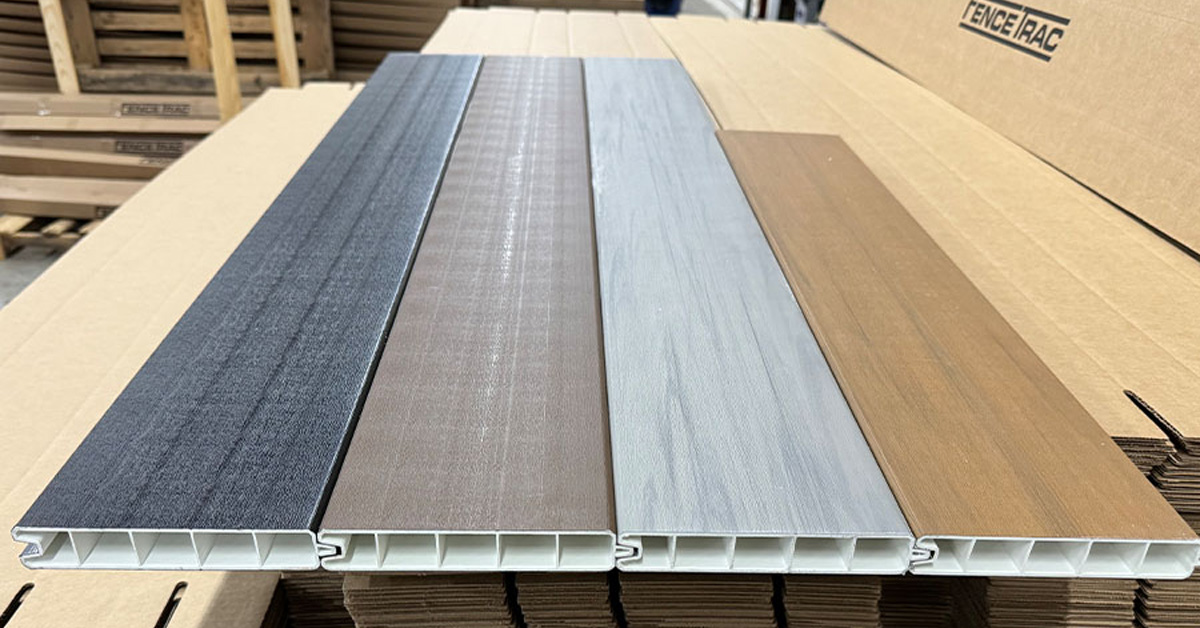
UltraBlend boards are engineered to outperform traditional materials thanks to a reinforced center web and double wall thickness, offering outstanding impact resistance.
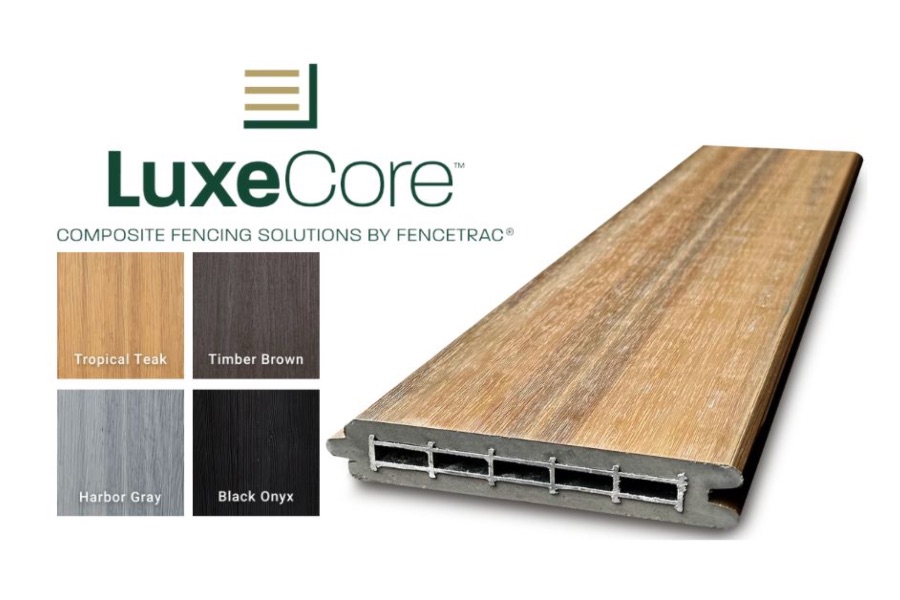
The video above highlights this durability: while conventional composite and vinyl boards often crack or collapse under stress, UltraBlend and LuxeCore retain their structural integrity. UltraBlend is particularly suited for high-wind or high-impact commercial settings. Available in four wood-grain finishes – Black Onyx, Harbor Gray, Timber Brown, and Tropical Teak – these boards offer design flexibility without compromising strength. Maintenance is minimal, requiring only a periodic rinse with soap and water, and they provide a service life exceeding 20 years.
LuxeCore: Heavy-Duty Boards for Demanding Applications
LuxeCore boards feature a cellular PVC core, weighing approximately 10 lbs per board – double the weight of UltraBlend. This contributes to their superior rigidity and a perfect 5/5 impact resistance rating. LuxeCore is ideal for challenging environments like coastal areas with strong winds, industrial perimeters, or municipal projects with strict code requirements.
The dense composition of LuxeCore ensures stability in extreme temperatures, preventing sagging or warping that lighter materials might experience. Backed by a 20-year structural guarantee, LuxeCore delivers reliable performance over the long term. Like UltraBlend, LuxeCore is low-maintenance and nonporous, resisting moisture, rot, mold, and mildew. While LuxeCore comes at a higher price point, its durability and reduced upkeep make it a smart investment for commercial projects where reliability is key. Both board types are also 100% recyclable and free of wood, aligning with environmentally conscious development goals.
Cost Analysis and Installation Time Comparison
20-Year Ownership Cost Breakdown
When comparing the costs of a 100-ft, 6-ft high commercial fence, the initial investment varies widely depending on the material. Wood fencing costs $15–$25 per linear foot ($1,500–$2,500 total), welded metal ranges from $20–$35 per linear foot ($2,000–$3,500 total), and FenceTrac vinyl systems are priced at $25–$40 per linear foot ($2,500–$4,000 total). While FenceTrac may have a higher upfront cost, the long-term financial picture is quite different.
Wood and metal fences come with annual maintenance expenses that add up over time. In contrast, FenceTrac requires minimal upkeep, costing only $20–$50 per year for occasional cleaning. Over 20 years, this totals just $400–$1,000, leading to overall savings of 35–50% compared to wood and metal options. This makes FenceTrac a cost-effective choice in the long run.
| Fence Type | Upfront Cost (100 ft) | Installation Time | Annual Maintenance | Durability (years) | Total 20-Year Cost |
|---|---|---|---|---|---|
| Wood Fencing | $1,500–$2,500 | 3–5 days | $200–$500 | 10–15 | $8,000–$15,000 |
| Welded Metal | $2,000–$3,500 | 3–4 days | $100–$300 | 15–20 | $6,000–$12,000 |
| FenceTrac Vinyl | $2,500–$4,000 | 1–2 days | $20–$50 | 25–50+ | $4,000–$6,500 |
In addition to savings over time, FenceTrac also offers quicker installation, which reduces labor costs and project timelines.
Faster Installation with Less Labor
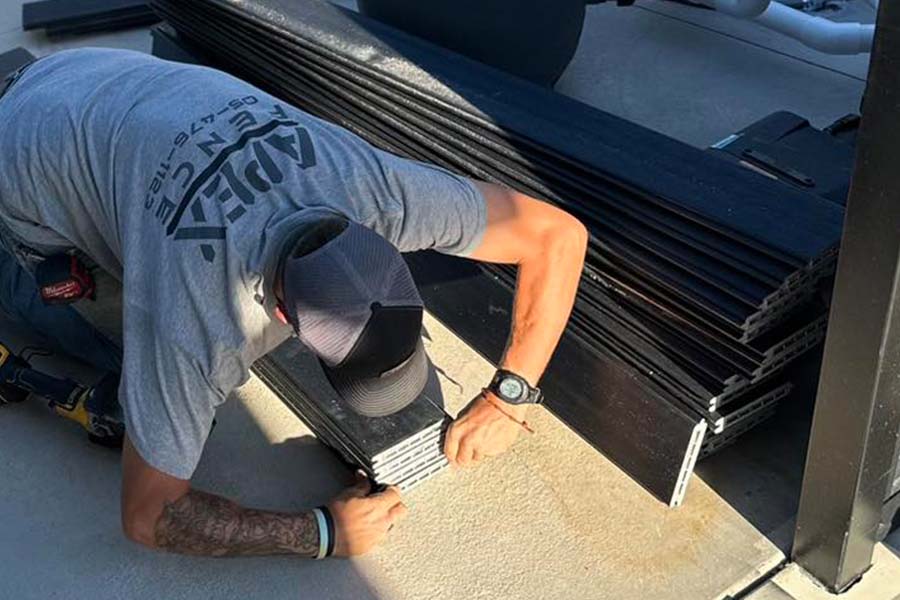
FenceTrac’s design isn’t just about durability – it also simplifies installation, saving both time and money. Thanks to its modular construction, FenceTrac cuts installation time by 50–75% compared to traditional fencing methods. For a 100-ft fence, assembly takes just 4–8 labor hours, compared to the 24–40 hours needed for wood or metal fences.
This efficiency translates into significant labor savings, ranging from $1,000–$2,500 per 100 ft. Wood fences require extensive site preparation and finishing, while welded metal fences involve on-site welding and specialized tools. FenceTrac eliminates these steps with its snap-together components, making it a hassle-free option.
The reduced labor and streamlined process also minimize disruptions, which is especially important for active commercial spaces like warehouses or corporate campuses. Combined with its long-lasting durability, these advantages make FenceTrac a strong choice for commercial fencing projects.
Commercial Applications of Vinyl Fencing Systems
The combination of FenceTrac’s modular steel frame system and advanced infill boards offers cost efficiency and design flexibility for a wide range of commercial uses.
Multifamily Housing and Apartment Complexes
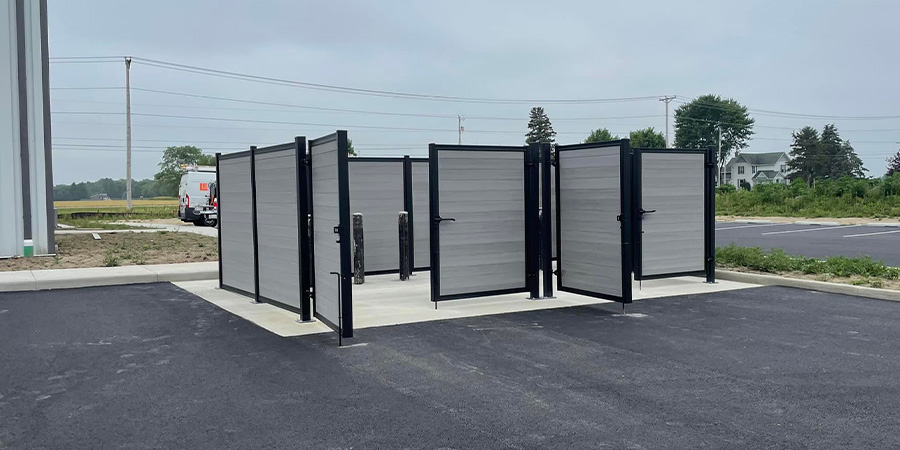
FenceTrac’s modular steel frame system, paired with UltraBlend composite-vinyl infill boards, creates tall, modern privacy panels that enhance both security and aesthetics. This setup is ideal for large apartment complexes, as it allows for quick installation around perimeters, pools, parking lots, and entryways. The curved or angled designs provide a sleek alternative to traditional welded metal fences, improving curb appeal and reducing noise in high-density areas. The nonporous ASA-encapsulated boards resist scratches and stains, requiring only occasional pressure washing instead of the frequent maintenance associated with wood. These features make it easier to maintain a polished look, which is critical in competitive rental markets. Corporate and public projects also benefit from these durable and visually appealing designs.
Corporate Offices and Public Spaces
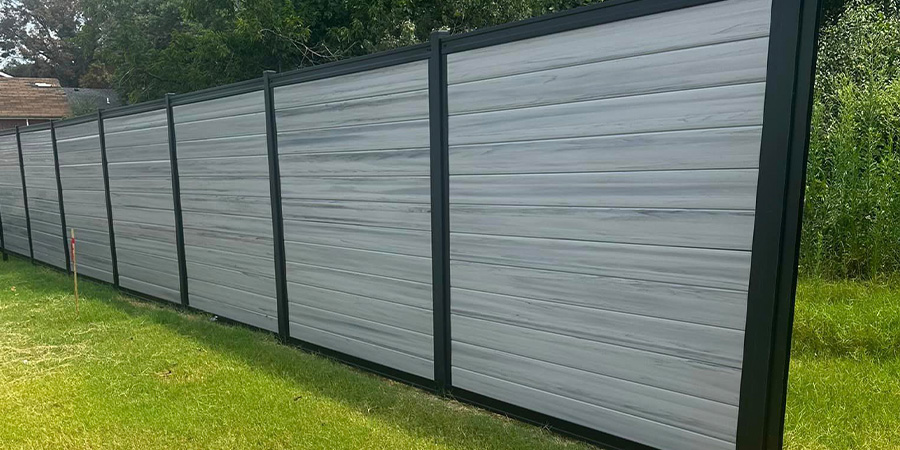
FenceTrac’s steel framing, combined with LuxeCore or UltraBlend infill boards, provides a professional, low-maintenance fencing solution for corporate and public spaces. The ASA encapsulation technology ensures the vinyl finishes resist fading and scratching, maintaining their appearance without the need for painting or staining. This durability meets both aesthetic and functional needs while reducing upkeep costs. In public parks and municipal facilities, FenceTrac systems are used to enclose playgrounds and green spaces, offering privacy and protection against unauthorized access. The design flexibility allows for seamless integration with landscaping, creating boundaries that align with community standards. Additionally, the system is effective for screening unsightly areas, such as dumpsters or AC units, and for adding high-end finishes to rooftop lounges or outdoor dining spaces.
Industrial Facilities and Warehouses
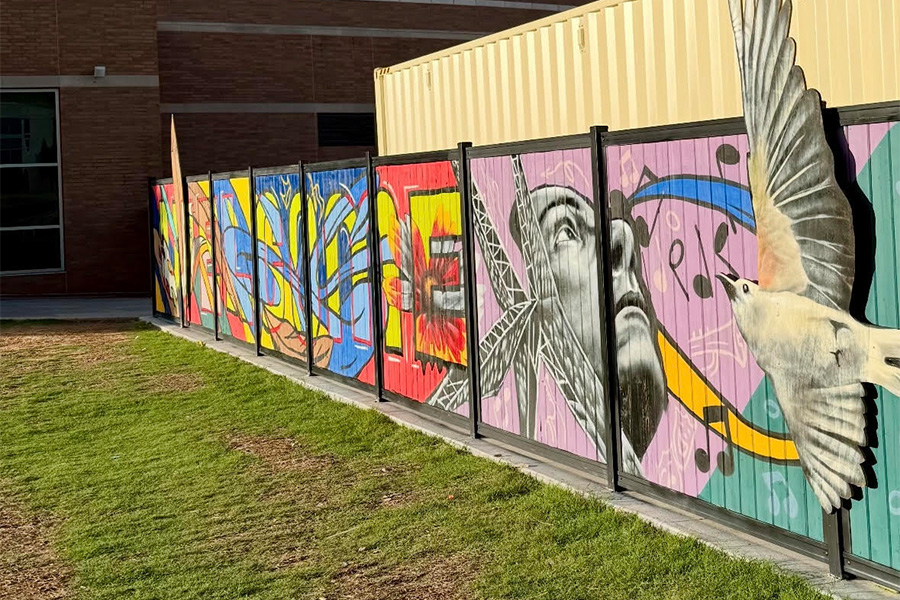
Industrial settings demand fencing that can withstand harsh conditions, and FenceTrac delivers with its modular steel frame system and LuxeCore high-performance boards. These fences are designed for wind resistance, impact durability, and protection against chemical exposure and corrosion. The thick, reinforced vinyl panels and steel frames provide a strong physical barrier, with options for taller heights and anti-climb features to secure warehouses and other facilities. Unlike traditional materials, these fences won’t rust or rot, even in extreme environments or near heavy machinery. The pre-engineered modular panels also reduce installation time by up to 50%, minimizing disruptions in busy industrial projects. This efficiency, coupled with the system’s low-maintenance design, can save 70–80% on upkeep costs over 20 years compared to wood, making it a practical choice for long-term use. Commercial contractors value FenceTrac’s ability to meet diverse project specifications while keeping costs and timelines in check.
Conclusion
Advanced vinyl fencing offers a practical solution for commercial projects by reducing costs, installation time, and ongoing maintenance issues. Over a 20-year period, wood fencing can cost around $52,000, while a vinyl system with FenceTrac averages closer to $25,000.
Products like UltraBlend and LuxeCore, both featuring ASA encapsulation, are designed to resist fading, cracking, and moisture, providing decades of reliable, maintenance-free use. LuxeCore stands out with its 20-year structural guarantee and top ratings (5/5) for longevity, durability, and color retention – well above wood’s 3/5 rating for longevity.
The modular design of these systems allows for a variety of layouts and color options, including horizontal, vertical, and curved configurations. With colors like Black Onyx, Harbor Gray, Timber Brown, and Tropical Teak, architects can align fencing with corporate branding, while contractors appreciate installation speeds that are two to three times faster than traditional welded metal systems. This not only reduces labor costs but also minimizes project delays, making it easier to gain approvals and enhance the overall appeal of a project.
For multifamily housing, corporate campuses, and industrial facilities, FenceTrac systems provide commercial-grade performance with superior wind resistance, impact durability, and chemical resistance. Unlike traditional wood or metal fencing, these systems eliminate recurring costs, making them a cost-effective choice. With faster installation, minimal maintenance, and a long service life, vinyl fencing with modular steel framing proves to be an ideal option for commercial applications.
FAQs
How do I choose between UltraBlend and LuxeCore?
Go with UltraBlend if you need a material that can handle impact, last over time, and require minimal upkeep – perfect for busy areas or spaces prone to moisture. For added strength, stability, and a sleek wood-like finish, LuxeCore is the better choice. It offers excellent resistance to weather and scratches, backed by a 20-year structural guarantee. Both deliver lasting performance and design versatility, but LuxeCore excels when premium looks and tougher conditions are priorities.
Will a FenceTrac system meet local wind and code requirements?
FenceTrac systems are built to align with local wind and building code standards. They adhere to ASCE 7-05 wind guidelines, ensuring durability and reliability even in regions prone to harsh weather.
What site conditions can slow down installation on commercial projects?
Certain site conditions can make installation take longer. For instance, humid or coastal areas can impact the longevity of materials like UltraBlend PVC, requiring extra care. Similarly, high winds and extreme temperatures can complicate and slow down the installation process. Preparing in advance for these challenges can help reduce potential delays.