
Dumpster areas often get overlooked, but their impact on property value, tenant satisfaction, and business image is huge. Poorly maintained enclosures lead to safety issues, zoning violations, and a negative perception of your property. Worse, traditional materials like wood, chain link, or masonry often fail over time, adding to repair and maintenance costs.
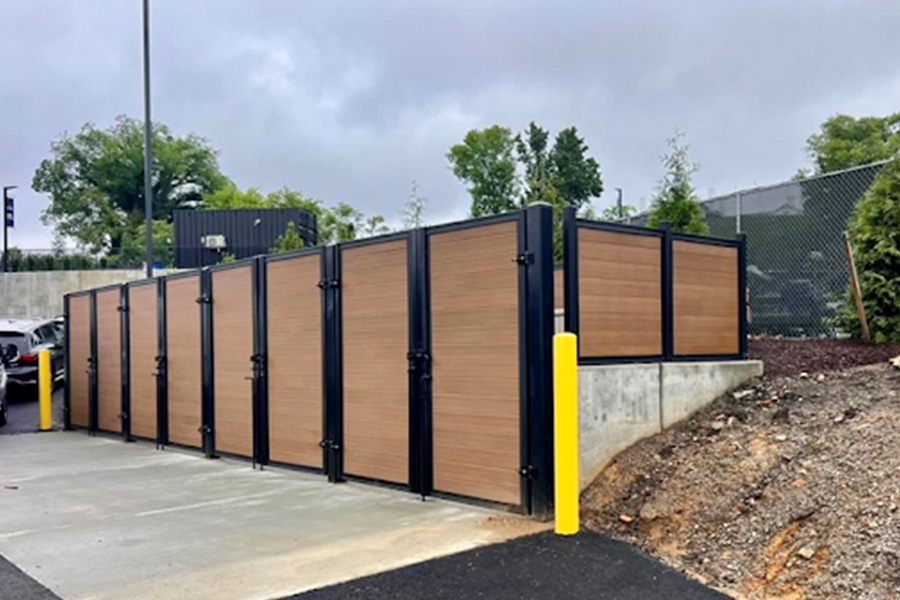
The solution? Steel frame systems like FenceTrac. These systems combine durable galvanized steel frames with customizable, low-maintenance infill panels, offering a long-lasting and visually appealing alternative to outdated enclosures. Key benefits include:
- Durability: Steel frames resist sagging, warping, and weather damage.
- Cost Efficiency: Lower long-term maintenance compared to wood or masonry.
- Customizable Design: Options like composite, PVC, or metal panels to match your property style.
- Code Compliance: Meets zoning and HOA regulations without sacrificing aesthetics.
FenceTrac transforms dumpster enclosures into functional, attractive features that boost curb appeal and protect your investment.
Why Traditional Dumpster Enclosures Fail
Choosing dumpster enclosures based solely on upfront costs often leads to higher expenses in the long run. Materials like wood, chain link with slats, masonry, vinyl, and untreated metal may seem budget-friendly at first but bring significant repair and maintenance costs over time.
This short-sighted focus on initial savings often results in recurring problems and poor performance, making these traditional options less cost-effective in the big picture.
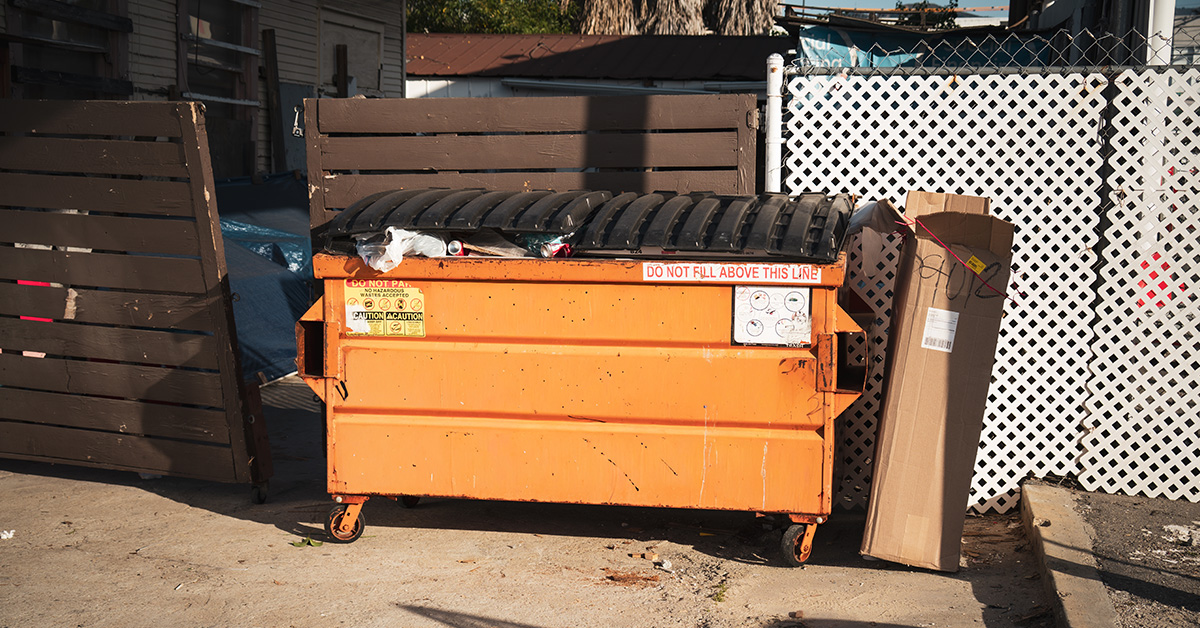
Material Options and Their Problems
Wood enclosures are a popular low-cost choice, but they come with major downsides. Cedar typically lasts 15–20 years, while pressure-treated pine holds up for only 10–15 years. Both require frequent staining, sealing, and painting to combat rot and decay. The harsh environment around dumpsters – exposed to moisture, grease, and impact – accelerates wood deterioration. Pressure-treated pine, in particular, is vulnerable to warping and splitting during temperature changes.
Chain link with slats might be cheap initially, but it does little to improve a property’s appearance. The slats often become brittle and break over time. With its open design, it fails to adequately hide dumpsters and is easy for trespassers to climb, reducing its effectiveness as a security measure.
Masonry and cinder block enclosures are durable but come with their own set of challenges. Over time, cracks and gaps form, allowing water to seep in and cause structural damage. Garbage truck impacts can further exacerbate the issue, and repairs are costly, requiring specialized labor. Construction costs for masonry or CMU block enclosures can exceed $50,000, and repairs are often prohibitively expensive. As Dura-Crete Walls notes:
"Masonry brick and CMU block have historically dominated the trash enclosure building materials segment, however, their elevated cost to construct and repair have motivated owners, architects, and designers to find new and more reasonable solutions."
Vinyl enclosures may seem low-maintenance, but their high upfront cost is a drawback. If a panel cracks or breaks, it cannot be repaired individually and must be completely replaced.
Metal enclosures without proper treatment are highly susceptible to rust and corrosion, especially in harsh weather conditions.
Traditional vs. Steel Frame Systems
Traditional dumpster enclosures often fail because they rely on single-material systems. For example, wood panels sag and warp, masonry walls crack under stress, and vinyl panels are irreparable when damaged. Since these materials bear the entire structural load, any wear and tear can quickly lead to failure.
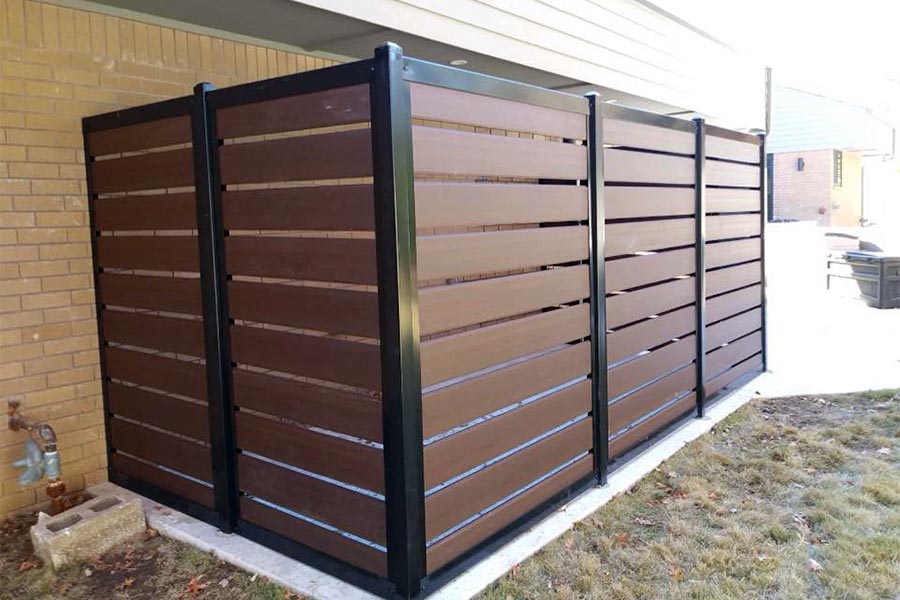
Steel frame systems, on the other hand, offer a smarter design. By separating the structural framework from the screening material, these systems provide greater durability. Galvanized steel posts and rails handle the structural load, while the infill panels serve purely as a visual barrier.
This setup ensures that the frame remains intact even if individual panels need replacement. Unlike masonry projects, which require coordination across multiple contractors, modular steel systems can often be installed in just one to two days.
Although materials like wood or chain link may seem cheaper upfront, their ongoing maintenance and eventual need for replacement drive up costs over time. Steel frame systems, especially when paired with various infill options like composite or treated materials, can last 20 to 25 years with minimal upkeep.
For commercial properties focused on durability and long-term value, steel frame systems clearly stand out as a better investment.
sbb-itb-908b3eb
FenceTrac: Steel Frame Dumpster Enclosure Systems
FenceTrac offers a steel frame system designed to support customizable infill panels, tackling the common issue of unattractive dumpster areas on commercial properties. This setup doesn’t just meet stringent regulations – it also turns utility spaces into visually appealing features.
System Features and Construction
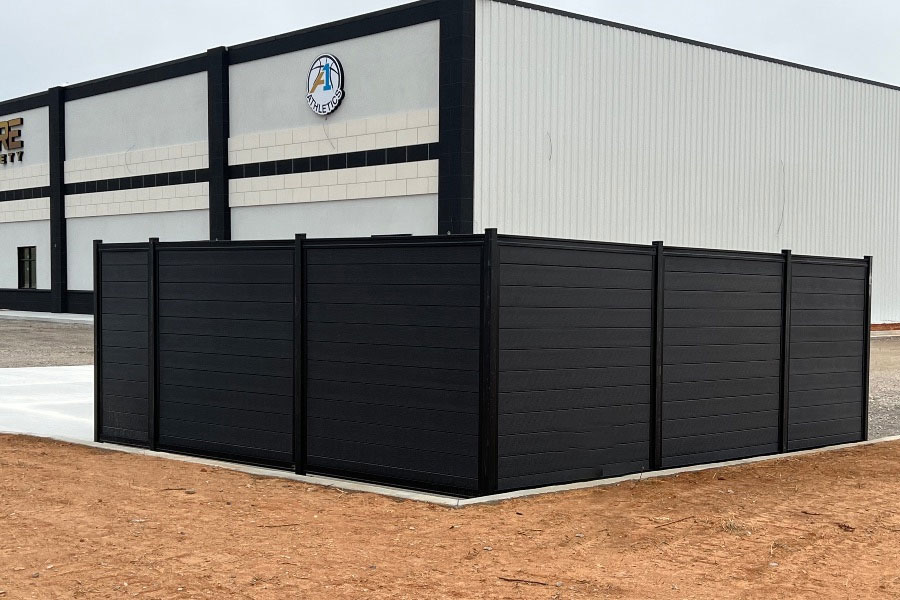
The FenceTrac system uses an 18-gauge galvanized steel frame with heavy-duty posts ranging from 2‑1/2″ to 4″. This design eliminates the sagging and warping often seen in traditional materials like wood or chain link fencing.
To ensure durability, all steel components are finished with a TGIC polyester powder coating available in Black (standard), White, Silver, or Bronze. This coating resists weathering, chipping, and fading over time.
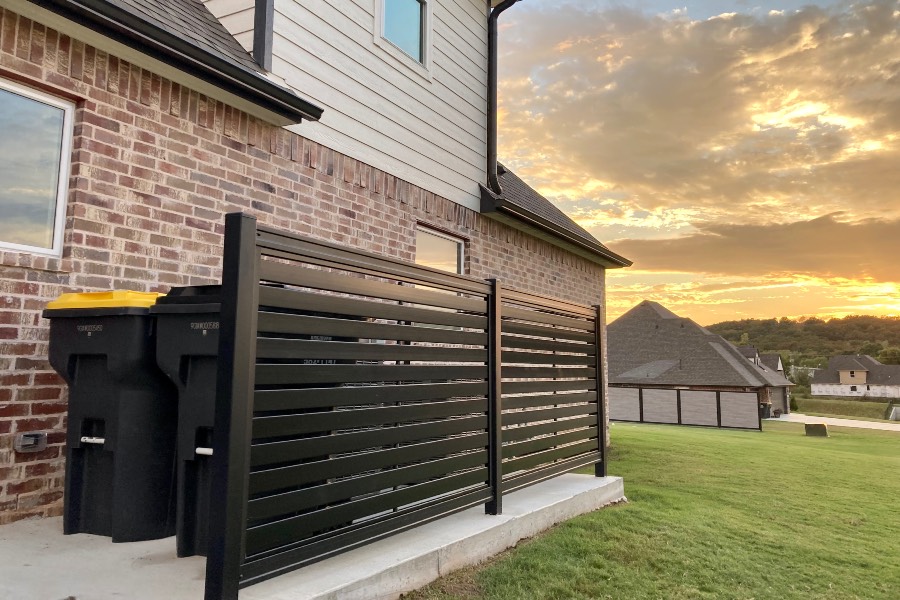
A patented U‑channel protects the infill panels from damage caused by impact and wear. The gates are built with reinforced frames and posts that can withstand thousands of open-and-close cycles without sagging. As highlighted by Hurricane Fence Company:
"Dumpster enclosure gates will demand steel gate posts sized to appropriately support the gate leaf needed for the opening… This provides the gate with much greater structural [integrity], ensures much longer life compared to less sturdy construction applications."
FenceTrac systems are also built to endure extreme weather, engineered to resist wind speeds up to 150 mph, making them ideal for coastal or exposed commercial areas.
With standard heights of 4, 6, and 8 feet, the enclosures meet most municipal screening requirements.
Additionally, the double swing gates, which can span up to 12 feet wide, allow easy access for refuse vehicles.
New Construction and Retrofit Applications
Thanks to its modular design, FenceTrac works equally well for new builds and retrofitting older properties. For retrofits, the steel frames can be mounted directly onto existing concrete pads, while gate posts are core drilled to ensure long-term stability.

This adaptability makes it easy for property managers to replace outdated wood or chain link enclosures with a solution that enhances the overall look of their property. The system’s flexibility ensures it can complement a variety of architectural styles.
Design Options and Infill Materials
Available Infill Materials
FenceTrac provides a wide range of infill options, giving architects and property managers the freedom to achieve a look that complements their property’s style.
Some popular choices include LuxeCore Composite, which mimics the natural beauty of wood without the risk of rot or weather damage, and UltraBlend PVC, favored for its low-maintenance durability and color consistency.
For those who prefer the warmth of real wood, cedar tongue and groove boards offer authentic charm, though they require regular maintenance. If you’re aiming for a more industrial vibe, metal panels deliver a sleek, professional appearance. Wire mesh is another option, ideal for maximizing airflow and visibility [2, 24].
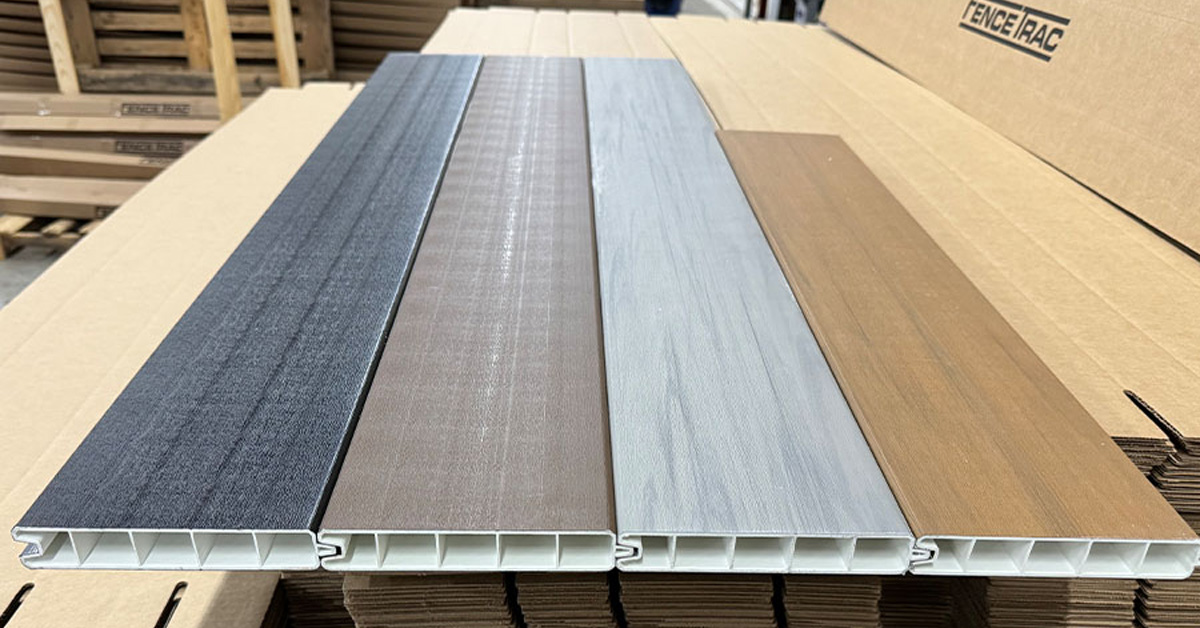
When selecting finishes, think about how they can tie in with the surrounding environment. For instance, beechwood tones work beautifully in natural settings or properties with wood accents, while metallic finishes often complement modern industrial sites, echoing materials like steel and glass.
Once you’ve chosen an infill material that suits your property’s aesthetic, you can refine the overall look by considering layout arrangements that enhance visual harmony.
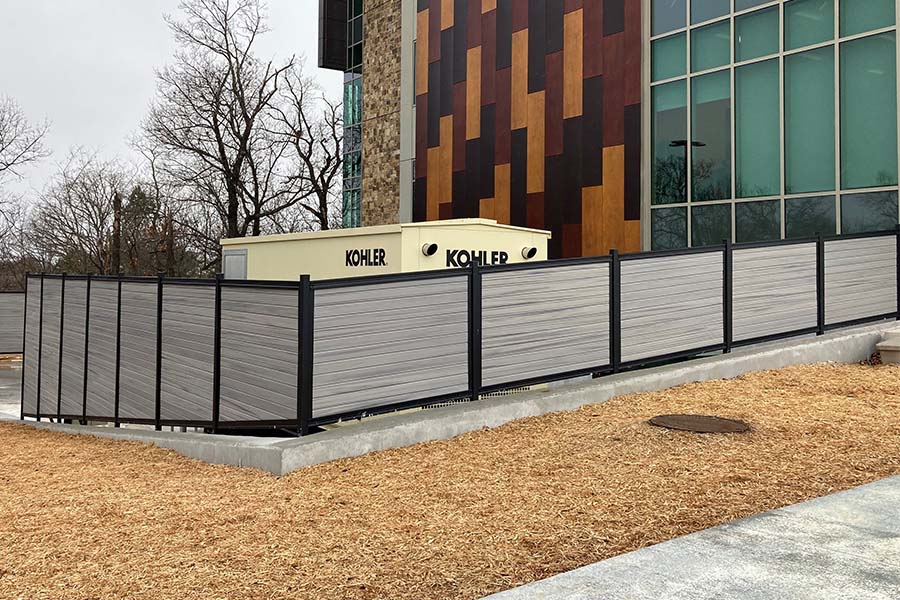
Architectural Appearance and Layout Options
The choice of layout can elevate an enclosure from functional to architectural. By tailoring the layout to match the property’s design, you can turn a simple screening solution into a polished feature that aligns with modern commercial standards.
FenceTrac’s system supports both horizontal and vertical infill arrangements, giving designers the flexibility to create clean, aligned sight lines that integrate seamlessly with a property’s linear elements. This adaptability is particularly useful for matching the rhythm of nearby facades or adhering to specific design guidelines.
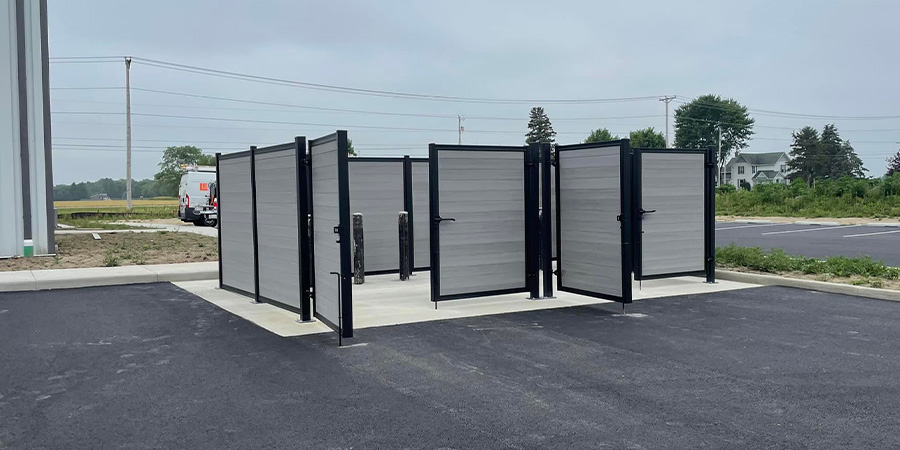
Standard modular panels are 6 feet wide, creating consistent, uniform sections. Add a finishing touch with powder-coated options, which can either blend structural elements with the infill material or introduce contrasting accents to highlight entry points and gates.
The system also makes it easy to incorporate multiple utility enclosures into a unified design. This approach turns scattered utility areas into a visually cohesive part of the overall architecture [2, 4].
Durability and Cost Performance
Weather Performance and Maintenance Requirements
Steel frame systems deliver unmatched structural reliability compared to wood-only construction. Built with 18-gauge galvanized steel frames and posts, they offer dependable performance over time. When coated with TGIC polyester powder, these steel frames stand up to harsh weather, extreme temperatures, and UV exposure better than wood alternatives. This durability translates to lower maintenance needs and long-term cost efficiency.
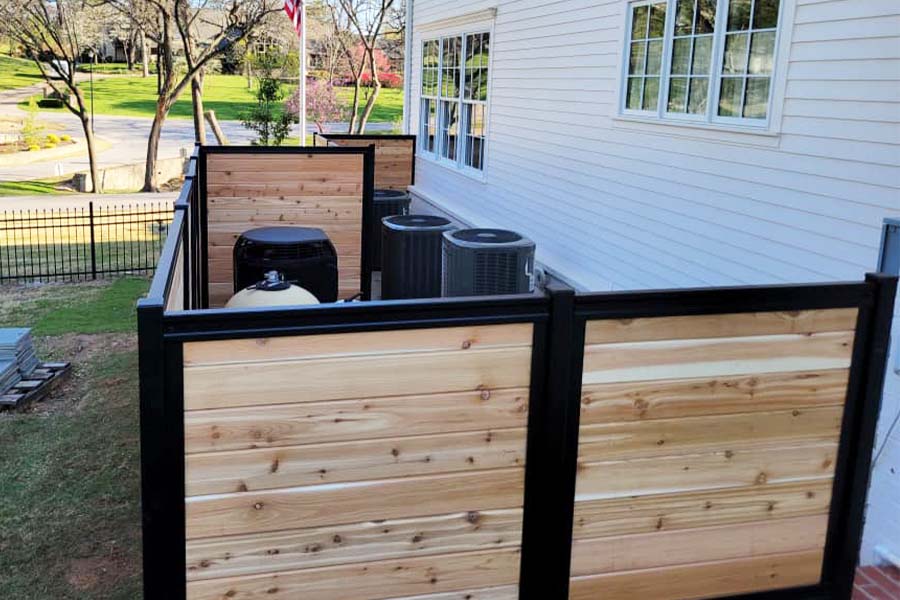
Gate durability is another key factor. Commercial dumpster gates endure thousands of uses throughout their lifespan. A steel frame ensures the gate retains its shape and reliably returns to position after each use. In contrast, wood-only gates tend to sag over time, leading to operational difficulties and higher repair expenses.
"While this type of construction [wood] provides a clean appearance… the wood and chain-link enclosures have a short life cycle before they need maintenance or to be replaced." – Rodney Jarboe, President, Replications Unlimited
Wood requires frequent upkeep to prevent rot and warping, while steel frames paired with composite or PVC infills need only occasional cleaning. Over a 20–25 year period, these reduced maintenance demands result in substantial cost savings, even with the higher upfront investment. This durability not only ensures compliance with building codes but also supports the premium aesthetics expected in modern commercial properties.
Property Value and Business Image
The benefits of durable enclosures extend beyond functionality – they also enhance property appeal and financial performance. A neglected trash area can diminish property value and create an unprofessional impression. For businesses like retail centers and restaurants, dumpster enclosures are part of the customer experience, and a poorly maintained area can leave a negative impression.
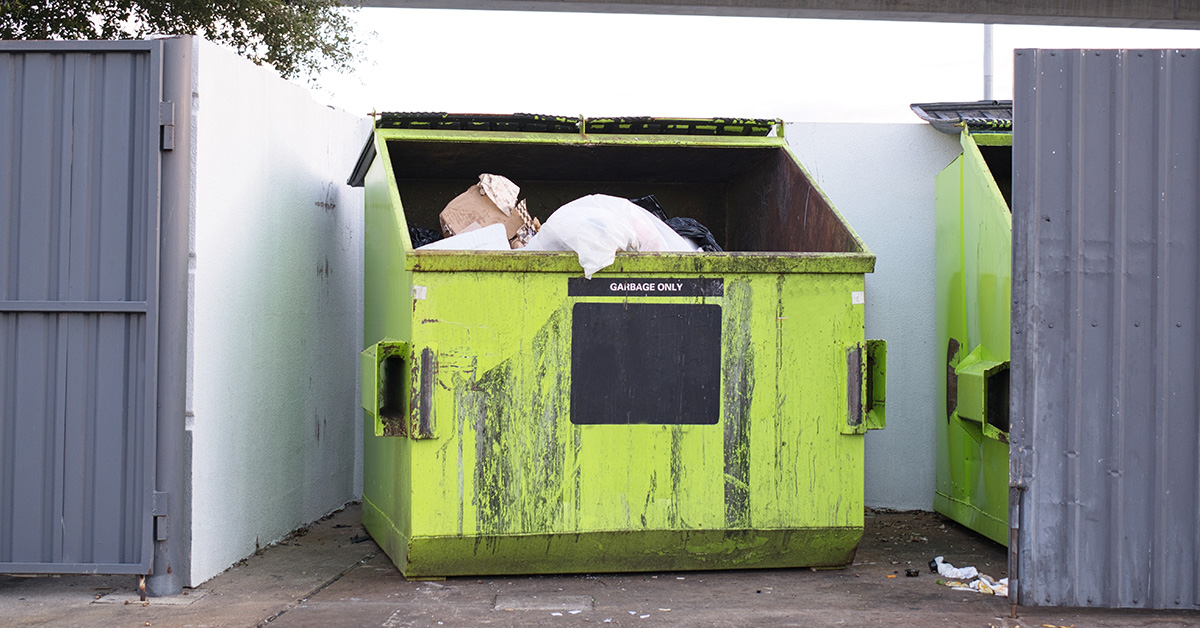
Steel frame enclosures also deter illegal dumping, saving property owners from the costs of unauthorized waste disposal. By matching the enclosure’s colors and textures to the surrounding architecture, these structures can go from being purely utilitarian to becoming an integral part of the property’s design. This level of detail is especially crucial for developments adhering to strict design standards or HOA requirements, reinforcing the polished, professional image that sets high-end commercial properties apart.
Conclusion: Modern Commercial Screening with FenceTrac
FenceTrac steel frame systems take the idea of a simple dumpster enclosure and turn it into a durable, visually appealing architectural element that can boost property value. With 18-gauge galvanized steel frames, these systems offer strength and reliability that outperform traditional materials. Plus, the customizable infill options make it easy to match any building’s style.
These systems tackle key challenges for commercial property managers: meeting municipal codes, maintaining a polished appearance with little effort, and protecting long-term investments. The TGIC polyester powder-coated finish ensures the enclosures can withstand harsh weather without needing constant upkeep.
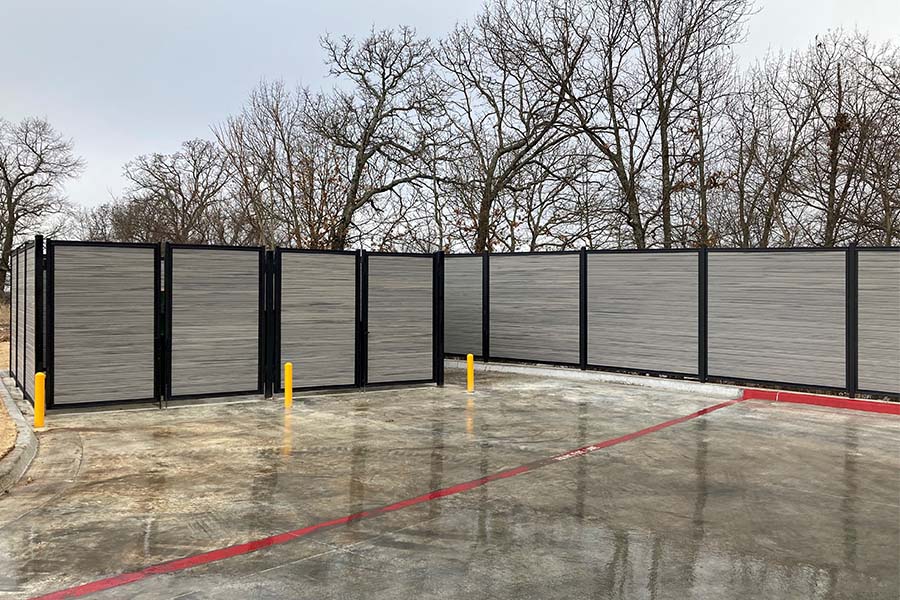
For architects and specifiers, FenceTrac provides consistency in design that can be replicated across multiple projects. Its modular design allows damaged panels to be replaced individually, which is a clear advantage over solid vinyl or masonry options. Paired with steel gate frames built to endure thousands of use cycles, the system delivers exceptional longevity.
Whether you’re overseeing a retail center, restaurant, multi-family property, or office complex, the choice of enclosure plays a significant role in tenant satisfaction and brand image. FenceTrac systems offer the professional look and lasting durability that modern commercial properties require. They transform dumpster enclosures from a basic necessity into an architectural feature that enhances the overall impression of your property.
FAQs
What size dumpster enclosure do I need?
When planning your dumpster enclosure, make sure it’s large enough to fit the dumpster with at least 2 feet of clearance on all sides for easy access. For instance, enclosures for smaller dumpsters, like 2- or 4-yard sizes, are often around 10′ W x 10′ D x 6′ H. Larger dumpsters, such as 6- or 8-yard containers, will need bigger enclosures to match their size. Always check that your design aligns with your needs and complies with local code requirements.
Can FenceTrac be installed on an existing concrete pad?
Yes, FenceTrac can be installed on an existing concrete pad. Its flexible design makes it a great choice for retrofit projects, providing a sturdy framing system for commercial screening. This allows for a sleek and durable upgrade to existing spaces.
Which infill panel is best for low maintenance?
Vinyl and composite materials stand out as excellent options for those seeking low-maintenance solutions. Unlike wood, which demands regular upkeep, these materials are far easier to care for, offering durability and convenience over the long haul.