
Metal-framed wood fence systems are becoming a popular choice for homeowners and businesses due to their durability, low maintenance, and modern design options. These fences combine steel posts and U-channel frames with wood panels, offering the strength of metal and the aesthetic appeal of wood. Here’s why they stand out:

- Longevity: Steel posts last 20–30 years compared to 7–10 years for wood posts.
- Low Maintenance: Metal components are rust-resistant and require little upkeep, while wood panels can be replaced individually.
- Design Flexibility: Supports vertical or horizontal layouts and various materials like cedar, composite, or bamboo.
- Weather Resistance: Handles wind speeds up to 150 mph and resists termites, moisture, and rot.
These systems offer a practical and stylish solution for both residential and commercial fencing needs.
DIY Horizontal Fence with Metal Frame
sbb-itb-908b3eb
Advantages Over Traditional Wood Fencing
Durability and Longer Lifespan
One of the biggest perks of metal-framed wood fences is their impressive longevity. Traditional wooden fence posts often start to rot within 7–10 years, but metal posts are built to resist the fungi, moisture, and pests that typically lead to wood decay. By eliminating ground-contact rot, these fences avoid the most common failure point. As B.C. Fence Austin puts it:
"The ground contact area is where wood fails first, but metal posts can last decades without degrading".
This durability means fewer replacements and greater peace of mind for property owners. Plus, the galvanized steel frames are designed to withstand high wind loads, preventing the sagging, leaning, or shifting you see with wooden posts.

Another standout feature is the floating infill design. This modern system allows the wood boards to "float" within U-channels, giving the wood room to naturally expand and contract with temperature changes. Considering wood can shrink up to 1/4 inch after installation, this design prevents warping and keeps fasteners secure. If a board does get damaged or starts to rot, you can simply slide it out and replace it – no need to rebuild the entire section. This not only boosts the fence’s lifespan but also cuts down on ongoing maintenance.
Lower Maintenance Requirements
Thanks to their durable design, metal-framed wood fences require much less upkeep than traditional wooden fences. Wooden fences often need sanding, priming, and refinishing every 2–3 years to keep them looking good and structurally sound. In contrast, the metal components of these fences – such as posts and rails – are usually powder-coated or galvanized, so they don’t need painting, sanding, or priming for decades.
The sturdy metal framework also helps avoid common wood problems like sagging, leaning, warping, or twisting. While the wood infill may still need staining every 2–3 years, you’re only maintaining the visible boards, not the entire structure. This reduced maintenance can cut the total cost of ownership by up to 40% compared to traditional wood fences.
Comparison Table: Metal-Framed Wood Fences vs. Traditional Wood Fences
| Feature | Traditional Wood Fence | Metal-Framed Wood Fence |
|---|---|---|
| Average Lifespan | 10–15 years | 30–50+ years |
| Post Durability | Prone to ground-level rot and pests | Resistant to rot, moisture, and termites |
| Maintenance | High (staining, board replacement, leveling) | Low (occasional cleaning, staining infill only) |
| Wind Resistance | Moderate (posts can snap or lean) | High (steel provides superior load strength) |
| Cost Over Time | High (due to frequent repairs/replacement) | Low (best long-term ROI) |
| Ease of Repair | High (nails/screws/structural work) | Low (simple board replacement) |
Durability and Weather Resistance
Performance in Extreme Weather
Metal-framed wood fences are built to endure extreme weather conditions. With galvanized steel posts and 18-gauge steel U-channel frames, these fences can handle wind speeds of up to 150 mph. This sturdy construction makes them a reliable choice in areas prone to hail, hurricanes, and severe storms.

The steel framework stands strong where wood posts might fail. As Rob Thibeault from Brentwood Fence points out:
"Metal posts set in concrete provide a foundation that can withstand extreme weather events that might topple or damage all-wood fences".
In colder climates, these fences shine by resisting the freeze-thaw cycles that often cause wooden posts to shift or heave. Unlike wood, which expands and contracts with moisture, galvanized steel stays stable through temperature swings. For the best results, posts should be set 3 feet deep instead of the usual 2 feet. Adding 4–6 inches of tamped gravel at the bottom of the post holes before pouring concrete helps prevent water from pooling around the base.
Beyond wind and freeze-thaw durability, these systems are also highly effective against biological threats.
Protection Against Termites and Moisture
Steel frameworks are impervious to termites and wood-boring insects, avoiding the damage that often plagues traditional wood fences. Richard Novigrod, owner of Sierra Fence, Inc., explains:
"Steel posts won’t be affected by natural elements or termites, so they’re widely considered more durable than wood fence posts".

These systems address ground-contact vulnerabilities by keeping structural components elevated, away from soil moisture. The wood infill boards are designed to "float" within the U-channels, meaning even if moisture impacts the wood panels, the framework remains unaffected. This design not only protects the fence’s structural integrity but also allows for easy replacement of individual boards if needed.
To further guard against rust and corrosion, high-quality metal frames feature multi-stage coatings. These include zinc phosphate pre-treatment, duplex cathodic electrocoat, and TGIC polyester powder coats. Thanks to these protective layers, galvanized steel posts can last anywhere from 30 to 70 years, far outpacing the typical 7–10-year lifespan of traditional wood posts.
Design Flexibility and Appearance
Customizable Infill Options
Metal-framed wood fence systems bring a level of versatility that traditional fencing simply can’t match. Thanks to the U-channel frame design, these systems can accommodate rigid materials up to 1 inch thick, giving homeowners an impressive range of options to choose from. Popular wood choices include Western Red Cedar, redwood, cypress, teak, Ipe, pine, and bamboo. But it doesn’t stop at natural wood – these frames also work seamlessly with materials like corrugated metal, perforated metal sheets, composite materials (like LuxeCore), vinyl, PVC, and Hardie board.
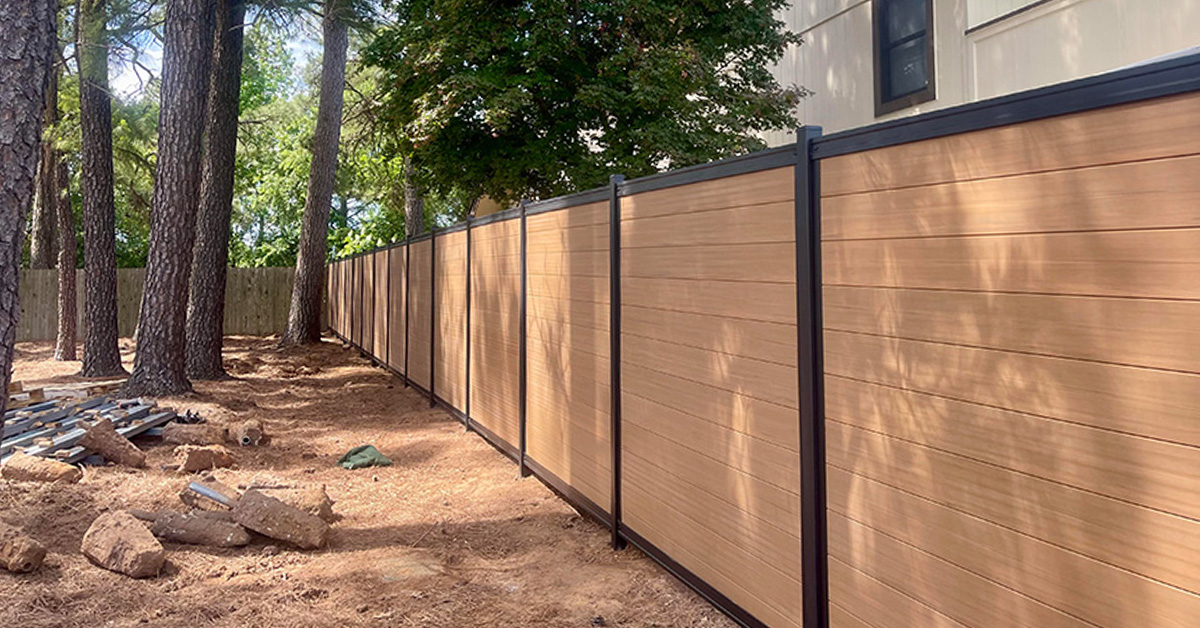
The way you arrange the layout can completely transform the fence’s style. A horizontal layout creates a sleek, modern vibe, while a vertical arrangement leans toward a more classic appearance. Want something bolder? Geometric designs – like chevrons, grids, or even random patterns using boards of different sizes – can make your fence stand out in a crowd.
Privacy is another area where these systems shine. If you want total seclusion, tongue-and-groove boards offer a no-gap solution. Prefer a more open feel? Spaced boards or perforated metal inserts allow for a semi-private design that lets in light and air. Plus, the metal posts and rails come in a variety of finishes, adding an extra layer of customization. This combination of flexible infill options and design layouts pairs perfectly with the strength and durability of the metal frame.
Combining Steel Strength with Natural Wood
Blending steel and wood creates a visually striking balance that works beautifully for both modern and traditional properties. As Perimtec describes:
"The union of a sleek black metal fence frame combined with warm wood for infill creates something truly unique. And eye-catching! This new look is one of the hottest trends in fence design."

The U-channel system elevates the overall look compared to traditional wood-on-wood fences. It delivers smooth, continuous lines that highlight the durability of steel alongside the natural beauty of wood grain. Unlike conventional wood fences, which often reveal an unattractive backside with exposed rails and posts, metal-framed systems look identical on both sides. The infill is centered within the frame, creating a polished, symmetrical appearance. This thoughtful design not only enhances aesthetics but also complements the low-maintenance, durable qualities of the metal framework.
Applications and Practical Benefits
Residential Applications
These metal-framed fencing systems offer a range of practical advantages for homeowners, combining durability with design versatility. Many homeowners choose them for purposes like ensuring privacy, marking property boundaries, or securing pool areas. Thanks to metal posts, these fences last 2–4 times longer than traditional wood options.
But it’s not just about durability. These fences also work as stylish solutions for hiding unsightly features like pool equipment, garbage bins, or air conditioning units. Repairs are straightforward too – if a wood board gets damaged, you only need to remove the top rail to replace the affected piece. Their design flexibility makes them suitable for homeowners who appreciate both sleek horizontal layouts and classic vertical styles.

For maximum privacy and strength, tongue-and-groove wood planks are a popular choice. Meanwhile, galvanized or powder-coated metal frames require minimal maintenance – just a weatherproof sealant or stain every few years typically does the trick. Using galvanized or stainless steel fasteners also prevents rust or corrosion at points where the metal meets the wood, ensuring a clean and polished look over time.
Commercial Applications
The same features that make these fences appealing for homes also make them an excellent choice for commercial properties. Businesses benefit from the enhanced security and durability of metal-framed systems. As Rob Thibeault explains:
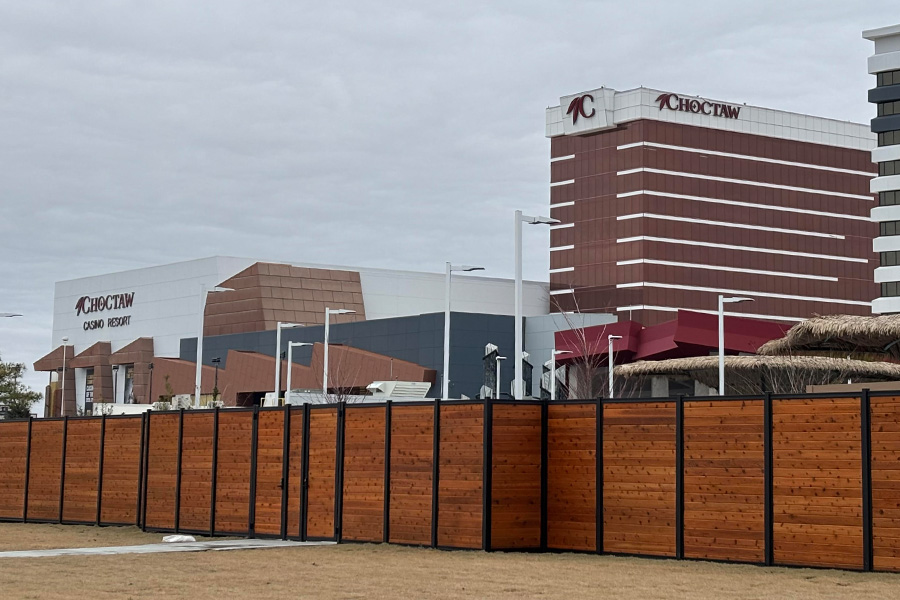
"A modern horizontal metal fence instantly signals that a commercial property is current, professional, and secure".
These fences are designed to resist force, climbing, and cutting better than traditional wood, making them ideal for high-security areas.

Commercial properties have even reported a 5 to 10% increase in perceived value after installation. While the initial investment may be higher, these systems often pay for themselves within 7 to 10 years. Steel fence posts with proper coatings can last 50 to 70 years, and premium powder-coated finishes frequently come with 25-year warranties for color and adhesion.
In addition, welded steel frames allow for wider gates – up to 10 feet – that resist sagging. This makes them perfect for uses like enclosing dumpsters or providing access to commercial driveways. Horizontal slat designs also create a "space-elongation effect", making smaller retail lots or office courtyards feel more open and inviting. Installation costs typically fall between $35 and $85 per linear foot.
Conclusion
Metal-framed wood fence systems stand out as a long-lasting solution, addressing the common shortcomings of traditional wood fences. With a lifespan of 30 to 40+ years – compared to just 7 to 15 years for standard wood fencing – they offer durability that’s hard to beat. Plus, they’re designed for ease of maintenance. Metal components don’t need constant staining or sealing, and if a wood board gets damaged, it can be replaced without taking apart the entire panel.
These benefits deliver practical value for both homeowners and businesses. While the initial cost may be higher than traditional wood fencing, the reduced maintenance and extended lifespan make them a more cost-effective choice in the long run.
FenceTrac takes these advantages a step further with its patented system. Their kits include heavy-duty steel posts, gate frames, and specialized hardware, all made in the USA. The U-channel design streamlines installation and makes repairs straightforward, offering a professional-grade option that’s DIY-friendly.
For a fence that combines lasting performance with customizable design, check out FenceTrac’s solutions today.
FAQs
What makes metal-framed wood fences a cost-effective choice compared to traditional wood fences?
While metal-framed wood fences come with an initial cost that’s 20%–40% higher per linear foot compared to traditional wood fences, they offer long-term savings that make them a worthwhile investment. The steel or aluminum frame is built to resist common issues like warping, rot, and rust, allowing these fences to last 3–5 times longer with very little upkeep. Unlike traditional wood fences, which often demand regular painting, repairs, or board replacements, metal-framed fences typically only need occasional cleaning.
Another advantage is the strength of the metal posts, which eliminates the need for expensive replacements every 10–15 years – a frequent problem with wood posts. And if a wood panel gets damaged, the modular design of systems like FenceTrac makes replacing it quick and simple, without the hassle of digging or heavy labor. Over a 10–15 year period, the overall cost of owning a metal-framed wood fence is often lower than that of a traditional wood fence, offering homeowners a sturdy and economical option in the long run.
How well do metal-framed wood fences hold up in extreme weather?
Metal-framed wood fences are built to handle tough weather conditions, thanks to their strong steel or galvanized metal frames and posts. Unlike traditional wood fences, these materials are resistant to warping, rotting, and moisture damage, which are common problems over time.
The metal framework adds solid support, helping the fence stand firm against strong winds and storms. This keeps the wood panels in place and prevents issues like leaning or breakage. With this blend of strength and resilience, these fences last longer, making them a dependable option for areas with unpredictable or extreme weather.
What are the design options for metal-framed wood fence systems?
Metal-framed wood fence systems blend the classic charm of wood with the strength and longevity of steel, opening up endless design possibilities. The framework, built with U-shaped top and bottom rails and sturdy side posts, is incredibly versatile, allowing you to pair it with a variety of infill materials. Popular choices include red cedar, bamboo, composite, vinyl, PVC, Hardie board, metal panels, and even decorative corrugated metal, giving you the freedom to create a fence that suits both your privacy needs and your personal style.
For added flair, you can opt for either horizontal or vertical panel orientations. Horizontal panels, in particular, offer a sleek, modern look that works beautifully with painted or stained wood finishes. To make your fence even more unique, consider options like mixed-material gates, custom post caps, or color-matched finishes – imagine white-coated steel frames paired with the warmth of natural wood. These systems are designed to complement a variety of architectural styles, from contemporary to rustic, all while delivering the durability and minimal upkeep you’d expect from a steel-reinforced design.