
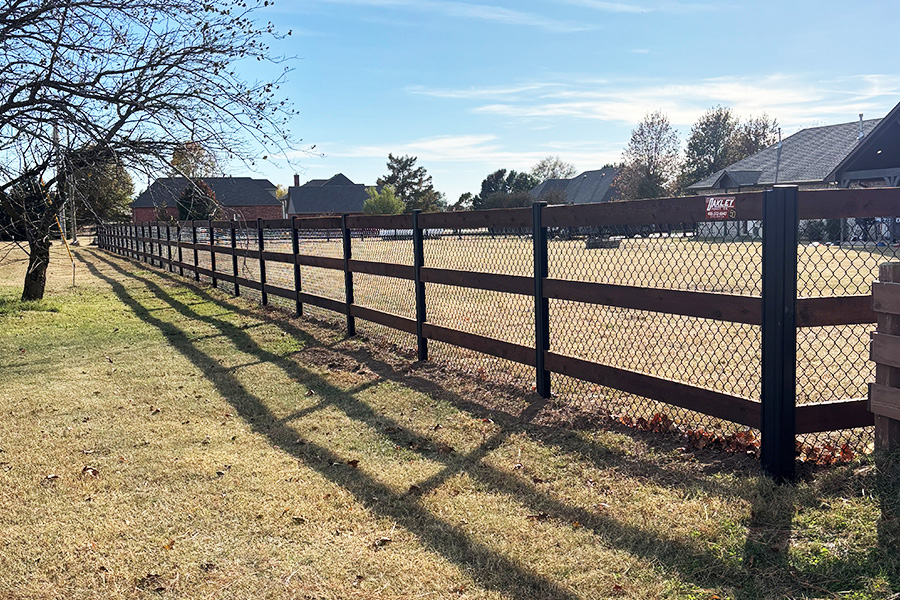
If you want open views with less wood-related upkeep, HighPlains is the better fit. It uses aluminum posts, rough-cut cedar rails, 4-foot and 5-foot height options, and 8-foot post spacing, while split-rail and all-wood fencing usually cost less up front but need more repair over time.
We found the choice is pretty simple.
If you need fencing for arenas, paddocks, pasture lines, and horse properties, the 5-foot option lines up better with the common 54-inch to 60-inch horse-fence range.
If you just need a low-cost boundary on low-traffic land, split-rail can still work.
Here’s the short version:
- HighPlains keeps the open-rail look but uses aluminum posts to avoid ground-line rot
- Wood fencing can last 15 to 30 years, but posts often fail first at the soil line
- Cedar rails should be stained within 30 days, which can add 5 to 7 years of life
- HighPlains works well on active horse areas and high-visibility spots
- Split-rail fits simple boundary lines where lower first cost matters more than upkeep
- On mixed-use land, open rail often works best for fields, while privacy panels fit home and utility zones
Quick Comparison
| Feature | HighPlains | Split-Rail / All-Wood |
|---|---|---|
| Posts | Aluminum | Wood |
| Rail look | Open, clean | Open, rustic |
| Heights | 4 ft, 5 ft (see 4-foot rail kits) | Varies |
| Post spacing | 8 ft | Varies |
| Horse-property fit | Better for arenas and active paddocks | Better for lighter-use lines |
| Rot risk at ground line | Lower | Higher |
| Upkeep | Lower | Higher |
| Up-front cost | Higher | Lower |
In other words, you’re choosing between lower first cost and lower long-term hassle.
sbb-itb-908b3eb
1. HighPlains Architectural Post and Rail System
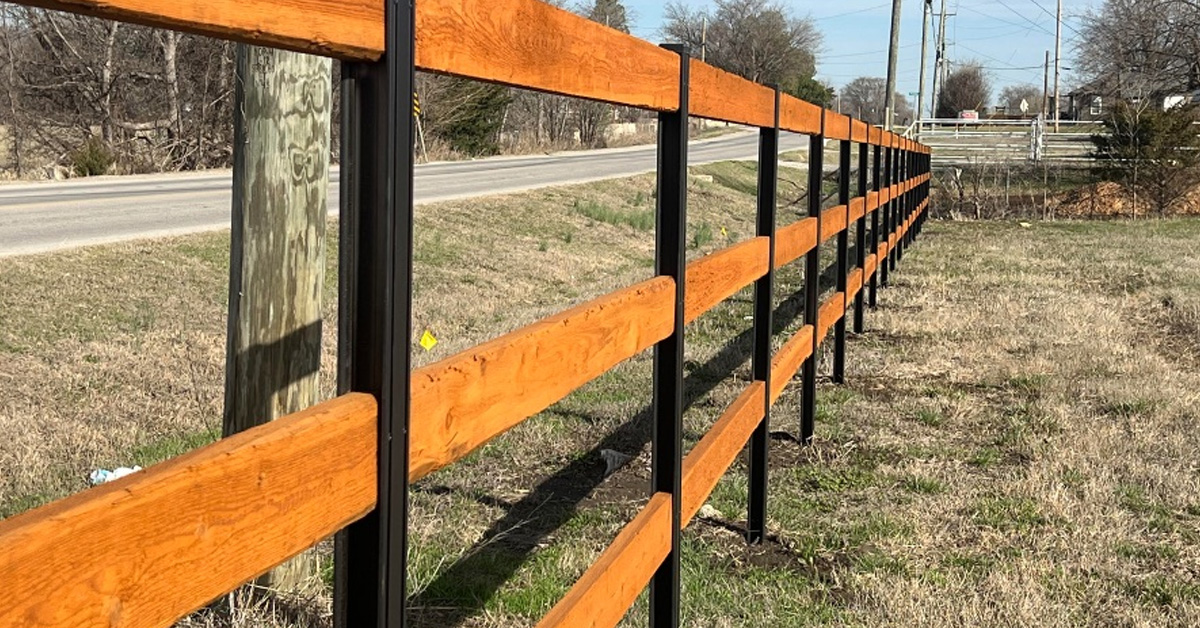
The HighPlains system is a standalone post-and-rail option with aluminum posts, rough-cut cedar rails, 4-foot or 5-foot heights, and 8-foot post spacing.
It gives you the open rail look of split-rail, but with a cleaner, more polished finish.
For horse properties, the main call is height.
HighPlains uses wide cedar rails that create a clear boundary during turnout.
Horse fencing should be 54 to 60 inches tall, which makes the 5-foot option the better match for arenas and equestrian properties.
This setup also cuts down on the weak spots that come with all-wood fencing.
Aluminum posts remove the ground-line rot issue, while rough-cut cedar rails give the fence a cleaner, more even look.
Quality cedar built with premium materials can last up to 25 years.
The upkeep is also simpler.
Cedar rails should be stained within 30 days, which can add 5 to 7 years to their lifespan, and the aluminum posts remove the need for repeat post replacement.
On large properties, looks matter just as much as function.
HighPlains works well for pasture lines, property boundaries, and arena fronts.
Then FenceTrac privacy panels can cover home and utility zones on the same acreage property, so the whole site feels consistent.
2. Traditional Split-Rail and All-Wood Post and Rail Fencing
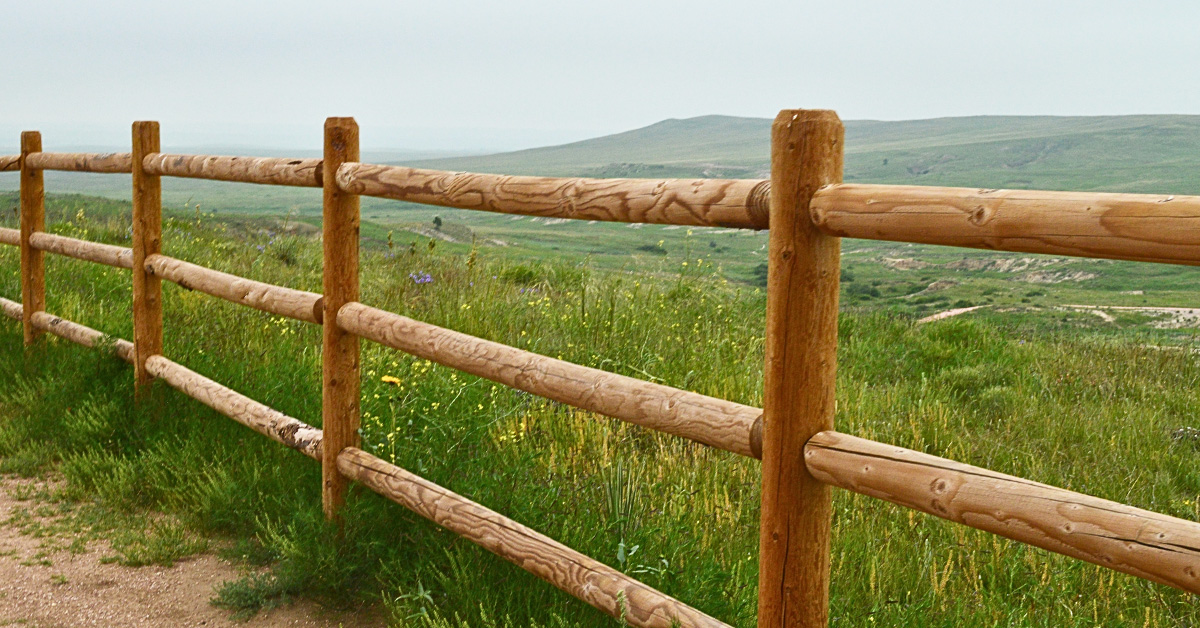
Traditional split-rail is the baseline HighPlains builds on.
It gives you that classic rustic look and usually costs less upfront, but it asks for more upkeep over time than HighPlains.
Horse Safety
Wood is easy for horses to see.
But when a horse hits a rail, that rail can break, splinter, or weaken over time from chewing and cribbing.
Durability
Cedar and pressure-treated pine can last 15 to 30 years.
The weak spot is usually the ground line, where all-wood posts are more likely to rot.
HighPlains cuts out that issue by using aluminum posts instead of wood.
Maintenance
All-wood fencing needs regular checks, staining, and repairs.
Rails can warp.
Nails can loosen.
And surface coatings wear down with time.
"A disadvantage of wood is it decays when exposed to weather or when in contact with the ground, resulting in ongoing maintenance costs." – Dr. Madison Ricard, DVM, PhD, DACVP
Aesthetics and Acreage Fit
For acreage owners, this is the main tradeoff.
Do you want the rustic charm enough to deal with the extra work?
Traditional split-rail looks right at home on large, open properties.
HighPlains gives you that same open-rail feel, but with a cleaner, more architectural finish and less long-term upkeep.
That tradeoff leads straight into the ranch-use comparison below.
Pros and Cons for Ranches, Horse Properties, and Mixed-Use Acreages
For ranch and acreage buyers, the choice usually comes down to three things: maintenance, pressure, and finish.
| Feature | HighPlains Architectural System | Traditional Split-Rail / All-Wood |
|---|---|---|
| Visibility for Horses | High, wide, distinct rails | High, classic open-rail profile |
| Fence Line Stability | High, aluminum posts stay straighter | Medium, wood posts can lean or rot at the ground line |
| Rot & Warp Resistance | Strong, engineered materials resist decay and warping | Poor, moisture, weather, and insects take a toll over time |
| Replacement Frequency | Low, built for long-term service | High, boards, rails, and posts need regular repair |
| Curb Appeal | Clean, modern, architectural | Rustic, Western |
| Cribbing Resistance | High, aluminum posts cut chewing damage | Low, wood rails are often chewed |
| Use Case Fit | Arenas, paddocks, active pastures | Large, low-pressure open range |
"An ideal fence should be solid enough to repel a running horse, yet flexible enough to prevent injury." – Dr. Madison Ricard, DVM, PhD, DACVP
Split-rail can still do the job on low-traffic boundary lines.
But when you move into arenas and active pastures, HighPlains is built for daily pressure.
That means less rot, less warping, and less repair work over time.
For mixed-use ranch and estate properties, a split setup often makes the most sense.
Use HighPlains on open acreage.
Then use FenceTrac privacy panels around the home, patio, pool, or utility areas.
Conclusion
Bottom line, split-rail is fine when you need a low-cost way to mark a boundary.
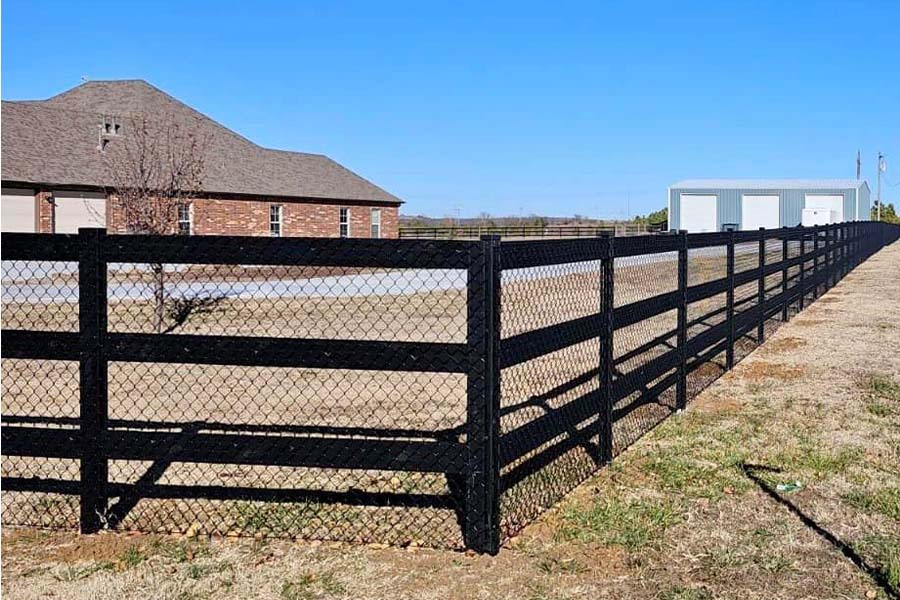
But if you’re fencing a ranch or horse property and want something built to last, HighPlains is the stronger long-term pick.
It keeps the open-rail look, but swaps all-wood construction for aluminum posts and rough-cut cedar rails.
That means a cleaner finish and less upkeep over time.
HighPlains also comes in 4 ft and 5 ft heights, which line up well with common horse-fence needs.
And its 8 ft post spacing helps add stability in arenas and active paddocks.
So if you’re working with horse properties, arenas, or busy paddocks, it makes a lot of sense.
For mixed-use properties, use HighPlains across open acreage and add FenceTrac privacy panels around the areas you want more secluded.
Learn more:
- HighPlains Post & Rail System
- Farm & Ranch Fencing
- Acreage Fencing
- Horse Farm Fencing
- Horse Arena & Equestrian Fencing
FAQs
Which height should I choose for horses?
For horses, a fence height of 54 to 60 inches is a common recommendation to help stop them from flipping over the fence.
If you have larger horses or jumpers, you may need a taller fence.
How much maintenance does HighPlains need?
HighPlains needs routine fence care to help extend its life and keep it looking good.
That means regular upkeep matters, even if the exact maintenance steps are not listed in the available information.
Specific maintenance details are not provided in the available information.
Where does HighPlains work best on large properties?
HighPlains is a strong fit for large properties, horse arenas, and pastures.
It works especially well when you need a fencing system that’s durable, safe, and good-looking.
That matters even more when you’re managing multiple horses across big stretches of land. In that kind of setup, you want fencing that can handle daily use without turning into a constant headache.
Related Blog Posts
- Why Wood Fences Warp, Lean, and Sag and How the FenceTrac Steel Fence Frame Solves the Problem
- Metal Framed Wood Fence Systems and Why They Are Gaining Popularity
- Horizontal Wood Fence Design Problems and How FenceTrac Steel Framing Improves Performance
- Modern Horizontal Privacy Fence Designs for Custom Homes and Estates