
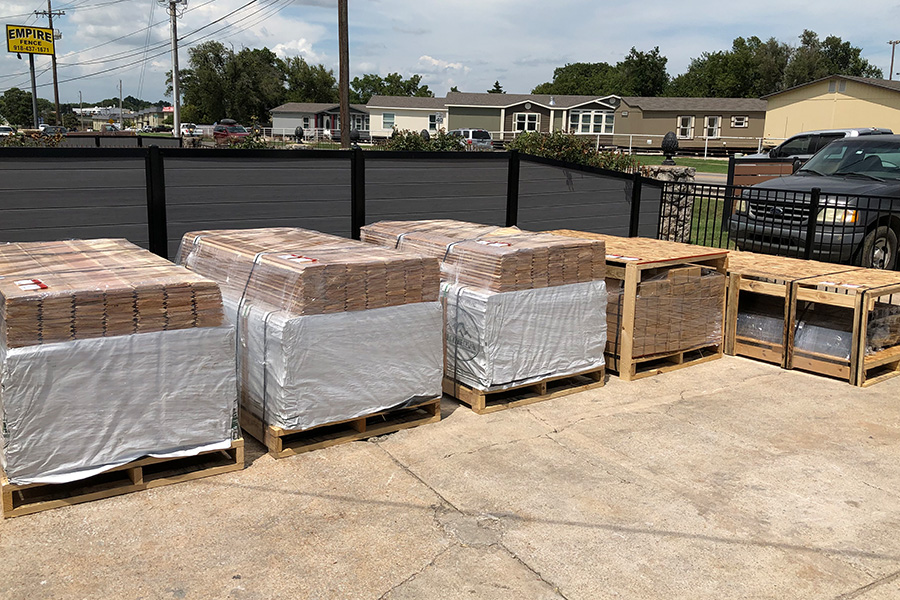
FenceTrac’s modular fence kits ship as pre-cut, powder-coated steel frame components with matched infill boards that assemble into a complete fence panel system. Compared to building a fence from scratch using loose lumber, posts, and hardware from a home improvement store, a kit-based approach reduces material waste, eliminates measuring and cutting errors, and produces a more consistent finished fence. The tradeoff is that a scratch-built wood fence has a lower material cost, while a kit-based system like FenceTrac delivers higher long-term value through durability and lower maintenance.
The Short Answer
A fence kit is better for most homeowners and contractors who want a consistent, professional-grade result. Building from scratch gives more flexibility on unusual layouts but requires more skill, more time, and more tolerance for inconsistency. FenceTrac’s modular kits include pre-cut galvanized steel frame rails, posts, fasteners, and infill boards sized to fit together without field cutting on the frame components.

What “Building from Scratch” Actually Means
Building a fence from scratch means buying raw materials (lumber, posts, fasteners, concrete) and constructing every component on site. You measure and cut each rail, notch or trim each picket, set each post, and attach everything with nails or screws.
This approach gives full control over dimensions, spacing, and materials. It also puts full responsibility for accuracy, structural integrity, and finish quality on the builder. Every cut, every post placement, and every fastener position is a decision point where an error can compound.
For experienced fence contractors, scratch building is routine. For homeowners tackling a first fence project, the learning curve is steep and the margin for error is wide.

What a Fence Kit Includes
A FenceTrac fence kit is a panel-based system. Each panel kit includes the steel frame channels (top, bottom, and two side channels), the infill boards, carriage bolts, and self-tapping screws. Posts and post caps are ordered separately based on the layout.
The frame components arrive pre-cut to the correct panel width (6 feet or 8 feet) and height (4, 6, or 8 feet). The infill boards are sized to fit the frame channels. No field cutting of frame components is required. The only on-site cutting may involve notching the top and bottom infill boards for carriage bolt clearance.
This is different from a generic “fence kit” sold at a big box store, which is typically a vinyl or composite panel with plastic posts and snap-fit connections. FenceTrac kits use commercial-grade galvanized G90 steel frames and professional-grade infill materials designed for permanent installation.
Fence Kit vs. Scratch Build: Key Differences
| Factor | Build from Scratch | FenceTrac Fence Kit |
|---|---|---|
| Material sourcing | Multiple trips, multiple suppliers | Single order, ships direct |
| Cutting and prep | Every piece cut on site | Pre-cut frame, minimal field prep |
| Panel consistency | Varies by builder skill | Factory-manufactured uniformity |
| Both-sided finish | Requires special design | Standard on every panel |
| Frame material | Wood (degrades over time) | Galvanized steel, powder-coated |
| Waste and overage | Typically 10-15% material waste | Minimal (pre-cut to spec) |
| Warranty | Lumber: 1-5 years typical | Frame: 20-year, Infill: Limited Lifetime |
When Building from Scratch Makes Sense
A scratch-built fence is the right choice when the project has unusual constraints that a standard panel system cannot accommodate. Heavily curved property lines, extreme grade changes on every post, or non-standard heights outside the 4/6/8-foot range are situations where custom-cut components may be necessary.
Some contractors also prefer scratch building when the client wants a specific wood species, board profile, or joinery style that is not available as a kit component. In these cases, the builder is accepting higher labor costs and longer timelines in exchange for total design control.

When a Fence Kit Is the Better Choice
For the majority of residential and commercial fence projects, a kit system delivers better results with less effort.
FenceTrac’s modular design covers straight runs, corners, and step-downs on sloped terrain. The panel system installs faster than scratch building because the frame components are pre-cut and the infill simply slides into the channels. There are no rails to level, no pickets to individually space, and no face-nailing.
The both-sided finish is another advantage a kit delivers that scratch building cannot easily replicate. Every FenceTrac panel presents the same finished appearance from both sides because the infill sits inside the frame channels. A scratch-built wood fence shows rails and fasteners on one side unless the builder adds a second layer of boards, which doubles the material cost.
Contractors who install FenceTrac kits report that the system installs in a similar timeframe to a wood fence while producing a more uniform, higher-quality finished product.
Fence Design Flexibility with a Kit System
One concern with kit-based fencing is that it limits design options. With FenceTrac, that concern does not apply.
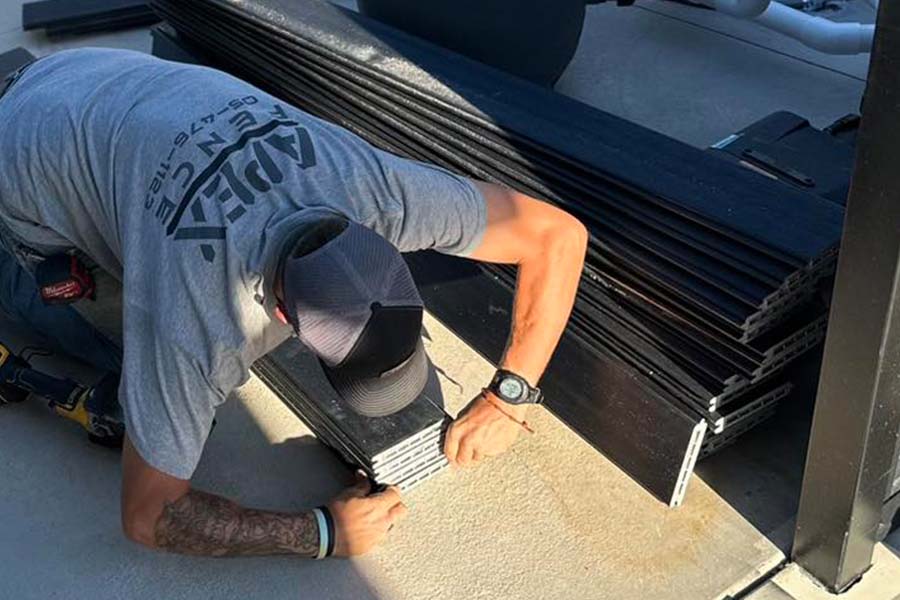
The steel frame accepts any rigid infill up to 1 inch thick. LuxeCore composite, UltraBlend PVC, aluminum boards, cedar, and mixed infill patterns all work within the same frame. You can change the infill material, color, and orientation (horizontal or vertical) without changing the frame.
This gives homeowners and designers more infill flexibility than most scratch-built fences offer, because the frame system is engineered to accept a wide range of materials rather than being designed around a single board type.
Related Questions
Is a steel frame fence more expensive upfront but cheaper long-term? The kit costs more initially than raw lumber, but the total cost of ownership over 20 years is typically lower because the maintenance costs are near zero.
Can a homeowner install a FenceTrac fence kit without a contractor? The system is designed for professional installation, but homeowners with basic tools and post-setting experience can install FenceTrac panels. The pre-cut components reduce the skill level required compared to scratch building.
See Also
FenceTrac privacy fencing for panel sizes, frame specs, and infill options available as complete kits.
Get a Quote for Your Fence Project
FenceTrac ships fence systems nationally and has been manufacturing engineered fencing in the USA since 2012.
Every system carries a 20-year warranty and is engineered for long-term performance with minimal maintenance.