
FenceTrac’s galvanized steel frame fence system carries a higher initial price than a standard wood post-and-rail fence, but the total cost of ownership over 10 to 20 years is typically lower because the steel frame eliminates the recurring expenses that make wood fencing expensive to maintain. The frame is built from 18-gauge G90 galvanized steel with a powder-coated finish, and it carries a 20-year warranty that covers the structural components of the fence.
The Short Answer
Yes. A steel frame fence costs more on day one but less over the life of the fence. Wood fences require staining, sealing, board replacement, and eventually full rebuilds. A FenceTrac steel frame with maintenance-free infill like LuxeCore or UltraBlend requires none of those recurring costs. Over a 20-year ownership period, the total spend on a wood fence typically exceeds the one-time cost of a steel frame system.
Where the Upfront Cost Difference Comes From
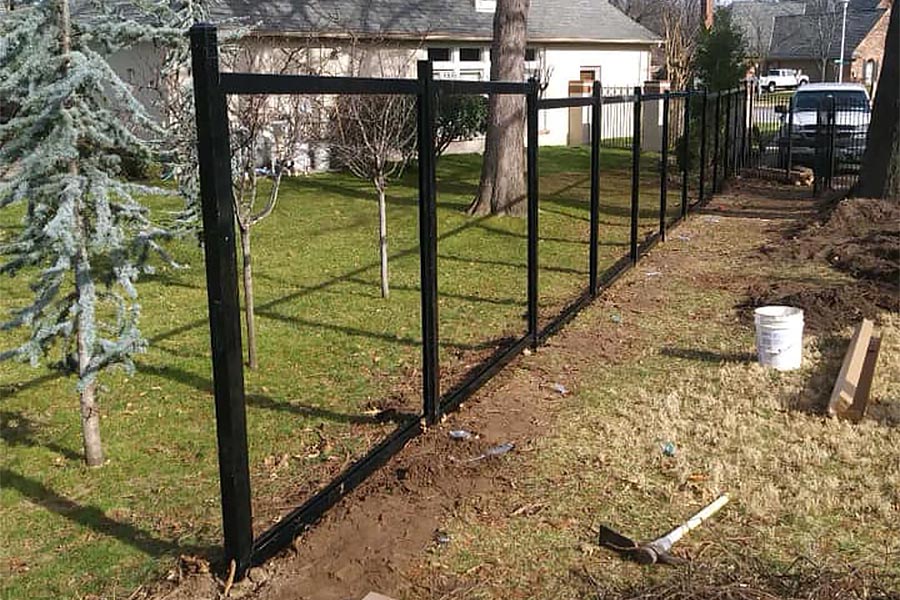
The steel frame is the primary cost driver. Galvanized G90 steel costs more per foot than dimensional lumber. The frame is manufactured, powder-coated, and shipped as a precision-cut kit. Lumber is a raw commodity sold by the board foot.
The infill also affects upfront price. LuxeCore composite boards and UltraBlend PVC boards cost more than cedar pickets. But both carry a Limited Lifetime Warranty and require zero maintenance, which is where the long-term math shifts.
Installation costs are comparable. FenceTrac’s modular panel system installs in a similar timeframe to a wood fence. The frame components are pre-cut to length, and the infill boards slide into the channels without nailing or screwing through the face of each board.

The Hidden Costs of Wood Fence Ownership
A wood fence does not stay in its installed condition. From the first year, it begins to weather, move, and degrade. Each stage of degradation has a cost.
Staining and Sealing
Most wood fences need staining or sealing every 2 to 3 years. Materials for a 150-linear-foot fence run $200 to $500 per application. Hiring a contractor for the work adds $500 to $1,500 or more. Over 20 years, that is 7 to 10 cycles, totaling $1,400 to $15,000 in stain and seal costs alone.
Board Replacement
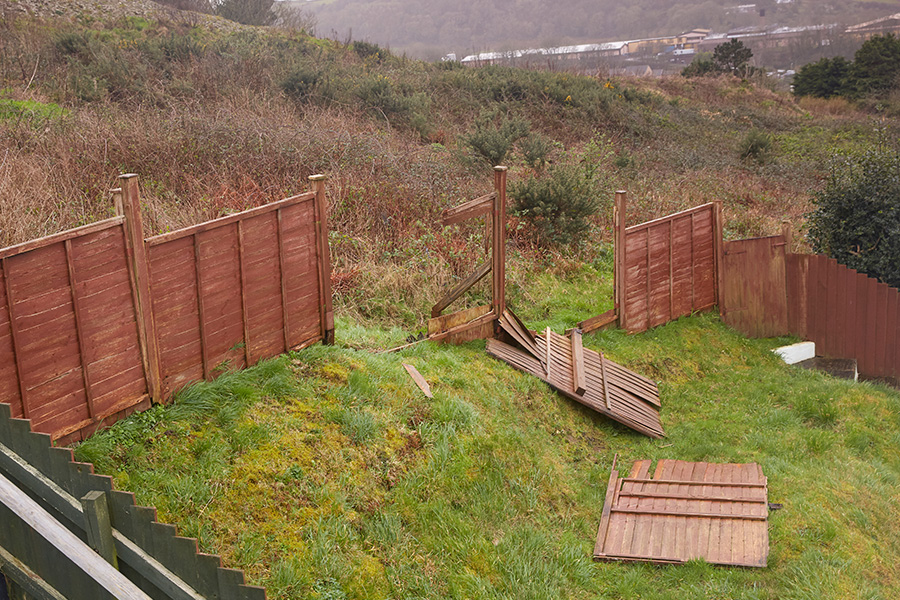
Individual pickets crack, split, warp, and rot. Replacing a few boards per year is typical after year 5. By year 10, most wood fences need significant board replacement or a full section rebuild. Each replacement cycle costs time and money, and the new boards never perfectly match the weathered originals.
Post Failure
Wood fence posts set in concrete are the most common failure point. The post rots at the ground line where moisture collects. When a post fails, the entire section it supports leans or collapses. Replacing a post means digging out the old concrete footing, setting a new post, and reattaching the rails and pickets. A single post replacement can cost $150 to $400.
How a Steel Frame Fence Eliminates Recurring Costs
FenceTrac’s powder-coated galvanized steel frame does not rot, warp, split, or require recoating. The steel posts do not degrade at the ground line the way wood posts do. The frame carries a 20-year warranty because the materials are engineered to last without maintenance intervention.
When paired with LuxeCore or UltraBlend infill, the entire fence system is maintenance-free. No staining. No sealing. No board replacement. No repainting. The only recurring cost is occasional cleaning with soap and water.
This is the core of the long-term cost advantage. The steel frame fence has a higher purchase price but a near-zero maintenance cost. The wood fence has a lower purchase price but a compounding maintenance cost that grows every year.
Cost Comparison Over 20 Years
| Cost Category | Wood Fence | FenceTrac Steel Frame + Composite Infill |
|---|---|---|
| Initial purchase and install | Lower | Higher |
| Staining/sealing (every 2-3 years) | $1,400-$15,000 | $0 |
| Board replacement | $500-$3,000+ | $0 |
| Post replacement | $300-$2,000+ | $0 |
| Full rebuild (year 12-18) | $3,000-$10,000+ | $0 |
| Warranty coverage | Typically 1-5 years (lumber) | 20-year frame + Limited Lifetime infill |
The exact numbers depend on fence length, labor rates, and material choices. But the pattern is consistent: the wood fence costs less to buy and more to own.

Design and Resale Value Considerations
A steel frame fence also holds its appearance longer, which affects property resale value. A 10-year-old FenceTrac fence looks essentially the same as the day it was installed. A 10-year-old wood fence shows its age in discoloration, warped boards, and weathered posts.
For commercial properties, the maintenance savings are even more significant. Property managers budgeting for multi-year fence maintenance on a wood fence can reallocate those funds when a steel frame system eliminates the line item entirely.
Related Questions
How long does a wood fence last? Most wood fences last 10 to 15 years with regular maintenance. Without maintenance, the lifespan drops to 7 to 10 years.
Is financing available for a steel frame fence? Contact FenceTrac directly through the pricing tool to discuss project pricing and payment options for larger installations.
See Also
LuxeCore composite fencing and UltraBlend PVC fencing for the maintenance-free infill options that pair with the steel frame.
Get a Quote for Your Fence Project
FenceTrac ships fence systems nationally and has been manufacturing engineered fencing in the USA since 2012.
Every system carries a 20-year warranty and is engineered for long-term performance with minimal maintenance.