
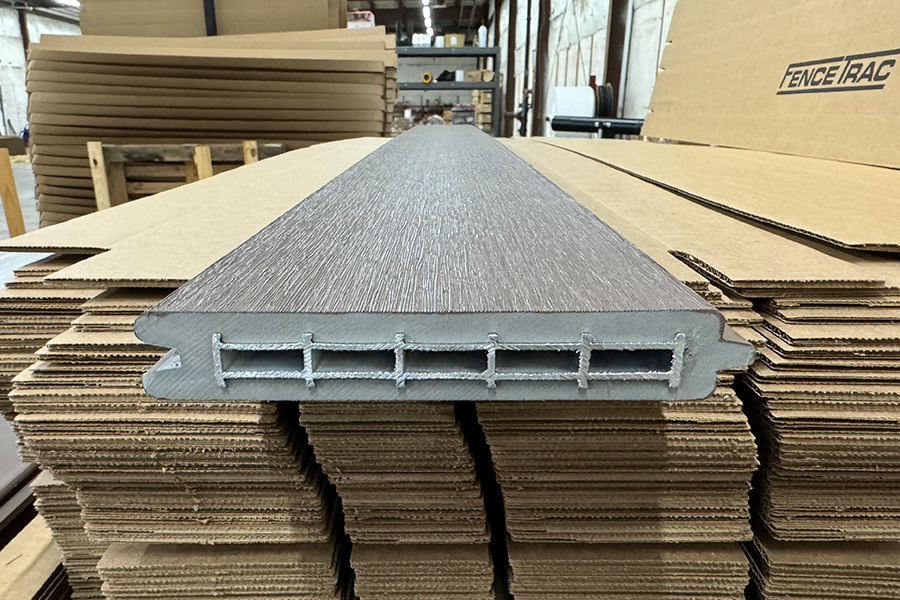
FenceTrac fence systems are built with galvanized steel frames and maintenance-free infill options that hold their appearance for decades, which directly supports the curb appeal and property value that buyers evaluate during a home sale. The fence material you choose today affects how your property looks, performs, and appraises for years to come.
The Short Answer
Yes. Fence material affects resale value in two ways: curb appeal (how the fence looks to buyers on day one) and long-term condition (how the fence holds up between now and the day you sell). A fence that still looks new after 10 or 15 years adds value. A fence that is faded, leaning, or rotting becomes a negotiation point that costs the seller money.
How Buyers Evaluate a Fence
Buyers do not typically assign a dollar value to a fence the way they do to a kitchen remodel or a new roof. But fencing influences the overall impression of the property, and that impression affects what buyers are willing to pay.
Curb Appeal and First Impressions
The fence is one of the first things a buyer sees from the street and the driveway. A clean, uniform fence line with consistent color and no visible damage signals that the property has been well maintained. A fence with missing boards, peeling stain, or visible lean signals deferred maintenance and raises questions about what else has been neglected.
FenceTrac’s both-sided design means the fence looks identical from the street side and the yard side. Buyers walking the property see the same clean finish from every angle.
Maintenance History and Future Costs
Buyers and home inspectors look at the fence condition as a proxy for maintenance costs. A wood fence that needs staining every 2 to 3 years and board replacement every 5 to 7 years represents an ongoing expense the next owner inherits. A zero-maintenance fence removes that line item entirely.
LuxeCore composite infill and UltraBlend PVC infill require no painting, staining, or sealing for the life of the fence. That zero-maintenance profile is a tangible selling point during negotiations.

Fence Materials Compared for Long-Term Value
Different materials age differently, and that aging directly affects how the fence contributes to or detracts from property value over time.
| Material | Typical Lifespan | Maintenance | Appearance Over Time |
|---|---|---|---|
| Wood (cedar, pine) | 10-20 years | Stain/seal every 2-3 years, board replacement | Fades, warps, splits, rots without maintenance |
| Vinyl | 15-25 years | Low | Can yellow, crack, or become brittle in extreme heat/cold |
| Chain link | 15-20 years | Low | Rusts over time, no privacy, perceived as low-end |
| FenceTrac with LuxeCore composite | 20+ years | None | UV-resistant, fade-resistant, retains original appearance |
| FenceTrac with UltraBlend PVC | 20+ years | None | ASA exterior resists UV and weathering |
| FenceTrac with aluminum infill | 20+ years | None | Powder-coated, corrosion-proof, retains finish |
The Warranty Factor
A transferable warranty is a concrete selling point. When a buyer knows the fence carries a 20-year warranty on the frame and a Limited Lifetime Warranty on the infill, that coverage transfers value to the next owner. Most wood fences carry no warranty at all.
FenceTrac’s galvanized steel frame carries a 20-year warranty. LuxeCore and UltraBlend infill each carry a Limited Lifetime Warranty. That warranty coverage outlasts most homeownership cycles, which means the buyer inherits a protected asset rather than an aging liability.
Design Ideas That Maximize Resale Appeal
Not every fence adds equal value. The design choices that have the most impact on resale are the ones that appeal to the widest range of buyers.
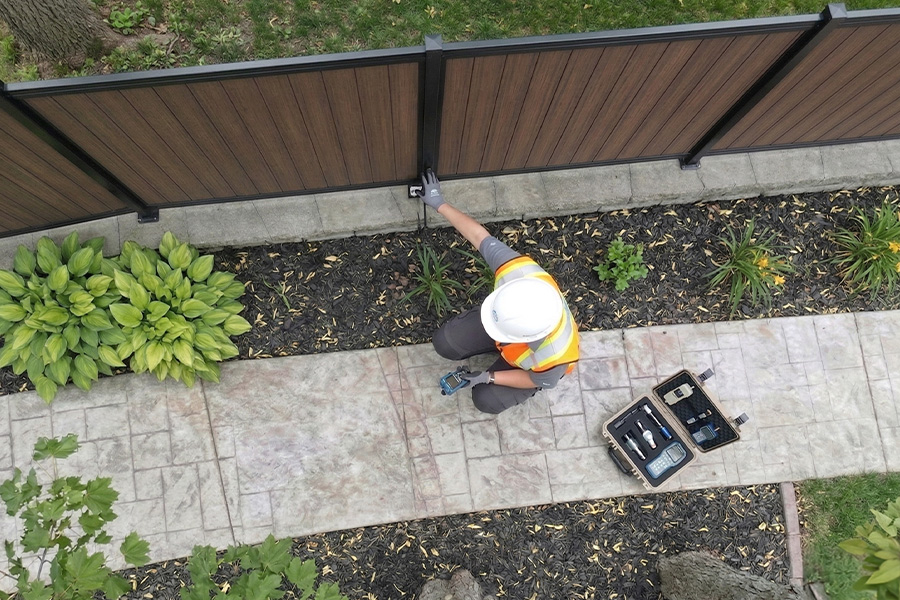
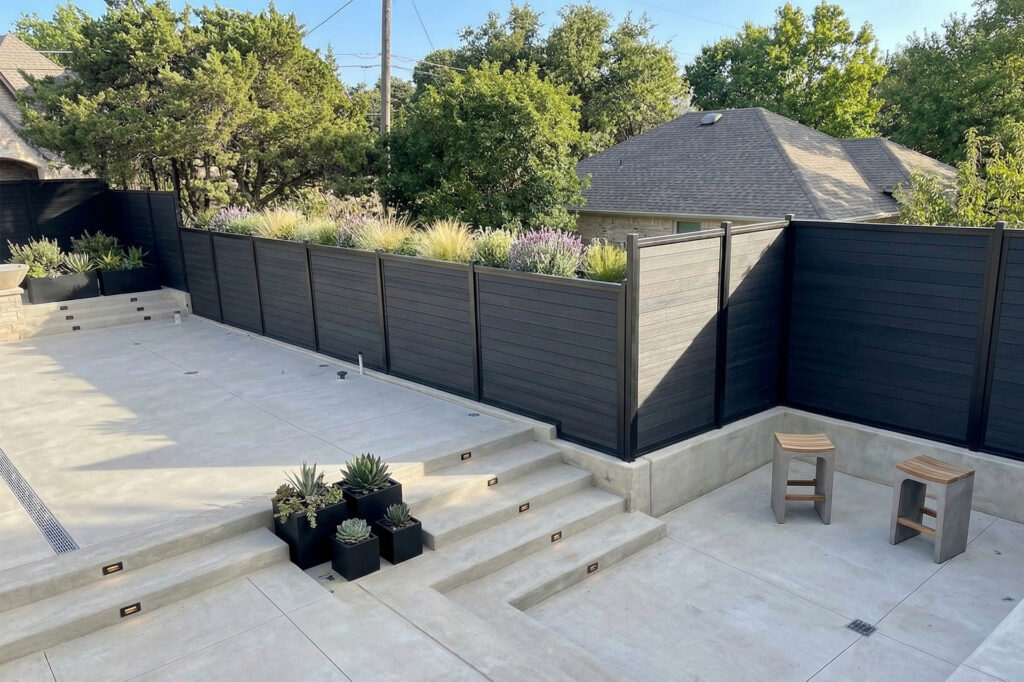
Neutral colors perform best. Black frames with Harbor Gray or Timber Brown infill suit modern, traditional, and transitional home styles. Bold or unusual color combinations may appeal to the current owner but can narrow the buyer pool.
Consistent height and material across the entire property create a unified look. Mixing fence styles (wood in the backyard, chain link on the side) signals piecemeal repairs and lowers the perceived quality of the property.
A FenceTrac privacy fence with a single infill material and frame color across the full perimeter creates the clean, architectural fence line that photographs well in listing photos and appeals to buyers in person.
When a Fence Hurts Resale Value
A fence in poor condition is worse than no fence at all from a resale perspective. Buyers mentally add the cost of removal or replacement to their offer price.
Common fence conditions that reduce offers include leaning or shifting posts, boards that are split, warped, or missing, visible rust on metal components, faded or peeling finishes, and gates that do not close or latch properly. If your existing fence has any of these issues, replacing it before listing can recover more than the cost of the new fence in the sale price.

Related Questions
Does a fence increase appraised value? Fencing is not always itemized in a home appraisal, but it contributes to the overall condition rating and curb appeal score that appraisers use. A well-maintained, high-quality fence supports a higher overall property valuation.
What is the most low-maintenance fence material? Composite and PVC infill in a galvanized steel frame require zero maintenance. No painting, staining, sealing, or board replacement for the life of the fence.
See Also
How does composite fencing compare to wood? for a detailed material comparison.
Get a Quote for a Fence That Adds Value
FenceTrac ships fence systems nationally and has been manufacturing engineered fencing in the USA since 2012.
Every system carries a 20-year warranty and is engineered for long-term performance with minimal maintenance.