
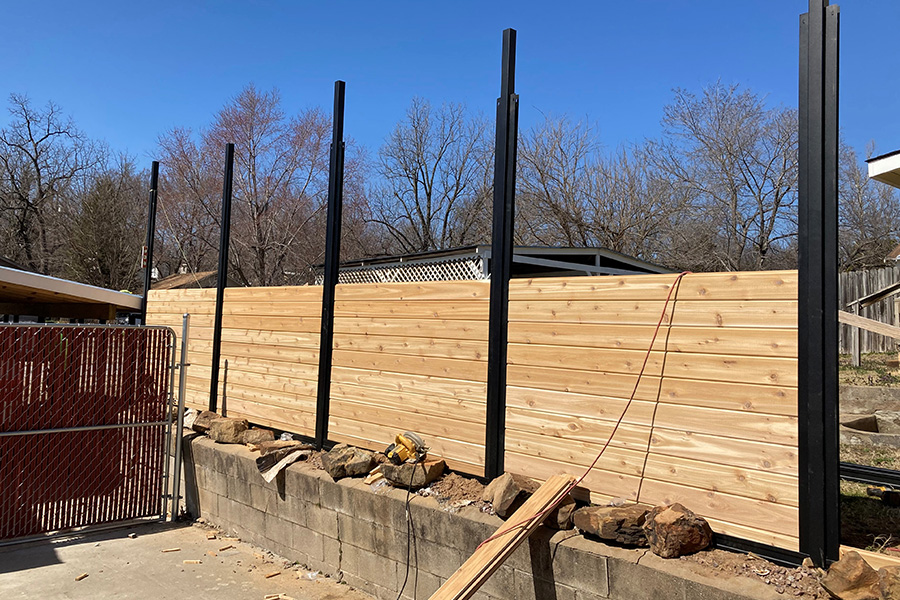
FenceTrac’s galvanized G90 steel posts follow the same depth principles as any structural fence post: the bottom of the concrete must sit below the frost line, and the embedded length must be proportional to the fence height. For a standard 6-foot FenceTrac privacy fence, that typically means 36 inches of post below grade in a concrete footing, though the exact depth depends on frost line, soil conditions, and local building codes.
The Short Answer
Set fence posts deep enough so the bottom of the concrete is at least 6 inches below the local frost line. A common guideline is to bury one-third of the total post length. For a 6-foot fence with a 9-foot post, that means 36 inches below grade. For an 8-foot fence with a 12-foot post, 48 inches. Always verify with your local building department before digging.
The One-Third Rule
The most widely cited guideline for fence post depth is to bury one-third of the total post length below grade. FenceTrac posts are typically 3 feet longer than the fence height, which provides exactly this ratio.
| Fence Height | Total Post Length | Below Grade (1/3 rule) |
|---|---|---|
| 4 ft | 7 ft | 28 inches |
| 6 ft | 9 ft | 36 inches |
| 8 ft | 12 ft | 48 inches |
These are starting points. The actual required depth may be deeper depending on the factors below.

Factors That Determine Post Depth
Four variables govern how deep your posts need to go. All four should be evaluated before setting post depth for a project.
Frost Line
The bottom of the concrete footing must sit at least 6 inches below the local frost line. When soil freezes, it expands and pushes upward (frost heave). A footing that sits above the frost line will shift over freeze-thaw cycles, causing posts to lean and panels to rack unevenly.
Frost line depth varies by region. In southern states like Texas and Florida, the frost line may be 6 to 12 inches. In northern states like Minnesota and Wisconsin, it can reach 48 to 60 inches. Your local building department publishes the frost line depth for your area.
Fence Height and Wind Load
Taller fences catch more wind, which increases the lateral force transferred through the post into the ground. A 6-foot privacy fence in a moderate wind zone may be fine at 36 inches. An 8-foot privacy fence in an open, exposed area may need 48 inches or deeper to resist overturning.
FenceTrac provides stamped engineering documentation for projects that require site-specific wind load calculations. The engineering report specifies exact post depth, hole diameter, and concrete volume for the project conditions.
Soil Type
Soil density affects how much lateral resistance the ground provides against wind and impact loads on the fence.
Dense clay and compacted soil grip the concrete footing tightly and resist lateral movement. Sandy or loose soil provides less resistance, which may require deeper holes or wider hole diameters to achieve the same stability. Expansive clay soils (common in Texas and parts of the Southeast) swell when wet and shrink when dry, which can shift footings over time. In expansive soil, deeper footings below the active zone provide more consistent support.
Local Building Codes
Many municipalities specify minimum post depth for fences, especially fences over 6 feet or fences along property lines. Some jurisdictions require a permit and inspection for fences above a certain height. Always check local code before setting depth, because the code requirement may exceed the one-third rule.

Post Hole Design for FenceTrac Steel Posts
FenceTrac recommends a hole diameter of 4 times the post dimension. The standard residential 2.5-inch post uses a 10-inch diameter hole. The 3-inch commercial post uses a 12-inch hole. The 4-inch heavy commercial post uses a 16-inch hole.
A 4-inch layer of compacted gravel at the bottom of the hole provides drainage and prevents the post from sitting in standing water. Concrete fills the space between the post and the hole walls, from the top of the gravel to grade level. For exact concrete bag counts at each depth, see how much concrete per fence post.
When Posts Are Not Set in the Ground
Not every fence installation involves digging holes. FenceTrac offers surface-mount base plates that bolt directly to existing concrete surfaces using anchor bolts. Surface-mount installations are common on concrete pads, rooftop patios, parking structures, and retaining wall caps.
With surface-mount base plates, post depth is zero. The structural load is transferred through the base plate and anchor bolts into the concrete substrate. The substrate itself must be thick enough and strong enough to handle the lateral forces on the fence.
Related Questions
How much concrete do you need per fence post? Concrete volume depends on post size, hole diameter, and hole depth. A 2.5-inch FenceTrac steel post in a 10-inch hole at 36 inches deep requires approximately 2.25 bags of 80-lb concrete.
What is the correct spacing for FenceTrac fence posts? FenceTrac posts are spaced at 6-foot or 8-foot intervals depending on panel width. Post spacing determines the total number of posts and total concrete needed for the project.
How do metal fence posts compare to wood? FenceTrac’s powder-coated G90 steel posts do not rot, warp, or split. Wood posts degrade in contact with soil and concrete over time, which is why post depth and drainage are especially critical for wood fence installations.
See Also
Can FenceTrac be engineered for wind load? for details on how post depth, hole diameter, and concrete volume are calculated for high-wind projects. Watch FenceTrac assembly videos for a visual walkthrough of the full installation process.
Get a Quote for Your Fence Project
FenceTrac ships fence systems nationally and has been manufacturing engineered fencing in the USA since 2012.
Every system carries a 20-year warranty and is engineered for long-term performance with minimal maintenance.