
FenceTrac manufactures modular privacy fence systems in 4-foot, 6-foot, and 8-foot heights using galvanized steel frames and engineered infill boards. The maximum height you can install depends on your local building code, HOA restrictions, and whether the fence is in a front yard, side yard, or backyard.
The Short Answer
Most residential zoning codes allow 6-foot privacy fences in backyards and side yards without a permit. Front yard fences are typically limited to 3 or 4 feet.
8-foot privacy fences are permitted in many jurisdictions, but they often require a building permit, a property survey, and sometimes an engineered footing plan. Commercial properties generally have more flexibility on fence height.

Common Fence Height Limits by Location
Local codes vary, so always check your specific jurisdiction before ordering materials. These are typical limits that apply across most U.S. municipalities.
| Location on Property | Typical Max Height (No Permit) | With Permit |
|---|---|---|
| Backyard | 6 feet | 8 feet (varies by code) |
| Side yard | 6 feet | 8 feet (varies by code) |
| Front yard | 3-4 feet | Up to 6 feet (some areas) |
| Corner lot (visibility triangle) | 3 feet or less | Restricted for traffic safety |
| Commercial property | 6-8 feet | Higher with engineering review |
Corner lots almost always have stricter height limits near intersections. Cities define a “visibility triangle” at corners where fences must stay low enough to maintain clear sightlines for drivers and pedestrians.
When an 8-Foot Tall Privacy Fence Makes Sense
A standard 6-foot fence provides adequate privacy for most residential yards. But certain situations call for the extra height.
Properties with Elevated Neighbors
If the adjacent property sits higher than yours, a 6-foot fence may only provide 3 or 4 feet of effective screening from the neighbor’s vantage point. An 8-foot privacy fence restores full visual separation in these situations.
Pool Areas and Outdoor Living Spaces
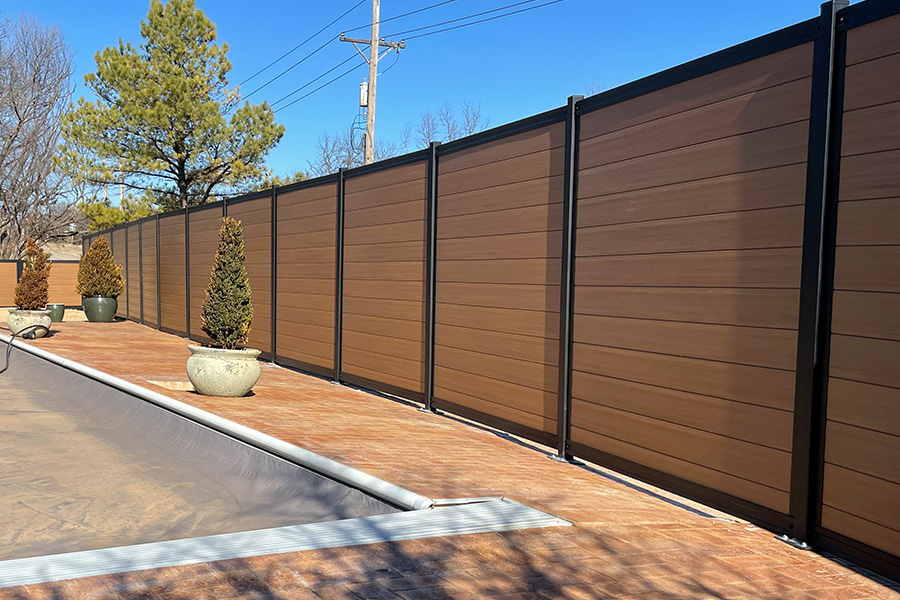
Pool privacy is a top reason homeowners choose 8-foot fencing. Taller fences block sightlines from second-story windows, nearby buildings, and public areas. FenceTrac’s 8-foot panels use the same G90 galvanized steel frame as the 6-foot version, so structural integrity is consistent across all heights.

Commercial and Roadside Applications
Commercial properties along busy roads or highways benefit from 8-foot fencing for both privacy and noise reduction. The taller the fence, the more effective it is at deflecting road noise and blocking headlights. FenceTrac privacy fencing in 8-foot configurations is common for office parks, storage facilities, and multi-family developments.
Tall Privacy Fence Considerations
Taller fences catch more wind. That means footings, post sizing, and panel engineering matter more at 8 feet than at 6 feet.
FenceTrac’s standard residential post is 2.5 inches by 2.5 inches square. For 8-foot installations, 3-inch or 4-inch posts may be specified depending on wind exposure and local code requirements. Post embedment depth is generally 38 inches but is determined by the project’s Engineer of Record based on local soil conditions and wind load calculations.
FenceTrac tested its LuxeCore system to 55.0 psf design wind load and 82.5 psf structural load under ASTM E330 at QAI Laboratories. That third-party data gives engineers and building departments the performance numbers they need to approve taller installations in high-wind areas.
FenceTrac Fence Heights and Infill Options
Every FenceTrac infill product is available in all three standard heights.
LuxeCore composite infill and UltraBlend PVC infill both come in 6-foot board lengths. For 8-foot panels, additional boards fill the extra height within the same steel frame.
Aluminum infill boards are available in multiple widths and can be configured for privacy or semi-privacy at any height. The fire-rated fencing system, OmniView welded wire, and all enclosure configurations also support 4-foot, 6-foot, and 8-foot builds.
Permit Tips for Tall Privacy Fences
If your project requires a permit, start by contacting your local building or zoning department. They will confirm the maximum allowed height, required setbacks from the property line, and whether engineered drawings are needed.

HOA-governed properties may impose additional restrictions beyond what the city allows. Check your HOA covenants before submitting a permit application.
FenceTrac provides full specifications and engineering support for projects that require stamped drawings or wind load calculations. An engineering fee applies when project-specific calculations are needed.
Related Questions
What is the tallest fence you can build without a permit? In most U.S. municipalities, 6 feet in the backyard. Front yards are typically limited to 3 or 4 feet. Check your local zoning code for the exact limit in your area.
Does an 8-foot fence need deeper footings? Usually yes. Footing depth is determined by the project engineer based on fence height, wind exposure, and soil type. FenceTrac recommends a minimum 6-inch diameter footing with depth verified by the installer based on local code.
Can FenceTrac fencing be installed on a slope? Yes. The modular panel system accommodates stair-stepping on sloped terrain. Each panel is installed level, with the gap at the bottom managed by adjusting post height or using a gravel board.
See Also
Semi-privacy fencing for applications where partial visibility and airflow are preferred over full screening.
Get a Quote for Your Privacy Fence Project
FenceTrac ships fence systems nationally and has been supplying contractors, property owners, and commercial buyers since 2012.
Every system carries a 20-year warranty and is engineered for long-term performance with minimal maintenance.