
FenceTrac fence systems can be installed on existing concrete surfaces using surface-mount base plates that bolt directly to the slab with anchor bolts. This eliminates the need to dig footings and makes it possible to install a full privacy fence on patios, pool decks, parking structures, retaining walls, rooftops, and other hardscaped areas where traditional post burial is not an option.
The Short Answer
Surface-mount base plates anchor FenceTrac’s galvanized steel posts to existing concrete without digging. The base plate bolts to the concrete surface, and the post attaches to the plate. From there, the frame assembly and infill installation follow the same process as a standard FenceTrac fence.
This method works on any cured concrete surface that can accept anchor bolts, including poured slabs, retaining wall caps, concrete block walls, and precast surfaces.
Why Concrete Installations Require a Different Approach
Standard FenceTrac installations embed posts in concrete footings below grade. The footing diameter is typically 6 inches minimum, and depth is generally 38 inches (confirmed by local building code). This is the strongest mounting method and the default for most residential and commercial projects.
But some job sites already have a concrete surface where the fence needs to go. Cutting into an existing patio slab or parking deck is expensive, messy, and sometimes structurally prohibited. Surface mounting solves this by attaching the post to the top of the concrete rather than inside it.
How Surface-Mount Base Plates Work
A surface-mount base plate is a steel plate that sits flat on the concrete surface. Anchor bolts pass through holes in the plate and into the concrete below, locking the plate in position.
The FenceTrac post then connects to the base plate. The connection is steel-to-steel, maintaining the structural integrity of the fence system. Once the post is secured, the rest of the installation follows the standard sequence: side channels attach to the posts, infill boards slide into the channels, and the top and bottom channels bolt on to complete the panel.
The base plate sits beneath the fence panel, so it is largely hidden from view once the fence is installed.
Where Concrete Fence Installations Are Common
Several common project types call for fence installation on existing concrete.
Patios and Pool Decks
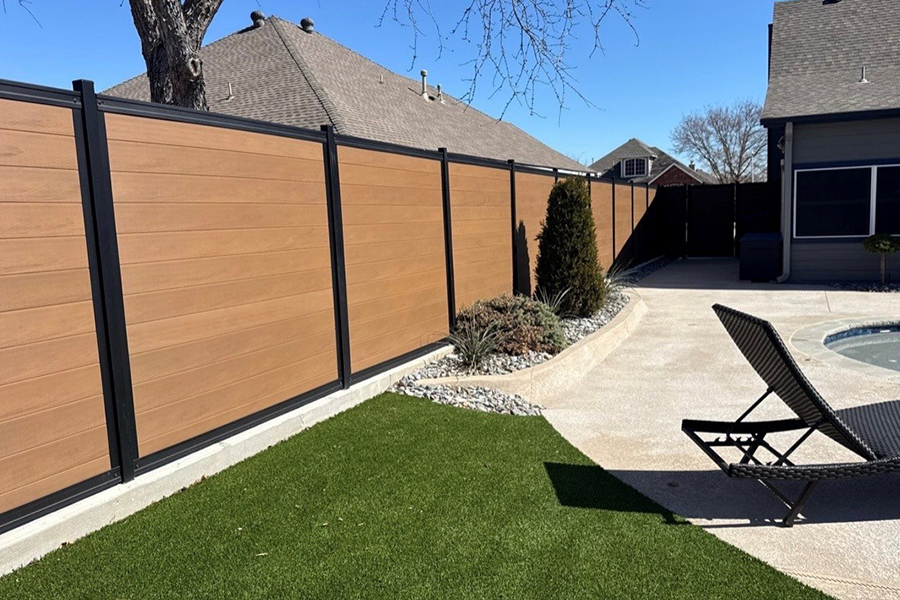
Homeowners adding privacy screening to an existing patio or pool deck often need to mount fence posts on the slab rather than in the yard adjacent to it. Surface-mount base plates let the fence sit at the exact edge of the concrete, maximizing usable space.
For pool areas, self-closing gate hardware is available to meet pool code requirements.

Retaining Walls
A fence on top of a retaining wall adds height, privacy, and fall protection. The base plates bolt to the cap of the wall, and the fence system adds 4, 6, or 8 feet of height above the wall surface. This is a popular design for properties with grade changes where the retaining wall alone does not provide enough screening.
Rooftop Patios and Elevated Decks
Rooftop installations cannot use buried footings. Surface-mount base plates are the only practical option for these applications. FenceTrac’s wind load testing to 55.0 psf design load (ASTM E330, tested by QAI Laboratories) is particularly relevant for elevated installations where wind exposure is higher than at ground level.
Commercial and Industrial Surfaces
Parking garages, loading docks, warehouse floors, and equipment pads are all concrete surfaces where fencing or screening may be needed. FenceTrac Enclosures mounted on base plates are a common configuration for dumpster screening, generator enclosures, and HVAC equipment screening on commercial properties.
Fence Design Ideas for Concrete Installations
Concrete-mounted fences open up design options that traditional installations do not. A short 4-foot fence on top of a 3-foot retaining wall creates 7 feet of total height with an architectural look. A rooftop patio can have a full LuxeCore composite privacy fence that matches the building exterior.
Because the FenceTrac frame is powder-coated in Black, Bronze, White, or Silver, and the infill is available in multiple colors and materials, the fence can be designed to complement the existing concrete and surrounding architecture rather than looking like an afterthought.

Engineering Considerations
Surface-mount installations may require site-specific engineering review, especially for tall fences (8-foot), high-wind locations, or elevated installations. The concrete surface must be thick enough and structurally sound enough to accept anchor bolts and resist the lateral loads the fence will transfer to it.
FenceTrac provides engineering specifications and dimensional data on the specifications page for architects and engineers sizing base plates and anchor bolts for specific project conditions.
Related Questions
Can any FenceTrac infill be used with surface-mount posts? Yes. The base plate changes only how the post connects to the ground. The frame, channels, and infill are identical to a standard FenceTrac installation. LuxeCore, UltraBlend, aluminum, cedar, and welded wire infill all work with surface-mounted posts.
How does a surface-mount fence handle post spacing? The same panel widths apply: 6-foot and 8-foot panels. Post spacing matches the panel width selected.
See Also
Does FenceTrac offer surface mount base plates for posts? for product-specific details on the base plate system.
Get a Quote for a Concrete Fence Installation
FenceTrac ships fence systems nationally and has been manufacturing engineered fencing in the USA since 2012.
Every system carries a 20-year warranty and is engineered for long-term performance with minimal maintenance.