
FenceTrac offers surface-mount base plates as an alternative to standard buried post footings. The base plates attach FenceTrac’s galvanized steel posts directly to existing concrete surfaces using anchor bolts, making it possible to install a full fence system on patios, retaining walls, rooftops, pool decks, and other hardscaped areas.
The Short Answer
Yes. FenceTrac surface-mount base plates are available for projects where digging post holes is not practical or not permitted. The base plate bolts to the concrete surface, and the steel post connects to the plate. The rest of the fence system assembles the same way as a standard installation.

What the Base Plate Replaces
In a standard FenceTrac installation, posts are embedded in concrete footings below grade. The footing is typically 6 inches minimum in diameter and approximately 38 inches deep (depth is confirmed by local building code and the project engineer of record).
The surface-mount base plate eliminates the below-grade footing entirely. Instead of burying the post, you bolt a steel plate to the concrete surface and mount the post on top of it. The anchor bolts transfer the lateral and vertical loads from the post into the concrete slab.
This means no digging, no concrete mixing, and no cure time for footings. The post is load-bearing as soon as the anchor bolts are tightened.
How Surface-Mount Base Plates Are Installed
The installation sequence is straightforward for experienced fence installers.
Step 1: Mark Post Locations
Lay out the fence line and mark each post position on the concrete surface. Post spacing follows the same rules as a standard installation: posts are set to match the panel width selected (6-foot or 8-foot panels). For exact post spacing dimensions, refer to the FenceTrac specifications.
Step 2: Drill Anchor Holes
Drill holes into the concrete at each base plate anchor point using a hammer drill with a masonry bit sized to match the anchor bolts. The concrete must be structurally sound and thick enough to accept the anchors. Cracked, spalling, or thin concrete may not provide adequate holding strength.
Step 3: Secure the Base Plate
Position the base plate over the drilled holes, insert the anchor bolts, and tighten to the specified torque. The plate should sit flat and flush against the concrete. Shims can be used if the surface is slightly uneven.
Step 4: Mount the Post
Attach the FenceTrac steel post to the base plate. The connection is steel-to-steel, maintaining the structural integrity that defines the FenceTrac system. Once the post is plumb and secured, the frame assembly proceeds normally: side channels, infill, and top/bottom channels.
Where Surface-Mount Base Plates Are Used
Base plates are specified whenever the job site has an existing concrete surface and below-grade footings are not feasible.
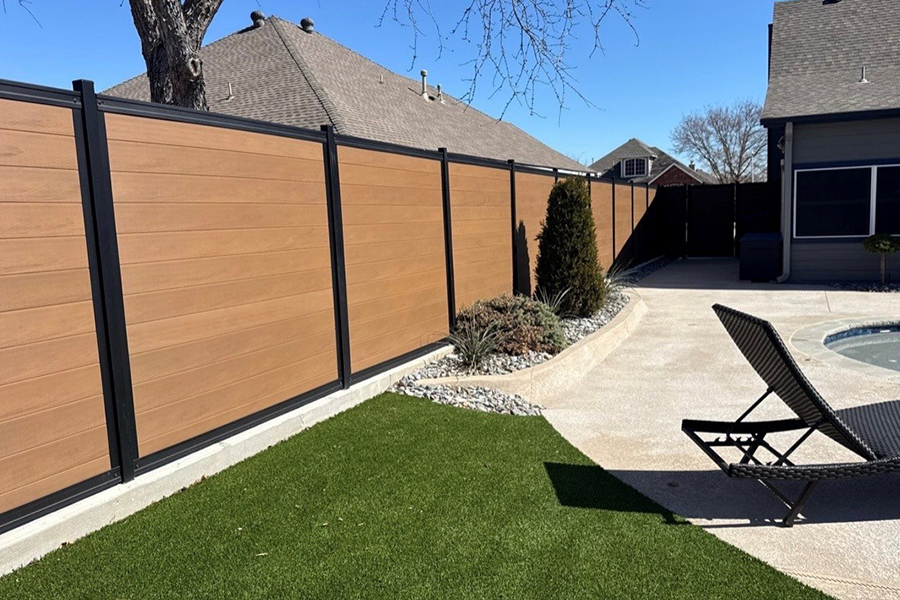
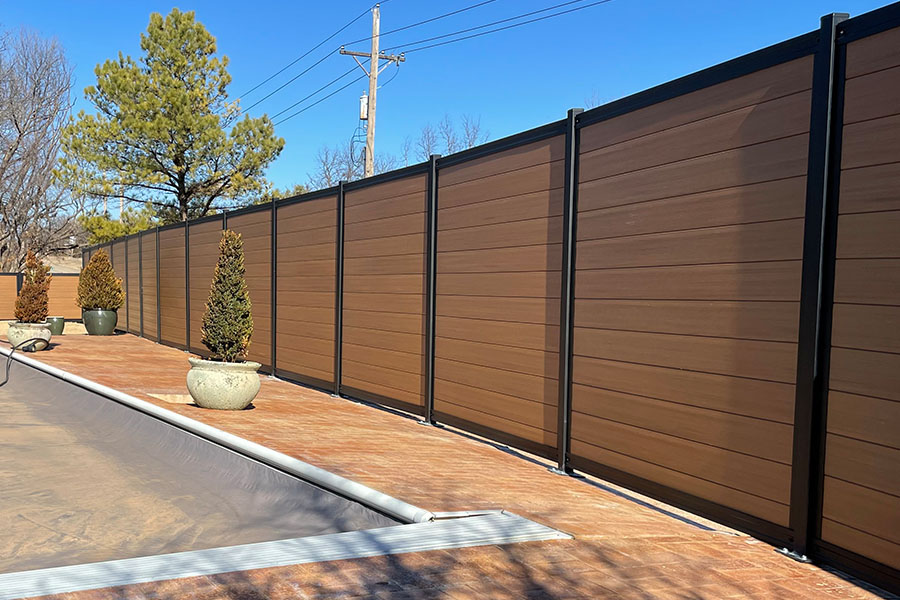
Common applications include patio privacy fences, retaining wall toppers, rooftop deck enclosures, pool deck fencing, parking garage screening, and commercial equipment enclosures on concrete pads. Installing a fence on existing concrete covers these applications in more detail.
Design Options with Surface-Mount Posts
The base plate does not limit the fence configuration. Every FenceTrac product works with surface-mounted posts: privacy fencing with LuxeCore, UltraBlend, aluminum, or cedar infill, semi-privacy fencing with aluminum slat boards, and Enclosures for dumpster, generator, or utility screening.
Panel heights of 4 feet, 6 feet, and 8 feet are all available. All four powder-coat frame colors (Black, Bronze, White, Silver) apply to surface-mount posts the same as standard posts.

For rooftop or elevated installations, FenceTrac’s wind load testing to 55.0 psf design load under ASTM E330 gives architects and engineers tested performance data to reference in their design calculations.
Engineering and Code Considerations
Surface-mount installations transfer all wind and impact loads through the base plate and anchor bolts into the concrete below. For standard residential applications on thick, sound concrete, the installation is straightforward.
For tall fences (8-foot), high-wind zones, elevated locations, or commercial projects, a site-specific engineering review is recommended. The engineer of record will size the anchor bolts, verify the concrete thickness and strength, and confirm that the base plate connection meets local wind load code requirements.
FenceTrac’s specifications page provides the material grades, dimensions, and fastener data that engineers need for these calculations.
Related Questions
Are surface-mount base plates included in the standard FenceTrac kit? Base plates are an accessory, not a default component. When requesting a quote, specify that the project requires surface mounting so the correct hardware is included.
Can I switch from buried posts to surface-mount partway through a fence line? Yes. Some projects combine both methods. Posts along a yard may use standard buried footings while posts on a patio section use base plates. The above-ground fence assembly is identical for both.
See Also
How do you install a fence on existing concrete? for a full walkthrough of concrete-surface fence installations.
Get a Quote for Surface-Mount Fencing
FenceTrac ships fence systems nationally and has been manufacturing engineered fencing in the USA since 2012.
Every system carries a 20-year warranty and is engineered for long-term performance with minimal maintenance.