
FenceTrac fence posts are spaced based on the panel width selected for the project. For 6-foot wide panel kits, posts are set 72-1/4 inches apart (measured between posts). For 8-foot wide panel kits, posts are set 96-1/4 inches apart. These measurements are critical to proper frame fit and panel alignment across the entire fence line.
The Short Answer
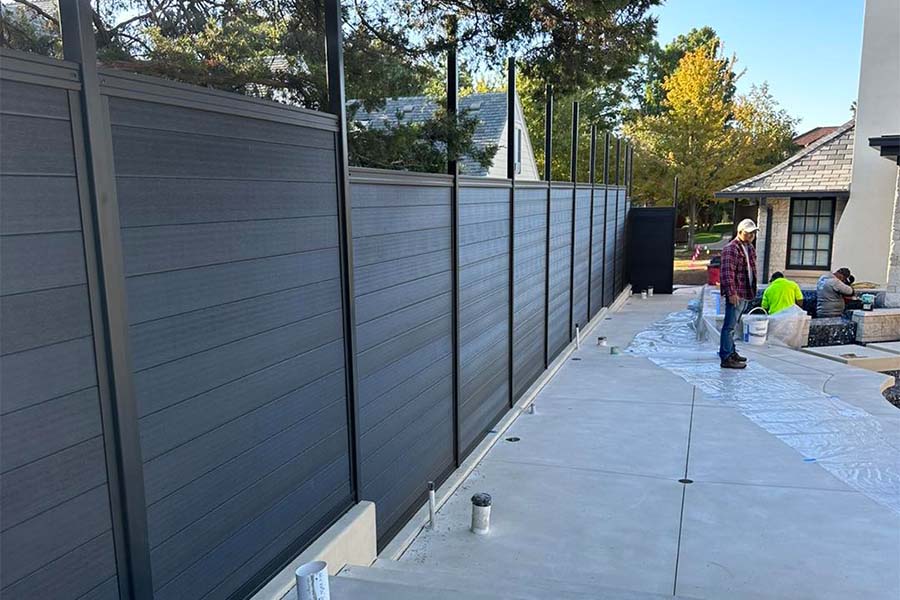
Set FenceTrac posts 72-1/4 inches apart for 6-foot panels and 96-1/4 inches apart for 8-foot panels. Allow a 1-inch to 2-inch gap between the bottom of the frame and grade. Extend the post 1 inch above the top of the frame. These dimensions apply to all FenceTrac panel heights: 4-foot, 6-foot, and 8-foot.

Post Spacing by Panel Width
FenceTrac panel kits are manufactured in two widths. The post spacing for each is precise because the steel frame channels must fit between the posts with consistent clearance for assembly.
| Panel Kit Width | Post Spacing (Between Posts) |
|---|---|
| 6-foot panel kit | 72-1/4 inches |
| 8-foot panel kit | 96-1/4 inches |
These measurements are taken from the inside face of one post to the inside face of the next post. Measure at the height where the side channels will attach, not at the base or top of the post, to account for any minor lean.
Post Height and Frame Alignment
Post spacing is only one of the two critical dimensions. The vertical position of the frame on the posts also matters.
Gap Below the Frame
Leave a 1-inch to 2-inch gap between the bottom of the bottom channel and grade. This gap keeps the steel frame above standing water, soil contact, and debris accumulation. It also accommodates minor grade variations along the fence line without forcing the frame to follow every dip and rise in the ground.
For installations on concrete surfaces using surface-mount base plates, the same 1-inch to 2-inch gap applies between the bottom channel and the concrete surface.
Post Extension Above the Frame
The post should extend 1 inch above the top of the top channel. This allows the post cap to sit flush on the post while clearing the top channel. It also gives the fence line a clean, uniform top profile.
If the post extends too far above the frame, the gap between the top channel and the post cap looks unfinished. If the post is cut flush with the top channel, the post cap may not seat properly.
Why Precise Fence Post Spacing Matters
The FenceTrac system is engineered with specific tolerances. The side channels, top channel, and bottom channel are manufactured to fit a known opening between posts. If the posts are too close together, the frame components will not fit. If the posts are too far apart, the side channels will not seat flush against the posts, and the carriage bolt connections will be compromised.
Consistent spacing also keeps the fence line visually uniform. Every panel should look identical to the next. Uneven post spacing creates panels that appear wider or narrower, which breaks the clean, architectural lines that define a FenceTrac fence.
How to Set Post Spacing Accurately
Experienced fence installers use several methods to keep post spacing consistent across a long fence line.
Use a Spacing Jig or Template
Cut a board or pipe to exactly 72-1/4 inches (for 6-foot panels) or 96-1/4 inches (for 8-foot panels). Use it as a spacer between each pair of posts during layout. This eliminates tape-measure errors over long runs.
String Line the Fence Run
Run a string line along the full length of the fence to keep posts aligned in a straight row. The string line establishes the face plane of the fence. Each post should just touch the string without deflecting it.
Set Corner and End Posts First
Install the corner posts and end posts first, then fill in the intermediate posts using the spacing jig. This anchors the fence line geometry before filling in the middle, which reduces cumulative spacing drift.
Fence Post Spacing Design Considerations for Corners and Gates
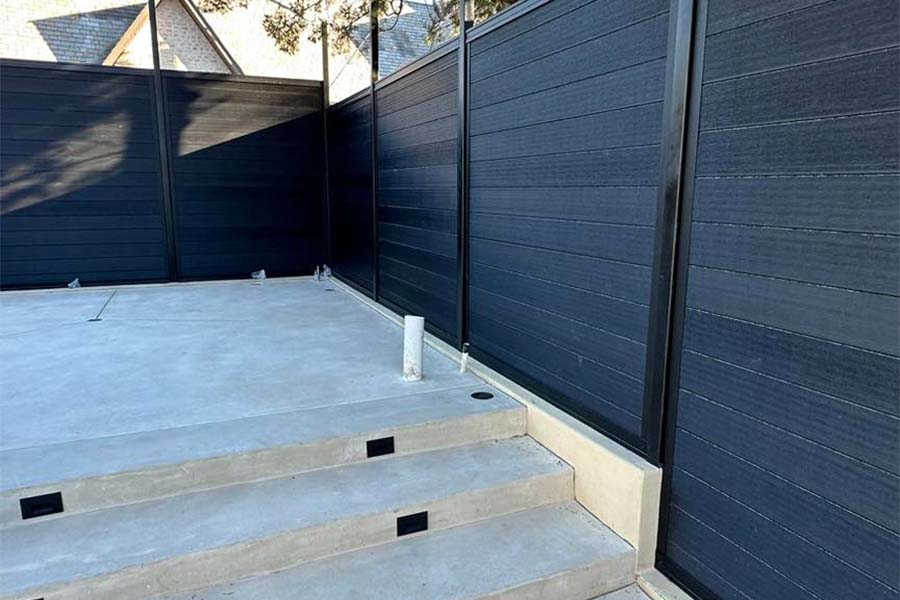
At corners, two panels meet at an angle. The corner post serves both panels. Measure the 72-1/4-inch or 96-1/4-inch spacing from the corner post in both directions along each fence run.
At gate locations, the post spacing changes. Gate openings are 4 feet or 6 feet for single gates and 8 feet or 12 feet for double gates. The gate posts are set to the gate width, not the panel width. Confirm the exact gate opening dimension when ordering gate kits.
Gate posts are typically heavier than line posts. Commercial projects and double-gate installations often use 3-inch by 3-inch or 4-inch by 4-inch steel posts for added rigidity at the gate opening.
Post Spacing and Panel Height
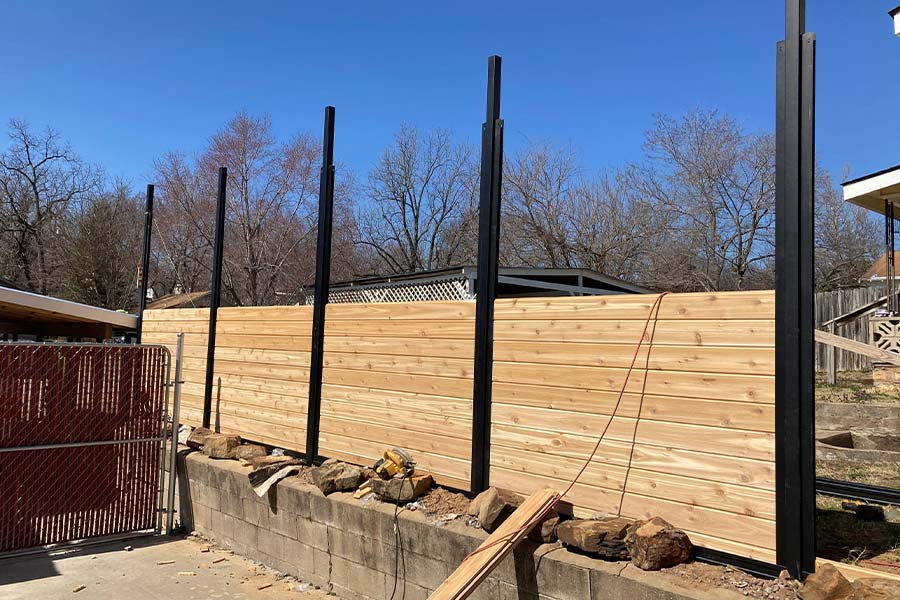
The post spacing dimensions (72-1/4 inches and 96-1/4 inches) are the same regardless of fence height. Whether you are installing 4-foot, 6-foot, or 8-foot FenceTrac privacy fencing, the horizontal distance between posts stays the same. Only the post length and side channel height change with fence height.
For 8-foot tall fences in high-wind areas, some projects choose 6-foot wide panels to reduce the wind load per post. FenceTrac’s specifications page provides the dimensional and material data engineers need for wind load calculations.
Related Questions
What size are FenceTrac posts? Standard residential posts are 2.5 inches by 2.5 inches, G90 galvanized steel, powder-coated. Commercial posts are available in 3-inch by 3-inch or 4-inch by 4-inch.
How deep should FenceTrac post footings be? Footing depth is generally 38 inches with a 6-inch minimum diameter. Local building code and the project engineer of record determine the final depth and diameter for your specific location.
See Also
How do you install a fence on existing concrete? for surface-mount installations where buried footings are not possible.
Get a Quote for Your Fence Project
FenceTrac ships fence systems nationally and has been manufacturing engineered fencing in the USA since 2012.
Every system carries a 20-year warranty and is engineered for long-term performance with minimal maintenance.