
FenceTrac fence systems can be engineered for wind load requirements. The system has been tested to third-party structural standards and can be specified with site-specific engineering documentation when local code or a project engineer requires it.
This puts FenceTrac in a different category than most residential and light commercial fencing products, which are built to convention rather than documented performance data.
What “Engineered for Wind Load” Means
A fence engineered for wind load has been either tested to a documented structural standard or analyzed by a licensed engineer to verify it can withstand the wind forces present at a specific location.

The standard unit of measure is psf (pounds per square foot of wind pressure). This is a more precise measure than miles per hour because it accounts for the actual force the wind exerts against the fence surface, factoring in height, exposure category, and local geography.
Wind load engineering involves two key values. The design load is the pressure the fence must routinely handle without structural failure or permanent deformation. The structural load is a higher pressure, typically 1.5 times the design load, used to test the ultimate capacity of the system. Both values are defined by ASTM E330 testing protocol.
FenceTrac’s Third-Party Wind Load Test Results
FenceTrac with LuxeCore composite infill was tested by QAI Laboratories in Miami under ASTM E330 and ASTM E1886. The test report number is MED-2058a.
Design load: 55.0 psf in both positive (wind push) and negative (suction/uplift) directions. The system passed both.
Structural load: 82.5 psf, which is 1.5 times the design load as required by ASTM E330 protocol. The system passed at the structural load in both directions.
Missile impact: ASTM E1886 Large Missile Impact Level D. A 9.25-pound 2×4 at approximately 50 feet per second, three separate impacts. No damage to the sample or fasteners at the conclusion of all testing.
The full test report is publicly available: view the QAI Laboratories ASTM E330 test report.
Why the Steel Frame Drives the Structural Performance
The wind performance of a FenceTrac fence system comes from the complete assembly, not just the infill material. The four-sided galvanized steel channel frame is what enables the tested structural results.
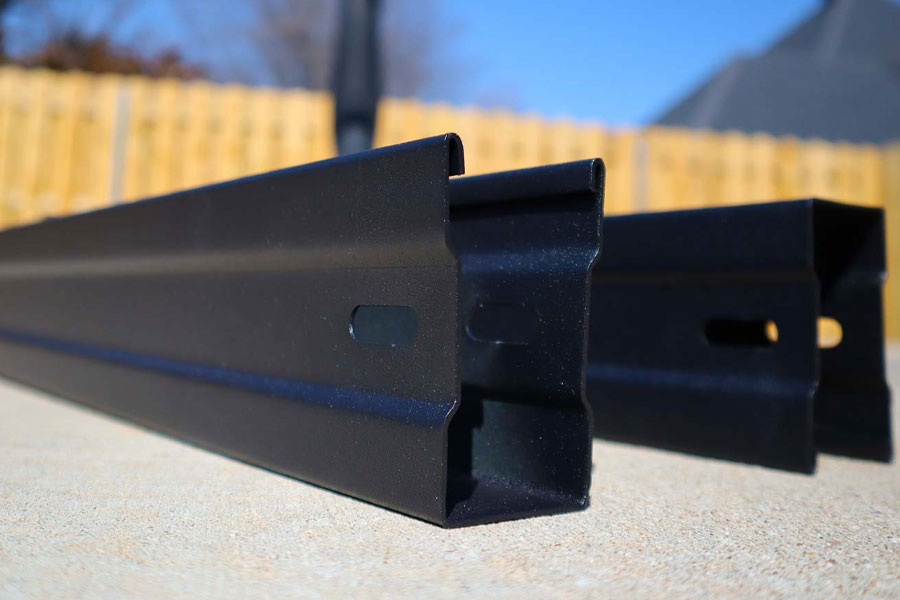
The horizontal top and bottom rails (3-inch galvanized G90 steel) and the vertical side rails (2-inch galvanized G90 steel) work together to distribute wind load across all four sides of each fence section. This load path transfers force efficiently to the posts rather than concentrating it at the board attachment points.
The posts used in the ASTM E330 test were 3×3 12-gauge galvanized steel, set in 6-inch diameter footings with 4,000-psi concrete. Post specification and embedment depth are critical variables. Changing either changes the structural calculation for the installation.
Site-Specific Engineering for Permit and Code Compliance
When local building code, a project owner, or an Authority Having Jurisdiction (AHJ) requires a stamped engineering drawing, FenceTrac installations can be specified with site-specific calculations from a licensed Engineer of Record.
This process uses the ASTM E330 test data as the performance baseline and adapts it to the actual conditions of the project: local wind speed, exposure category, fence height, post spacing, concrete specification, and any other site-specific variables.
For commercial projects, institutional properties, or high-wind residential applications, the site-specific engineering package provides the documentation needed for permit approval and code compliance. This is the same process used for engineered windows, curtain walls, and other exterior structural systems in commercial construction.
Post Installation and Footings in High-Wind Applications
Post installation is where wind engineering becomes practical on the job site. The ASTM E330 tested configuration used 3×3 12-gauge steel posts set in 6-inch diameter footings with concrete at 4,000 psi. Post embedment was 4.5 inches into the concrete.
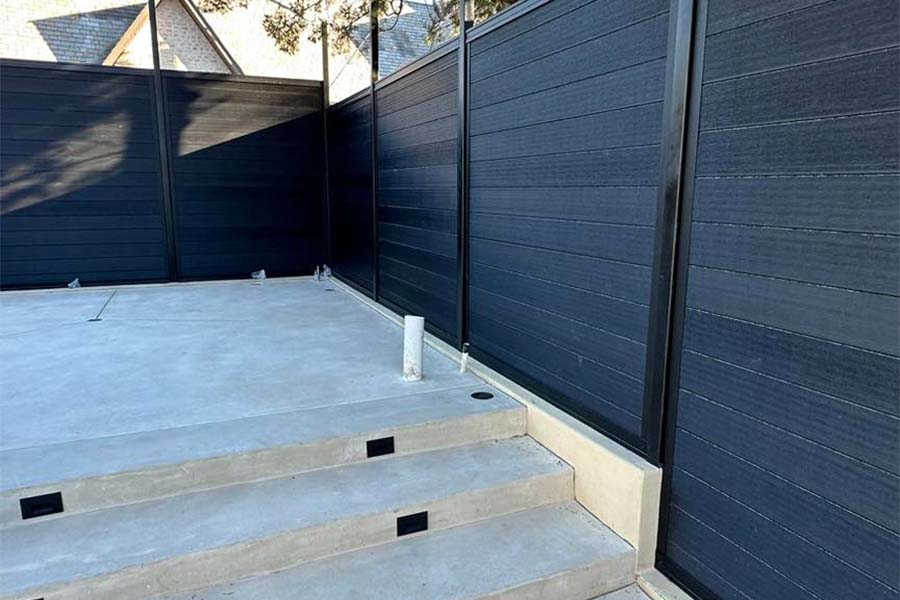
Footing depth is determined by local building code and the Engineer of Record’s calculations for the specific project. A deeper footing handles more lateral load. In high-wind zones, footing depth requirements are typically greater than the minimums applied in standard residential installations.
FenceTrac’s standard guidance: footing depth and diameter are always subject to local code and site engineering review. The test data establishes what the system can do; the engineer determines how to achieve it at each site.
Where FenceTrac Wind-Rated Fencing Is Specified
Applications that commonly require documented wind load performance include coastal residential properties in hurricane-prone regions, commercial projects in municipalities that enforce ASCE 7 design pressures for site structures, municipal and institutional properties where building departments require engineer approval, and residential properties in designated high-wind zones where local AHJs require stamped drawings for permit issuance.
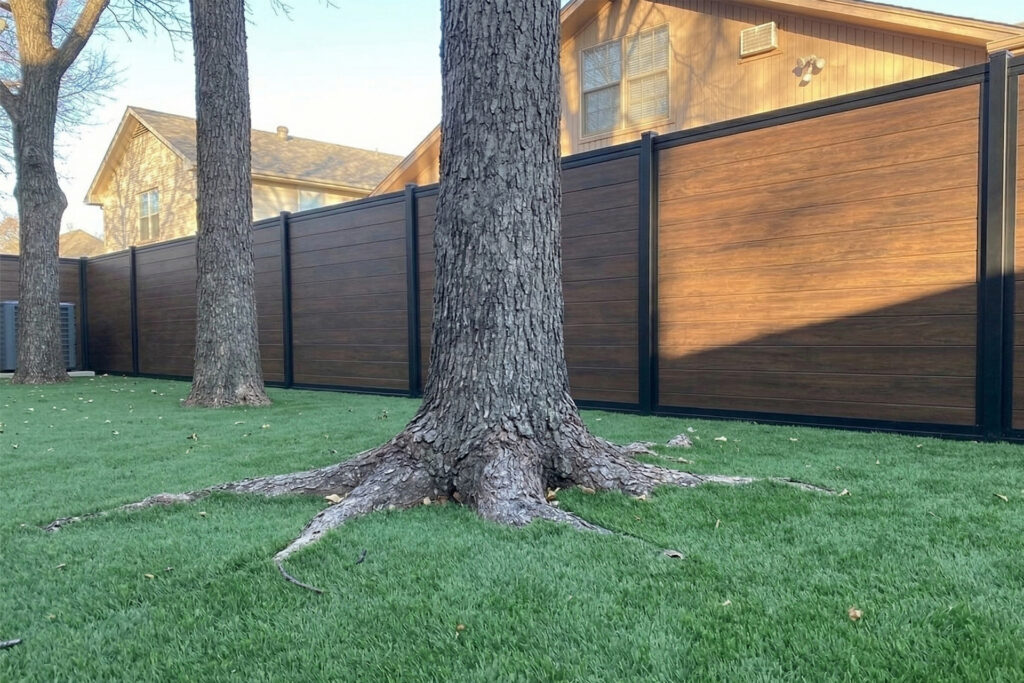
FenceTrac’s combination of third-party test data and available site-specific engineering documentation makes it appropriate for these applications in a way that conventional fencing systems are not.
For a detailed overview of the engineering standards that govern fencing in high-wind zones, see what fence engineering standards apply to high-wind zones.
Get a Quote for a Wind-Engineered Fence System
FenceTrac ships fence systems nationally and has been supplying contractors, property owners, and commercial buyers since 2012.
Every system carries a 20-year warranty and is engineered for long-term performance with minimal maintenance.