
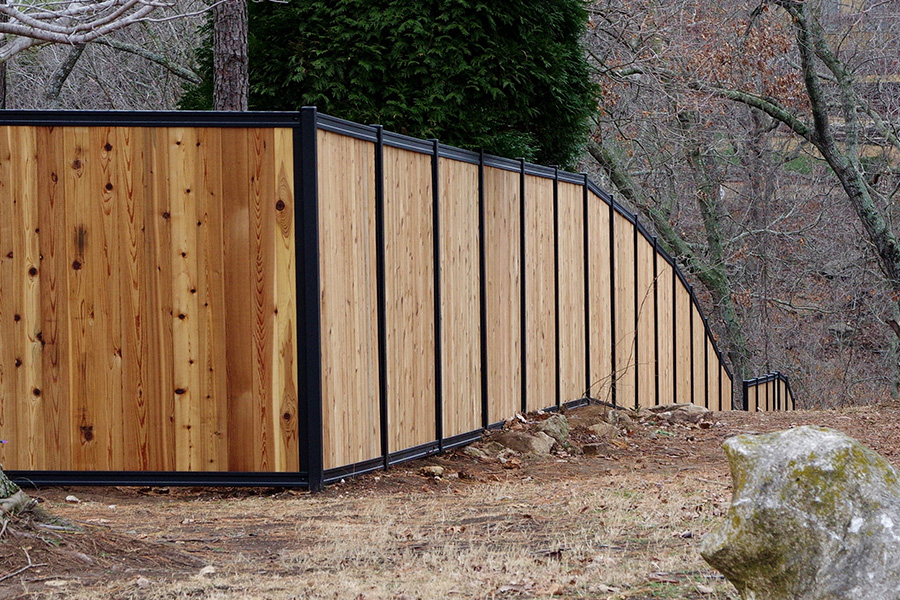
FenceTrac’s modular fence system is engineered to handle sloped terrain. The panels are rackable up to 30 degrees, which means they can follow the natural grade of the land without stepping. The side channels pivot to match the slope while the horizontal rails stay parallel to the ground, producing a clean fence line with no gaps at the bottom.
The Short Answer
Yes. FenceTrac panels rack (angle) up to 30 degrees to follow slopes. For mild to moderate grades, the panels adjust during installation without any modification to the frame components. For steep terrain beyond 30 degrees, stair-stepping or terracing is required.
How Racking Works on a FenceTrac Fence
Racking is the ability of a fence panel to pivot so the top and bottom rails follow the slope of the ground rather than staying level.
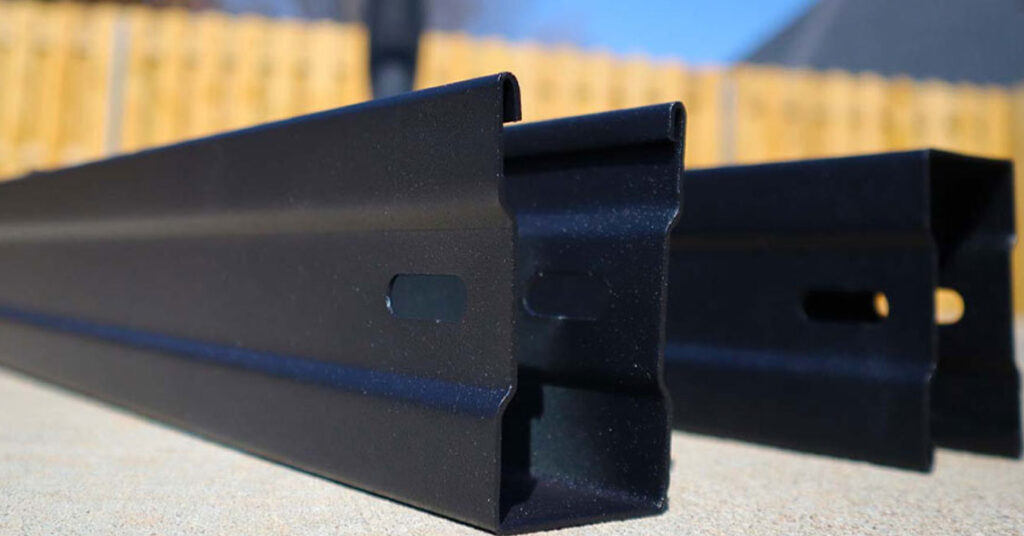
On a FenceTrac system, racking is achieved by adjusting the angle of the vertical side channels relative to the horizontal top and bottom rails during installation. The side channels attach to the posts with self-tapping screws, and the installer sets the angle to match the grade before fastening.
The infill boards slide into the U-channel frame the same way they do on flat ground. The tongue-and-groove connection between boards holds them in position even at an angle. No special hardware or modified components are needed.
Racking vs. Stair-Stepping
There are two ways to install a fence on a slope. Each has trade-offs that depend on the grade and the look you want.
Racking (Following the Slope)
The panels angle to follow the terrain. The top of the fence stays a consistent height above the ground at every point along the fence line. This produces a smooth, continuous look with no gaps at the bottom.
Racking works best on gradual to moderate slopes up to 30 degrees. It is the preferred method for privacy fencing because there are no triangular openings at the base where the panel meets the ground.
Stair-Stepping
Each panel stays level, and the fence “steps” down the slope from one panel to the next. This creates a uniform top line when viewed from a distance but leaves triangular gaps at the bottom of each step where the ground drops away.
Stair-stepping is common with rigid fence types that cannot rack, like precast concrete or some vinyl systems. It is also used on very steep slopes where the grade exceeds 30 degrees and racking alone cannot cover the angle.

Design Considerations for Sloped Fence Lines
A few factors affect how a sloped fence installation comes together.
Post Placement on Slopes
Posts on a slope are set vertically (plumb), not angled to match the grade. The post stays straight up and down while the panel between posts racks to follow the ground. Standard post spacing of 6 or 8 feet still applies, measured along the slope.
Post Depth on Slopes
Sloped terrain can affect drainage and soil stability around the post hole. Posts on a downhill slope may need slightly deeper holes to maintain adequate embedment since the grade drops away on one side. See how deep fence posts should be set for depth guidelines by fence height and soil type.
Combining Racking and Stepping
On properties with variable terrain, some sections may rack while others stair-step. A long fence line that crosses a gentle slope before dropping steeply can use racked panels on the gradual section and stepped panels where the grade exceeds 30 degrees. The FenceTrac frame accommodates both approaches using the same posts and hardware.

What Happens Beyond 30 Degrees
Slopes steeper than 30 degrees exceed the racking range of the FenceTrac frame. At this point, the installer has two options.
First, stair-step the panels and fill the triangular gap at the base with additional infill, a retaining wall, or graded soil. Second, terrace the fence line by building short retaining walls at intervals and running level or gently racked panels between them.
For commercial projects with steep grades that require stamped engineering documentation, FenceTrac provides site-specific calculations that account for slope, wind exposure, and soil conditions.
Related Questions
What are rackable fence panels? Rackable panels pivot to follow sloped ground. FenceTrac panels rack up to 30 degrees, which covers the majority of residential and commercial slopes.
How deep should fence posts be set? Post depth depends on fence height, frost line, and soil conditions. Posts on slopes may need additional depth for stability.
How much concrete do you need per fence post? Concrete volume depends on post size, hole diameter, and hole depth. Use the reference tables to find the exact bag count for your installation.
See Also
How to build an extremely strong privacy fence for details on the FenceTrac frame engineering that makes racking possible. Watch FenceTrac assembly videos to see the installation process in action.
Get a Quote for Your Sloped Fence Project
FenceTrac ships fence systems nationally and has been manufacturing engineered fencing in the USA since 2012.
Every system carries a 20-year warranty and is engineered for long-term performance with minimal maintenance.