
FenceTrac’s galvanized steel frame privacy fence system is engineered to be significantly stronger than conventional wood or vinyl fencing, with third-party test results showing the system withstands a 55.0 psf design wind load and 82.5 psf structural load under ASTM E330, plus large missile impact under ASTM E1886. Building an extremely strong privacy fence requires getting every component right: the frame, the infill, the posts, the fasteners, and the footings.
The Short Answer
Strength in a privacy fence comes from the structural system, not just the materials. A strong frame transfers load efficiently, interlocking infill distributes force across the full panel, heavy-gauge posts resist bending, and deep footings anchor the system against overturning. FenceTrac delivers all of these as a factory-engineered kit, tested by QAI Laboratories to pressures that correspond to severe wind conditions and hurricane-level debris impact.
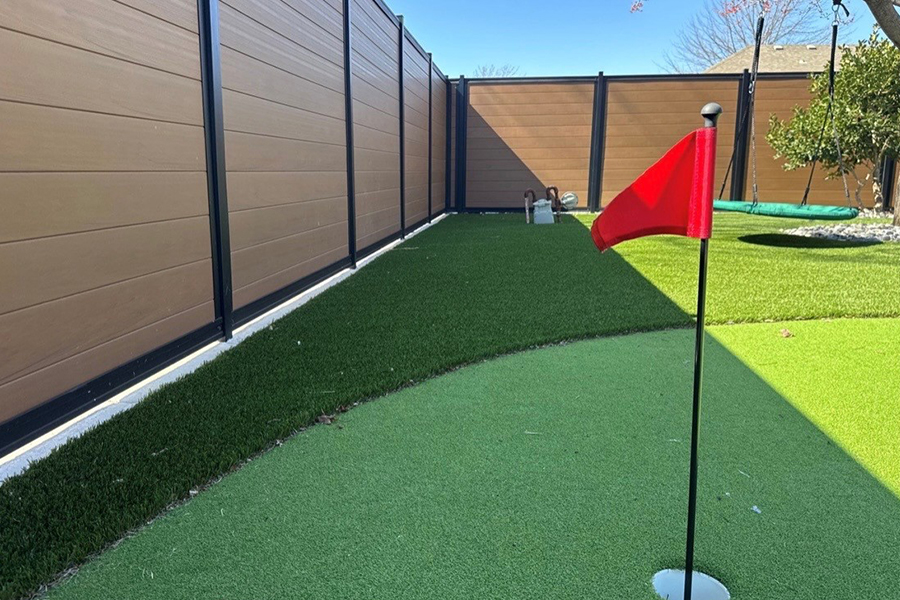
What Makes a Privacy Fence “Strong”
Strength in a fence is measured by its ability to resist three types of force: lateral wind pressure pushing against the panel, impact from objects hitting the fence, and sustained load over time without structural degradation.
A fence that resists all three is genuinely strong. A fence that handles one but fails at the others has a weak link that will eventually cause a failure. Most wood and vinyl fences are adequate for everyday conditions but fail under high wind, impact, or long-term material degradation.
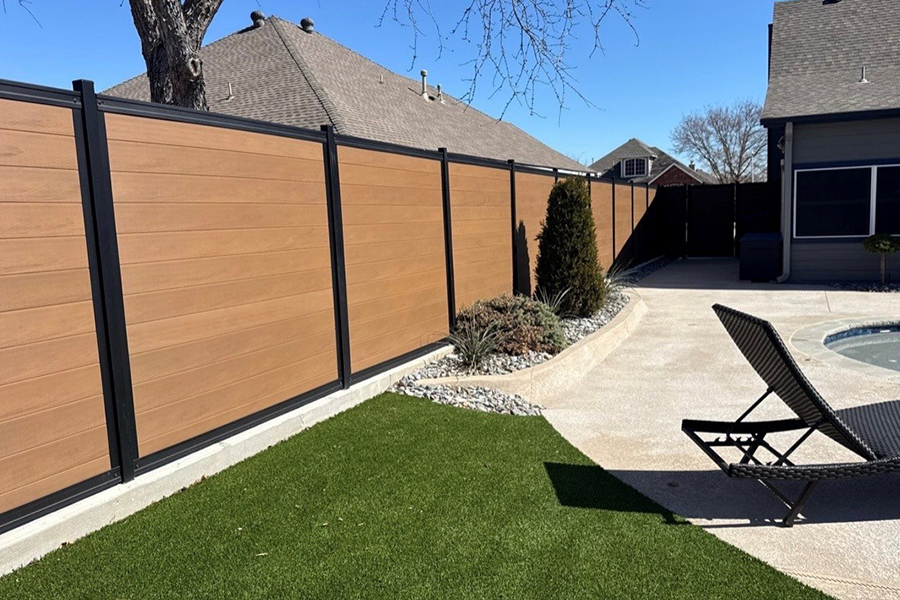
The Steel Frame Advantage
The frame is the skeleton of the fence. Everything depends on it.
Galvanized Steel vs. Wood Rails
FenceTrac’s frame uses galvanized G90 steel channels that form a rigid rectangle around each panel. The top, bottom, and side channels lock together with carriage bolts, creating a continuous structural loop. Wood rails are linear members nailed to posts. They can split at the nail, bow under load, and rot at the connection points.
Steel does not rot, warp, split, or lose strength over time in the way wood does. A powder-coated galvanized steel frame at year 15 has the same structural capacity as the day it was installed. A wood frame at year 15 has lost a measurable percentage of its original strength to moisture, UV, and biological decay.

Four-Sided Channel vs. Two-Sided Rail
A wood fence has horizontal rails on one side and pickets attached to those rails. The pickets are held by nails or screws driven through the face. Under wind pressure, each fastener is a single point of resistance.
FenceTrac’s U-channel system grips the infill on all four edges. The infill sits inside the channels, not on top of them. Under wind load, the entire perimeter of the panel shares the force. There are no individual fastener failure points on the infill face.

Choosing the Strongest Infill
The infill determines how the panel surface handles impact and sustained pressure.
LuxeCore composite is the strongest infill option. Each board has a structural aluminum core surrounded by cellular PVC and encased in ASA resin. The tongue and groove profile interlocks every board to its neighbor, so the panel behaves as a single surface under load. LuxeCore is the infill used in the ASTM E330 and E1886 tests that produced the 55.0 psf and 82.5 psf results.
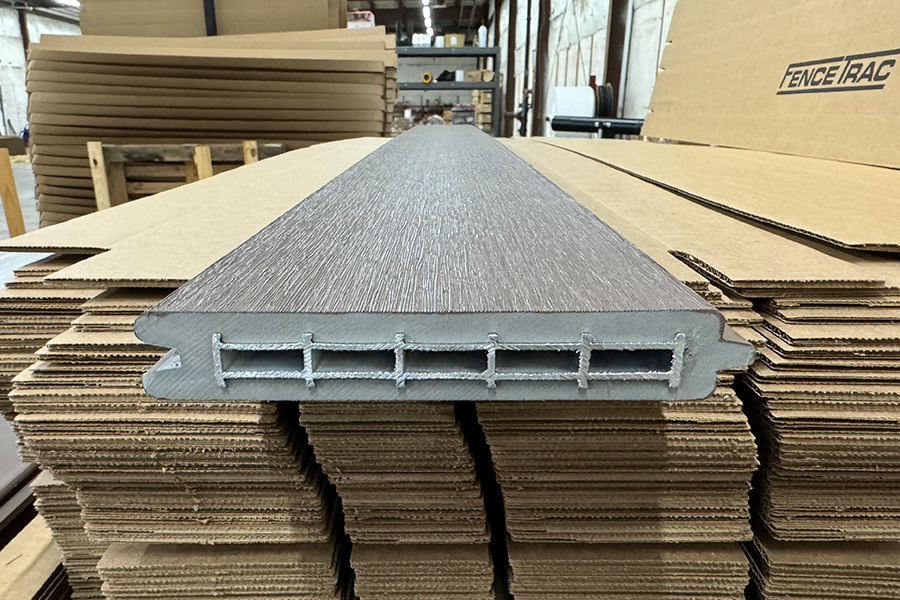
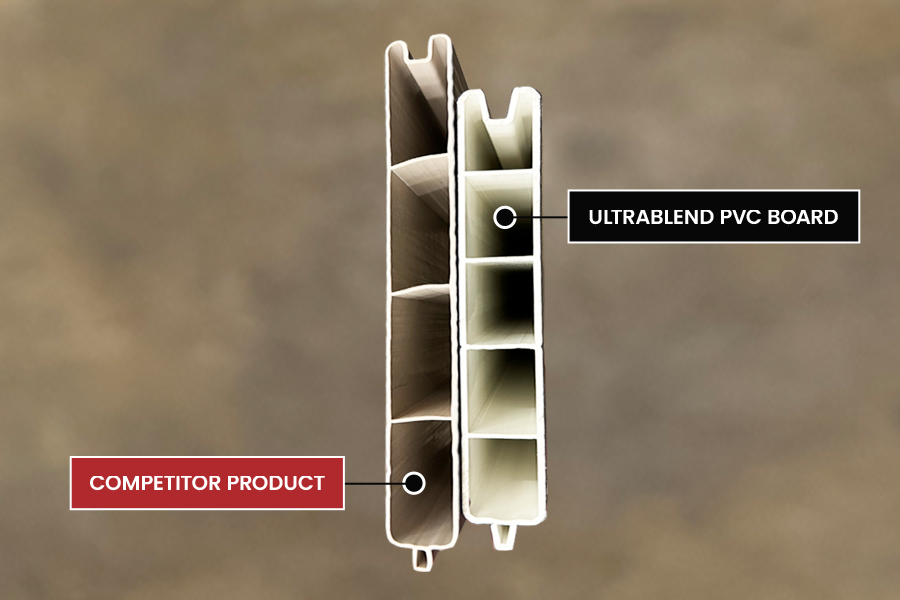
UltraBlend PVC is also strong, with thicker webbing than standard vinyl fence boards. It uses the same tongue and groove profile and fits the same frame. For applications that do not require the extreme impact resistance of LuxeCore, UltraBlend is a durable, maintenance-free choice.
Aluminum infill boards offer the highest rigidity per board. For security-focused applications or fire-rated installations, aluminum boards in the FenceTrac frame create an extremely hard, impact-resistant panel.
Posts and Footings for Maximum Strength
The strongest panel in the world will fail if the posts cannot hold it up.
Post Sizing
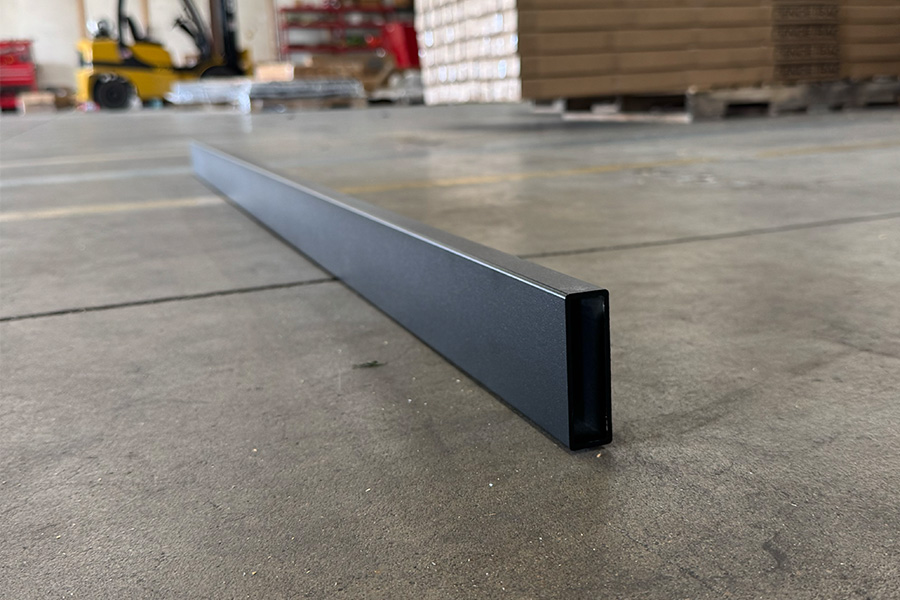
FenceTrac’s standard residential post is 2.5 inches by 2.5 inches galvanized G90 steel, powder-coated. For high-wind, tall fence, or commercial applications, 3-inch by 3-inch or 4-inch by 4-inch steel posts provide greater bending resistance. The ASTM E330 test used 3-inch by 3-inch, 12-gauge steel posts, which is the recommended specification for maximum strength.
Footing Depth and Concrete Strength
The tested configuration used 6-inch diameter holes with posts embedded 4.5 feet into 4,000-psi concrete. Deeper footings resist the overturning moment created by wind load on a tall, solid panel. Shallow footings are the most common cause of fence failure in storms, regardless of how strong the panel and frame are.
Post spacing also affects overall fence line strength. Standard FenceTrac spacing is 72-1/4 inches between posts for 6-foot panels and 96-1/4 inches for 8-foot panels. Closer spacing increases strength per linear foot.

Design Ideas for High-Strength Privacy Fencing
An 8-foot FenceTrac privacy fence with LuxeCore infill, 3-inch by 3-inch posts, and engineered footings is one of the strongest residential privacy fence configurations available. It provides full visual screening, identical appearance on both sides, and tested wind and impact resistance.
For coastal properties or high-wind zones, add site-specific engineering to verify that the footing depth, post spacing, and concrete strength meet local code requirements. FenceTrac offers engineering services for projects that require stamped drawings.
For commercial properties that need both strength and flexibility, the FenceTrac frame lets you mix infill types across zones. Use LuxeCore on the perimeter for maximum strength and semi-privacy aluminum slats in areas where airflow and visibility are needed.
Related Questions
How do you build a fence that meets 150 mph wind requirements? The same components that make an extremely strong fence, steel frame, interlocking infill, heavy posts, deep footings, are exactly what is needed to meet high-wind code requirements.
How do you build a fence that won’t warp or rot? Strength and durability go together. A steel frame with synthetic infill eliminates the material degradation that weakens wood fences over time.
See Also
FenceTrac privacy fencing for system specifications, and architect specifications for engineering documentation.
Get a Quote for High-Strength Fencing
FenceTrac ships fence systems nationally and has been manufacturing engineered fencing in the USA since 2012.
Every system carries a 20-year warranty and is engineered for long-term performance with minimal maintenance.