
FenceTrac’s galvanized steel frame and maintenance-free infill options are specifically engineered to resist the two most common causes of fence failure: warping and rot. The system eliminates wood from the structural components entirely, replacing wood posts and rails with powder-coated G90 galvanized steel that will not absorb moisture, swell, twist, or decay.
The Short Answer
Build the fence with materials that do not absorb water. Warping and rot are both caused by moisture entering organic materials. A galvanized steel frame with composite, PVC, or aluminum infill removes wood from the equation and eliminates both failure modes. If you want a natural wood look, use cedar infill inside a steel frame so the structure stays intact even if the wood weathers over time.

What Causes Fences to Warp
Warping happens when a board absorbs moisture unevenly. One face of the board gets wet while the other stays dry, or one edge absorbs more water than the other. The wet side swells. The dry side stays the same size. That uneven expansion twists or cups the board.
Horizontal fence boards are especially prone to warping because the top edge collects rain while the bottom edge stays drier. Over time, this repeated wet-dry cycle forces the board into a permanent curve.
Wood posts warp and lean for the same reason. The section buried in soil stays wet. The section above grade dries in the sun. That moisture gradient causes the post to twist and lean, which pulls the entire fence out of alignment.

What Causes Fences to Rot
Rot is biological decay caused by fungi that feed on wet wood. The process requires sustained moisture. If the wood stays dry, rot cannot start. If the wood stays wet, rot is inevitable.
The most vulnerable part of any wood fence is the post at the ground line. This is where soil moisture, rainwater runoff, and poor drainage keep the wood perpetually damp. Even pressure-treated posts eventually rot at this junction, typically within 10 to 15 years. Once the post fails, the fence collapses regardless of the condition of the boards.
The Steel Frame Approach to Warp and Rot Prevention
The most effective way to prevent warping and rot is to remove wood from the structural components of the fence entirely.
FenceTrac’s frame is built from G90 galvanized steel, powder-coated. The posts are G90 galvanized steel, also powder-coated. Steel does not absorb water. It does not swell, shrink, twist, or support fungal growth. The zinc coating on galvanized steel creates an active corrosion barrier, and the powder coat adds a second protective layer.
The FenceTrac frame system carries a 20-year warranty. That warranty is possible because the materials do not degrade under normal weather exposure the way wood does.

Choosing Infill That Resists Warping and Rot
With the frame handled, the infill choice determines whether the visible surface of the fence also resists moisture damage.
LuxeCore Composite: Zero Warp, Zero Rot
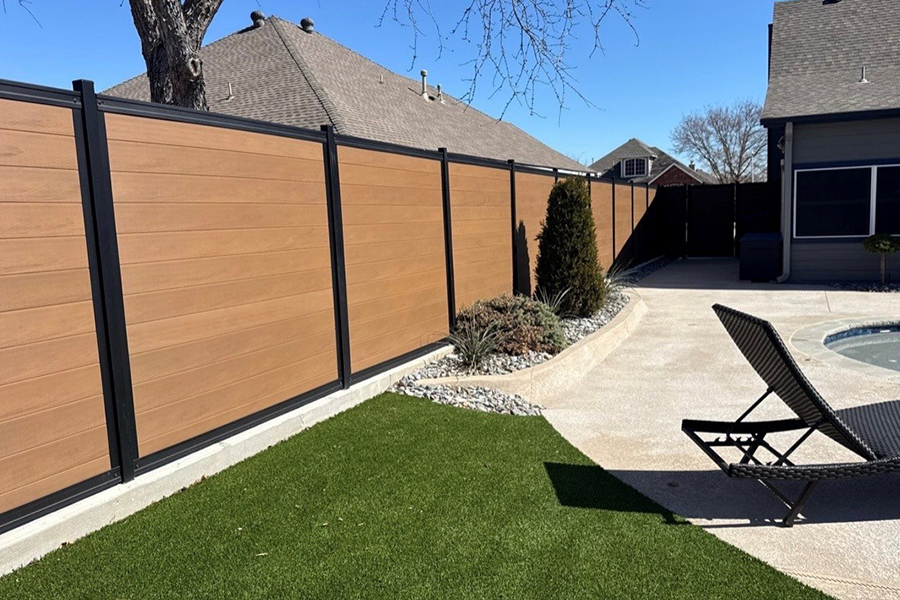
LuxeCore composite boards are built with an aluminum structural core, cellular PVC, and an ASA exterior. There is no wood in the board. The aluminum core prevents warping by providing internal rigidity that resists the forces of gravity and temperature cycling. The PVC and ASA layers are non-porous, so moisture never enters the board.
LuxeCore carries a Limited Lifetime Warranty and is the top choice for buyers who want a textured wood-look finish with zero risk of warping or rot.
UltraBlend PVC: Moisture-Proof and Warp-Resistant
UltraBlend PVC boards are encased in ASA and have a thicker internal web structure than standard vinyl boards. They do not absorb water and resist warping across the range of temperatures and humidity levels found in residential applications. UltraBlend also carries a Limited Lifetime Warranty.

Aluminum: Immune to Moisture Entirely
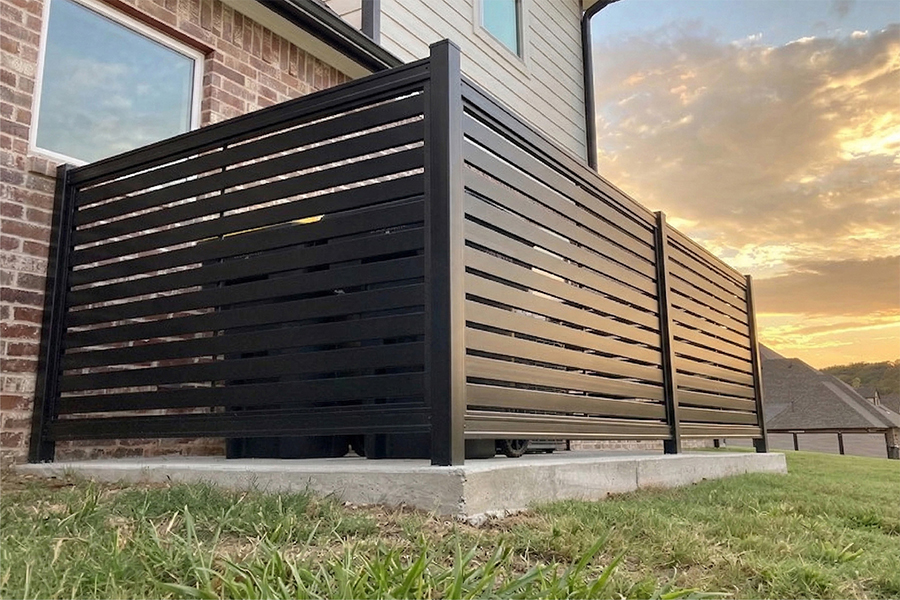
Aluminum infill does not absorb water, does not corrode, and does not change shape under any weather condition. It is the most moisture-resistant infill in the FenceTrac system and the right choice for pool fencing, coastal properties, and any application where water contact is constant.
Cedar: The One Exception
Cedar infill is real wood. It can warp and will weather over time. FenceTrac offers Western Red Cedar as an infill option for buyers who specifically want natural wood aesthetics. The critical difference is that even with cedar infill, the frame and posts are steel. If a cedar board warps or weathers, you slide it out and slide in a replacement without rebuilding the fence structure.
Cedar infill carries no warranty. For design ideas that combine a natural wood look with permanent structural integrity, cedar in a steel frame is the engineered approach.

Fence Design Choices That Reduce Moisture Exposure
Even with the right materials, smart design reduces the amount of moisture the fence encounters.
Keep the bottom of the fence 1 to 2 inches above grade. This gap prevents soil and mulch from holding moisture against the base of the panels. It also keeps standing water from pooling against the infill after rain.
Ensure the fence line has adequate drainage. Fences installed at the base of a slope or along a retaining wall may sit in pooled water after every rain. Grading the soil away from the fence line or adding a gravel strip at the base helps water drain rather than accumulate.
Related Questions
How long does a wood fence last? Most wood fences last 10 to 20 years. Posts fail first because of rot at the ground line.
How does UV exposure affect fence materials? UV degrades wood and some plastics over time. ASA-coated composite and powder-coated aluminum resist UV fading.
See Also
How does composite fencing compare to wood? for a full material-by-material breakdown.
Get a Quote for a Warp-Proof Fence
FenceTrac ships fence systems nationally and has been manufacturing engineered fencing in the USA since 2012.
Every system carries a 20-year warranty and is engineered for long-term performance with minimal maintenance.