
FenceTrac’s LuxeCore composite infill uses an ASA (acrylic-styrene-acrylonitrile) exterior layer that is specifically engineered to resist UV degradation, making it one of the most fade-resistant fence materials available. Understanding how UV affects different fence materials explains why some fences look new after 15 years while others are faded and brittle in 5.
The Short Answer
UV radiation from sunlight breaks down organic materials and fades surface finishes. Wood grays and becomes brittle. Paint and stain peel and chalk. Standard PVC can yellow and crack. Materials with built-in UV stabilizers, like ASA-coated composite and powder-coated aluminum, resist these effects because the UV protection is part of the material, not a surface treatment that wears off.

How UV Damages Fence Materials
Ultraviolet radiation breaks chemical bonds in organic materials. The process is gradual but relentless. Every hour of sun exposure does a small amount of damage, and the effects accumulate over years. South-facing and west-facing fence sections receive the most UV exposure and degrade fastest.
Wood
UV light breaks down lignin, the natural polymer that gives wood its structure and color. As lignin deteriorates, the wood surface turns gray and the fibers become loose and rough. This is why untreated wood fences develop that weathered gray look within the first year or two of sun exposure.
Stains and sealers with UV blockers slow this process, but they are surface treatments that wear off. They need to be reapplied every 2 to 3 years to remain effective. Once the protective layer fails, UV damage to the wood resumes.
Standard Vinyl and PVC
Standard PVC formulations are vulnerable to UV. Prolonged sun exposure causes yellowing, surface chalking, and eventually brittleness. The material loses flexibility and becomes prone to cracking, especially in cold weather after years of UV exposure have weakened the polymer chains.
Some vinyl fence manufacturers add UV stabilizers to their PVC mix, which helps. But the level of UV protection varies widely between products, and it is rarely specified in a way that allows buyers to compare.
Painted and Powder-Coated Metal
Bare metal does not degrade under UV. But the finish on top of the metal does fade over time if it is not formulated for outdoor exposure. Low-quality paints chalk and peel. High-quality powder coatings, like those used on FenceTrac’s steel frame and aluminum infill, are formulated for long-term outdoor UV resistance and hold their color and gloss for decades.

UV-Resistant Fence Materials Compared
This table compares how common fence materials respond to sustained UV exposure over years of outdoor use.
| Material | UV Response | Maintenance to Counter UV |
|---|---|---|
| LuxeCore composite (ASA exterior) | Highly resistant, minimal color shift | None |
| UltraBlend PVC (ASA exterior) | Highly resistant, minimal color shift | None |
| Aluminum (powder-coated) | Resistant, finish holds color | None |
| Galvanized steel (powder-coated) | Resistant, finish holds color | None |
| Cedar (stained) | Grays without stain, stain fades in 2-3 years | Re-stain every 2-3 years |
| Pressure-treated pine | Grays and cracks, stain fades | Re-stain every 2-3 years |
| Standard vinyl/PVC | Yellows and becomes brittle over time | No effective remedy |
Why ASA Is the UV Standard for Composite Fencing
ASA (acrylic-styrene-acrylonitrile) is a resin developed specifically for outdoor applications that require long-term UV stability. It is used in automotive exterior trim, outdoor signage, and building products where color retention over decades of sun exposure is critical.
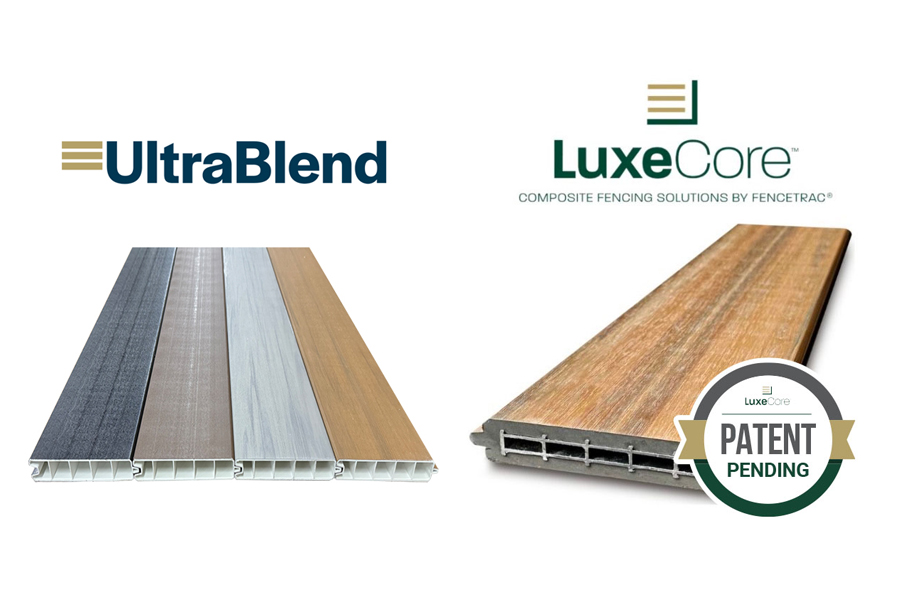
LuxeCore composite infill and UltraBlend PVC infill both use ASA as the outer layer. The UV protection is not a coating applied to the surface. It is the surface itself. There is nothing to wear off, peel, or reapply. The color you see on day one is the color the fence will show in year 15.
This is a meaningful differentiator from composite or PVC products that rely on surface coatings, films, or lower-grade polymer blends for UV protection. Ask any fence manufacturer what their exterior resin layer is made of. If the answer is not ASA or an equivalent UV-stable polymer, the product will fade faster.
Design Considerations for UV-Heavy Environments
Properties in the Sun Belt, desert Southwest, and other high-UV regions should prioritize materials with inherent UV resistance rather than materials that depend on periodic recoating.
Darker colors absorb more heat but do not necessarily fade faster when the UV protection is built into the material. FenceTrac’s Black Onyx LuxeCore holds its color in full sun the same way Harbor Gray does, because both use the same ASA exterior formulation.
If the fence includes cedar infill, expect the south-facing and west-facing sections to weather to gray faster than shaded sections. Plan for re-staining those sections more frequently, or accept the natural gray patina as part of the fence design.

Related Questions
What is the most weather-resistant fence material? UV is one of five weather stressors that affect fencing. Moisture, wind, temperature extremes, and salt air also matter.
Does FenceTrac’s powder coat fade? FenceTrac’s powder-coated finish is formulated for exterior use and resists UV fading under normal outdoor exposure. The finish carries the same 20-year warranty as the steel frame itself.
See Also
How long does a composite fence last? for a broader look at composite fence durability beyond UV alone.
Get a Quote for UV-Resistant Fencing
FenceTrac ships fence systems nationally and has been manufacturing engineered fencing in the USA since 2012.
Every system carries a 20-year warranty and is engineered for long-term performance with minimal maintenance.