
FenceTrac with LuxeCore composite infill has been tested to a 55.0 psf design wind load and 82.5 psf structural load under ASTM E330 at QAI Laboratories in Miami, placing its tested performance in the pressure range associated with wind speeds of 130 to 150+ mph using simplified calculations. Building a fence that meets 150 mph wind requirements is not about selecting a single strong material. It requires an engineered system where the panel, frame, posts, fasteners, and footings all work together to resist the forces those wind speeds generate.
The Short Answer
Wind codes are written in pounds per square foot (psf), not miles per hour. A 150 mph wind produces pressures in the range of 50 to 58 psf depending on exposure category and terrain. To meet that requirement, every component of the fence must be rated for those loads: the infill, the frame, the post-to-frame connection, the posts, and the footings. FenceTrac is the only privacy fence system with third-party ASTM E330 and ASTM E1886 test data documenting performance at these pressure levels.
Why Wind Speed Alone Does Not Define the Requirement
Building codes do not say “your fence must withstand 150 mph.” They specify a design wind pressure based on the project location, terrain exposure, and structure category. Two properties in the same city can have different design pressure requirements based on how exposed or sheltered the site is.
The conversion from wind speed to pressure depends on multiple factors including gust factor, exposure coefficient, and pressure coefficient. This is why engineers and building officials work in psf. A fence manufacturer that claims “rated for 150 mph” without referencing a specific psf test result and test standard is making a marketing claim, not an engineering statement.
FenceTrac references the tested values: 55.0 psf design load and 82.5 psf structural load, both tested by QAI Laboratories under ASTM E330. These are the numbers an engineer or building official uses to determine if the fence meets the local wind code for a specific site.
The Five Components That Must Work Together
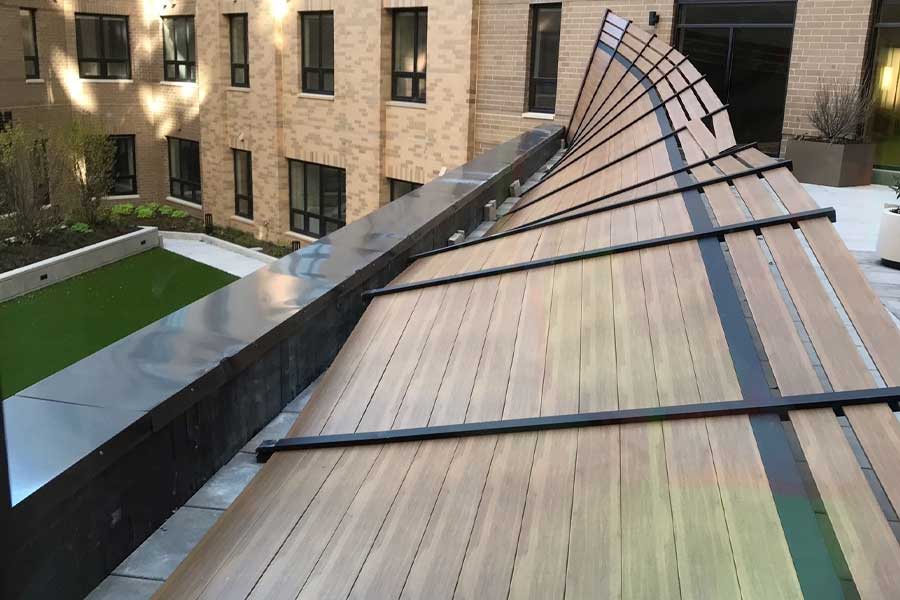
A fence is only as strong as its weakest component. At 150 mph wind pressures, a failure in any one part brings down the entire section.
Infill Panel
The infill is the surface that catches the wind. It must resist the pressure without cracking, breaking, or pulling out of the frame. FenceTrac’s LuxeCore composite boards are 1 inch thick with a structural aluminum core, cellular PVC, and an ASA outer shell. The tongue and groove profile interlocks each board to its neighbor, distributing load across the full panel surface rather than concentrating it on individual boards.
Frame
The frame transfers the wind load from the infill to the posts. FenceTrac’s frame uses galvanized G90 steel channels that grip the infill on all four sides. The carriage bolt connections at the corners and the self-tapping screws at the post attachments must hold under the full design load. In FenceTrac’s ASTM E330 test, these connections held through all six load sequences with no fastener failure.
Posts
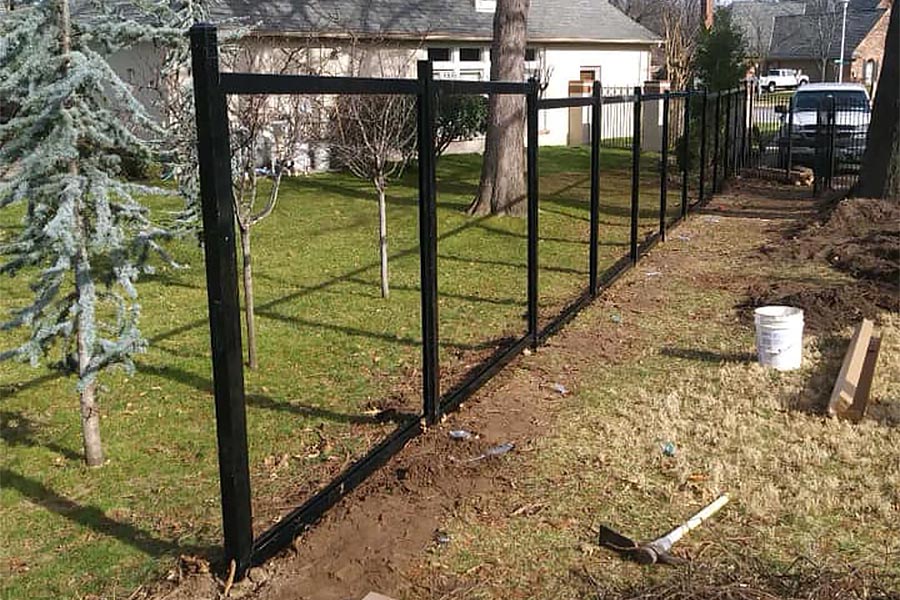
The posts are the vertical anchors that resist the bending moment created by wind on the panel. The tested FenceTrac configuration used 3-inch by 3-inch, 12-gauge steel posts. Post size and wall thickness directly affect bending resistance. A post that is too small or too thin will bend or buckle before the panel fails.
Post-to-Frame Connection
The screws or bolts that attach the frame channels to the posts must transfer the full wind load without pulling out or shearing. This connection is the critical handoff point between the panel assembly and the post. Weak fasteners or insufficient fastener count at this joint is a common failure mode in high-wind events.
Footings
The footing anchors the post in the ground and resists the overturning moment created by wind load. The tested FenceTrac configuration used 6-inch diameter holes with posts embedded 4.5 feet into 4,000-psi concrete. Footing depth and diameter must be sized by a qualified engineer based on the site’s soil conditions and design wind pressure.
What the ASTM E330 and E1886 Tests Proved
The QAI Laboratories test (report MED-2058a, November 2024) subjected a 6-foot-wide by 6.5-foot-tall FenceTrac panel with LuxeCore composite infill to a full battery of structural and impact tests.
| Test | Load / Impact | Result |
|---|---|---|
| Design load (positive) | 55.0 psf | Passed |
| Design load (negative/suction) | 55.0 psf | Passed |
| Structural load (positive) | 82.5 psf | Passed |
| Structural load (negative/suction) | 82.5 psf | Passed |
| Large missile impact (ASTM E1886 Level D) | 9.25 lb 2×4 at ~50 ft/sec | Passed, 3 impacts, no damage |
The negative load tests are critical. During a hurricane or severe storm, suction forces pull the fence away from the wind side. Many fences that resist positive pressure (wind pushing against the face) fail under negative pressure because the fasteners and connections are not designed for pull-out loads. FenceTrac passed at the same pressure in both directions.
The powder-coated galvanized steel frame and connections showed no damage after the full test battery, including three large missile impacts simulating hurricane-level debris.
Design Ideas for Hurricane-Zone Fence Projects
If your property is in a jurisdiction that requires fencing to meet high-wind standards (common in Florida, the Gulf Coast, and coastal Atlantic communities), the fence installation requires site-specific engineering.
FenceTrac provides engineering services and can supply stamped drawings for projects that require permit approval in wind-regulated zones. The ASTM E330 and E1886 test reports give the engineer and the building department verified data to work from, which speeds the permitting process.
For coastal environments where salt air compounds the wind challenge, FenceTrac’s dual-layer corrosion defense (G90 galvanization plus powder coating) protects the steel frame from salt spray while the LuxeCore or UltraBlend infill resists moisture, UV, and impact without degrading.
Related Questions
How much wind force does a 6-foot fence experience? A 6-foot by 6-foot solid panel absorbs nearly one ton of force at 150 mph wind pressures. Understanding the numbers helps explain why engineered systems outperform conventional fencing in storms.
Do I need a permit for a hurricane-rated fence? In most high-wind jurisdictions, yes. Fences above a certain height or in certain exposure zones require a building permit and may require engineered drawings. Check with your local building department before starting the project.
See Also
FenceTrac privacy fencing for system specifications, and architect and engineering specifications for technical documentation.
Get a Quote for High-Wind Fencing
FenceTrac ships fence systems nationally and has been manufacturing engineered fencing in the USA since 2012.
Every system carries a 20-year warranty and is engineered for long-term performance with minimal maintenance.