
FenceTrac is a modular fence system built around standardized, interchangeable components: galvanized G90 steel frame channels, powder-coated steel posts, and rigid infill boards that slide into the frame. The system arrives as pre-engineered parts sized to fit together without on-site cutting of the frame, making each panel a repeatable building block for any fence line.
The Short Answer
A modular fence system uses factory-made components that connect on site to form a complete fence. Instead of building each section from raw materials, the installer assembles pre-engineered parts designed to fit together precisely.
FenceTrac’s modular system centers on a four-sided galvanized G90 steel, powder-coated channel frame that accepts rigid infill boards up to 1 inch thick. Every component, from the 3-inch horizontal channels to the posts and post caps, is manufactured to consistent dimensions. Every panel in the fence line is identical in structure and appearance.

What Makes a Fence System Modular
The word “modular” means the system is built from discrete, interchangeable modules. In fencing, that translates to a few specific characteristics.
Standardized Components
Every FenceTrac frame kit contains the same parts in the same dimensions. Horizontal channels are 3 inches deep, made from galvanized G90 steel. Side channels are 2 inches deep. Panels come in 6-foot or 8-foot widths and 4-foot, 6-foot, or 8-foot heights. Posts are galvanized G90 steel, powder-coated, in matching sizes.
This standardization means any panel in the fence line assembles the same way. The components arrive sized and drilled, with no custom-cutting of the frame on site.
Interchangeable Infill
The channel frame accepts any rigid infill material up to 1 inch thick. LuxeCore composite, UltraBlend PVC, aluminum boards, cedar, and dozens of compatible third-party materials all fit the same frame channels.
This is the core advantage of a modular system. The structure stays the same regardless of what material fills it. A homeowner can install LuxeCore composite today and, years later, swap the infill for a different material without replacing the frame or posts.
Repeatable Assembly
Because the components are standardized, the assembly process repeats identically for every panel. Set the posts. Attach the side channels. Slide in the infill. Secure the top and bottom channels with carriage bolts.
This repeatability reduces installation errors and keeps labor time consistent from the first panel to the last.
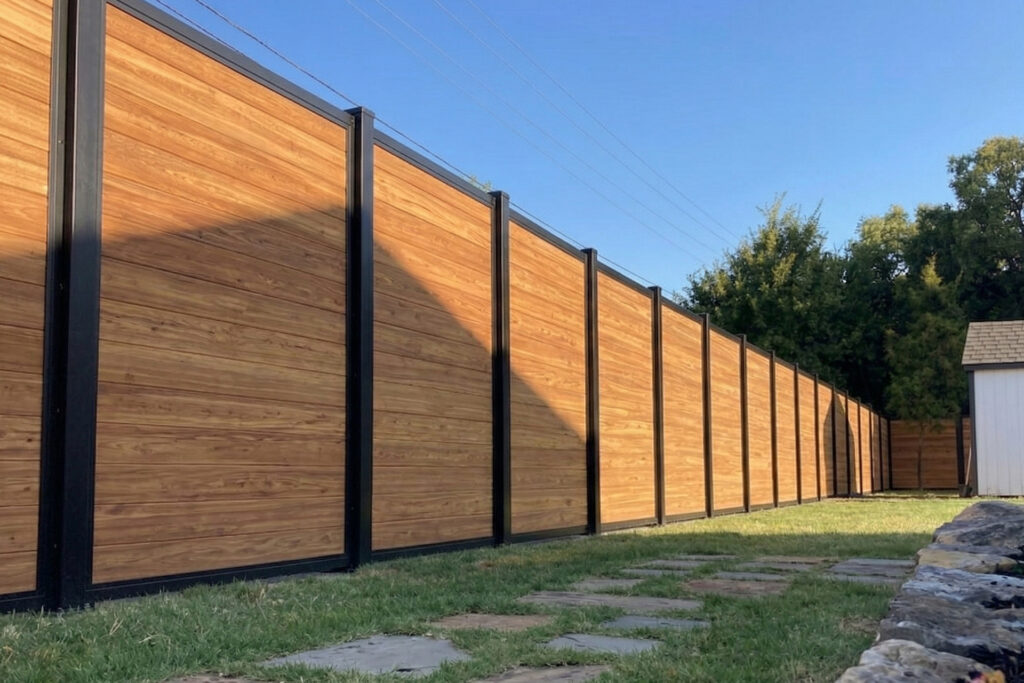
How the FenceTrac Modular System Goes Together
Here is the basic assembly sequence for a FenceTrac fence panel.
Posts are set in concrete footings at 6-foot or 8-foot spacing to match the panel width. Once the concrete cures, the vertical side channels attach to the posts with self-tapping screws. The bottom horizontal channel connects to the side channels with carriage bolts.
Infill boards slide into the channels from the top, stacking vertically until the panel is full. The top horizontal channel slides over the top edges of the infill and bolts to the side channels, locking everything in place.
The entire panel is now a rigid, enclosed unit. The powder-coated steel frame borders the infill on all four sides, and no fasteners penetrate the face of the infill boards.
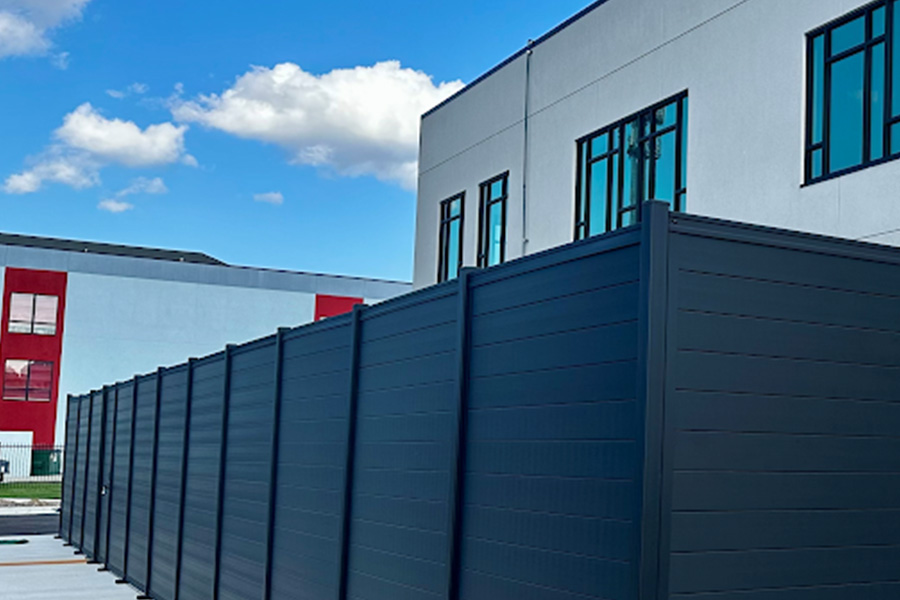
Practical Benefits of a Modular Fence System
The modular approach creates advantages that become clear during installation, daily use, and long-term ownership.
Easier Repair
If a section is damaged, only the affected panel needs attention. The infill can be removed and replaced without disturbing the frame, posts, or adjacent panels. With traditional fencing, repairing one section often means removing rails that span multiple sections.
Consistent Appearance Across the Fence Line
Every panel is built from the same components to the same dimensions. There is no variation in board spacing, rail height, or post alignment because the system enforces consistency by design. The both-sided design means neighbors see the same finished face you do.
Scalable for Any Property Size
The same modular system works for a small residential yard and a multi-acre commercial perimeter. Adding more fence means adding more identical panels. FenceTrac supplies commercial properties and residential projects with the same components, sized to fit the application.

Ideas for Configuring a Modular Fence
Because the infill is independent of the frame, a modular system opens up possibilities that fixed-construction fencing cannot match.
Mix different infill materials in the same fence line by using privacy panels along the back yard and semi-privacy aluminum slats along a side yard. Alternate colors within a single panel for accent patterns. Combine composite boards with aluminum accent boards for a layered, architectural look.
The frame also supports different configurations from the same components. Semi-privacy fencing uses the same channel frame with spaced slat infill and stackable spacers. Fire-rated fencing uses the same frame with aluminum infill boards rated to ASTM E84-24 Class A. Enclosures add gates to the same frame for dumpster, HVAC, and utility screening.
Related Questions
What is channel frame modular fencing? Channel frame fencing is the specific construction method FenceTrac uses, where U-shaped steel channels grip the infill from all four edges. It is the engineering behind the modular system.
How does a modular fence system differ from traditional fencing? Traditional fencing nails boards to one side of a rail. A modular system encloses the infill in a steel frame, producing a stronger, both-sided panel with no face fasteners.
See Also
FenceTrac privacy fencing for complete product details, and architect specifications for technical documentation and engineering data.
Get a Quote for a Modular Fence System
FenceTrac ships fence systems nationally and has been manufacturing engineered fencing in the USA since 2012.
Every system carries a 20-year warranty and is engineered for long-term performance with minimal maintenance.