
FenceTrac is the original patented channel frame modular fencing system, using U-shaped galvanized G90 steel channels to hold rigid infill boards in a four-sided frame that produces a finished, both-sided fence panel. Channel frame fencing is a category of modular fence construction where the structural frame grips the infill from all four edges, rather than attaching boards to one face of a rail. FenceTrac invented this approach and holds the patent on the U-channel design.
The Short Answer
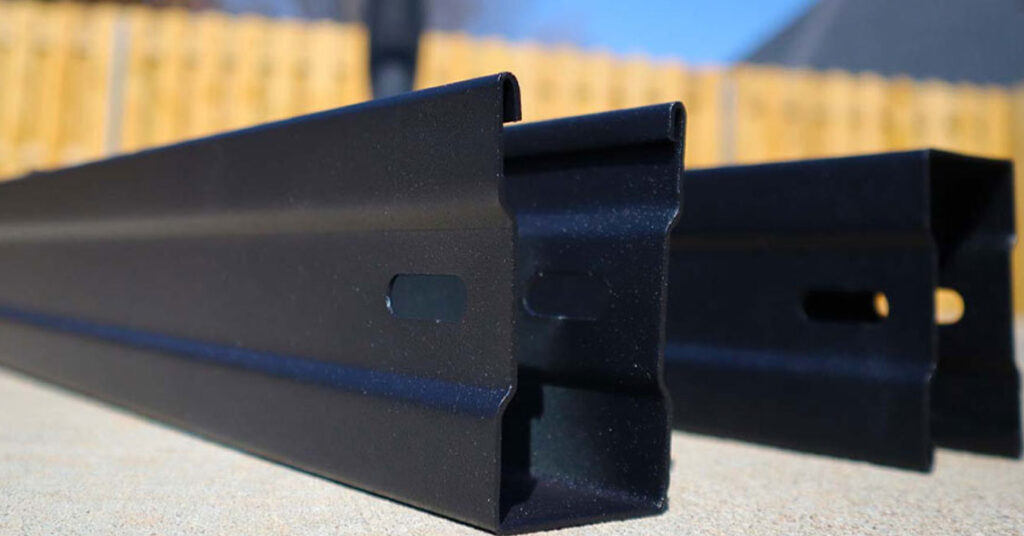
Channel frame modular fencing is a fence construction method where metal channels shaped like a U form a rectangular frame around each panel. Infill boards slide into the open side of the channels and are held in place by contact pressure on all four edges. The result is a panel with no face-nailing, no exposed rails, and a finished appearance on both sides. FenceTrac’s channels are 3 inches deep on the top and bottom and 2 inches deep on the sides, made from galvanized G90 steel, and accept infill up to 1 inch thick.
How Channel Frame Construction Works
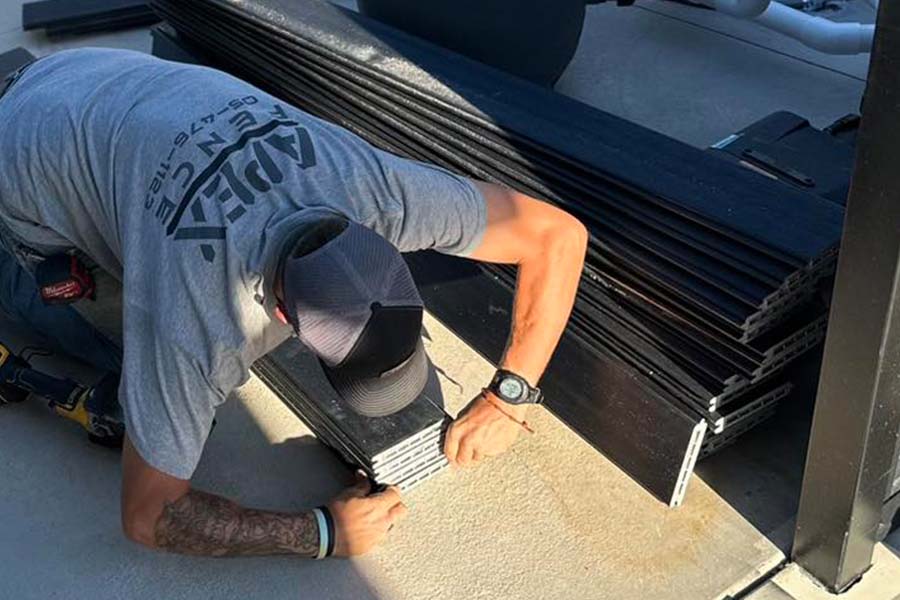
The concept is straightforward. Four steel channels, one for the top, one for the bottom, and one for each side, form a rectangle. The open side of each U faces inward, creating a continuous track around the inside perimeter of the frame.
Infill boards slide into the channels from the top and stack vertically. Each board’s edges sit inside the channel track. When the panel is fully loaded with infill and the top channel is secured, every board is held in position by the frame on all four sides.
The side channels attach to the posts with self-tapping screws. The top and bottom channels connect to the side channels with carriage bolts at each corner. The assembled panel is a rigid, self-contained unit that transfers wind load and impact force through the frame and into the posts.
Why Channel Frame Is Different from Traditional Fence Construction
Traditional fence construction attaches boards to one side of horizontal rails using nails or screws. The rails span between posts. The boards are held only by the fasteners driven through their faces.
This creates several problems that channel frame fencing eliminates.
No Face Fasteners
In a channel frame panel, no nails or screws penetrate the face of the infill boards. The boards are held by the channel edges. This means no nail holes that admit moisture, no screw heads that rust and stain the board surface, and no split boards from fasteners driven too close to the edge.
Both-Sided Finish
Because the infill sits inside the channels rather than on one face of a rail, both sides of the panel show the same flat infill surface and the narrow powder-coated steel channel edge. There is no “good side” and “bad side.” Every FenceTrac panel is a finished fence on both sides by default.
Infill Flexibility
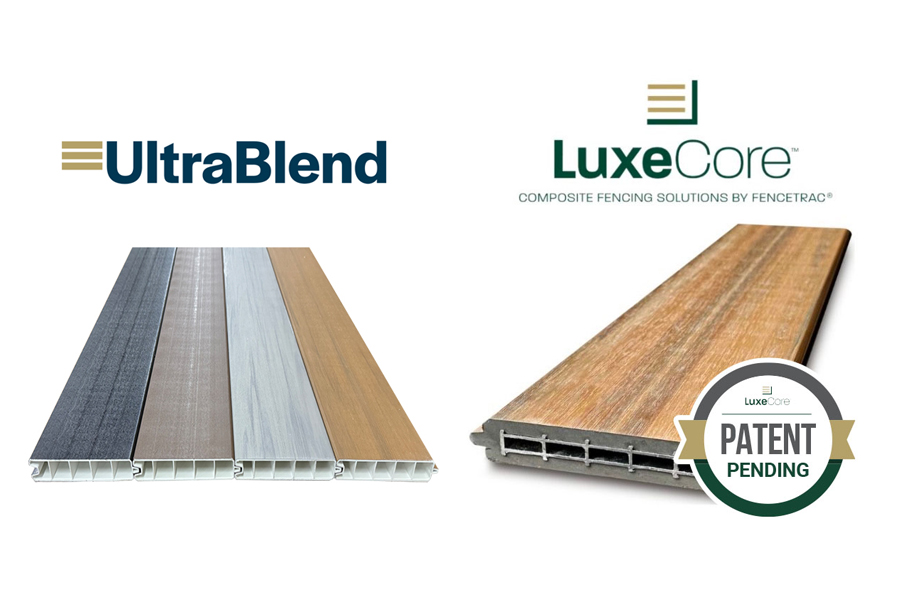
The channels accept any rigid infill material up to 1 inch thick. LuxeCore composite, UltraBlend PVC, aluminum boards, cedar, and compatible third-party materials all fit the same frame. Changing the look of the fence means changing the infill, not rebuilding the structure. This is what makes the system truly modular.
FenceTrac: The Original Channel Frame System
FenceTrac designed, patented, and brought channel frame modular fencing to market. The system was engineered from the ground up as a structural fence, not adapted from a decorative product or imported from another industry.
The key specifications that define the original system are not arbitrary. They are engineering decisions that determine how the fence performs over decades of outdoor exposure.
| Specification | FenceTrac | Why It Matters |
|---|---|---|
| Top/bottom channel depth | 3″ | Deeper channel grips more infill edge, resists board pull-out under wind |
| Side channel depth | 2″ | Sufficient grip for lateral stability without adding excess frame width |
| Channel material | Galvanized G90 steel | Strongest standard fence-grade metal, does not flex like aluminum |
| Max infill thickness | 1″ | Accepts structural-grade infill boards (LuxeCore, UltraBlend, aluminum T&G) |
| Post material | Galvanized G90 steel, powder-coated | Steel posts resist bending under wind load better than aluminum |
| Panel heights | 4′, 6′, 8′ | Covers residential, commercial, and security applications |
| Panel widths | 6′, 8′ | Standard residential and commercial spacing |
These specifications have been validated by third-party testing at QAI Laboratories: 55.0 psf design wind load under ASTM E330 and Large Missile Impact Level D under ASTM E1886. No other channel frame fence system has published comparable structural test data.
What Channel Frame Fencing Can Be Used For
The modular nature of the system means it adapts to a wide range of applications by changing the infill and configuration.
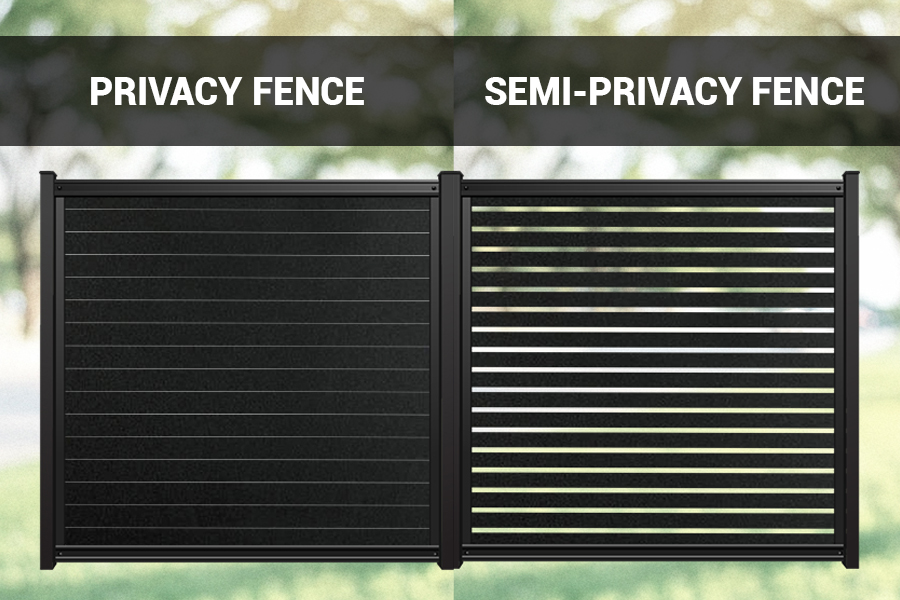
Privacy fencing uses solid tongue and groove infill (composite, PVC, aluminum, or cedar) for full visual screening. Semi-privacy fencing uses spaced aluminum slat boards for partial screening with airflow. Fire-rated fencing uses aluminum infill to achieve ASTM E84-24 Class A. Enclosures use the same frame with gates to screen dumpsters, HVAC units, and utility equipment.
For commercial properties, the ability to specify one frame system across every fencing zone on the property simplifies procurement, ensures visual consistency, and reduces long-term maintenance to near zero.
Fence Design Possibilities with Channel Frame Construction
Channel frame construction opens up design options that traditional post-and-rail fencing cannot achieve. Mixed infill patterns, where composite boards alternate with aluminum accent boards in the same panel, are possible because the channels hold any combination of rigid infill without requiring different fastening methods.
Horizontal and vertical board orientations both work within the same frame. Color mixing across the infill is straightforward since the frame is independent of the infill material. The powder-coated steel frame in Black, Bronze, White, or Silver provides a clean architectural border that frames the infill like a picture frame.
Related Questions
How does FenceTrac compare to cheaper channel fence systems? Imitation channel fence systems use shallower channels (1-1/4″ to 1-1/2″), aluminum instead of steel, and accept only 1/2″ to 3/4″ infill. These differences directly affect structural performance and longevity.
Is it better to build from scratch or buy a fence kit? Channel frame fencing is a kit-based system by design. The pre-cut components assemble on site without field-cutting the frame, which reduces installation time and eliminates measuring errors.
See Also
FenceTrac privacy fencing for complete system details, and architect specifications for technical documentation.
Get a Quote for Channel Frame Fencing
FenceTrac ships fence systems nationally and has been manufacturing engineered fencing in the USA since 2012.
Every system carries a 20-year warranty and is engineered for long-term performance with minimal maintenance.