
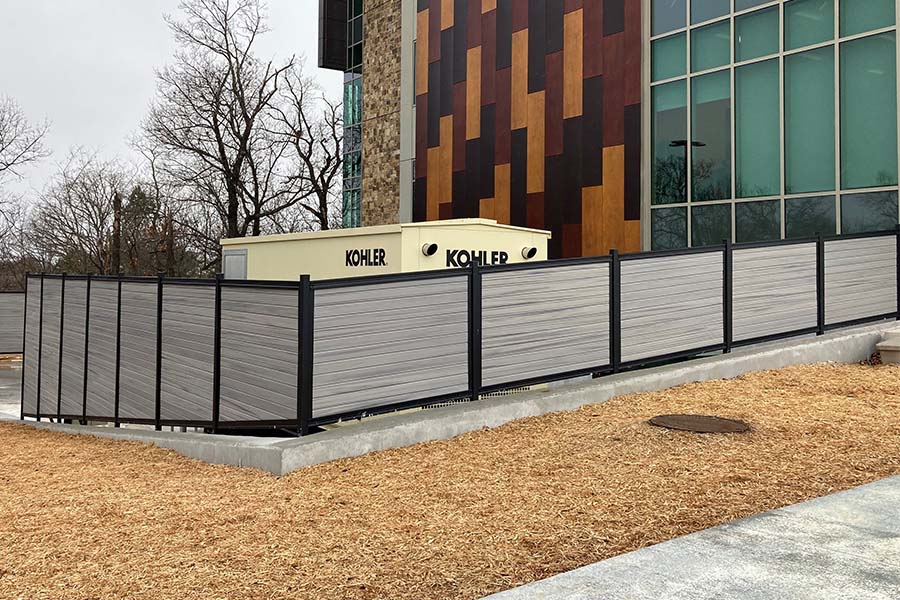
FenceTrac’s enclosure system with aluminum infill carries an ASTM E84-24 Class A fire rating, making it one of the few dumpster enclosure options that meets fire code requirements without a secondary fire barrier. In many jurisdictions, building codes require non-combustible or fire-rated fencing around dumpster enclosures located within a specified distance of occupied structures. The exact distance and material requirements vary by local code, but the underlying concern is consistent: dumpster fires are common, and a combustible enclosure can spread fire directly to an adjacent building.
The Short Answer
If your dumpster enclosure is within 5 to 10 feet of a building (the exact threshold depends on local code), most jurisdictions require the enclosure to be built with non-combustible materials. Wood and vinyl enclosures do not qualify. FenceTrac fire-rated fencing uses a galvanized steel frame and 6063-T5 aluminum infill, both non-combustible, and carries a documented Flame Spread Index of 0 under ASTM E84-24.
Why Dumpster Enclosures Are a Fire Code Target
Dumpsters are one of the most common ignition sources on commercial properties. Discarded materials, grease, chemicals, and improperly disposed hot items make dumpster fires a routine call for fire departments.
When a dumpster is enclosed by a combustible fence, the fence becomes fuel. A fire that starts in the dumpster can ignite wood or vinyl fencing within seconds, and that burning fence can spread fire to a building wall, roofline, or utility connection before the fire department arrives.
This is why building codes focus specifically on the material composition of enclosures near structures. The enclosure itself must not contribute to fire spread.
What the Codes Typically Require
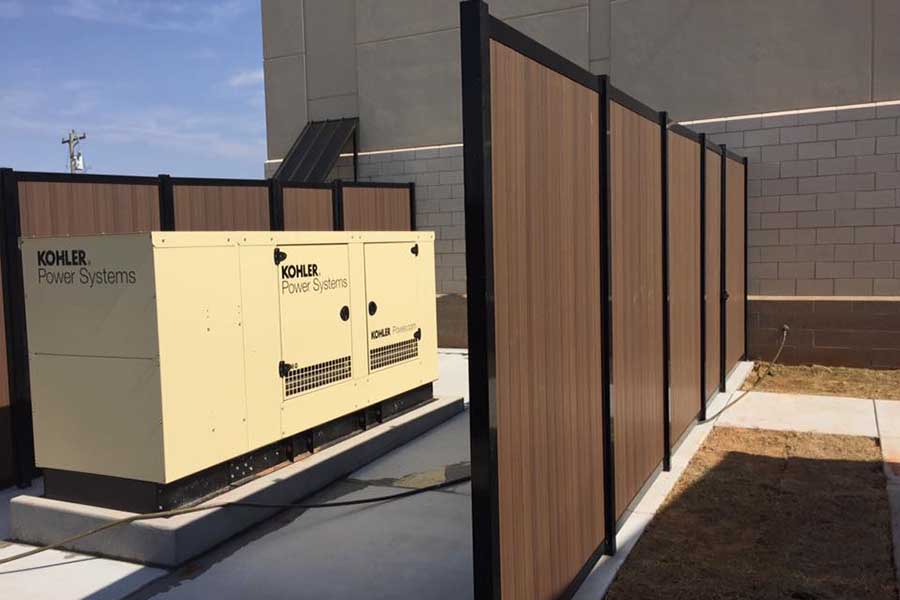
Dumpster enclosure fire requirements come from several overlapping code sources. The specific code that applies depends on the jurisdiction and the type of property.
International Fire Code (IFC)
The IFC, adopted in most US jurisdictions with local amendments, addresses dumpster placement and enclosure materials. IFC Section 304.3.3 requires combustible waste containers stored near buildings to be placed a minimum distance from the structure or enclosed with non-combustible construction. The standard trigger distance is 5 feet from a combustible wall or opening.
International Building Code (IBC)
IBC Chapter 8 governs interior finish and fire separation requirements. When a dumpster enclosure is attached to or immediately adjacent to a building, IBC fire separation provisions may apply, requiring the enclosure walls to meet a fire resistance rating or be constructed of non-combustible materials.
Local Fire Marshal Requirements
Many cities and counties add local amendments that are stricter than the model codes. Some jurisdictions require non-combustible dumpster enclosures regardless of distance from structures. Others require specific ASTM E84 ratings for enclosure materials. The local fire marshal or authority having jurisdiction (AHJ) is the final word on what applies to a specific property.
Design Ideas for Fire-Rated Dumpster Enclosures
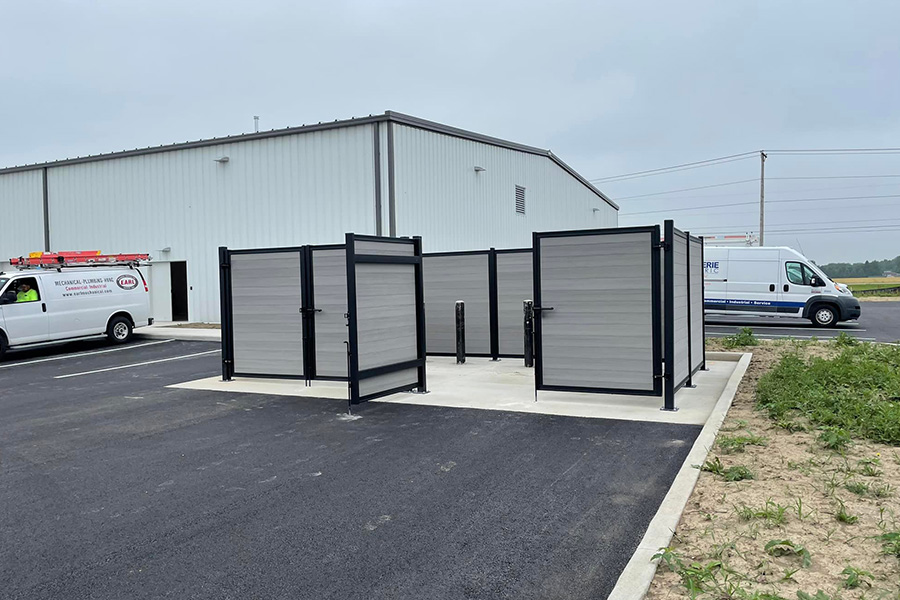
Fire-rated does not mean industrial-looking. FenceTrac’s enclosure system uses the same modular frame and powder-coated finish as the rest of the FenceTrac privacy fence line.
The aluminum infill is available in Black, Bronze, White, and Silver. The enclosure matches the surrounding fence line or building exterior, giving the property a clean, consistent appearance that also satisfies fire code. The both-sided design means the enclosure looks finished from every angle, including from inside the enclosure where service crews access the dumpster.
Gate options include 4-foot and 6-foot single gates and 8-foot and 12-foot double gates, all built with heavy-duty posts sized for commercial enclosure use. Custom steel welded gates are available for non-standard openings.
What About Existing Wood or Vinyl Dumpster Enclosures
If your property has an existing wood or vinyl dumpster enclosure and a code inspection flags it as non-compliant, the enclosure must be replaced or retrofitted with non-combustible materials.
FenceTrac’s modular system makes replacement straightforward. The steel posts set in concrete, the frame assembles around the posts, and the aluminum infill slides into the U-channel frame. A typical single-dumpster enclosure can be installed in a day by a qualified fence contractor.
For enclosures on existing concrete pads, FenceTrac surface-mount base plates attach the posts directly to the concrete surface using anchor bolts, eliminating the need to dig post holes.

How Tall Does a Dumpster Enclosure Need to Be?
Most codes and property management standards require the enclosure to fully screen the dumpster from view. A standard 6-foot enclosure covers most residential and light commercial dumpsters. Larger commercial dumpsters (6-yard and 8-yard) may require 8-foot enclosure height for full screening. FenceTrac enclosures are available in 4-foot, 6-foot, and 8-foot heights.

Related Questions
What is fire-rated fencing and when is it required? Fire-rated fencing is required by building codes in specific proximity zones near occupied structures, including areas where dumpster enclosures sit adjacent to buildings.
What is the best material for a commercial equipment enclosure? For fire code compliance, non-combustible materials like aluminum and steel are the standard. FenceTrac’s enclosure system combines both in a single modular assembly.
What type of fence is required near electrical transformers or utility equipment? Utility equipment near structures often falls under the same fire code provisions as dumpster enclosures, with additional clearance and access requirements from the utility provider.
See Also
How to screen HVAC units with fencing for details on screening other utility equipment with FenceTrac. What does ASTM E84 Class A mean for fencing for a full explanation of FenceTrac’s fire test results.
Get a Quote for Your Dumpster Enclosure Project
FenceTrac ships fence systems nationally and has been supplying contractors, property owners, and commercial buyers since 2012.
Every system carries a 20-year warranty and is engineered for long-term performance with minimal maintenance.