
FenceTrac’s enclosure system uses a galvanized G90 steel frame with interchangeable infill options, making it the most versatile material choice for commercial equipment screening. The steel frame carries a 20-year warranty and accepts LuxeCore composite, UltraBlend PVC, aluminum, cedar, or welded wire infill, so the same structural system can screen anything from a rooftop HVAC unit to a ground-level generator to a parking lot transformer.
The Short Answer
The best material is a non-combustible or fire-rated steel frame paired with an infill that matches the application. For general screening where no fire code applies, LuxeCore composite or UltraBlend PVC provides a maintenance-free, attractive enclosure. For equipment near occupied structures or where fire codes apply, aluminum infill in a steel frame achieves ASTM E84-24 Class A. FenceTrac’s modular system handles both scenarios within the same frame.
What Commercial Equipment Enclosures Need to Do
An equipment enclosure is not just a visual screen. It serves multiple functions depending on the equipment inside and the property’s requirements.
Visual Screening
The primary purpose is hiding equipment that detracts from the property’s appearance. HVAC condensers, generators, electrical transformers, utility meters, and telecommunications equipment are functional necessities that look industrial. A well-built enclosure makes them disappear from the tenant’s and visitor’s sightline.
Code Compliance
Many municipal codes require mechanical equipment to be screened from public view. Some codes specify the enclosure material (non-combustible near certain equipment), minimum height (typically matching or exceeding the equipment height), and setback from the equipment for service access and airflow.
Durability
Equipment enclosures sit in service areas that take abuse. Lawn mowers hit them. Service trucks back into them. Weather hits them year-round with no shelter. The enclosure material needs to absorb this punishment without denting, cracking, rotting, or requiring constant repair.
Materials Compared for Equipment Enclosures
| Material | Durability | Fire Rating | Maintenance | Appearance |
|---|---|---|---|---|
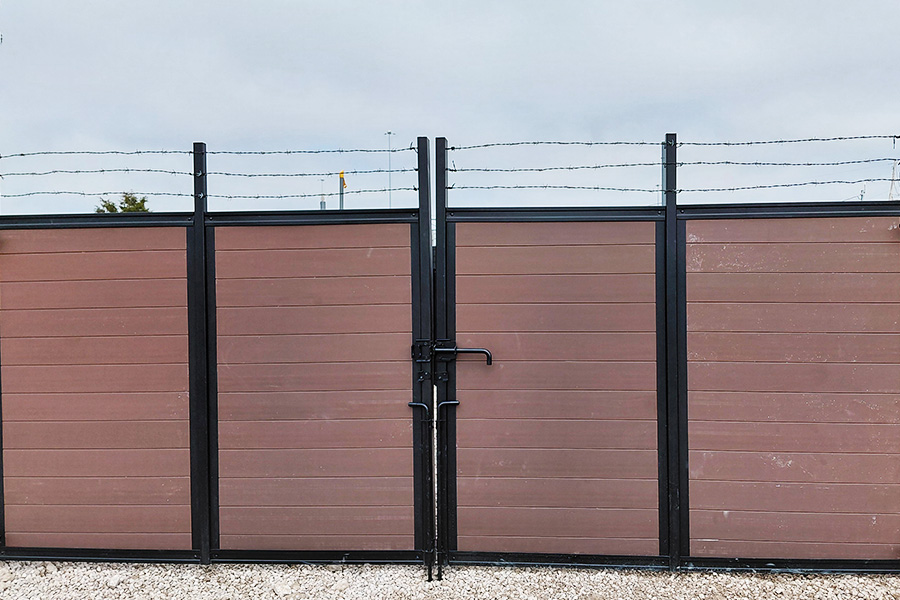
| FenceTrac steel frame + composite infill | High | Frame: non-combustible. Infill: not Class A. | None | Textured wood look, 4 colors |
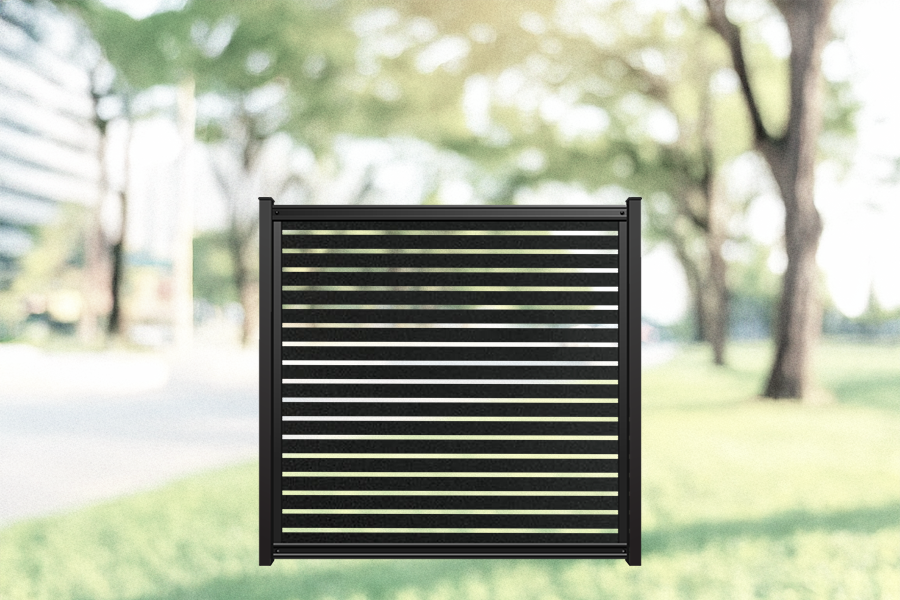
| FenceTrac steel frame + aluminum infill | High | Class A (FSI 0, SDI 35) | None | Smooth modern finish, 4 colors |
| Wood | Low-Medium | Combustible | Stain/seal every 2-3 years | Degrades over time |
| Vinyl | Low | Combustible, melts | Low | Yellows and becomes brittle |
| CMU / Masonry | Very high | Non-combustible | Low | Permanent but expensive |
| Chain link with slats | Medium | Varies | Low | Industrial, not attractive |
Why Steel Frame with Modular Infill Wins
A steel frame enclosure combines the structural permanence of metal with the design flexibility of interchangeable infill. This is the key advantage over single-material options.
Wood enclosures rot in service areas where moisture collects around equipment. Vinyl enclosures crack when hit by equipment or service vehicles. Masonry enclosures are permanent and strong but cost significantly more and cannot be modified or relocated.
FenceTrac’s steel frame holds up to the same impacts and weather conditions as masonry but at a lower cost and with the ability to change the infill if the property’s needs change. If a general-screening enclosure later needs to meet fire code because the equipment changes, the owner swaps the infill from composite to aluminum without replacing the frame, posts, or gates.
The powder-coated galvanized steel frame resists corrosion from equipment condensation, chemical exposure from mechanical systems, and physical impact from service operations. The 20-year warranty covers the frame through years of service-area conditions that would destroy a wood enclosure.

When Fire-Rated Materials Are Required
Equipment that generates heat, contains combustible fuel, or is classified as an ignition source may require a fire-rated enclosure. Common examples include generators (diesel or natural gas), electrical transformers, and HVAC equipment near building openings.
FenceTrac’s aluminum infill in a steel frame carries an ASTM E84-24 Class A fire rating with a Flame Spread Index of 0. This satisfies IBC and NFPA requirements for non-combustible screening in fire-sensitive applications. The aluminum infill is inherently non-combustible, so the fire performance does not degrade over time the way fire-retardant-treated wood does.
Design Options for Equipment Enclosures
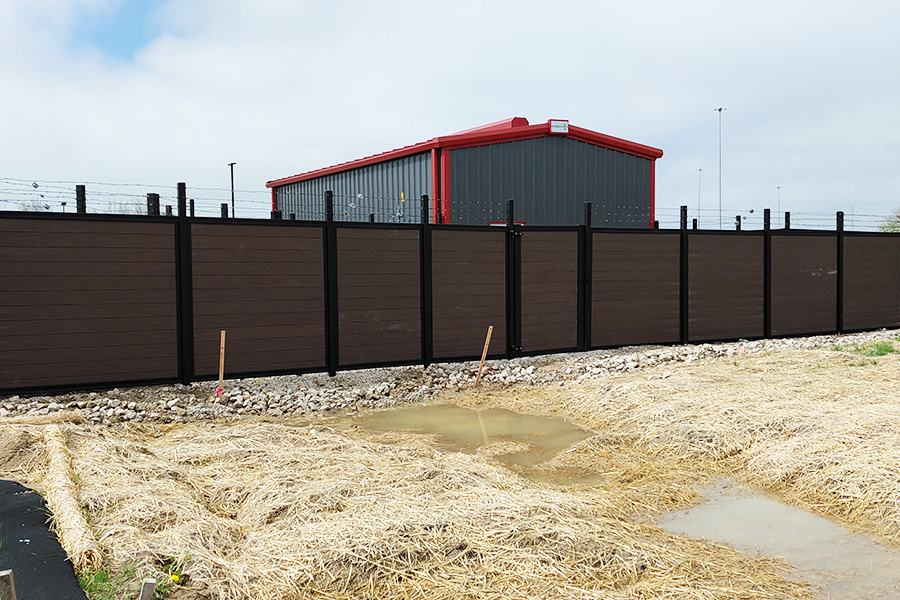
Equipment enclosures do not need to look utilitarian. FenceTrac’s system gives property owners and architects the same design flexibility as the perimeter fence.
Match the enclosure infill and frame color to the building’s perimeter fencing for a unified look across the property. Use mixed infill patterns, such as composite privacy panels on the visible sides and aluminum slats on the service side where airflow is needed.
For rooftop equipment, surface-mount base plates allow the enclosure posts to attach directly to the roof deck or concrete pad without digging footings. This is a critical detail for rooftop HVAC and telecommunications equipment screening.
Related Questions
How tall does a dumpster enclosure need to be? Dumpster enclosures follow similar code requirements but are sized to the container dimensions. 6-foot and 8-foot heights are most common.
How do I screen HVAC units with fencing? HVAC screening requires attention to airflow clearance and, in some cases, fire-rated materials. FenceTrac’s semi-privacy and fire-rated configurations handle both.
See Also
FenceTrac enclosures for product specifications, gate options, and configuration details.
Get a Quote for an Equipment Enclosure
FenceTrac ships fence systems nationally and has been manufacturing engineered fencing in the USA since 2012.
Every system carries a 20-year warranty and is engineered for long-term performance with minimal maintenance.