
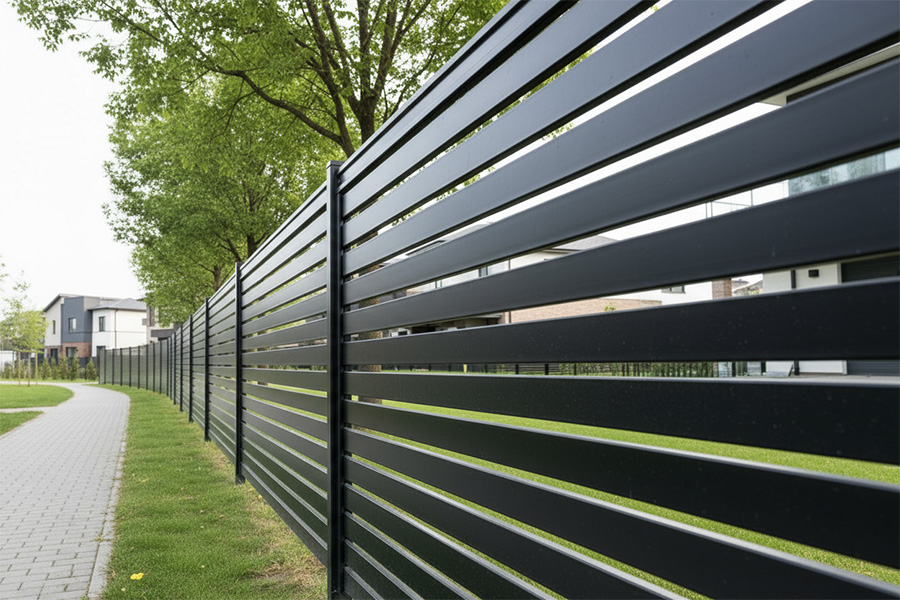
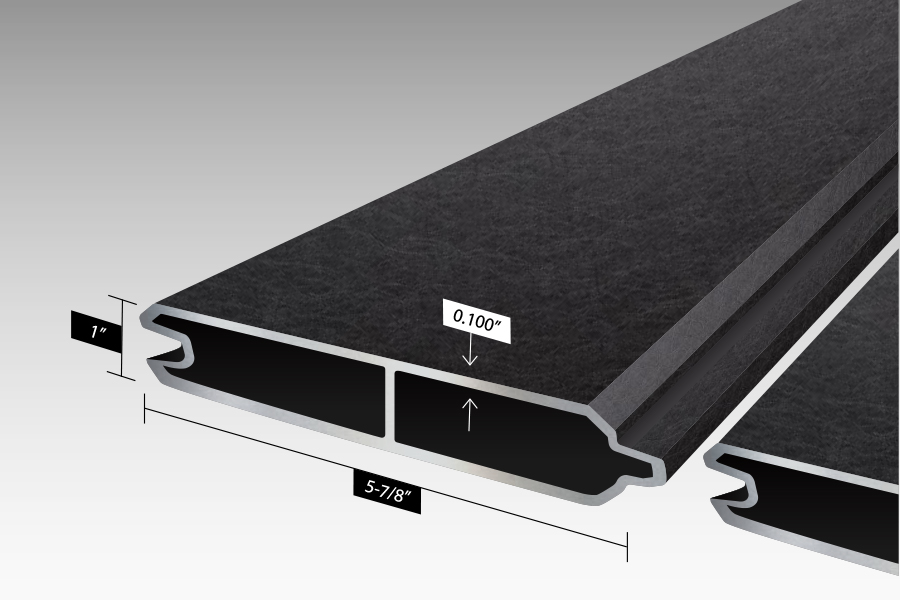
FenceTrac’s fire-rated fencing uses 6063-T5 aluminum infill boards in a galvanized steel frame, achieving a Class A rating under ASTM E84-24 with a Flame Spread Index of 0 and a Smoke Developed Index of 35, both tested by QAI Laboratories. Not all fence materials qualify for fire-rated applications. The material must be tested to a recognized fire performance standard, and the test results must meet the classification required by the local building code for the specific installation.
The Short Answer
Metals (aluminum and steel) are the primary fence materials that achieve Class A fire ratings. Wood, vinyl, and most composite materials are combustible and either cannot pass ASTM E84 testing or score in the lower Class B or Class C ranges. For projects where the building code requires Class A non-combustible fencing, aluminum infill in a steel frame is the standard specification.
How Fire Rating Is Determined for Fence Materials
A material’s fire rating is not an assumption based on what the material is made of. It is a classification assigned based on standardized test results. The test that applies to fence materials in most U.S. building codes is ASTM E84, “Standard Method of Test for Surface Burning Characteristics of Building Materials.”
The test is conducted in a 25-foot tunnel where the material is exposed to a controlled flame for 10 minutes. Two measurements are taken: Flame Spread Index (how far flames travel across the surface) and Smoke Developed Index (how much smoke the material produces). The results determine the material’s classification.
A material that has not been tested to ASTM E84 does not have a fire rating. A manufacturer saying their product is “fire resistant” or “non-combustible” without referencing a specific test standard and classification is making an unverified claim.
Materials That Qualify for Fire-Rated Fencing
The table below compares common fence materials and their fire performance characteristics.
| Material | Combustible? | Typical ASTM E84 Class | Notes |
|---|---|---|---|
| Aluminum (6063-T5) | No | Class A (FSI 0) | Inherently non-combustible. FenceTrac tested. |
| Steel (galvanized) | No | Class A | Non-combustible. Used for FenceTrac frame and posts. |
| Concrete / Masonry | No | Class A | Non-combustible but heavy and expensive for fencing. |
| Cedar / Wood | Yes | Class C or unrated | Burns readily. Fire-retardant treatment improves but rarely achieves Class A. |
| Vinyl / PVC | Yes | Varies (often Class C) | Melts and burns. Produces toxic smoke. |
| Composite (wood-plastic) | Yes | Varies (Class B or C) | Contains combustible components. Not typically Class A. |
Why Aluminum Is the Standard for Fire-Rated Fencing
Aluminum is inherently non-combustible. Its fire performance is a property of the metal itself, not a coating or chemical treatment that can wear off or degrade over time. This is why aluminum infill boards achieve a Flame Spread Index of 0 in ASTM E84 testing. There is nothing to burn, so there is no flame spread.
The Smoke Developed Index of 35 for FenceTrac’s aluminum infill reflects the minimal off-gassing from the powder-coated finish under extreme heat. Even this small amount of smoke is well below the Class A ceiling of 450.
Steel (used for the FenceTrac frame and posts) is also non-combustible and contributes to the overall fire performance of the assembled system. The combination of an aluminum infill and a steel frame means every structural and visible component of the fence is non-combustible.
Materials That Do Not Qualify
Understanding what fails fire rating requirements is as important as knowing what passes.
Wood
Untreated wood is highly combustible. Fire-retardant-treated (FRT) lumber can improve flame spread performance, but the treatment adds cost, requires ongoing maintenance, and often does not achieve Class A results. Most building codes do not accept treated wood as a substitute for non-combustible materials in applications that specifically require a fire-rated barrier.

Vinyl and PVC
Standard vinyl fence products melt and burn when exposed to flame. They also produce toxic hydrogen chloride gas during combustion. While some vinyl products may score in the Class B or C range, they are not appropriate for applications where Class A performance is required.
Standard Composites
Wood-plastic composite materials contain combustible wood fibers. Their fire performance varies by formulation, but most standard composite fence boards fall in the Class B or C range. They should not be specified for fire-rated fence applications unless the specific product has been tested and classified to the required standard.
Design Ideas for Fire-Rated Fence Projects
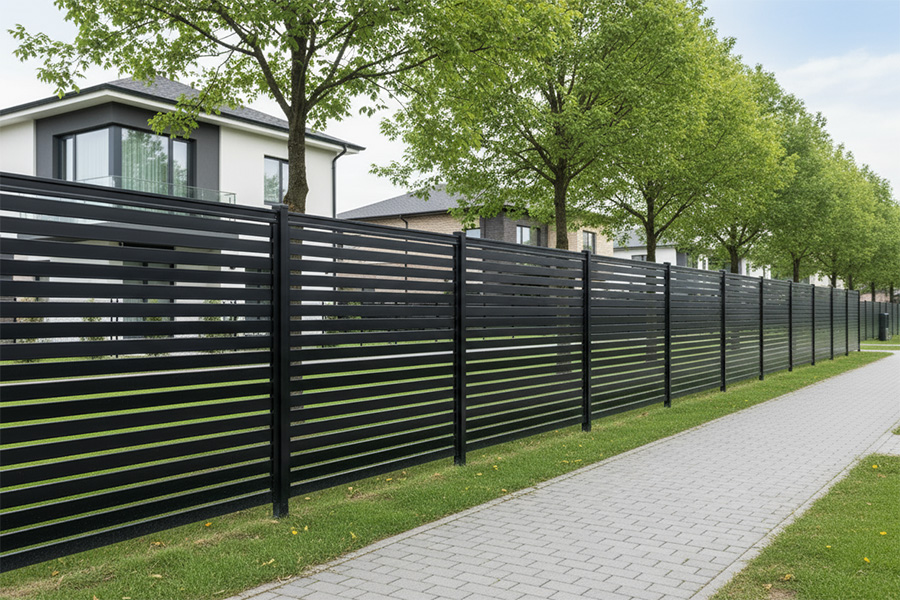
FenceTrac’s fire-rated fencing is available in privacy (tongue and groove aluminum boards) and semi-privacy (spaced aluminum slat) configurations. Both use the same galvanized steel frame as the rest of the FenceTrac product line.
Aluminum infill boards come in four powder-coated colors: Black, Bronze, White, and Silver. This gives architects and property owners design flexibility even within the constraints of a fire-rated specification.
For properties that need fire-rated fencing in some zones and non-fire-rated fencing in others, the FenceTrac frame system allows mixing. Fire-rated aluminum panels go where code requires them. LuxeCore composite or UltraBlend PVC go on the perimeter where fire rating is not mandated. The same frame, same posts, same color, one unified fence line across the entire property.

Related Questions
What is fire-rated fencing and when is it required? Fire-rated fencing is required near occupied structures, utility equipment, and in code-mandated separation barrier applications. The local building department determines requirements based on IBC, NFPA, or local fire codes.
Can I use fire-retardant-treated wood instead of aluminum for a fire-rated fence? In most cases, no. Fire-retardant treatment improves wood’s flame spread performance but rarely achieves Class A, and many codes specifically require non-combustible materials, which excludes all wood products regardless of treatment.
See Also
FenceTrac fire-rated fencing for the complete product specification and a link to the QAI Laboratories ASTM E84-24 test report.
Get a Quote for Fire-Rated Fencing
FenceTrac ships fence systems nationally and has been manufacturing engineered fencing in the USA since 2012.
Every system carries a 20-year warranty and is engineered for long-term performance with minimal maintenance.