
FenceTrac’s fire-rated fencing system is a full privacy fence. The 6063-T5 aluminum infill boards install in a tongue-and-groove configuration inside the galvanized G90 steel, powder-coated frame, creating a continuous visual barrier with no gaps between boards. The system carries an ASTM E84-24 Class A fire rating with a Flame Spread Index of 0, tested by QAI Laboratories. Fire compliance and privacy performance are built into the same product.
The Short Answer
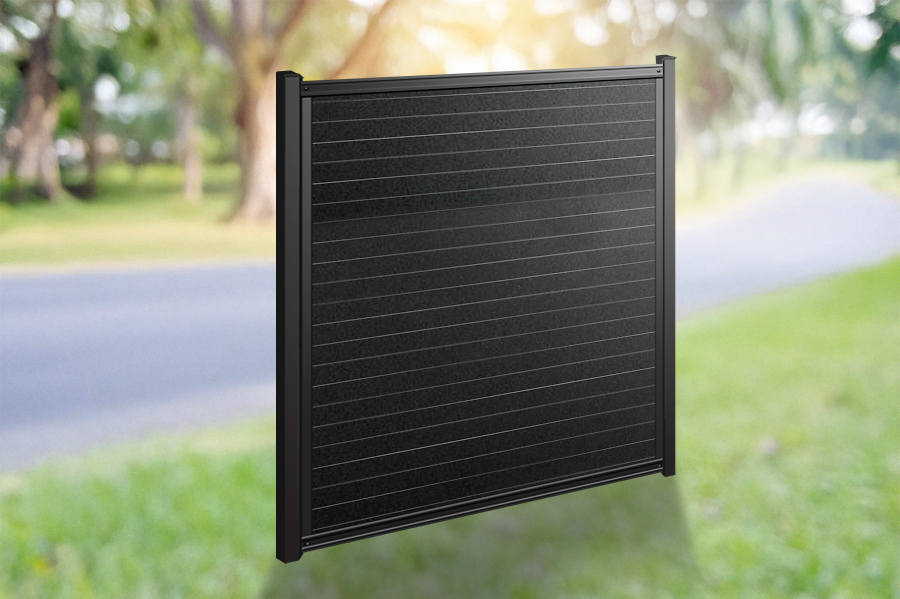
Yes. FenceTrac’s fire-rated fence is a privacy fence by default. The aluminum infill boards sit in tongue-and-groove alignment inside the steel frame channels, producing a solid surface on both sides with no sightlines through the fence. It delivers the same complete visual screening as FenceTrac’s composite and PVC privacy configurations, with the added benefit of a tested Class A fire rating.
How Fire-Rated Privacy Works in the FenceTrac System
The FenceTrac frame is a modular system. The same galvanized G90 steel, powder-coated channels that hold LuxeCore composite or UltraBlend PVC infill also hold fire-rated aluminum infill. The frame does not change. The infill determines the fire rating.
Aluminum Infill Configuration for Privacy
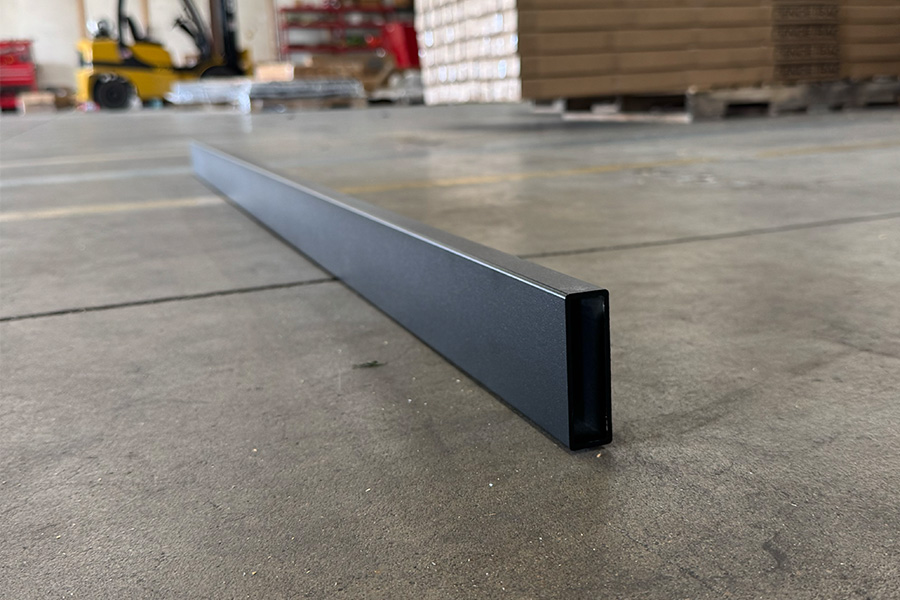
Fire-rated privacy fencing uses 5-7/8 inch wide, 6-foot long, 1-inch thick aluminum boards in a tongue-and-groove profile. The boards stack inside the 3-inch steel frame channels with interlocking edges that eliminate gaps between boards.
The result is a both-sided privacy fence that looks identical from either side. There are no exposed rails, fasteners, or structural members visible from the exterior. The flat, continuous surface provides no climbing footholds on either face.
Semi-Privacy Option
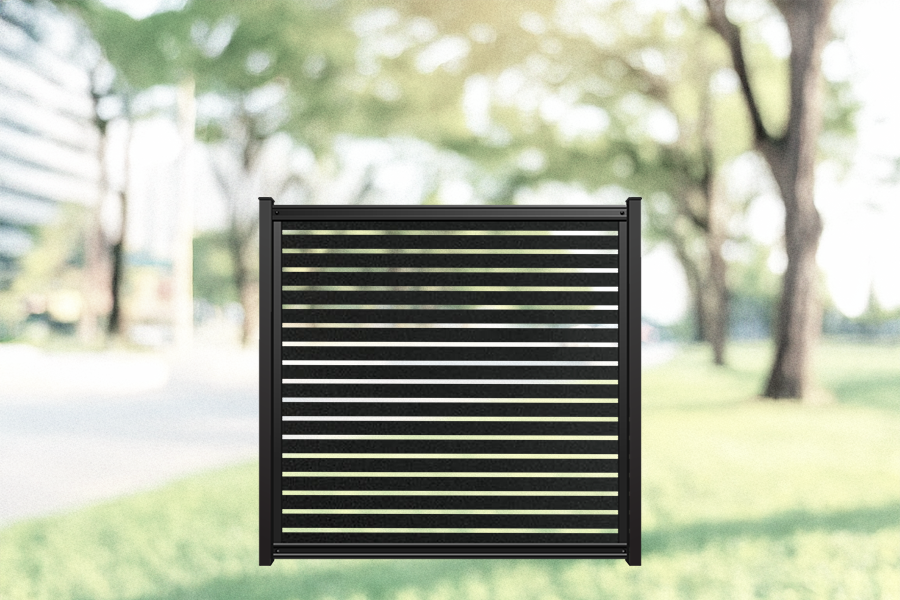
For applications where airflow and partial visibility are preferred, FenceTrac fire-rated fencing is also available in a semi-privacy configuration. Aluminum boards install with stackable spacers starting at 3/4 inch in 1-inch increments to control the gap between boards. This configuration is common for equipment screening where ventilation is required (generators, transformers, HVAC units) and the fire code still applies.
Both configurations, privacy and semi-privacy, use the same aluminum material and carry the same ASTM E84-24 Class A fire rating.
Why Most Fire-Rated Fencing Falls Short on Privacy
Conventional approaches to fire-rated fencing sacrifice privacy, appearance, or both.
Chain link with fire-retardant slats provides some visual screening but leaves visible gaps, degrades in appearance within a few years, and offers no architectural finish on either side. Concrete masonry (CMU) walls are non-combustible and provide privacy, but they are significantly more expensive to install, require a foundation, and are permanent structures that cannot be reconfigured. Metal mesh and expanded metal panels are non-combustible but provide zero privacy.
FenceTrac’s aluminum infill in a steel frame provides full privacy, a clean architectural finish, an ASTM E84-24 Class A fire rating, and modular construction that allows section-by-section installation and repair. That combination does not exist in other fire-rated fencing approaches.
Design Options for Fire-Rated Privacy Fencing
Fire-rated fencing does not have to look institutional.
Aluminum infill boards are available in four powder-coated colors: Black, White, Silver, and Bronze. The steel frame is also available in Black, White, Silver, and Bronze. Matching or contrasting the frame and infill colors creates a finished architectural look that commercial properties and architects specify for street-facing perimeters, not just equipment enclosures.
The system is available in 4-foot, 6-foot, and 8-foot heights. The modular infill system also allows mixing fire-rated aluminum boards with other infill types on the same property. Use fire-rated panels in code-mandated zones and LuxeCore composite or UltraBlend PVC panels on sections where the fire rating is not required. The frame, posts, and hardware remain the same across the entire fence line.

Common Applications for Fire-Rated Privacy Fencing
Projects that need both fire compliance and visual screening include several categories.
Commercial equipment enclosures for generators, transformers, and fuel storage near occupied buildings. Dumpster and waste container screening where the enclosure is within fire-separation distance of a structure. School and healthcare facility perimeters where life-safety codes require non-combustible materials. Property-line fencing where the fence falls within the fire-separation distance of an adjacent building. Industrial facility perimeters where local fire codes mandate non-combustible barriers.
In all of these applications, the property owner or facility manager also needs privacy: screening dock operations, hiding equipment from public view, securing a perimeter, or meeting tenant expectations for a professional, finished appearance.
Fire Performance Specifications
QAI Laboratories tested FenceTrac’s aluminum infill to ASTM E84-24 and recorded the following results.
| Metric | Result | Class A Limit |
|---|---|---|
| Flame Spread Index | 0 | 0-25 |
| Smoke Developed Index | 35 | 0-450 |
| Classification | Class A | Class A |
The Flame Spread Index of 0 means zero flame propagation across the surface during the full 10-minute test conducted at ceiling exposure. The Smoke Developed Index of 35 is far below the 450 limit. These results come from the aluminum material composition, not from a fire-retardant treatment. The fire performance does not degrade over the life of the fence.
Related Questions
What building codes require fire-rated fencing? The IBC, NFPA 101, NFPA 1, and local code amendments contain provisions that trigger fire-rated fencing requirements based on the building type, equipment proximity, and local enforcement.
What materials qualify for fire-rated fence applications? Aluminum and steel are the primary materials that achieve ASTM E84 Class A. Wood, most vinyl products, and wood-plastic composites do not qualify.
See Also
FenceTrac fire-rated fencing for product details. Where fire-rated fencing is most commonly required for a geographic and application-level breakdown of where these codes are enforced.
Get a Quote for Fire-Rated Privacy Fencing
FenceTrac ships fence systems nationally and has been supplying contractors, property owners, and commercial buyers since 2012.
Every system carries a 20-year warranty and is engineered for long-term performance with minimal maintenance.