
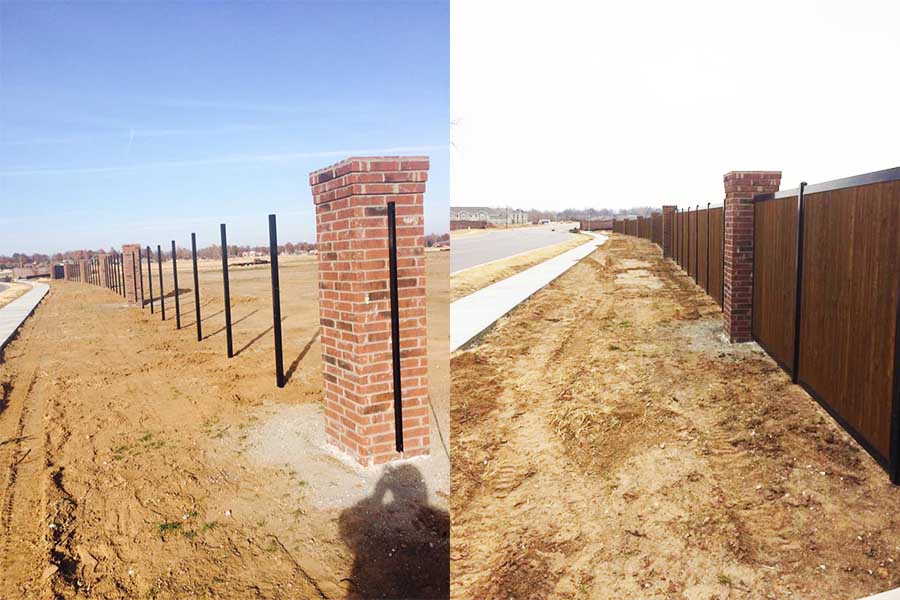
FenceTrac’s steel U-channel side rails can be mounted directly to concrete or rock pillars using the appropriate masonry fasteners. This configuration eliminates the need for steel fence posts between pillars and allows the FenceTrac frame and infill to span from column to column. It is a popular design choice for HOA neighborhood perimeter fencing, commercial property boundaries, and luxury estates where masonry columns are an architectural feature of the overall fence design.
The Short Answer
Yes. The FenceTrac vertical side channels attach to concrete, stone, brick, or stucco-clad pillars using concrete anchors or masonry fasteners rated for the substrate. The horizontal top and bottom channels then bolt to the side channels the same way they would on a standard steel-post installation. All infill options (LuxeCore composite, UltraBlend PVC, aluminum, cedar) work with pillar-mounted configurations.

How Pillar Mounting Works
In a standard FenceTrac installation, the 2-inch vertical side channels attach to steel posts with self-tapping screws. In a pillar-mounted installation, those same side channels attach to the face of the pillar instead of a steel post.
The installer positions the side channel against the pillar face, marks the fastener locations, drills pilot holes into the masonry, and secures the channel with concrete sleeve anchors, wedge anchors, or Tapcon-style masonry screws. The specific fastener depends on the pillar material, the pillar thickness, and the load requirements for the installation.
Once the side channels are secured to the pillars on both ends of the span, the horizontal top and bottom channels attach to the side channels with carriage bolts, just like a standard panel. The infill boards slide into the channels the same way. From the assembly standpoint, the only difference is the attachment method at the pillar.
Fastener Selection by Pillar Material
The right fastener depends on what the pillar is made of. Using the wrong type can result in a weak connection or cracking in the masonry.
| Pillar Material | Recommended Fastener Type | Notes |
|---|---|---|
| Poured concrete | Wedge anchors or sleeve anchors | Strongest hold. Requires hammer drill with masonry bit. |
| Concrete block (CMU) | Sleeve anchors or Tapcon masonry screws | Avoid wedge anchors in hollow block; use sleeve type. |
| Natural stone / rock veneer | Sleeve anchors into the structural core | Fasten through the veneer into the concrete or block core, not into the veneer alone. |
| Brick | Sleeve anchors or Tapcon masonry screws | Drill into the brick, not the mortar joint, for maximum pull-out strength. |
| Stucco over concrete/block | Sleeve anchors through stucco into substrate | Stucco alone has no structural value. The fastener must reach the concrete or block behind it. |
The installer should always verify the internal construction of the pillar before selecting fasteners. Many decorative stone or rock pillars are built with a CMU or poured concrete core wrapped in a stone veneer. The fastener must anchor into the structural core, not just the decorative outer layer.

Where Pillar-Mounted FenceTrac Fencing Is Most Common
Pillar mounting is not just a technical option. It is a design strategy that adds a distinct architectural look to the fence line. These are the most common applications.
HOA and Subdivision Perimeter Fencing
Planned communities and subdivisions frequently use masonry columns as a design element along the neighborhood perimeter. The columns establish a visual rhythm and an upscale appearance that a continuous fence line alone cannot achieve. FenceTrac panels spanning between pillars give the HOA a zero-maintenance privacy infill between the columns, with a clean, consistent look on both sides of the fence.
This is especially relevant for communities with HOA fence rules that mandate masonry columns at intervals along the fence line or require a specific aesthetic standard for perimeter fencing.
Commercial Property Boundaries
Office parks, retail centers, and mixed-use developments often use concrete or stone pillars at entry points, corners, and along street-facing property lines. FenceTrac panels between pillars deliver commercial-grade privacy screening with a modern, engineered appearance that matches the quality of the surrounding architecture.
The aluminum infill option paired with pillar mounting creates a particularly strong commercial look. The powder-coated aluminum boards add a metallic, modern contrast to stone or concrete columns.
Luxury and Estate Properties
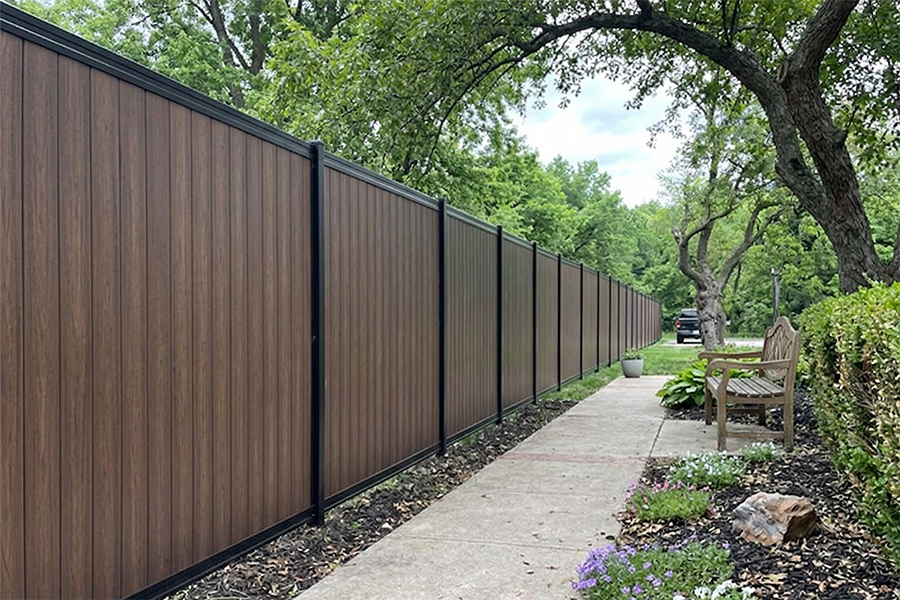
Estate fencing often combines stone or brick columns with fence panels to define the property boundary while maintaining a high-end appearance. FenceTrac with LuxeCore aluminum-core composite infill provides the both-sided design that estate properties demand, where the fence looks finished from the street side and the interior side equally.
Because FenceTrac infill boards seat in channels from the top and are held by the frame on all four sides, the finished panel has no exposed fasteners, no “bad side,” and no visible rails on either face. This matters on estate perimeters where neighbors, HOA review boards, or public right-of-way viewers see one side and the homeowner sees the other.
Pillar-Mounted Fence Design Ideas
The FenceTrac frame does not dictate the pillar style, spacing, or material. That flexibility opens up a wide range of design combinations.
A common residential design uses stone-clad pillars at 8-foot intervals with FenceTrac 8-foot panels between them. The 8-foot panel width matches the pillar spacing exactly, producing a clean, symmetrical layout with no filler panels.
For a more open look, some designs alternate between privacy panels and semi-privacy panels between pillars. This works well for front-yard or street-facing fence runs where full privacy is not the goal but the masonry column aesthetic is still desired.
On commercial properties, pillar-mounted FenceTrac can wrap corners and transition between privacy sections and OmniView welded wire sections for areas that need visibility, like entry drives and security camera sight lines.
Related Questions
Does FenceTrac offer surface-mount base plates for posts? Surface-mount base plates are a different mounting method. They bolt FenceTrac steel posts to a flat concrete surface (like a patio slab or retaining wall cap). Pillar mounting attaches the side channels directly to a vertical masonry column and does not use FenceTrac posts at all.
How do you install a fence on existing concrete? This post covers installations where the fence posts are anchored to a horizontal concrete surface. Pillar mounting is a related but distinct application where the frame attaches to a vertical masonry structure.
What infill options work with FenceTrac’s modular frame system? All FenceTrac infill products work in a pillar-mounted configuration. The infill boards slide into the same G90 galvanized steel channels regardless of whether those channels are attached to steel posts or masonry pillars.
See Also
Retaining wall fencing for another common scenario where FenceTrac mounts to existing masonry structures. See FenceTrac assembly videos for a visual walkthrough of how the frame channels, infill, and fasteners come together.
Get a Quote for Your Pillar-Mounted Fence
FenceTrac ships fence systems nationally and has been manufacturing engineered fencing in the USA since 2012.
Every system carries a 20-year warranty and is engineered for long-term performance with minimal maintenance.