
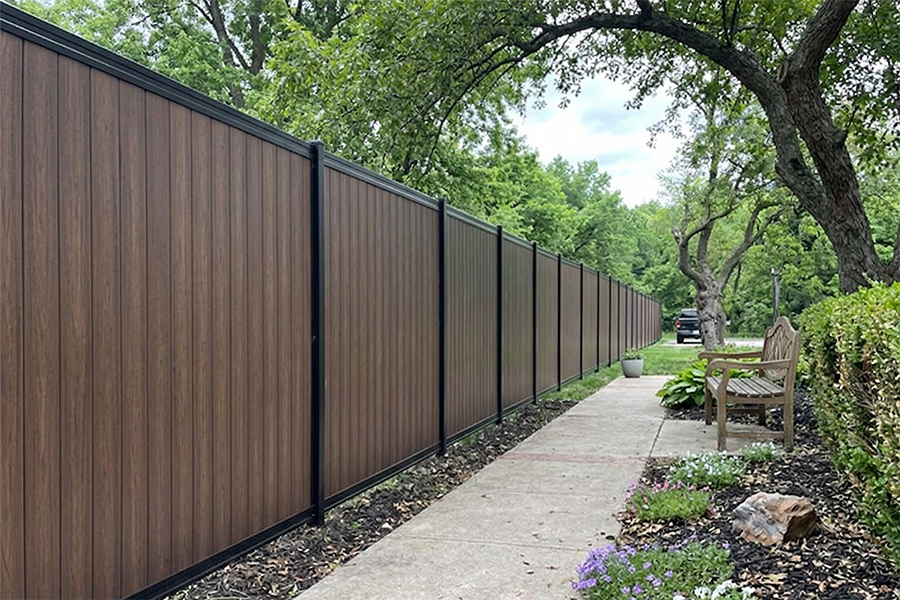
FenceTrac fence systems are installed in HOA communities across the country because the modular steel frame, powder-coated finish, and both-sided design meet the material, appearance, and consistency standards that most architectural review boards require. Before installing any fence in an HOA community, you need to understand what your association’s covenants allow and what approval steps are required.
The Short Answer
HOA fence rules are found in your community’s CC&Rs (covenants, conditions, and restrictions) and any supplemental architectural guidelines. The most common restrictions cover fence height, approved materials, color options, placement relative to the home, and whether architectural review board (ARB) approval is required before installation. Violating these rules can result in fines, forced removal, or legal action.
Where to Find Your HOA Fence Rules
Your HOA’s fence restrictions are documented in two places, and you should read both before planning your project.
CC&Rs (Covenants, Conditions, and Restrictions)
The CC&Rs are the master governing document for the community. They contain the baseline rules for fencing: what is allowed, what is prohibited, and what requires approval. The CC&Rs are recorded with the county and are legally binding on every property owner in the community.
If you do not have a copy, request one from your HOA management company or download it from your HOA’s online portal.
Architectural Guidelines or Design Standards
Many HOAs publish a separate architectural guidelines document that provides more specific rules than the CC&Rs. This is where you will find details like approved fence colors, maximum heights by lot location, required setbacks from sidewalks, and whether the fence must match the style of adjacent properties.
Common HOA Fence Restrictions
While every HOA is different, most communities regulate the same categories.
Height Limits
HOAs commonly limit backyard fences to 6 feet and front yard fences to 4 feet or less. Some communities prohibit front yard fencing entirely. These limits may be more restrictive than the city code, and the stricter rule always applies. For details on municipal height codes, see maximum fence height allowed in residential communities.
Approved Materials
Many HOAs restrict fence materials to a specific list. Wood, composite, vinyl, and metal are commonly approved. Chain link is frequently prohibited in front-facing or street-visible areas. Some HOAs require that the fence material match the predominant style in the community.
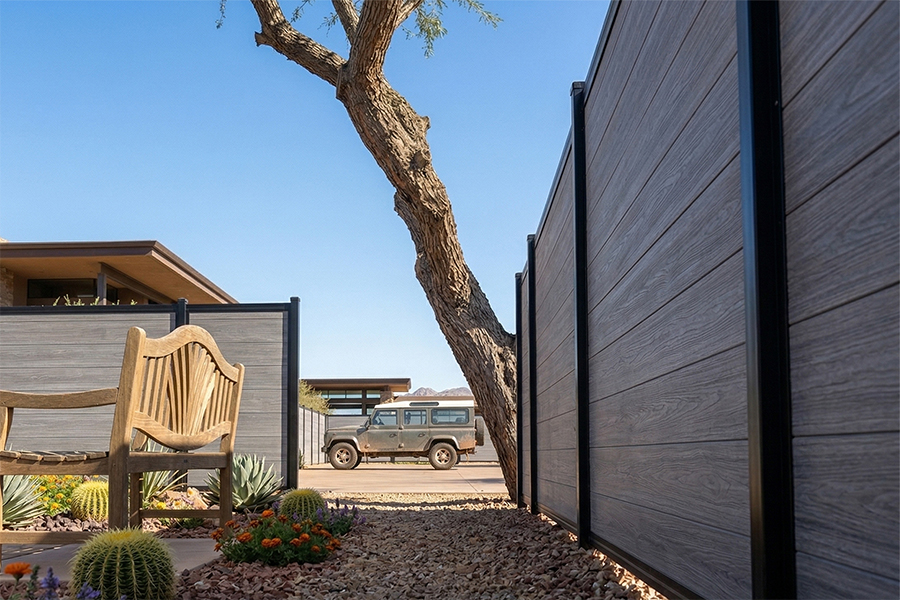
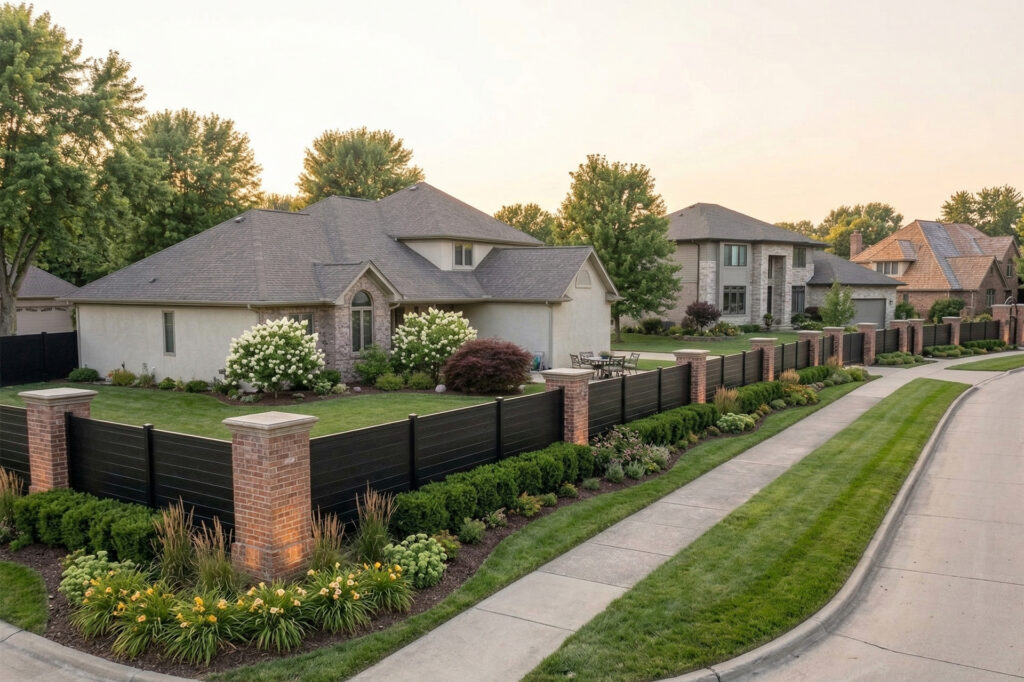
FenceTrac’s galvanized steel frame with composite, PVC, or aluminum infill typically meets or exceeds HOA material requirements because the system produces a clean, uniform appearance with no exposed fasteners and a both-sided design that looks identical from both directions.
Color Restrictions
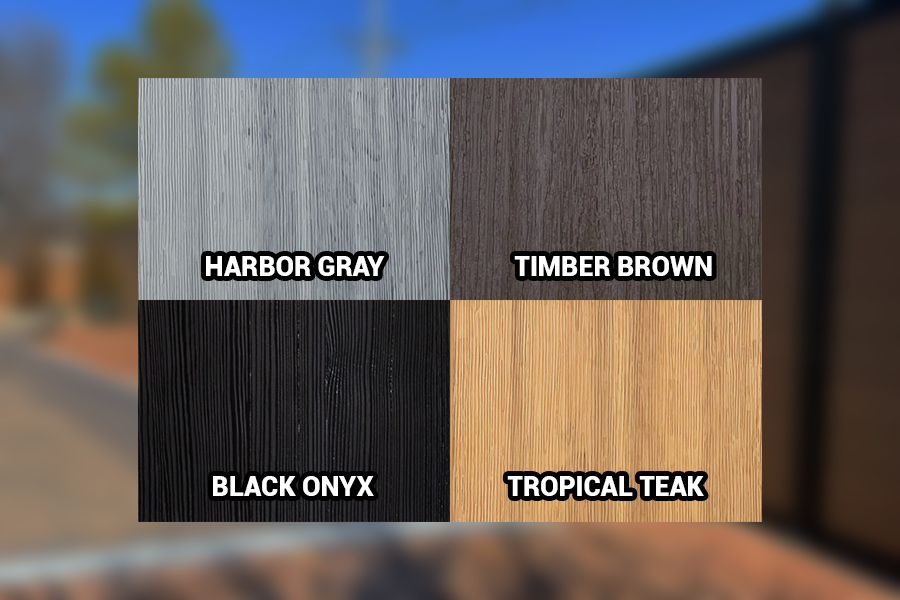
HOAs often limit fence colors to a palette that complements the community’s exterior finishes. FenceTrac’s four frame colors (Black, Bronze, White, Silver) and four infill colors (Black Onyx, Harbor Gray, Timber Brown, Tropical Teak) cover the range most communities require.
If your HOA requires a specific color, confirm it matches an available FenceTrac option before submitting your application.
Placement and Setback Rules
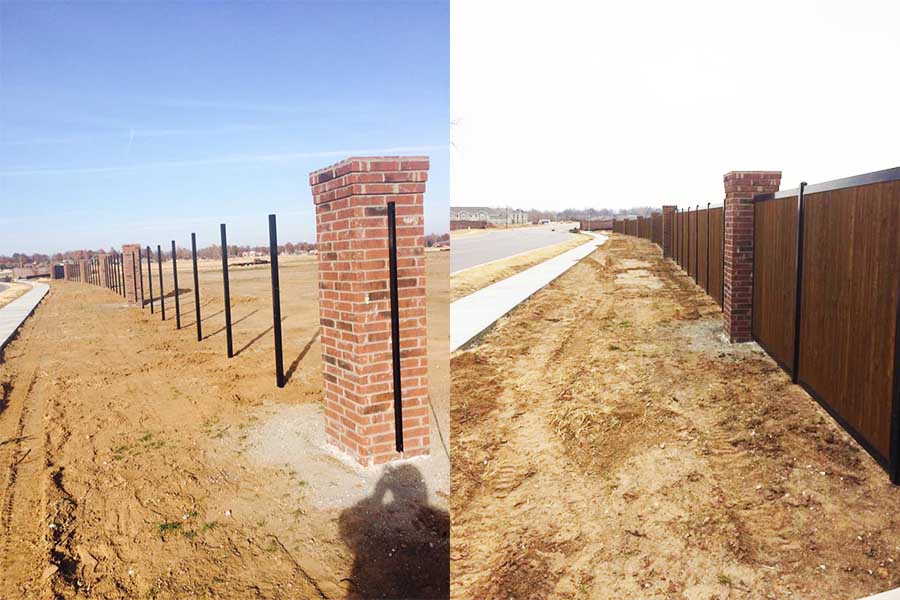
HOA rules may specify how far the fence must be from the property line, the sidewalk, the street, or the home itself. Corner lots often have additional restrictions to preserve sight lines at intersections. Some communities require fences to align with the rear building line of the house.
Both-Sided Appearance Requirements
Many HOAs require that the fence look the same from both sides, so no neighbor is stuck with an unfinished “back side.” This rule eliminates most traditional wood fence designs, which show rails and posts on one side. FenceTrac’s U-channel frame system produces a finished look on both faces of every panel, which satisfies this requirement without any design compromises.
The Architectural Review Board Approval Process
Most HOAs require you to submit a fence plan to an architectural review board (ARB) or architectural control committee (ACC) before installation begins.
A typical ARB submission includes a site plan showing fence location and dimensions, the proposed fence material and color, the fence height, and a product photo or specification sheet. FenceTrac’s specifications page provides the engineering data and material specs that ARBs commonly request.
Submit early. ARB review cycles can take 2 to 6 weeks depending on the community. Do not order materials or schedule installation until you have written approval.
Fence Design Options That Satisfy HOA Standards
For HOA communities where consistency and curb appeal are priorities, two FenceTrac configurations stand out.
LuxeCore composite infill in Harbor Gray or Timber Brown with a black steel frame delivers a modern, textured wood-look fence that requires zero maintenance. The color holds for the life of the fence, which means no fading or discoloration across neighboring lots over time.
UltraBlend PVC infill offers the same color options and both-sided finish at a lower price point. For large HOA communities where multiple homeowners are installing fences, UltraBlend provides a consistent look across the neighborhood without the premium cost of composite.
Related Questions
What happens if I install a fence without HOA approval? The HOA can issue fines, require you to modify or remove the fence, and in some cases place a lien on the property. Always get written approval before starting.
Can the HOA change fence rules after I install my fence? Generally, existing fences are grandfathered under the rules in effect at the time of installation. However, some CC&Rs include provisions that allow retroactive enforcement. Read your CC&Rs carefully or consult an attorney if this is a concern.
See Also
FenceTrac privacy fencing for full product details, panel sizes, and color options to include in your ARB submission.
Get a Quote for Your HOA Fence Project
FenceTrac ships fence systems nationally and has been manufacturing engineered fencing in the USA since 2012.
Every system carries a 20-year warranty and is engineered for long-term performance with minimal maintenance.