
If you have ever sat behind a solid privacy fence and still felt strong gusts whipping over the top and around the corners, you have experienced one of the less obvious downsides of solid fencing.
Semi-privacy fencing manages wind differently. In the right configuration, a semi-open fence can reduce wind speed across a larger area than a solid fence while still letting air move through the yard.
How Wind Behaves Against a Solid Fence
A solid fence forces all wind load up and over the fence line. On the leeward side, the blocked air creates a low-pressure zone that draws air back down from above.
The result is a turbulent wind shadow on the protected side of the fence. This zone typically extends about five to seven times the fence height. A 6-foot solid fence creates a protected area roughly 30 to 42 feet deep before ambient wind speeds return.
Within that zone, wind speed is reduced. But the turbulence at the top of the shadow zone is often worse than you would expect, because the diverted air comes back down fast. Solid fences also generate high positive pressure on the windward face, which increases the structural load on the fence itself.
How Semi-Open Barriers Change the Equation
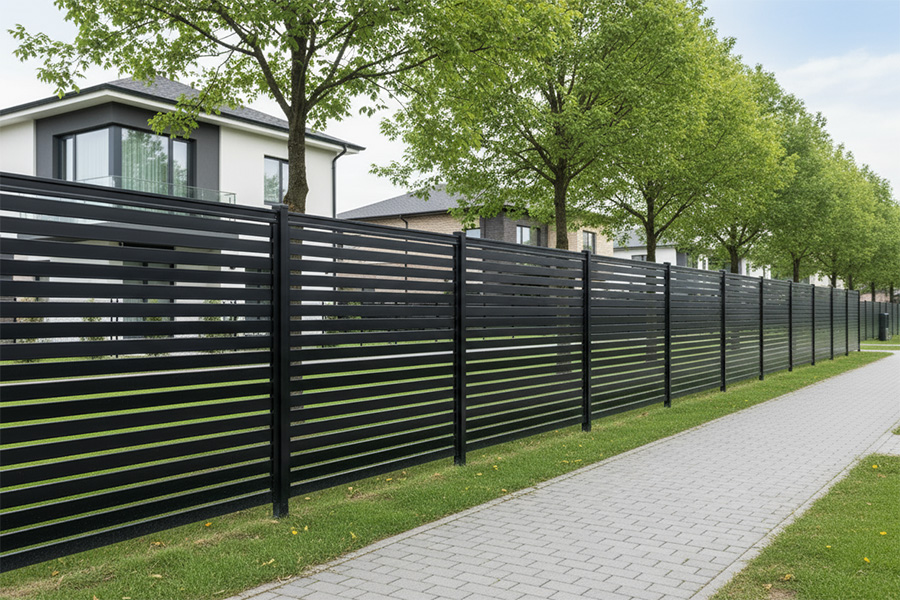
A semi-open barrier allows a controlled amount of air to pass through the gaps. This reduces the pressure differential between the windward and leeward sides, which in turn reduces the turbulence on the protected side.
The result is a protected zone that extends further from the fence, with more uniform wind reduction across the entire area. Wind science research in agricultural and landscape contexts has consistently shown that semi-permeable barriers outperform solid barriers for protecting large outdoor areas from prevailing winds.
The tradeoff is that the area immediately behind a semi-open fence has somewhat less wind reduction than the same spot behind a solid fence. The advantage of the semi-open approach accumulates over a larger distance from the fence line.
For outdoor living spaces, this often means more usable area with comfortable wind conditions, rather than a small fully protected zone surrounded by turbulence.
What Porosity Level Works Best?
Wind research generally identifies a porosity of roughly 40 to 50 percent as optimal for maximizing the size of the protected zone. Porosity refers to the percentage of the fence face that is open rather than covered by boards.
Below that range, the fence starts behaving more like a solid barrier. Above it, the open gaps let too much wind through to provide meaningful wind speed reduction.
For a semi-privacy fence, this corresponds to moderate gap spacing rather than very tight or very wide board spacing. The right configuration depends on your primary goal: tighter spacing gives more screening with less wind porosity, while wider spacing provides better airflow management with less visual screening.
How FenceTrac Semi-Privacy Handles Wind
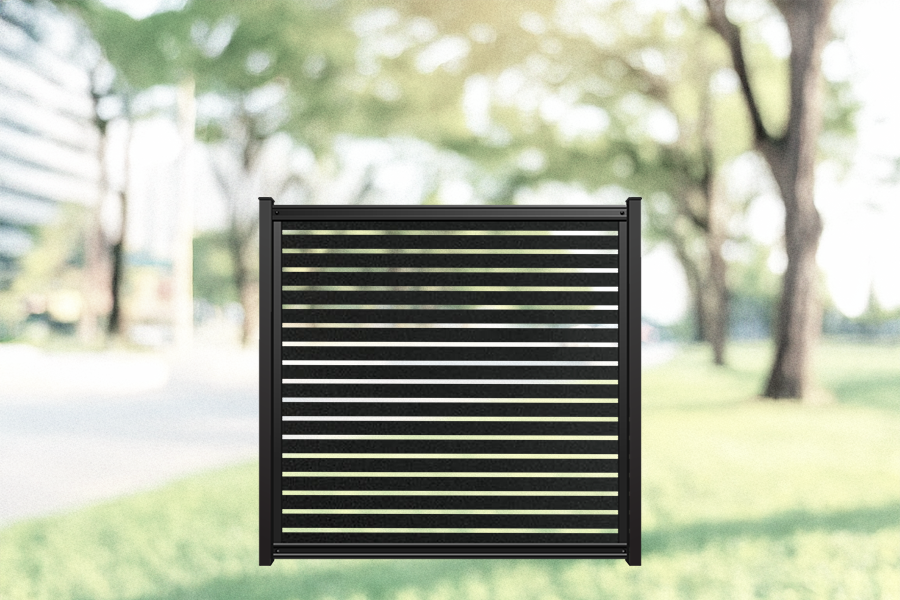
FenceTrac’s semi-privacy fencing uses aluminum infill boards inside a galvanized steel frame, with stackable spacers starting at 3/4 inch. Spacers can be added in 1-inch increments to increase the gap between boards.
This adjustability lets you configure the fence for the specific wind conditions on your property. Properties in moderate wind environments can use tighter spacing for more screening with lower porosity. Properties in consistently windy environments can use wider spacing to achieve better distributed wind reduction.
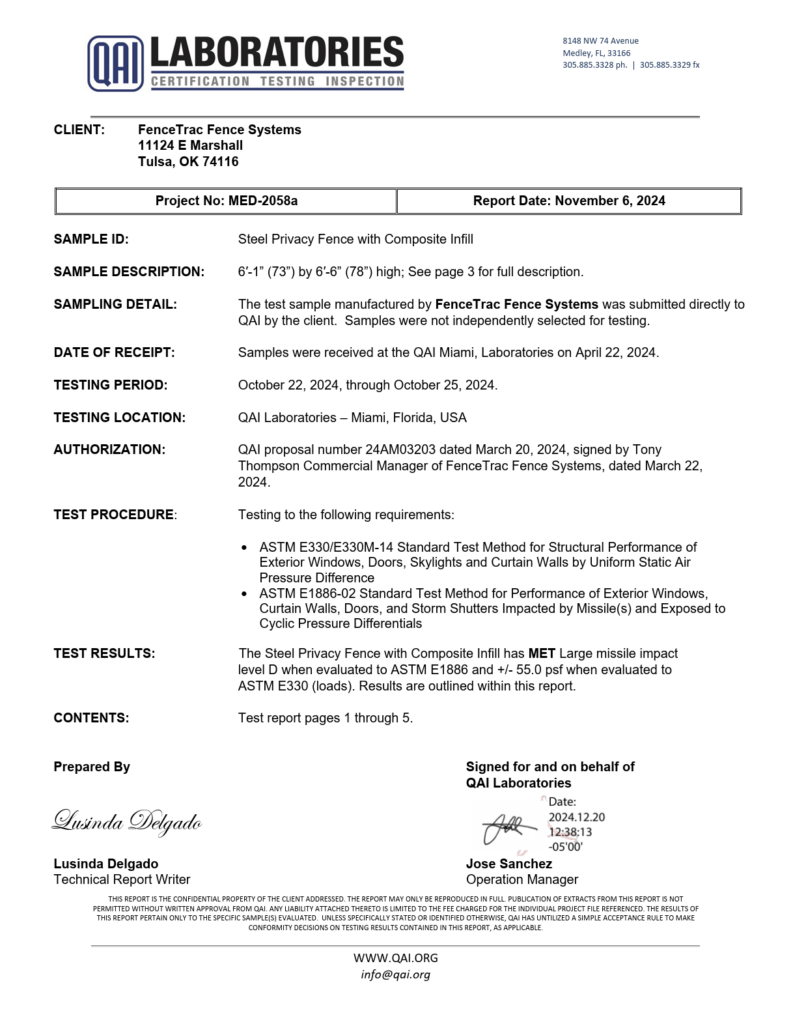
The galvanized steel frame and four-sided channel construction also provides structural integrity in high-wind conditions. FenceTrac’s composite infill system has been third-party tested under ASTM E330, with a documented design load of 55.0 psf and structural load of 82.5 psf.
Airflow Matters for Comfort and Plant Health
Managing airflow through a fence is not only about comfort for people in an outdoor space. It also affects the health of plants in the enclosed area.
Solid fences that block all airflow can create stagnant microclimates, which increase humidity and promote fungal growth in garden beds. A semi-open fence maintains enough airflow to prevent stagnant conditions while still reducing wind speed.
For pool areas and outdoor dining spaces, controlled airflow is more comfortable than the sudden gusts that occur when wind is deflected over the top of a solid fence.
Semi-Privacy Fencing in High-Wind and Coastal Areas
Properties in coastal or high-wind zones often benefit from semi-privacy fencing along the windward sides of the property. The reduced porosity extends wind protection further into the yard, making outdoor spaces more usable in consistently windy conditions.
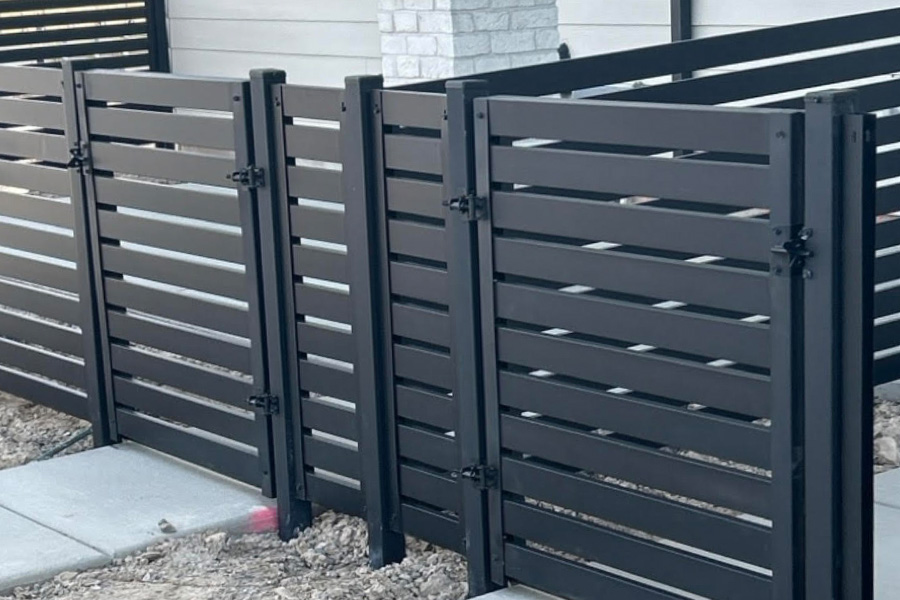
Semi-privacy fencing also places less structural load on the fence system than solid fencing in the same location. Solid fences bear the full force of wind pressure on the face; semi-open fences allow some of that pressure to pass through the gaps.
This reduced structural demand matters in high-wind areas. It can be the difference between a fence that holds and one that fails when a strong storm moves through.
If you are in a high-wind zone and evaluating fence options, review how FenceTrac fence systems are engineered for wind load compliance.
Get a Quote for Your Semi-Privacy Fence
FenceTrac ships semi-privacy fencing nationally and has been supplying homeowners, contractors, and commercial buyers since 2012.
Every system carries a 20-year warranty and is engineered for long-term performance with minimal maintenance.