
FenceTrac’s fire-rated fencing carries an ASTM E84-24 Class A rating, tested by QAI Laboratories with a Flame Spread Index of 0 and a Smoke Developed Index of 35. Fire-rated fencing is required by building codes in specific situations where a fence is close to an occupied structure, near utility equipment, or in a location where local fire codes mandate non-combustible separation barriers. Understanding when fire-rated fencing is required helps property owners and contractors avoid code violations and costly post-installation replacements.
The Short Answer
Fire-rated fencing is fencing that has been tested to a recognized fire performance standard and assigned a classification based on how it performs. The most common standard is ASTM E84, which measures flame spread and smoke development. FenceTrac’s aluminum infill in a steel frame achieves Class A under ASTM E84-24, the highest classification, meaning it has the lowest flame spread and smoke output of any rated category.

What ASTM E84 Measures
ASTM E84 is a standardized test that evaluates how a material performs when exposed to fire in a controlled tunnel. The test measures two things.
Flame Spread Index (FSI)
This measures how far and how fast flames travel across the surface of the material during a 10-minute test. The scale ranges from 0 (no flame spread) to over 200 for highly combustible materials. FenceTrac’s fire-rated fencing scored a Flame Spread Index of 0, meaning zero flame propagation across the surface during the full test duration.
Smoke Developed Index (SDI)
This measures the density of smoke produced during the test. The Class A limit is 450 or below. FenceTrac’s fire-rated fencing scored 35, which is far below the threshold. Low smoke output matters in occupied environments where visibility and air quality during a fire event affect evacuation safety.
Fire Rating Classifications
ASTM E84 results are grouped into three classifications under both NFPA and IBC codes.
| Class | Flame Spread Index | Smoke Developed Index |
|---|---|---|
| Class A | 0-25 | 0-450 |
| Class B | 26-75 | 0-450 |
| Class C | 76-200 | 0-450 |
FenceTrac’s scores (FSI 0, SDI 35) place it firmly in Class A. This is not a borderline result. A Flame Spread Index of 0 is the lowest possible score, and the Smoke Developed Index of 35 is a fraction of the 450 ceiling.
When Fire-Rated Fencing Is Required
Fire-rated fencing is not required on every property. Building codes specify fire-rated materials in certain proximity and use-case scenarios.
Near Occupied Structures
When a fence is within a specified distance of an occupied building (the setback distance varies by jurisdiction), local fire codes may require the fence to be constructed from non-combustible or fire-rated materials. This is common in commercial, multi-family residential, and institutional settings where structures are close together.
Utility and Electrical Equipment Screening
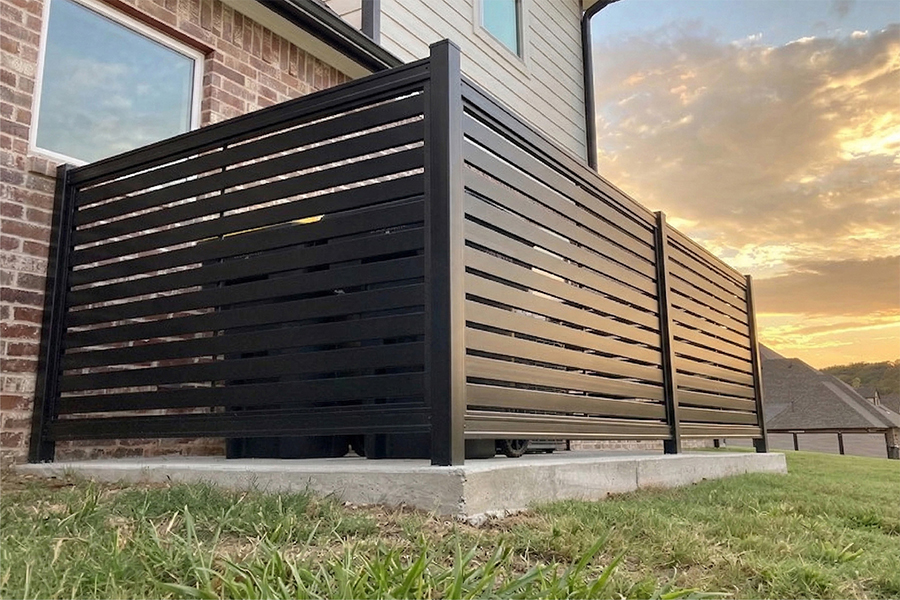
Fencing that screens transformers, electrical panels, generators, HVAC units, or other utility equipment often falls under fire code requirements. A combustible fence near electrical equipment creates an ignition risk. Fire-rated fencing eliminates that risk while still providing the visual screening the property owner needs.
Code-Mandated Separation Barriers
IBC Chapter 8 and NFPA 101 (Life Safety Code) establish requirements for interior finishes and separation barriers in commercial and institutional buildings. When a fence serves as a separation barrier between zones, such as between a parking structure and an adjacent building, fire-rated materials may be required.
Schools, Healthcare, and Government Facilities
Facilities subject to stricter fire codes, including schools, hospitals, government buildings, and correctional facilities, often require all perimeter barriers to meet fire performance standards. FenceTrac’s Class A rating satisfies these requirements.

Design Options for Fire-Rated Fence Projects
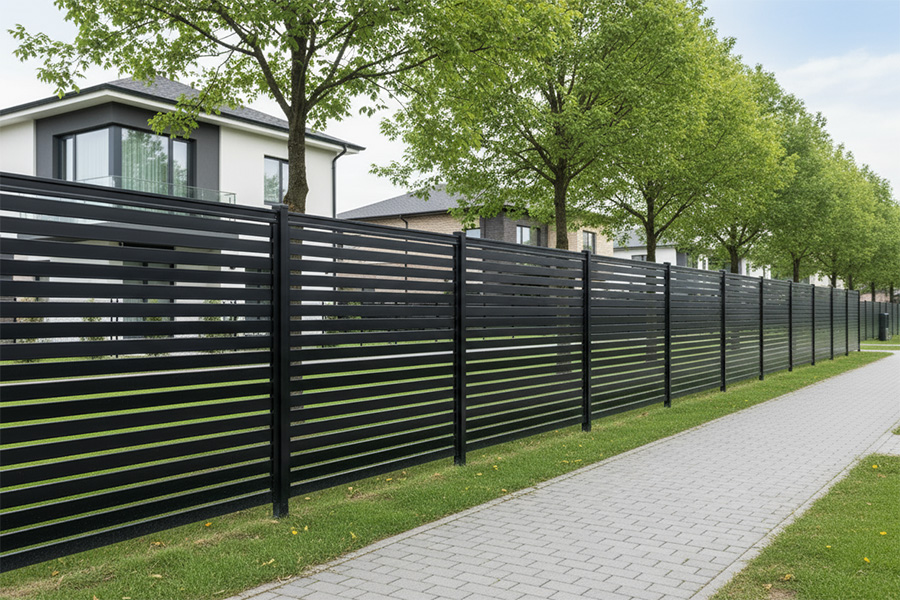
FenceTrac’s fire-rated fencing uses the same galvanized steel frame as the rest of the FenceTrac system, with aluminum infill boards providing the fire-rated performance. The aluminum boards are available in privacy (tongue and groove) and semi-privacy (spaced slat) configurations.
Because the frame is the same, fire-rated panels can be mixed with other FenceTrac infill types on the same property. Use fire-rated aluminum panels near utility equipment and LuxeCore composite or UltraBlend PVC on the perimeter where fire rating is not required. The frame color, post system, and hardware are identical across all zones, giving the property a unified architectural appearance.
For dumpster and utility enclosures, fire-rated panels are a common specification because the enclosed equipment often includes ignition sources or combustible waste.
Related Questions
What materials qualify for fire-rated fence applications? Aluminum and steel are the primary materials that achieve Class A ratings. Wood and most vinyl products do not qualify.
Who determines if my project needs fire-rated fencing? The local building department or the project’s architect of record determines fire rating requirements based on the applicable building code (IBC, NFPA, or local amendments), the fence location relative to structures, and the property’s use classification.
See Also
FenceTrac fire-rated fencing for product specifications and the full QAI Laboratories test report.
Get a Quote for Fire-Rated Fencing
FenceTrac ships fence systems nationally and has been manufacturing engineered fencing in the USA since 2012.
Every system carries a 20-year warranty and is engineered for long-term performance with minimal maintenance.