
Most HOA fence votes fail because owners get surprised by scope, cost, or materials.
We can cut that risk by doing four things up front: read the reserve study line closely, define the full project scope, get matching bids, and show both full-replacement and phased options.
In plain terms, members want to know:
- What is being replaced
- How much it will cost
- Who maintains it
- Whether the board looked at more than one path
- Why the lowest bid is not always the lowest long-term cost
A few cost items often get missed, like gate hardware, demo, concrete removal, slopes, and access limits.
That is where budgets can go from the reserve line to a much higher real project number.
If we are comparing options, the choice usually comes down to this:
| Option | Up-front cost | Disruption | Look at completion | Planning later |
|---|---|---|---|---|
| Phased replacement | Lower first ask | Repeats over more than one project window | Mixed until all phases are done | More tracking |
| Full replacement | Higher first ask | One larger project window | Uniform right away | Simpler |
The main takeaway?
Boards get more yes votes when they remove surprises before the meeting, not during it.
So this article breaks down how we can turn a reserve study line into a clear owner-facing plan, with matched bids, plain answers to common objections, and a one-page summary members can review fast.

Why HOA fence replacement votes fail, and how to prevent it
Fence votes usually fail for a few plain reasons.
Owners see bids that don’t match, no phased path, or a material pick that looks too expensive for what they’re getting.
So before the vote, the board needs to fix three things: one written scope, apples-to-apples bids, and a choice between full replacement and phased replacement.
The three surprises that trigger member pushback
Members usually don’t fight a fence project because they want a worn-out perimeter to stay.
They push back because the board caught them off guard.
The first surprise is a scope gap.
Owners want clear answers on what is being replaced, where the fence line begins and ends, how many gates are part of the job, and who handles sections along a shared boundary.
The second surprise is a sudden special assessment.
A big funding ask, with no earlier talk tied to the reserve study, lands hard even when the fence is plainly failing.
When people had no warning, they often vote no on principle.
The third surprise is unclear repair and upkeep expectations.
Owners want to know who handles a damaged section, what the repair process looks like, and whether the board has a plain plan for upkeep.
Without those answers, the project can feel less like a fix and more like the start of a repeat headache.
Why comparable bids matter more than a low starting price
If contractors are pricing different scopes, different heights, different gate counts, or different cleanup rules, the board isn’t comparing bids.
It’s comparing different projects.
Members notice that big price spread fast, and confidence drops.
Brandon Chatham put it plainly:
"The lowest bid can sometimes be the most expensive choice if it leads to shoddy work and costly repairs later."
Every bid request needs to use the same fence line, height, gate count, infill, and disposal standard.
That’s the hard part.
When the scope matches across every bid, price differences usually come down to contractor efficiency and warranty terms, not missing work hidden in the fine print.
FenceTrac‘s HOA perimeter fencing system gives each bidder the same galvanized steel frame baseline.
But there’s a catch.
That helps only if the bid request also standardizes each contractor’s pricing assumptions.
Why offering a phased option improves approval odds
A one-shot, all-at-once funding request backs members into a corner.
They either approve a big spend or vote no.
That’s a tough setup for any board.
Showing a phased path next to full replacement changes the conversation.
Members who can’t support the full project cost today may still support a multi-year plan that feels doable.
Phasing also lets the board tackle the worst sections first, which shows care with community funds instead of replacing everything at once just because it’s simpler.
For that approach to work, the frame specification has to stay the same from phase to phase, so later sections match the first.
And that side-by-side comparison only works when the board ties the plan back to the reserve study line.

sbb-itb-908b3eb
Read the reserve study line before choosing material or timing
The reserve study gives the board a starting point, not a finished project plan.
So before you pick material or set a timeline, read the fencing line closely for scope, assumptions, and exclusions.
What the reserve line covers and what it usually misses
Most reserve studies treat fencing as a single line item with a renewal cycle.
In many cases, that line assumes a like-for-like wood replacement.
That sounds simple.
But the budget risk usually sits in the parts that line item skips.
Gates often fail first, but their framing, hardware, and heavier posts are often omitted from the reserve line.
Demolition is another common gap.
Removing old wood and concrete-set posts takes a lot of labor, and that cost often never makes it into the reserve line.
Slopes, grade changes, and tight access can also drive labor well past a flat per-foot estimate.
And if the board wants to move from wood to a galvanized steel frame system, that change may sit outside the reserve assumption too.
Each one of these gaps can turn into a surprise at the member meeting.
The better move is to frame each gap as a member-facing issue, not just a budget line change.
That way, the board can answer questions before they harden into objections.
| Cost Driver | Usually in reserve line? |
|---|---|
| Linear footage, base material, and labor | Usually yes |
| Gate hardware and heavy posts | Often omitted |
| Demolition and concrete removal | Often omitted |
| Slopes, grades, and access | Often omitted |
| Material upgrade from wood to steel frame | Rarely included |
Once those reserve assumptions are fixed, the board can compare phased replacement and full replacement using the same numbers.

How to connect reserve assumptions to the actual project scope
Start by closing the gap between the reserve assumption and the work the project will actually require.
Check which fence sections are failing.
Map out the gates.
Look at slopes, grade shifts, and site access to see where scope may grow.
Then choose the material before bids go out.
A galvanized steel frame system carries a 20-year frame warranty.
Use that documentation to update the capital expense entry and support the higher upfront cost.
The point is simple, spend more now to cut down the odds of another wood replacement cycle later.
Also, confirm your governing documents and state HOA statute before making any assessment or capital-improvement decision.
The CC&Rs may limit materials, heights, or appearance.
The Architectural Review Board may also need to approve a material change before the project moves ahead.
Getting that approval early helps you avoid a delay after bids are already in hand.
For related homeowner rules, see HOA fence rules homeowners should check before installing.
With scope and material set, the next step is a bid request that forces comparable numbers.
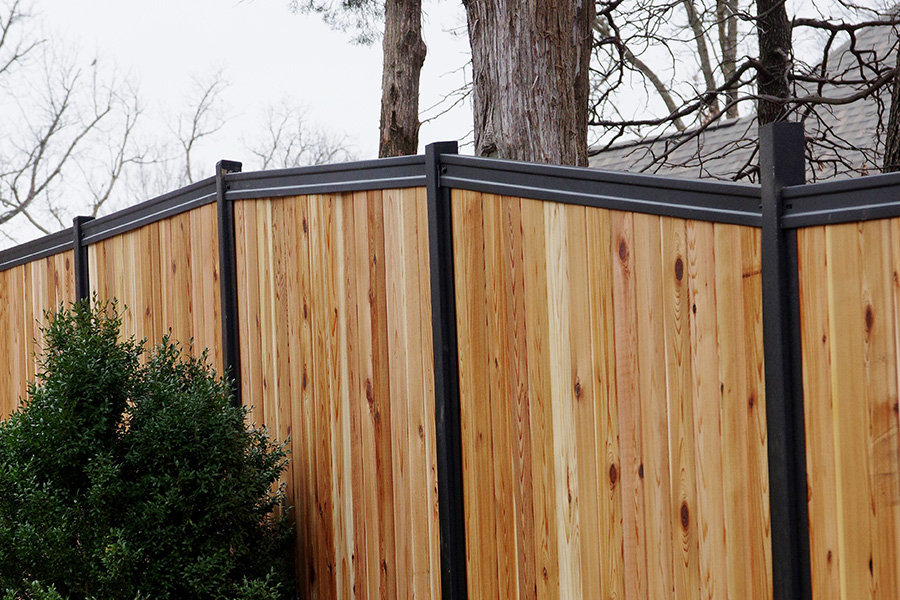
Phased replacement versus one full project: a direct comparison
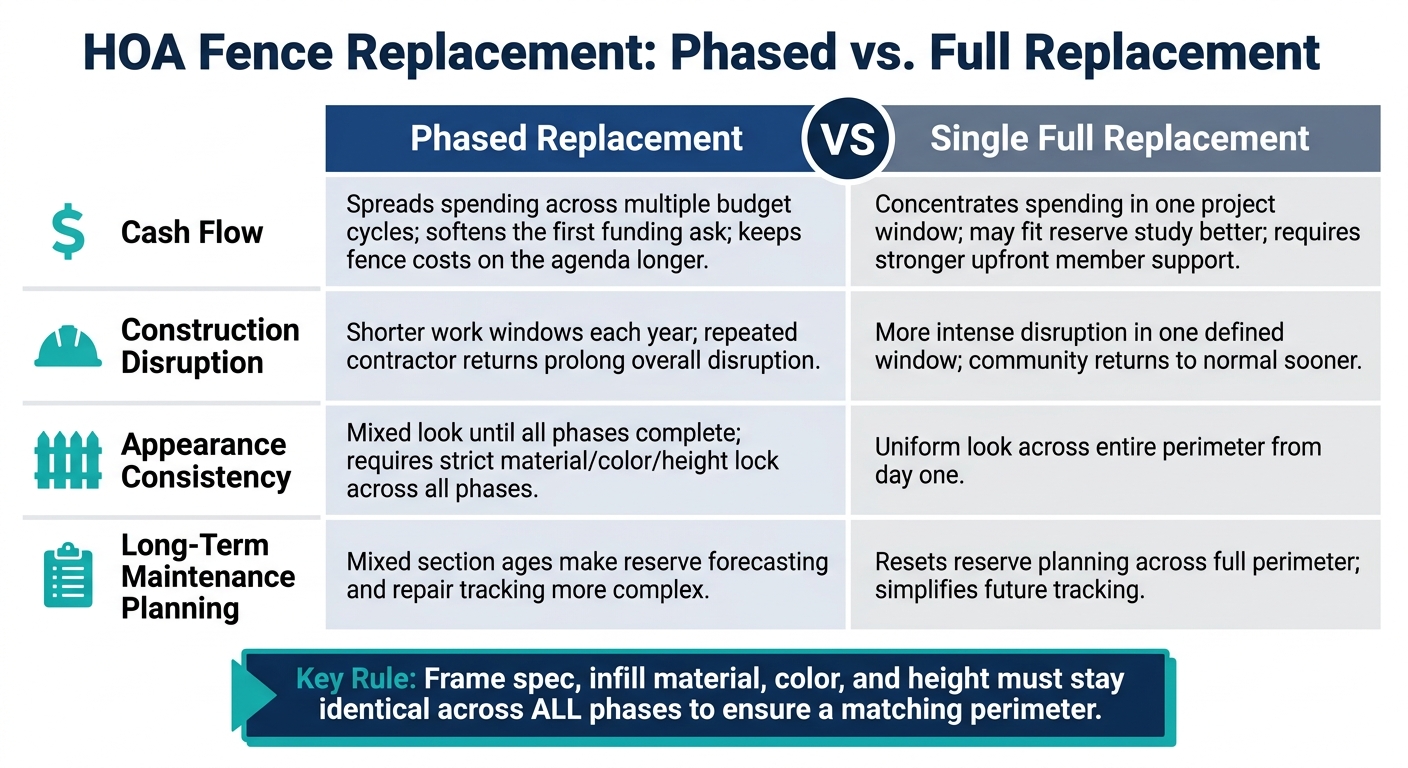
HOA Fence Replacement: Phased vs. Full Replacement Cost & Planning Comparison
Once scope and material are set, the board still has one big call to make.
Go phase by phase, or replace the whole perimeter in one project.
Each path hits cash flow, disruption, and member approval in a different way.
The comparison below helps show which option members may be more willing to back.
| Factor | Phased Replacement | Single Full Replacement |
|---|---|---|
| Cash flow | Spreads spending across budget cycles and can soften the first ask, but keeps fence costs on the agenda longer. | Concentrates spending in one project window, which may fit the reserve study better but usually requires stronger member support for the upfront impact. |
| Construction disruption | Shorter work windows each year, but repeated returns can prolong disruption. | More intense disruption in one defined window, but the community returns to normal sooner. |
| Appearance consistency | Material, color, height, and layout must stay fixed so later sections match the first. | Delivers a uniform look across the entire perimeter from day one. |
| Long-term maintenance planning | Mixed ages make reserve forecasting and repair tracking more complex. | Resets future reserve planning across the full perimeter and simplifies tracking. |
What the board gains and gives up with phasing
Phasing gives the board more flexible cash flow.
It also lets the board test member support and see how a contractor performs on early sections before committing to the full perimeter.
That can make the first funding request smaller, which may help the vote pass.
But there’s a catch.
The board gives up a matching perimeter right away.
Members will notice if one stretch looks brand new while another still looks worn.
The harder part shows up later.
Future boards have to stick with the same material, color, and layout chosen in phase one.
If they drift, the perimeter can end up looking pieced together.
That’s why it helps to choose a system with a fixed frame spec and set infill options, so later phases match the first.
And that only works if the bid scope stays locked from the first phase through the last section.
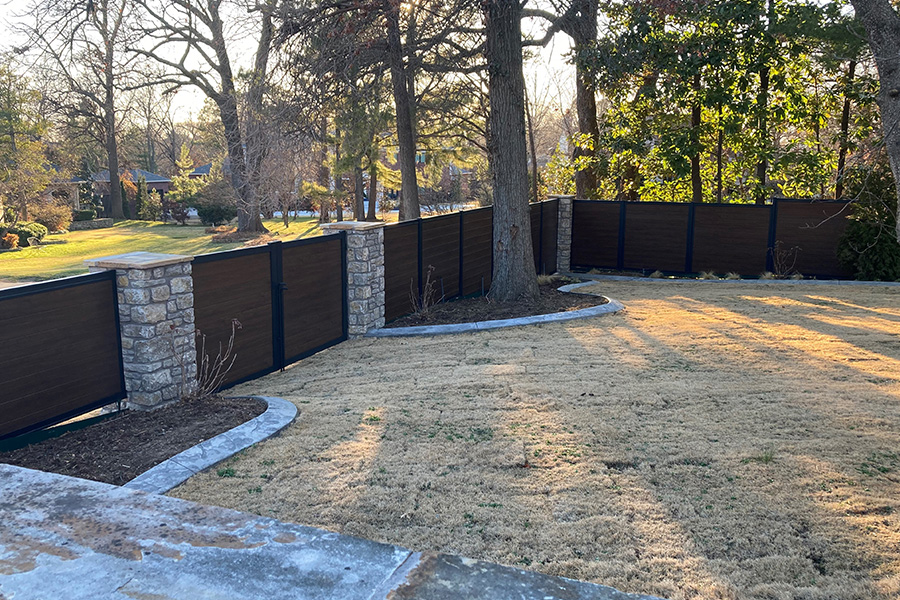
What a single full replacement changes for the community
A full replacement puts the decision into one board term.
That makes the vote feel bigger, because it is.
At the same time, it gives the community one finished perimeter from day one.
One decision.
One look.
One completed project.
Future reserve planning gets simpler because the board and reserve specialist can use one maintenance plan instead of tracking sections with different ages.
For communities moving from wood to a modern steel-frame system, that shift can also cut down how often perimeter repair comes up at future meetings.
And that gives the board more room to focus on other priorities.
Once the board makes that call, it can write a bid request that brings back comparable numbers.
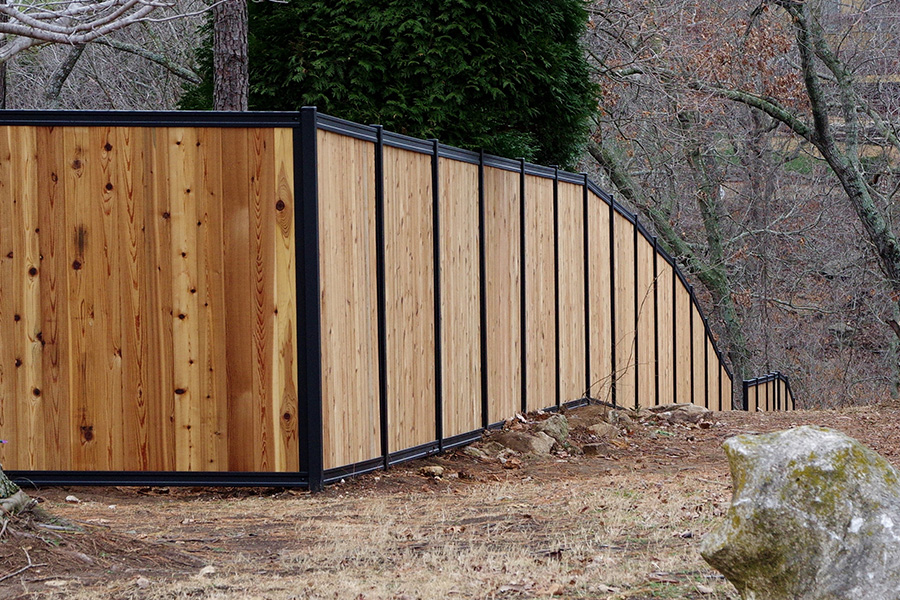
Request comparable bids and prepare answers before the meeting
Once the board picks phasing or full replacement, the next job is simple.
Make every contractor price the exact same scope.
That’s what turns reserve-study assumptions into bids members can compare side by side.
What every bid request must standardize
If a bid request leaves wiggle room, you’ll get numbers that don’t line up.
One contractor may assume 6-foot panels.
Another may assume 8-foot sections, fewer gates, or less cleanup.
Now you’re comparing apples to oranges, and that’s where meetings go off the rails.
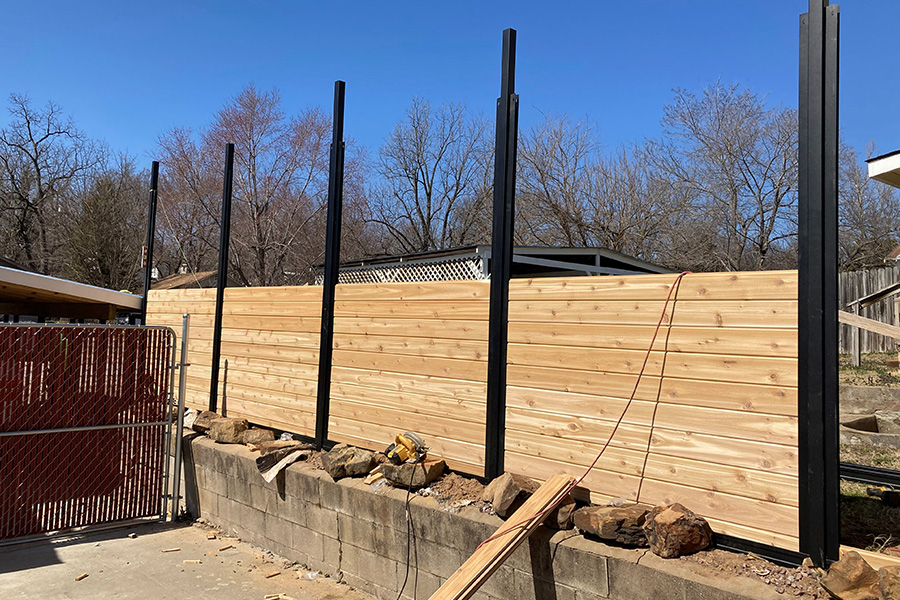
The board needs to lock down the fence line with total linear footage, heights of 4, 6, or 8 feet, section widths of 6 or 8 feet, frame type, infill material, gate widths and hardware, access conditions for the crew, removal of existing fencing, and site cleanup.
Also spell out that the fence is finished on both sides so the look stays consistent from inside and outside the community.
Use this guide to writing fencing into a commercial RFP bid package to build the full bid package.
When the scope is fixed, the board can answer the questions that usually derail a vote.
The four objections members raise most often
Get your answers ready before the meeting.
Short. Direct. Written down.
Surprises at the podium sink votes.
Once the bids match, prepare answers to the objections members are most likely to raise.
| Objection | Answer-first talking point |
|---|---|
| Why not wood again? | Wood fades and warps unevenly, so the fence starts to look pieced together. A steel-frame system with composite or PVC infill holds a uniform color and structure, and it keeps the community out of the same replacement meeting later. See the 20-year total cost of ownership comparison between steel-frame and wood fencing for the full picture. |
| Why not take the lowest bid? | The lowest bid often lacks strong warranties or uses installation methods that lead to sagging gates and alignment issues. Evaluate bids on best value: warranty coverage, material quality, and installation scope, not starting price alone. |
| Who maintains it? | The HOA maintains common-area fencing. Infill materials like LuxeCore aluminum-core composite and UltraBlend PVC require no painting, staining, or sealing, which keeps maintenance low for the association. |
| What happens if one section gets damaged? | Because FenceTrac is a modular system, a single damaged section can be replaced years later and will match the original color and profile exactly. That is not possible with wood, where replacement lumber rarely matches aged boards. |
"Wood fencing in a 100-unit townhome community creates 100 individual maintenance obligations." – FenceTrac
Put these answers in writing before the meeting.
Build a one-page member summary and close with a clear decision path
Once you’ve handled the objections, put the choice on one page.
What the one-page summary must show
Most members will get through one clean page faster than a long packet.
That page should take scope, cost, and schedule surprises off the table before the vote.
Start with a plain problem statement.
Say the perimeter is uneven, needs frequent repairs, and is already listed in the reserve study.
Also say that continued patchwork repairs increase the risk of a sudden failure.
Then lay out the two options.
Show how each option affects the reserve draw.
Show how each option changes construction disruption.
Spell out the frame and post warranty.
Include the infill warranty too.
Also note that LuxeCore aluminum-core composite and UltraBlend PVC do not need painting, staining, or sealing.
Say just as plainly that cedar infill carries no warranty.
That point matters because members need to see the tradeoff in black and white.
List the gates by count and entrance.
State that gate infill matches the fence system on both sides.
Then draw a clear line between association responsibility and owner responsibility.
Link members to HOA fence rules before installing a fence so they can see how the perimeter project fits with individual homeowner approvals.
End the page with the motion, the approval result, and the deadline for questions.
What members need to know before they vote
Members tend to approve fence projects when they can see the full picture without having to go hunting for it.
The board has already done the legwork.
That includes comparable bids on equal scopes, a clear phased option with defined tradeoffs, and a material choice backed by warranty coverage.
What members need to confirm is simple:
- Which option is being presented
- What it costs the reserve
- What happens next after approval