
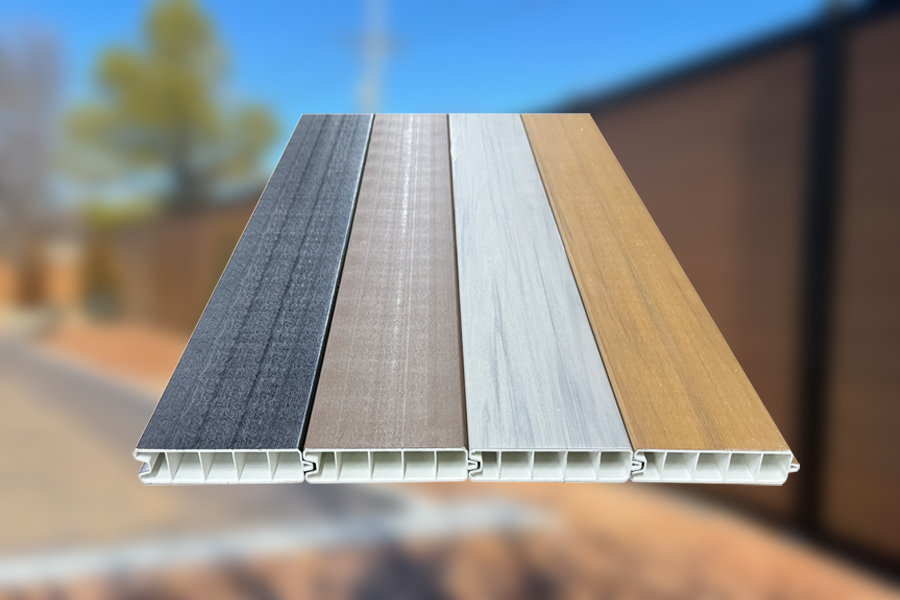
 FenceTrac’s UltraBlend PVC fencing is a 1-inch-thick, ASA-encased board designed for the FenceTrac steel frame system. It outperforms standard vinyl fencing on thickness, impact resistance, and UV stability because of its reinforced internal web structure and weather-resistant exterior coating.
The Short Answer
PVC (polyvinyl chloride) is the raw material used in all vinyl fencing. The terms are often used interchangeably, but performance varies dramatically depending on how the PVC is manufactured, how thick the boards are, and whether a protective surface coating is applied.

Standard vinyl fencing uses thin-walled PVC extrusions that can crack in cold temperatures and yellow with UV exposure. Higher-grade PVC fencing like FenceTrac’s UltraBlend uses thicker profiles, reinforced webbing, and an ASA resin exterior that resists fading, impact, and weathering far longer than uncoated vinyl.
How PVC and Vinyl Relate
Every vinyl fence is made from PVC. The word “vinyl” is a consumer-facing term for the same polyvinyl chloride polymer.
The difference between products is not the base material. It is the engineering. Wall thickness, internal structure, UV stabilizers, and exterior coatings all affect how long a PVC fence holds its shape and color outdoors.
Calling a fence “PVC” or “vinyl” tells you what the plastic is. It does not tell you how well the fence will perform over 10 or 20 years.
Where Standard Vinyl Fencing Falls Short
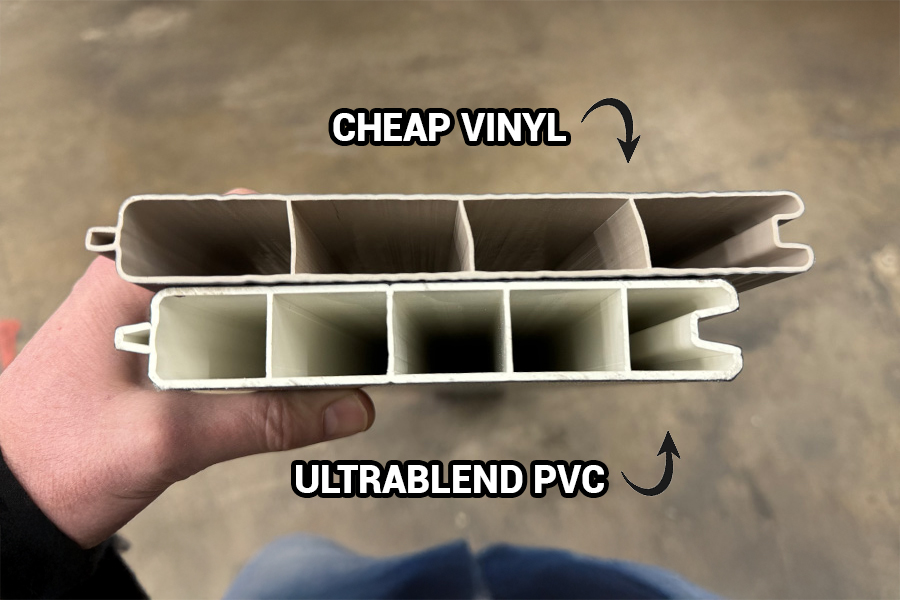
Most vinyl fencing sold at retail is extruded with thin walls and minimal internal reinforcement. These products are lightweight, which keeps shipping costs low but limits structural strength.
Thin-walled vinyl is vulnerable to impact cracking, especially in cold climates. A hard strike from a lawnmower, a fallen branch, or a kicked ball can crack or shatter a thin vinyl board.
UV degradation is the other common failure mode. Without a protective surface layer, PVC yellows, chalks, and becomes brittle over time. In southern climates with intense sun exposure, standard vinyl fencing can show visible degradation within 5 to 7 years.
What Makes UltraBlend PVC Fencing Different
FenceTrac’s UltraBlend PVC fencing addresses each of those weaknesses with three specific engineering choices.
First, board thickness. Each UltraBlend board measures 1 inch thick with a tongue-and-groove profile. That is significantly thicker than most retail vinyl fence boards, which typically measure 1/2 inch or less.

Second, internal structure. UltraBlend boards have more internal webbing than standard vinyl, which increases rigidity and impact resistance across the full width of the board.
Third, the ASA exterior. Every UltraBlend board is encased in ASA (acrylic-styrene-acrylonitrile), a weather-resistant resin used in automotive and outdoor applications for its UV stability and fade resistance. ASA does not yellow, chalk, or degrade the way raw PVC does under prolonged sun exposure.
PVC Fencing Compared to Other Fence Materials
Understanding where PVC fencing sits among common fence materials helps clarify when it is the right choice.
| Factor | Standard Vinyl | UltraBlend PVC (ASA) | Wood |
|---|---|---|---|
| Board thickness | Typically 1/2″ or less | 1 inch | 5/8″ to 7/8″ |
| UV resistance | Moderate, degrades over time | High (ASA coating) | Low without finish |
| Impact resistance | Low in cold weather | High year-round | Moderate |
| Maintenance | None | None | Paint/stain every 2-3 years |
| Warranty | Varies (often limited) | Limited Lifetime Warranty | Typically none |
| Pest and rot risk | None | None | High |
The Steel Frame Advantage for PVC Fencing
Most vinyl fences use vinyl posts and vinyl rails to hold the boards. When a post cracks or a rail sags, the entire section needs replacement.
UltraBlend PVC boards install inside the FenceTrac steel frame system. The frame is G90 galvanized steel, powder-coated, and carries a 20-year warranty. It does not flex, sag, or crack in any climate.
The steel frame also provides wind resistance that vinyl-on-vinyl systems cannot match. FenceTrac’s LuxeCore system (which uses the same frame) was tested to a 55.0 psf design wind load under ASTM E330. The frame holds PVC infill as securely as it holds composite or aluminum.
PVC Fence Ideas for Residential and Commercial Properties
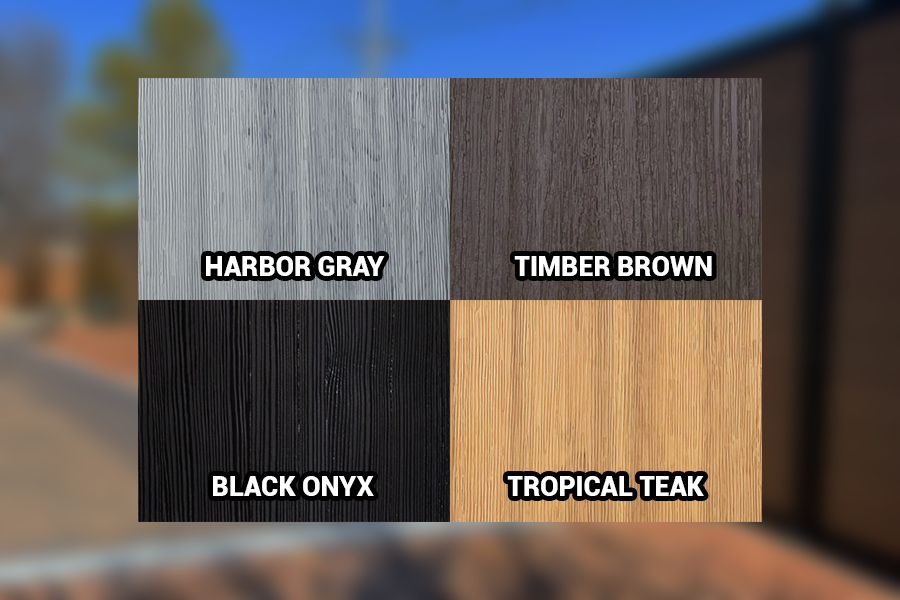
UltraBlend PVC fencing comes in four colors: Black Onyx, Harbor Gray, Timber Brown, and Tropical Teak. Each has a textured wood-look finish that reads as natural from a distance.
The boards work in 4-foot, 6-foot, and 8-foot heights and in 6-foot or 8-foot panel widths. UltraBlend is a strong fit for HOA communities, pool perimeters, residential backyards, and light commercial applications where a consistent, maintenance-free appearance matters.
Related Questions
Is PVC fencing the same as vinyl fencing? PVC is the raw material in all vinyl fencing. The performance difference comes from board thickness, internal structure, and whether a protective coating like ASA is applied.
Does PVC fencing yellow over time? Standard PVC can yellow with prolonged UV exposure. UltraBlend PVC is encased in ASA resin, which resists UV degradation and maintains its color for the life of the fence.
Can PVC boards go inside a metal fence frame? Yes. UltraBlend boards are designed specifically for the FenceTrac steel frame. The 1-inch-thick boards slide into the frame’s U-channels for a secure fit with a clean finish on both sides.
See Also
LuxeCore composite fencing for a premium alternative with an aluminum-core construction.
Get a Quote for PVC Fencing
FenceTrac ships PVC fence systems nationally and has been manufacturing engineered fencing in the USA since 2012.
Every system carries a 20-year warranty and is engineered for long-term performance with minimal maintenance.