
Horizontal fencing is exactly what the name describes. The boards or slats run parallel to the ground instead of standing upright like a traditional picket or stockade fence.
The look is clean, modern, and linear. It draws the eye along the length of the fence line rather than up and down, which makes yards and outdoor spaces feel wider and more open.
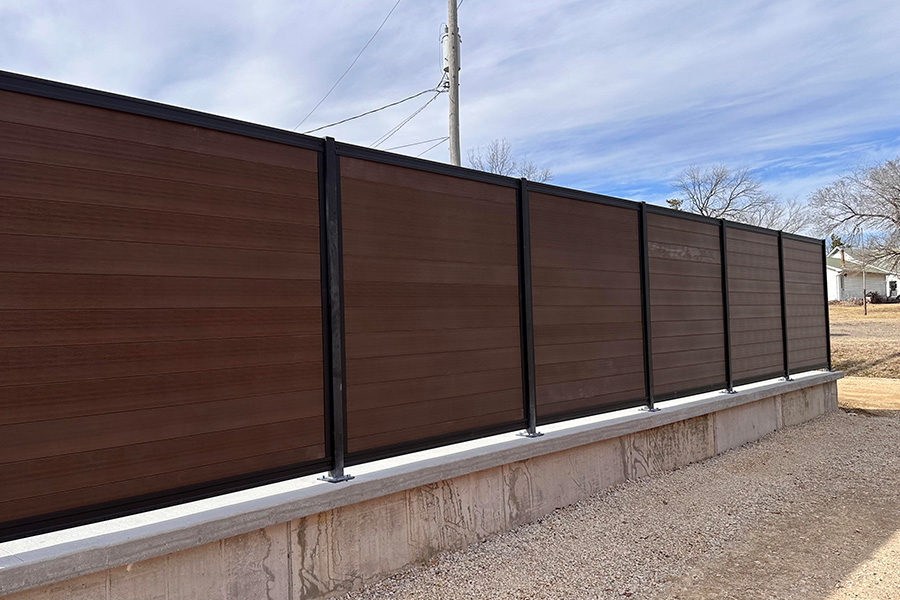
Over the past decade, horizontal fencing has moved from a niche architectural detail to one of the most requested fence styles in residential and commercial construction. There are good reasons for that shift.
Why Horizontal Fencing Has Become So Popular
The biggest driver is aesthetics. Horizontal lines create a contemporary look that pairs well with modern home architecture, flat rooflines, clean landscaping, and minimalist outdoor design.
Architects and designers started specifying horizontal fencing for high-end residential projects in the early 2010s. Within a few years, the look filtered into mainstream residential construction and renovation.

Social media and home design platforms accelerated the trend. Horizontal fencing photographs well. The clean lines create strong visual contrast in listing photos, real estate marketing, and backyard renovation content.
Beyond aesthetics, horizontal fencing offers practical design flexibility. Adjusting the spacing between boards lets you control how much visibility the fence allows.
Tight spacing creates full privacy. Wider gaps create a semi-privacy screen that lets light and airflow through while still defining the boundary.
How Horizontal Fencing Is Built
Traditional horizontal wood fences use dimensional lumber (usually cedar or redwood) attached to vertical posts with the boards running horizontally between them. The boards are face-screwed or toe-nailed to the posts.
The problem with this approach is structural. Horizontal boards span the full distance between posts, and gravity pulls on every inch of that span. Over time, the boards sag, bow, or cup, especially in longer runs or humid climates.

Wood also expands and contracts with moisture changes. Horizontal boards trap water on their top edges, which accelerates rot at the contact points. Most traditional horizontal wood fences show visible warping within three to five years.
FenceTrac solves these problems with a completely different structural approach.
How FenceTrac Builds Horizontal Fencing
The FenceTrac fence system uses a galvanized G90 steel frame with channel rails that hold infill boards in place. The boards slide into the frame channels rather than being screwed to posts.
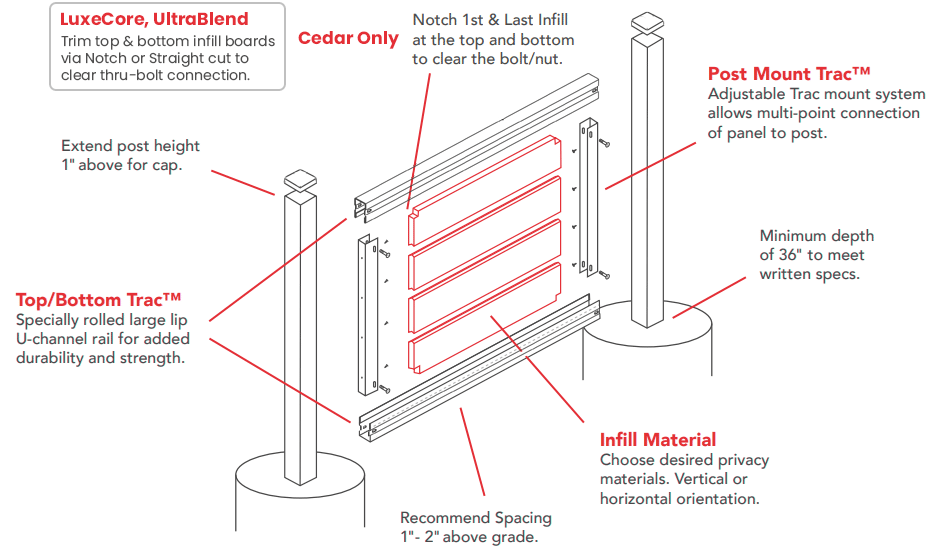
This means every board is supported on all four sides by the steel frame. There is no unsupported span for gravity to act on. The boards cannot sag, bow, or shift out of alignment.
The steel frame is powder-coated and does not rust, rot, or warp. It holds its shape permanently, which means the horizontal lines stay straight and consistent for the life of the fence.
FenceTrac horizontal fencing is available in 4′, 6′, and 8′ heights with 6′ or 8′ panel widths. The frame accommodates infill boards up to 1″ thick from multiple material options.
Horizontal Fencing Material Options
LuxeCore composite boards are the premium choice for horizontal fencing. The boards have an aluminum core wrapped in cellular PVC and encased in ASA resin, available in four colors: Black Onyx, Harbor Gray, Timber Brown, and Tropical Teak.
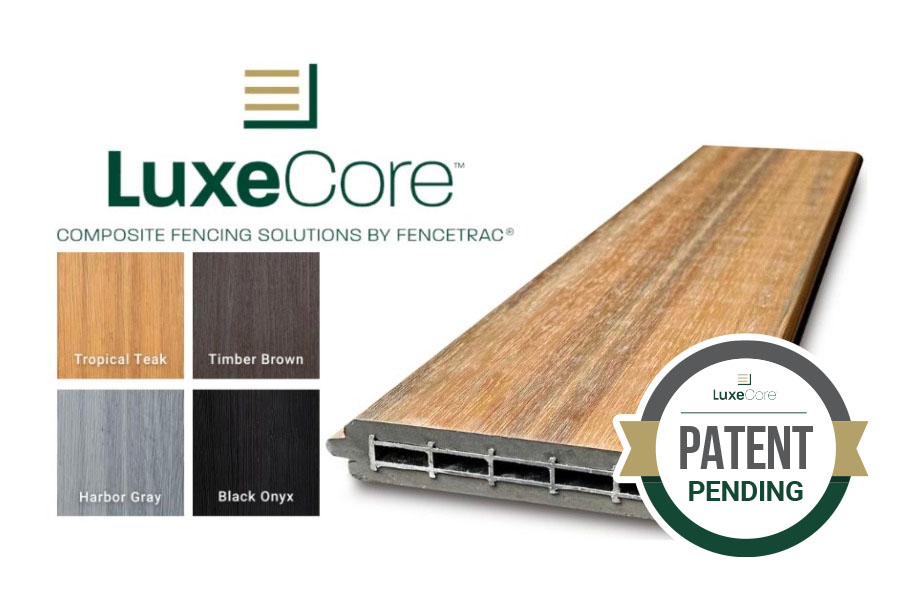
The textured wood-grain finish looks like natural hardwood but requires zero maintenance.
UltraBlend PVC boards deliver the same horizontal aesthetic at a lower price point. The PVC boards are encased in ASA resin for UV and weather resistance.
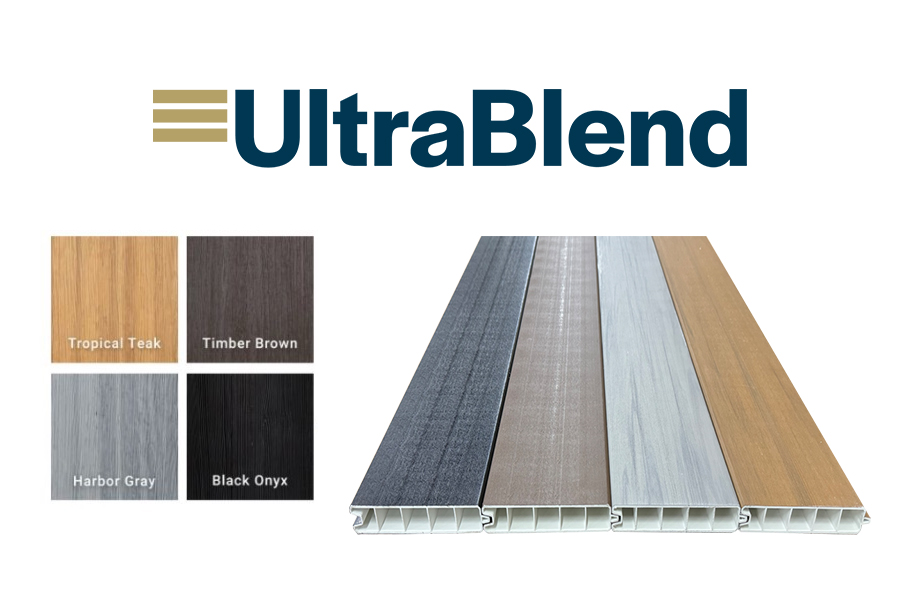
Same four color options. Same tongue-and-groove fit inside the FenceTrac frame.
Aluminum infill boards create a sleeker, more industrial horizontal look. The 6063-T5 aluminum boards come in Black, White, Silver, and Bronze powder-coat finishes. They are the strongest infill option and work well in commercial applications and coastal environments where salt air is a factor.
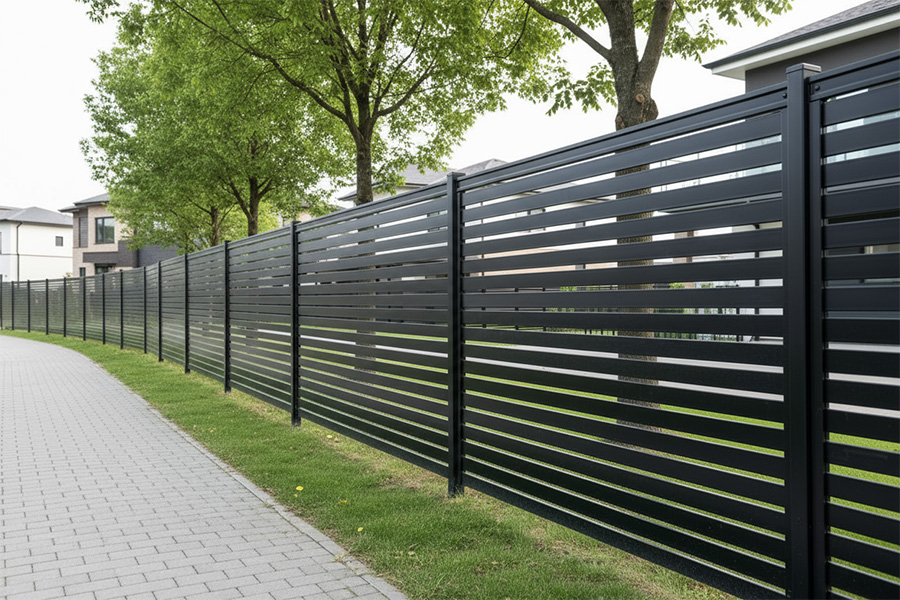
Semi-privacy configurations use aluminum slat boards with adjustable spacers. The spacers start at 3/4″ and stack in 1″ increments, so you can dial in exactly how much gap you want between each horizontal board. This is the configuration that gives you the mid-century modern horizontal slat look.
Horizontal Fencing for Privacy vs. Semi-Privacy
Full privacy horizontal fencing uses tongue-and-groove boards with no gaps between them. The boards lock together inside the steel frame channels and create a solid visual screen. From the outside, all you see is a clean wall of horizontal lines.
Semi-privacy horizontal fencing spaces the boards apart to allow partial visibility through the fence. The gap size determines how much you can see through.
Smaller gaps (3/4″ to 1″) provide significant screening while still letting air and filtered light through. Larger gaps (2″ to 3″) create more of an architectural feature than a privacy barrier.
Both configurations use the same FenceTrac steel frame. The difference is entirely in the infill selection and spacing.
Why Horizontal Fencing Costs More Than Vertical (and Why It’s Worth It)
Horizontal fencing typically costs more than a basic vertical wood fence. The materials are more engineered, the frame system adds structural integrity that wood posts alone cannot provide, and the installation requires more precision to keep the horizontal lines level across the full fence run.
The cost difference narrows significantly when you factor in maintenance. A traditional wood horizontal fence needs staining or painting every two to three years, and warped or rotted boards need individual replacement.

Over a 15-year period, the cumulative maintenance cost often exceeds the original installation cost.
FenceTrac horizontal fencing carries a 20-year warranty. The steel frame does not corrode under its powder coat, and the composite and PVC infill boards do not absorb moisture, warp, or require refinishing.
Total cost of ownership over the life of the fence favors the engineered system.
Where Horizontal Fencing Works Best
Horizontal fencing works in virtually any application where a modern aesthetic is the goal. The most common installations include residential backyard privacy fences, front yard accent fencing, pool enclosures, commercial property screening, restaurant patios, and rooftop deck enclosures.
It pairs especially well with contemporary home styles, but it also creates a strong contrast against traditional architecture. A horizontal fence next to a craftsman or farmhouse-style home can bridge the gap between classic structure and modern outdoor design.
For properties in HOA-governed communities, check your HOA’s architectural guidelines before specifying a horizontal fence. Most HOAs now approve horizontal designs, but some older covenants still restrict fence styles to traditional vertical picket or board-on-board.
Get a Quote for Horizontal Fencing
FenceTrac ships fence systems nationally and has been supplying contractors, property owners, and commercial buyers since 2012.
Every system carries a 20-year warranty and is engineered for long-term performance with zero maintenance.