
FenceTrac manufactures modular fence systems that function as permanent noise barrier walls for residential and commercial properties affected by highway traffic, railroad noise, commercial equipment, and neighboring industrial operations. The galvanized G90 steel frame with powder-coated finish holds solid privacy infill in 4-foot, 6-foot, and 8-foot heights. The tongue-and-groove infill profile creates a continuous surface with no air gaps between boards, which is the single most important factor in a fence’s ability to reduce noise transmission.
Sound travels through gaps. A fence with 1% open area transmits significantly more noise than a fence with zero gaps. Traditional wood fences develop gaps as boards shrink, warp, and pull away from the rails. Vinyl fences crack and separate at panel joints. Those small gaps become direct paths for sound to pass through.
Effective noise reduction starts with a fence that stays sealed.

How Fencing Reduces Noise
A fence reduces noise in two ways: it reflects sound waves back toward the source, and it blocks direct line-of-sight transmission between the noise source and the listener. The effectiveness depends on the fence’s height, density, and ability to maintain a continuous surface without gaps or openings.
Height and Placement
Taller fences block more noise because they intercept a wider angle of sound waves. An 8-foot FenceTrac fence provides significantly more noise reduction than a 6-foot fence because it blocks sound that would otherwise travel over the top of a shorter barrier.
Placement matters as much as height. A fence closer to the noise source is more effective than one close to the listener. For highway noise, the ideal position is as close to the road as the property line allows. For equipment noise from an adjacent commercial property, the fence should be positioned at the property line nearest the equipment.

Mass and Density
Heavier, denser materials block more sound. This is why highway sound walls are built from concrete, masonry, or earth berms. A fence built from lightweight materials transmits more sound energy through the material itself.
FenceTrac with LuxeCore aluminum-core composite infill combines an aluminum structural core with cellular PVC and an ASA resin shell. The multi-layer construction adds mass and density compared to hollow vinyl or thin wood boards. The 1-inch board thickness provides more material between the sound source and the listener than most residential fence products.

Zero Gap Construction
The most critical factor in fence-based noise reduction is eliminating air gaps. Sound takes the path of least resistance, and even small gaps between boards act as channels that allow noise to pass directly through the fence.
FenceTrac privacy fencing uses tongue-and-groove infill boards that interlock inside the steel frame channels. There are no gaps between boards, and the boards cannot shift, shrink, or separate over time. The steel frame holds the infill in a fixed position permanently, which means the fence maintains its sealed surface for the life of the system.
Wood fences lose their noise-blocking effectiveness as the wood dries, shrinks, and gaps appear between boards. FenceTrac’s rigid frame and interlocking infill prevent this from happening.
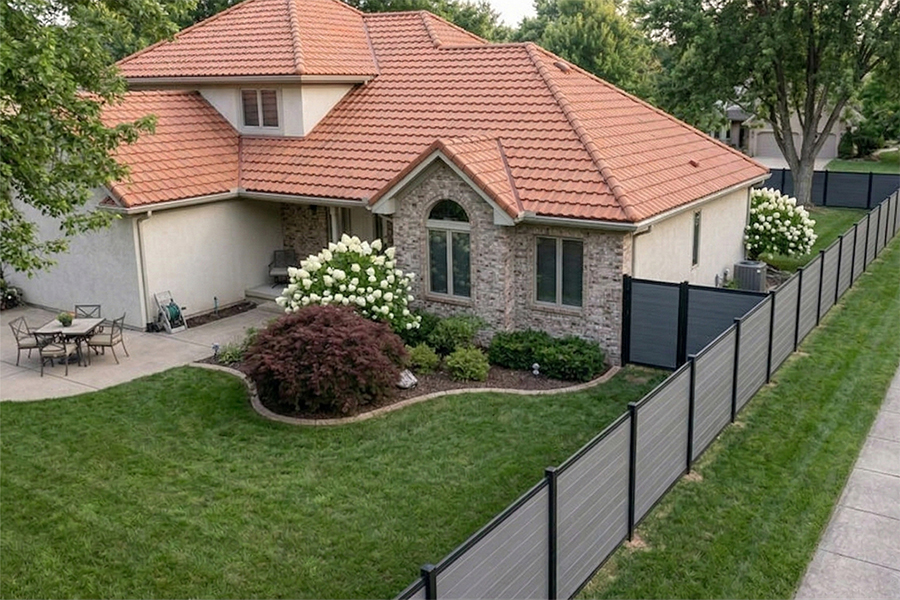
Best FenceTrac Products for Noise Barrier Fencing
FenceTrac with LuxeCore aluminum-core composite infill at 8-foot height is the strongest recommendation for noise barrier applications. The aluminum-core composite provides more mass per board than hollow PVC or standard wood, and the 1-inch tongue-and-groove profile creates a sealed surface. LuxeCore carries a Limited Lifetime Warranty and requires zero maintenance.
FenceTrac with UltraBlend PVC infill at 8-foot height is a viable alternative. UltraBlend’s 1-inch profile and tongue-and-groove construction also produce a sealed surface with no gaps. The PVC construction provides less mass than the aluminum-core composite but still outperforms wood and hollow vinyl in maintaining a consistent barrier over time.
FenceTrac with aluminum infill boards is the densest infill option in the FenceTrac line. The 6063-T5 aluminum provides the highest mass-per-board for maximum sound reflection. In privacy configuration with tongue-and-groove boards, aluminum infill creates the most effective noise barrier available in the FenceTrac system.
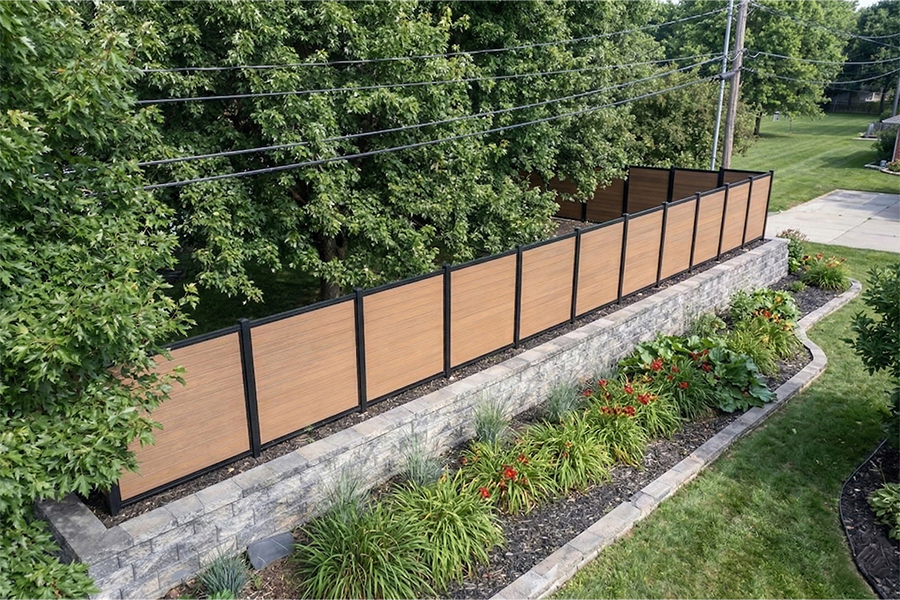
Noise Barrier Fence Design Considerations
For maximum noise reduction, install the fence at 8-foot height and run it as a continuous line with no gaps, breaks, or openings along the noise-facing side. Every break in the fence line, including gates, creates a path for sound to enter.
If a gate is required in the noise barrier section, use a solid privacy gate with the same infill as the fence. Keep the gate as narrow as practical and position it at the end of the fence line rather than the center, where the gap would allow noise to penetrate the deepest into the property.
Combining the fence with landscaping, earth berms, or raised planters on the noise-source side adds an additional layer of absorption. Dense evergreen plantings in front of the fence scatter and absorb high-frequency noise that the fence reflects.
Properties adjacent to highways, rail lines, or commercial operations should consider running the noise barrier fence along the full length of the affected property line. Partial coverage allows noise to flank around the ends of the fence and reduce the overall effectiveness.
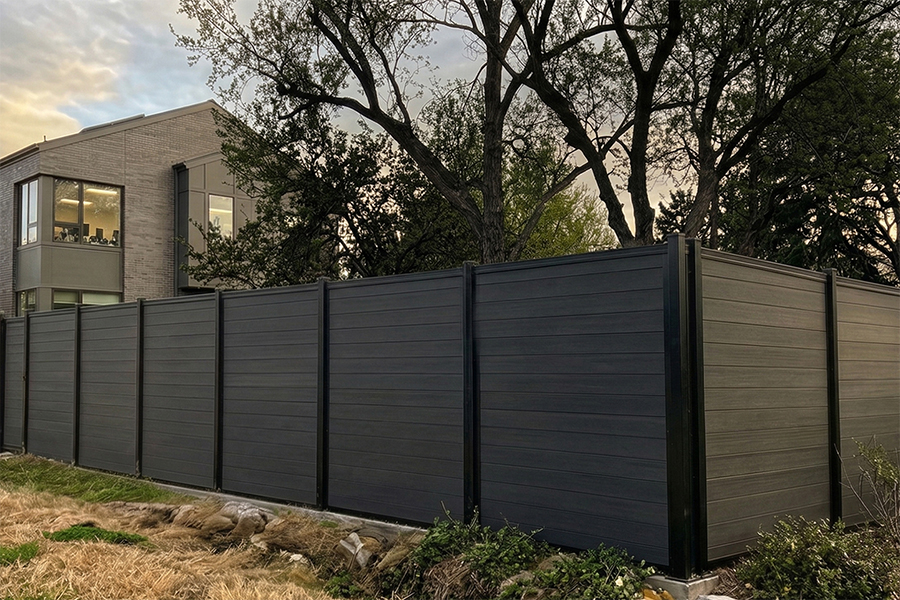
Common Questions About Noise Barrier Fencing
Homeowners and property managers ask these questions when evaluating fencing for noise reduction.
How much noise does a fence actually reduce?
A solid fence with no gaps can reduce perceived noise by 5 to 10 decibels depending on height, placement, and the frequency of the noise source. Low-frequency sounds like truck engines and bass are harder to block than high-frequency sounds. An 8-foot solid fence positioned close to the noise source provides the best reduction achievable with a fence-based barrier.
Is FenceTrac as effective as a concrete sound wall?
Concrete and masonry sound walls provide more mass per square foot and greater noise reduction than any fence product. FenceTrac is not a replacement for engineered highway sound walls. It is the most effective fence-based noise barrier available for residential and commercial properties where a concrete wall is not practical, not permitted, or not within budget.
Does the fence reduce noise from both directions?
Yes. A solid fence reflects and blocks sound in both directions. FenceTrac’s both-sided design provides identical performance regardless of which side faces the noise source.
Where FenceTrac Ships Noise Barrier Fencing
FenceTrac ships complete fence systems to homeowners, apartment communities, and commercial properties nationwide from Tulsa, Oklahoma. The modular system arrives ready for professional installation. For properties that need both noise reduction and backyard privacy, the same FenceTrac system serves both purposes.
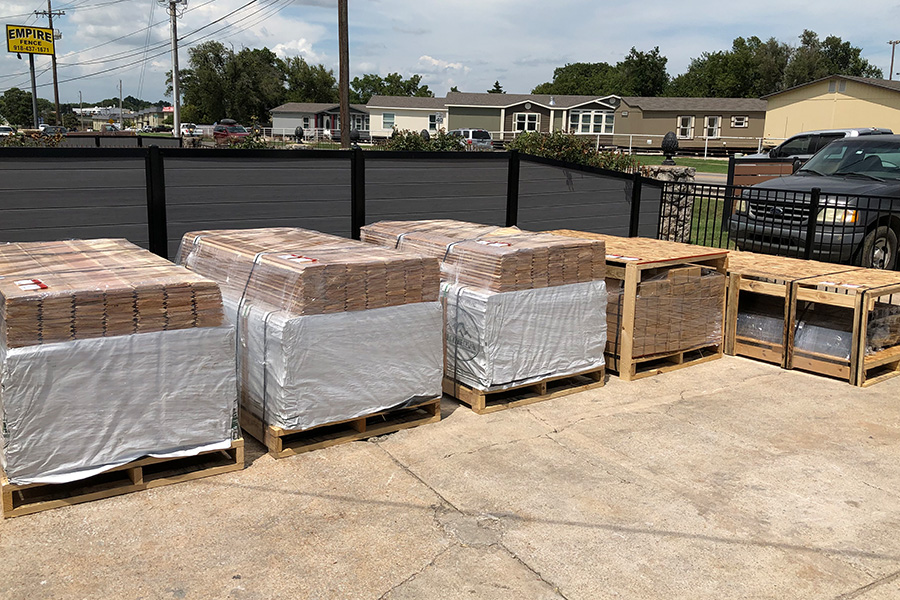
Get a Quote for Your Noise Barrier Project
FenceTrac ships fence systems nationally and has been supplying contractors, property owners, and commercial buyers since 2012.
Every system carries a 20-year warranty and is engineered for long-term performance with minimal maintenance.