
FenceTrac with LuxeCore aluminum-core composite infill is one of the few residential and commercial fence systems to pass third-party impact testing. In lab testing at QAI Laboratories in Miami, the system absorbed three direct hits from a 9.25 lb 2×4 lumber missile at nearly 50 feet per second and showed no damage to the panel or fasteners. That test, conducted under ASTM E1886, is the same standard used to certify products for hurricane-zone construction.
The Short Answer
An impact-resistant fence requires three things: a rigid structural frame, an infill material that absorbs force without cracking or shattering, and post footings engineered to transfer lateral loads into the ground. FenceTrac with LuxeCore composite infill meets all three criteria and is the only configuration in the FenceTrac lineup with published missile impact test results.
What Makes a Fence Impact-Resistant
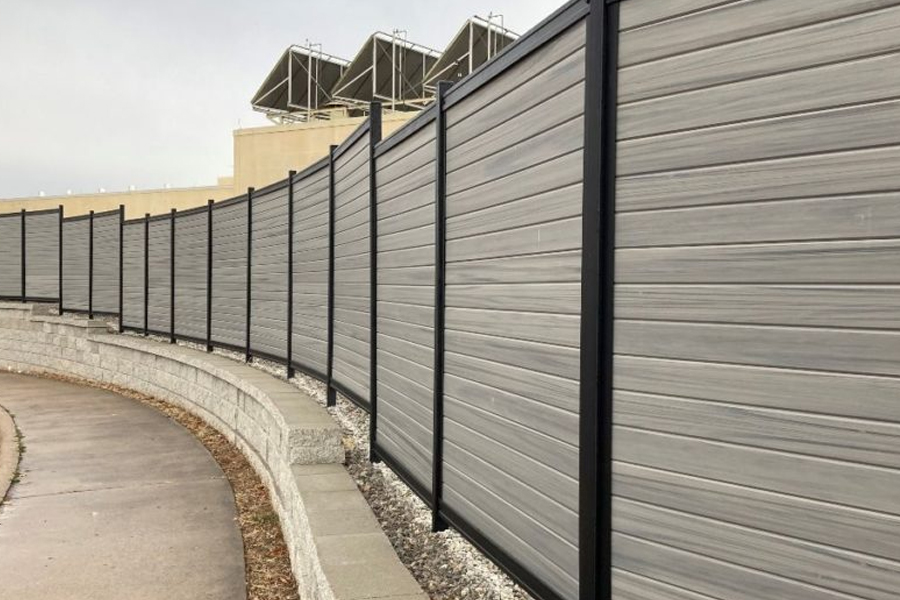
Impact resistance is not a single material property. It is the result of how the frame, infill, posts, and fasteners work together under sudden force. A fence that performs well in steady wind can still fail under a sharp impact if any one component is brittle or poorly connected.
Rigid Frame Construction
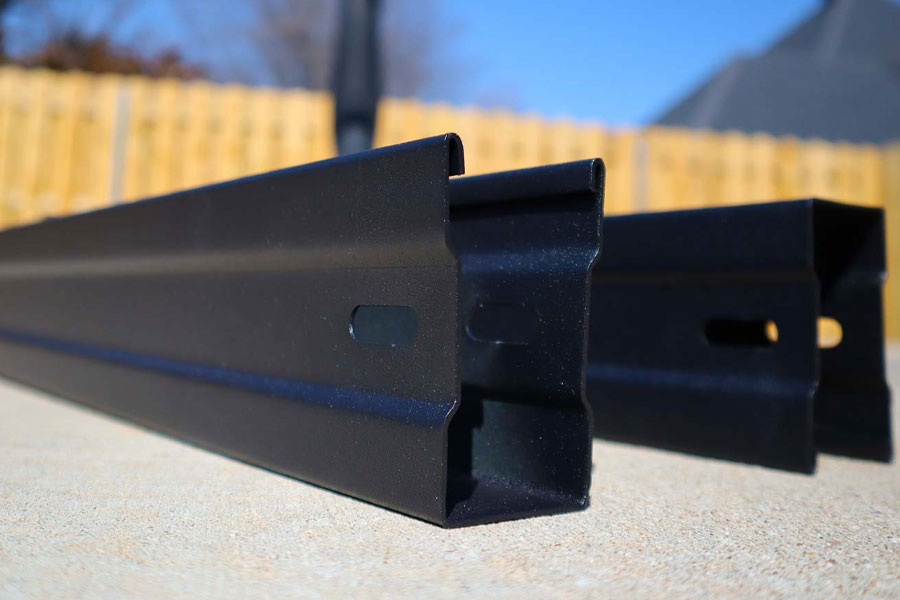
The FenceTrac frame uses G90 galvanized steel channels at the top, bottom, and sides of each panel. The horizontal rails are 3-inch channels. The vertical side channels are 2-inch channels. Carriage bolts lock the corners, and self-tapping screws fasten the side channels to the posts.
This frame holds the infill boards in a fixed position so they cannot flex outward or separate under impact. When a striking object hits the panel face, the force distributes across the full frame perimeter rather than concentrating at the point of contact.
Infill That Absorbs Energy
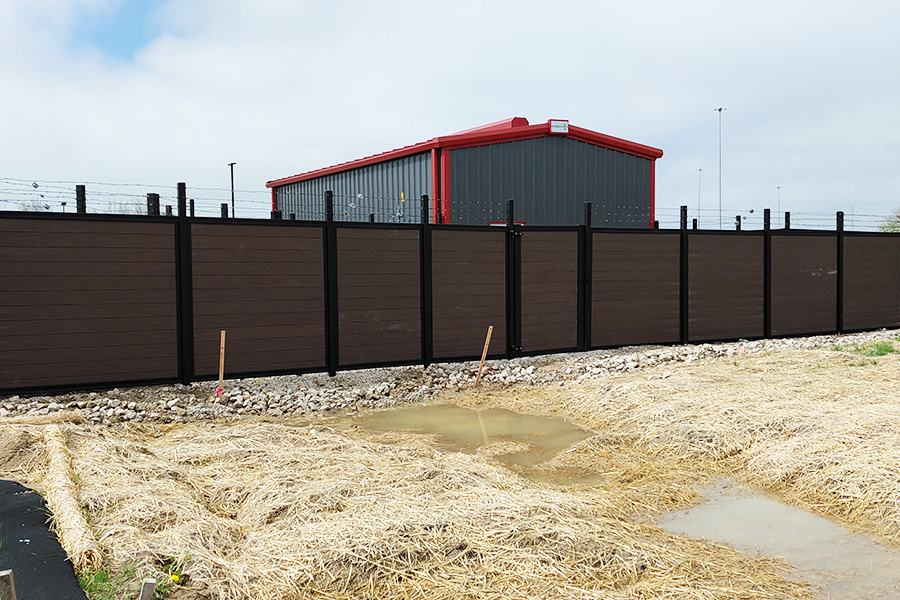
LuxeCore aluminum-core composite boards are built with a structural aluminum core surrounded by cellular PVC and encased in ASA, a weather-resistant acrylic resin. This layered construction gives the board both rigidity and energy absorption.
When a projectile strikes a LuxeCore board, the ASA surface resists puncture while the aluminum core and PVC layers absorb and distribute the kinetic energy through the board’s cross-section. The board does not shatter like wood or crack like standard vinyl. It holds its shape and stays locked in the U-channel frame.
That energy absorption is what separates LuxeCore from conventional fence materials under impact loading. Wood splinters. Standard PVC cracks at the point of contact. Aluminum boards dent but resist penetration. LuxeCore’s layered composite construction handles both the initial shock and the residual vibration without structural failure.
Post and Footing Engineering
The posts anchor everything. Impact force travels from the infill through the frame and into the posts. If the posts are undersized or the footings are shallow, the fence can shift or lean even if the panel itself survives the hit.
FenceTrac’s post depth and footing recommendations are based on hole diameters of 4 times the post dimension (10 inches for the 2.5-inch post, 12 inches for the 3-inch post) set in concrete to a depth determined by local frost line and building codes. For high-exposure applications, stamped engineering documentation is available to calculate exact post depth, hole diameter, and concrete volume for the site conditions.
The QAI Missile Impact Test Results
FenceTrac with LuxeCore composite infill was tested by QAI Laboratories in Miami, Florida, in October 2024. The test followed ASTM E1886-02, the standard for evaluating performance under missile impact and cyclic pressure differentials.
The sample was a 6-foot by 6-foot FenceTrac privacy fence panel with LuxeCore composite boards, assembled with 3-inch by 3-inch steel posts set in 4,000-psi concrete footings.
| Impact | Missile | Speed | Result |
|---|---|---|---|
| Impact 1 | 9.25 lb, 2x4x92″ lumber | 49.8 ft/sec | Passed |
| Impact 2 | 9.25 lb, 2x4x92″ lumber | 49.8 ft/sec | Passed |
| Impact 3 | 9.25 lb, 2x4x92″ lumber | 49.0 ft/sec | Passed |
All three impacts were classified as Large Missile Impact Level D, the most stringent large missile category under the standard. At the conclusion of all three hits, the report noted no apparent damage to the sample or its fasteners.
Level D testing replicates the kind of airborne debris generated during a major hurricane or severe storm. A 9.25 lb piece of lumber traveling at nearly 50 feet per second carries substantial kinetic energy, roughly equivalent to a large tree branch or construction debris launched by high winds.
How Different Fence Materials Handle Impact
Not all materials respond to impact the same way. The failure mode matters as much as the material’s raw strength, because it determines whether the fence can be repaired or needs full replacement after an event.
| Material | Impact Behavior | Repair After Impact |
|---|---|---|
| Wood (cedar, pine) | Splinters and fractures at the point of contact | Replace damaged boards |
| Standard vinyl/PVC | Cracks or shatters, especially in cold weather | Replace damaged sections |
| Aluminum boards | Dents but resists penetration | Replace dented boards if appearance matters |
| LuxeCore aluminum-core composite | Absorbs energy without cracking or shattering | Minimal to none based on test results |
Wood and vinyl are the most vulnerable to impact damage. Both fail in brittle modes, meaning the material fractures suddenly rather than deforming gradually. In a storm event, a wood or vinyl fence hit by debris typically requires section replacement. LuxeCore’s composite layering gives it a ductile response: it absorbs and distributes force rather than concentrating it at the strike point.
Where Impact Resistance Matters Most
Impact resistance is not just a hurricane-zone concern. Several common fence applications benefit from a system that can absorb sudden force without structural failure.
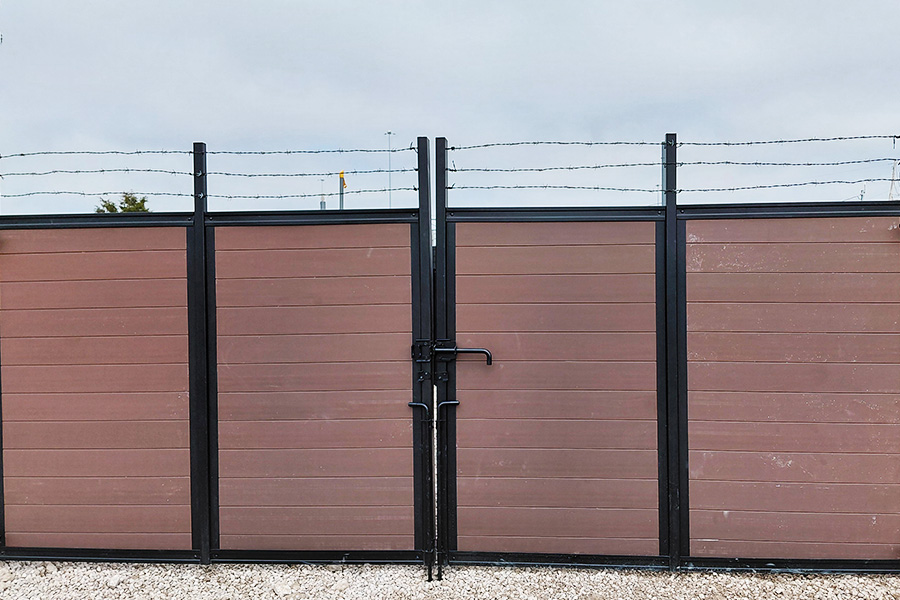
Coastal and hurricane-prone properties face the most obvious risk. Airborne debris during a Category 3 or higher storm can carry enough force to destroy conventional wood and vinyl fencing. FenceTrac with LuxeCore composite infill is tested to the standards used for hurricane-zone product certification.
Commercial properties near parking lots, loading areas, or high-traffic zones see accidental impacts from vehicles, equipment, and moving materials. A fence that can absorb a hit without cracking reduces maintenance costs and downtime.
School and athletic facility perimeters take regular hits from balls, equipment, and foot traffic. An impact-resistant fence holds up over years of daily use where vinyl or wood would show damage within months.
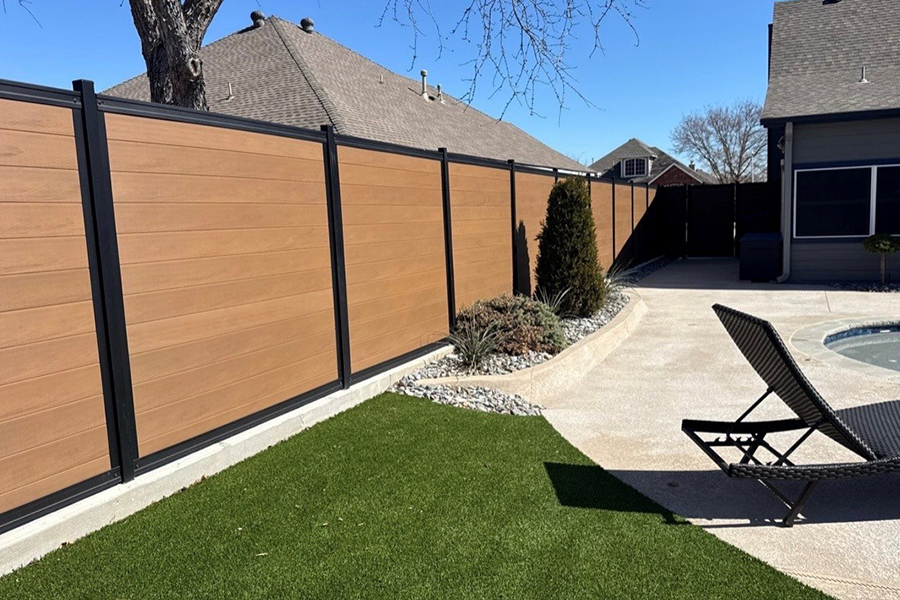
Design Ideas for Impact-Resistant Perimeter Fencing
The FenceTrac frame accepts LuxeCore composite boards in four colors: Black Onyx, Harbor Gray, Timber Brown, and Tropical Teak. All four carry the same structural properties and the same Limited Lifetime Warranty on the infill boards.
For properties where impact resistance and design flexibility are both priorities, LuxeCore boards can be mixed with aluminum infill boards to create accent patterns. The aluminum boards add a metallic contrast line while maintaining the frame’s structural integrity.
The standard FenceTrac privacy fence configuration with LuxeCore infill is available in 4-foot, 6-foot, and 8-foot heights, with panel widths of 6 or 8 feet. The same rackable design that follows sloped terrain applies to impact-resistant configurations, so there is no trade-off between site adaptability and structural performance.

Related Questions
How do you build an extremely strong privacy fence? Strength and impact resistance overlap but are not identical. Strength is about resisting sustained loads like wind pressure. Impact resistance is about absorbing sudden, concentrated force. FenceTrac with LuxeCore scores high on both.
What is the most weather-resistant fence material? LuxeCore’s ASA outer layer resists UV, moisture, and temperature cycling. Combined with the G90 galvanized steel frame, the system handles weather exposure and physical impact without requiring maintenance.
How do aluminum-core composite fence boards compare to wood-fiber composite? Wood-fiber composite (WPC) boards contain organic material that absorbs moisture and weakens over time. LuxeCore contains zero wood. The aluminum core gives it a structural backbone that WPC boards lack, which directly affects impact performance.
See Also
Can FenceTrac be engineered for wind load? for the full ASTM E330 uniform static pressure test results that accompany the impact test data. See FenceTrac assembly videos for a walkthrough of how the frame, infill, and posts come together.
Get a Quote for Your Impact-Resistant Fence
FenceTrac ships fence systems nationally and has been manufacturing engineered fencing in the USA since 2012.
Every system carries a 20-year warranty and is engineered for long-term performance with minimal maintenance.