
The right fence color usually comes down to 3 things: your house, your yard, and how much upkeep you want.
If your home has black windows, charcoal roofing, or a clean modern look, black often fits best.
If your home has brick, stone, beige siding, or wood tones, brown or tan usually feels warmer.
And if you want a middle option, gray works well when your exterior mixes warm and cool tones.
Here’s the short version:
- Black works well with modern homes and planted yards.
- Brown or tan fits warm-toned homes and open yards.
- Gray is a safe middle pick for mixed-color exteriors.
- Composite and PVC keep color better than wood and usually only need washing.
- Looking at samples in midday sunlight can save you from picking the wrong shade.
A practical rule we can use is simple.
If 2 or more fixed parts of your home, like the roof, trim, windows, brick, or patio, point toward one color family, that’s often the better pick.
| Color | Best For | Yard Effect | Home Match |
|---|---|---|---|
| Black | Modern, high-contrast homes | Tends to fade behind plants | White, light gray, charcoal, black accents |
| Gray | Mixed warm-and-cool exteriors | Sits between house and yard | Gray, blue-gray, weathered tones |
| Brown/Tan | Warm, earth-toned homes | Softens edges in open yards | Brick, stone, beige, cream, cedar |
One more thing.
Fence color can look different in full sun, shade, and next to mulch, grass, or concrete.
That’s why we should check the house first, then the yard, then the material.
1. Start With Your Home’s Style and Exterior Colors
Start with the parts of your home that won’t change.
Think siding, roof, trim, masonry, plus the patio, driveway, and walkways.
Then look at the yard and ask a simple question.
Should the fence blend in, or should it stand out?
Match a black fence to modern and high-contrast exteriors
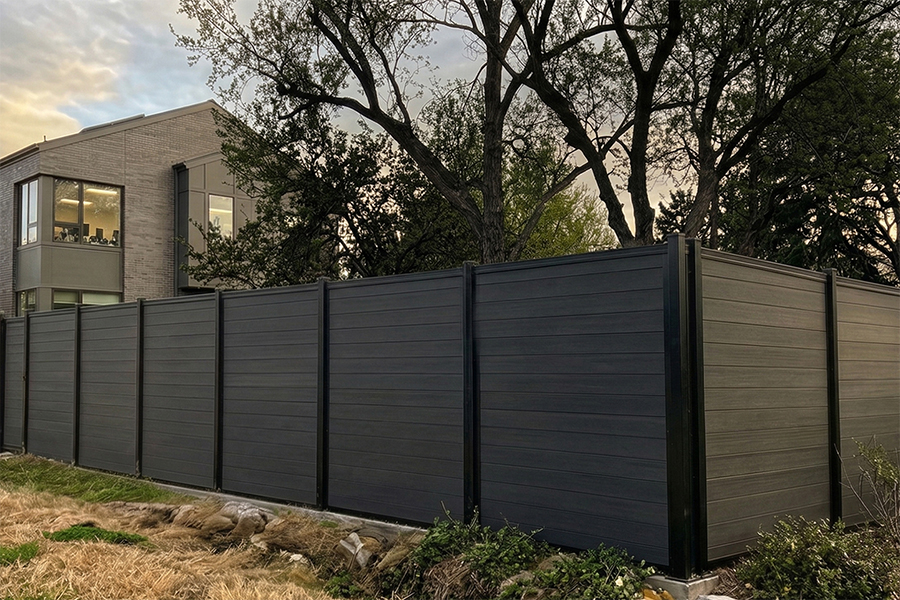
A black privacy fence tends to work best when black already shows up somewhere else on the house, like window frames, dark trim, charcoal shingles, or steel accents.
It pairs well with white or light gray siding, black windows, and charcoal roofs.
On homes like that, a black fence repeats the darkest accent at ground level, so the whole place feels pulled together.
Black also suits modern, contemporary, and modern farmhouse homes, where it looks clean and architectural instead of heavy.
If your home has dark fiber-cement or stucco siding, black fencing can work like a quiet backdrop.
It extends that pared-down look all the way to the property line and frames the home without pulling focus.

Use brown or tan when the house needs warmth
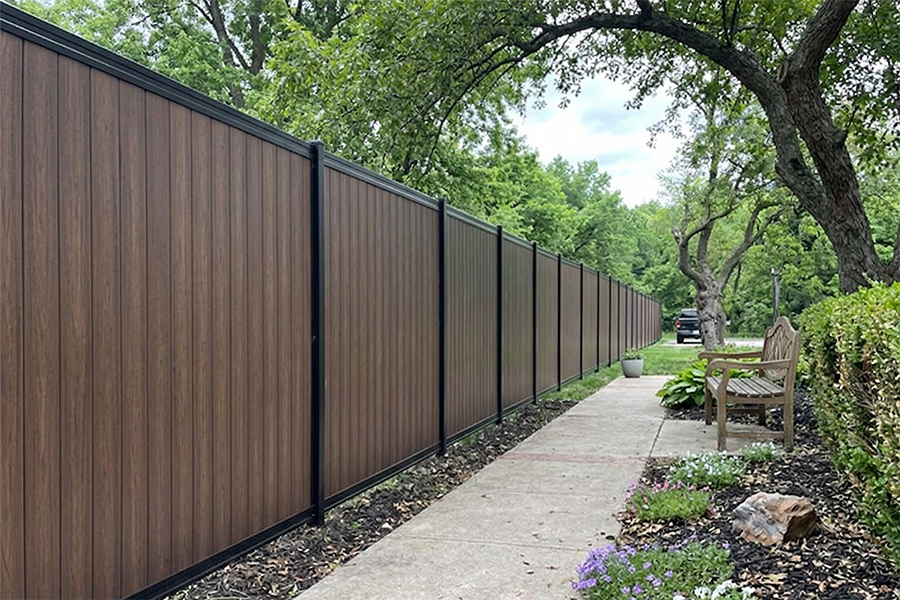
If your home leans beige, cream, brick, stone, or cedar, brown and tan composite fence options are often the better fit.
Brown plays nicely with earthy materials like red or brown brick, warm fieldstone, and wood decking.
Tan keeps things lighter and a bit more open.
On a colonial or ranch home with tan siding, off-white trim, and a medium-brown roof, a tan fence helps the exterior feel warm and pulled together.
Check the fixed elements before you decide
Before you pick a color, look at the permanent features of your home.
| Fixed Element | Points Toward Black | Points Toward Brown or Tan |
|---|---|---|
| Roof shingles | Charcoal, black, or dark gray | Brown or weathered wood |
| Masonry | Cool gray stone or white stucco | Red or brown brick, warm fieldstone |
| Window frames & trim | Black or dark bronze | Cream, almond, or warm white |
| Garage & entry doors | Black or deep espresso | Carriage-style wood or warm off-white |
| Patio, driveway, and walkways | Concrete or cool pavers | Flagstone, brick pavers, or wood-look composite |
If two or more fixed elements point in the same direction, go with that color.
If the home still gives you two solid options, let the yard break the tie.
Check samples in midday sunlight by holding them against your siding and trim in midday light.
That step matters more than most people think.
Warm sunlight can make tan and brown look richer, while black can look softer outdoors.
Once the exterior colors point you in one direction, the next step is to see how the fence will look against the yard itself.
sbb-itb-908b3eb
2. Let the Landscape Guide Whether the Fence Blends In or Stands Out
Once your house points you toward a color, check how that color sits in the yard.
The same fence color can look very different next to thick planting, a big open lawn, or a lot of concrete and stone.
So this is the next test.
Should the fence fade into the background, or should it mark the edge on purpose?
Why black tends to disappear into the landscape
A black privacy fence often works like a shadow line.
Next to shrubs, grasses, evergreens, and dense planting beds, black blends into darker areas and lets the plants do the talking.
It tends to work best in wooded yards, along tree lines, and over dark mulch.
The payoff is simple: the yard can feel larger.
But there’s a catch.
In a small or narrow side yard with very little planting, a solid black fence can feel heavy.
When there isn’t much greenery in front of it, it shows up more like a hard edge.
If the yard is open or only lightly planted, a warmer fence color can be a better fit.
When brown or tan makes the yard feel more open and inviting
Brown and tan pair well with soil, bark mulch, wood decking, and warm-toned stone.
In open lawns, those colors create an edge you can still see, but it feels softer.
Around light stone or concrete patios, they keep the transition calm and easy on the eye.
In desert-style yards, they sit naturally with gravel and the plant palette.
Look at real project photos before you decide
Fence color shifts with sun, shade, and the time of year.
That’s why it helps to review the Gallery and see how each finish looks in actual yards.
Try to find photos that look like your setup, especially the yard size, amount of planting, and home style.
Then look closely at how each color behaves in both bright light and shade.
If the choice still feels close, the next tie-breaker is how well the material holds that finish.

3. Pick a Material That Holds Its Color Over Time
If selecting the best fence style and your landscape leave you with two solid choices, go with the one that keeps its color with less work.
Why composite and PVC don’t need painting or staining
Wood needs repainting or restaining on a regular basis.
Composite and PVC don’t.
Their color is built in, so you won’t be stuck painting, staining, and touching up every few years.
Most of the time, they just need an occasional wash.
How infill choice affects the finished look
Color is only part of the story.
Texture matters too.
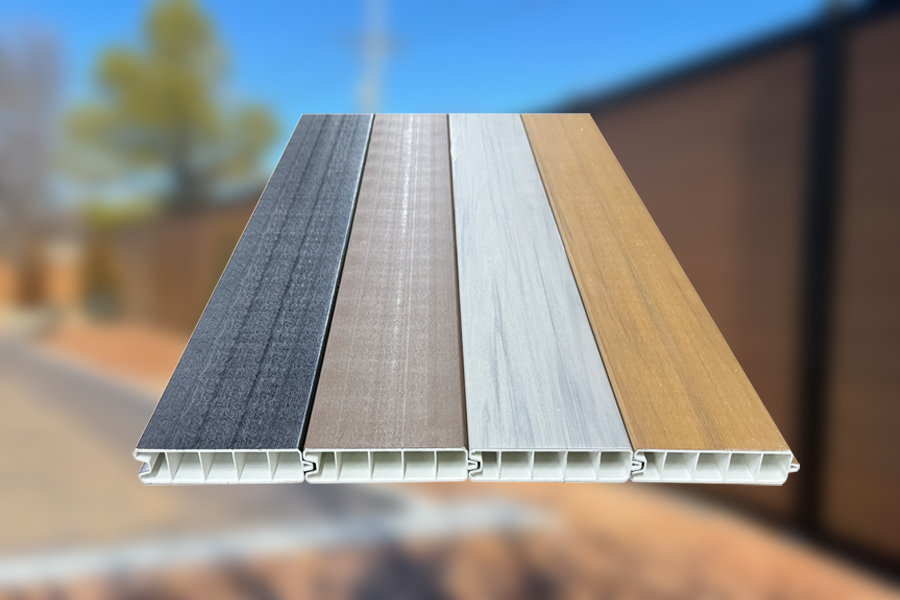
The same frame can give off a different feel depending on whether you use composite or PVC.
Composite has a wood-grain look.
PVC looks smoother and more modern.
The best move is to match the texture to your home first, then compare finish options on Infill Options.
See the finished fence come together
Want to see how it all looks once it’s installed?
Watch the assembly video to see how the finished panel reads in outdoor light.
After that, compare black, gray, and brown on the product pages.
4. Compare Colors and Go to the Right Product Page
Black, gray, and brown side by side
If you’re down to two or three colors, this side-by-side view makes the choice a lot easier.
And if you still have two solid options, compare them below.

| Color | Overall Look | Landscape Interaction | Best Siding & Roof Pairings |
|---|---|---|---|
| Black | Bold, sleek, high-contrast, Modern / Contemporary | Recedes into shadows, disappears behind greenery | White, light gray, or cream siding, charcoal or black metal roof |
| Gray | Soft, neutral, restrained, Modern / Transitional | Bridges house and yard without dominating either | Gray, blue-gray, or cool-toned siding, charcoal or weathered-wood roof |
| Brown | Warm, natural, wood-like, Traditional / Farmhouse | Echoes soil, mulch, and wood features, warms up the yard | Tan, taupe, cream, or stone-accented siding, brown or warm-toned roof |
Gray is the safest middle ground for mixed warm-and-cool exteriors.
Black makes the strongest visual statement.
Brown tends to feel like the easiest fit for yards with decks, pergolas, or garden beds.
Go straight to the color page that fits your project
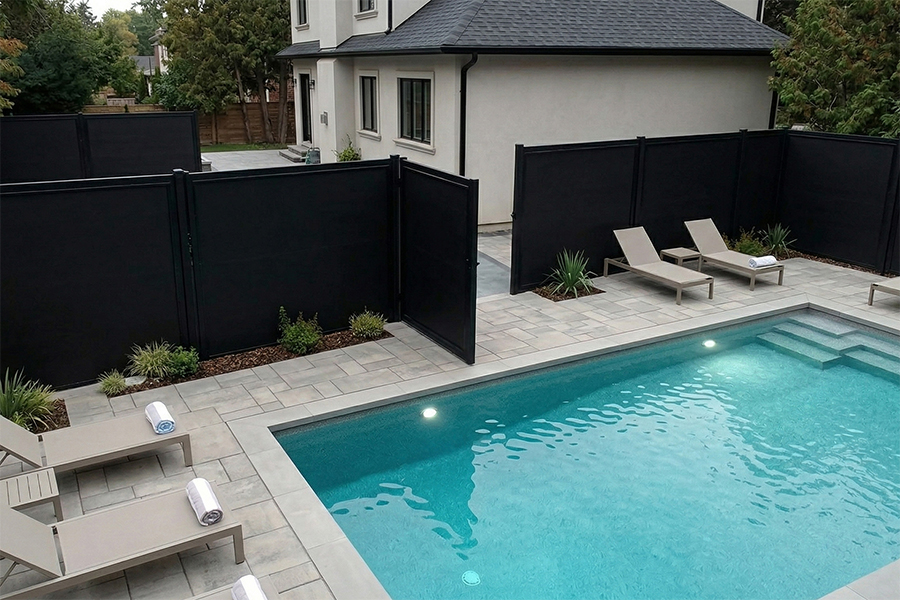
black PVC fence – Best for modern homes, pool areas, and wooded lots.
gray PVC fence – A strong choice for suburban homes with gray or blue-gray siding, coastal-inspired designs, and urban backyards with concrete or stone hardscaping. It looks clean and contemporary without the stark contrast of black.
brown composite fence – Best for homeowners who want a wood-like look with less upkeep.
Once you’ve picked a color, move to Infill Options and Price My Fence.
Still deciding?
If you’re not sure which infill works with your color choice, head to Infill Options, then use Price My Fence for a fast estimate.

Conclusion: Match the Color to the House, Yard, and Upkeep Plan
If you’ve narrowed your fence color to black, gray, or brown, this is the last gut check.
Start with the fixed elements.
A black privacy fence looks right at home with modern, high-contrast exteriors.
Brown and tan feel warmer, and they pair well with brick, stone, and earth tones.
Gray sits in the middle, giving you a bridge between black and brown.
Let the yard help you decide.
In planted yards, black tends to fade into the background behind shrubs and trees.
In open or smaller yards, brown or tan brings warmth without making the space feel too heavy.
Choose a material that holds its color.
Composite and PVC keep their color with very little upkeep.
Most of the time, they just need an occasional wash.
Once the color works with the house and yard, go straight to product and pricing.
Head to Infill Options to confirm your material and style, then use Price My Fence to turn it into a project estimate.
If you’re planning a broader build, review mixed material fencing as well.
FAQs
What if my home has both warm and cool tones?
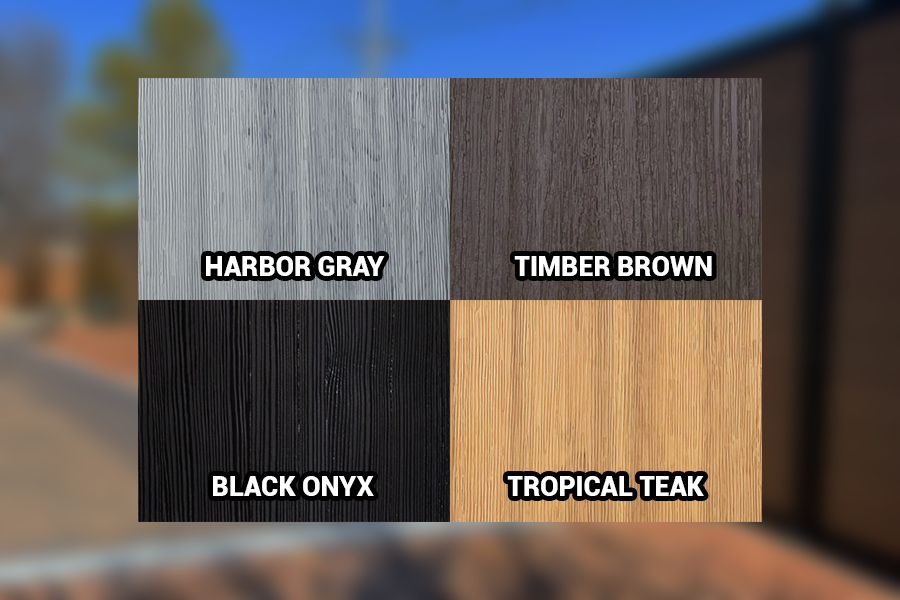
Choose a neutral infill color like Harbor Gray.
It brings a soft touch of warmth without locking you into one style, which makes it easy to use with both warm and cool exterior colors.
Pair it with a black powder-coated steel frame for a clean, architectural look.
That combo also ties in nicely with details like window mullions and hardware.
If you want more room to customize, you can also explore more infill options.
Will a black privacy fence make my yard look smaller?
Not necessarily.
A black privacy fence often fades into the background, which helps it blend with the yard and lets your home or garden stand out.
It makes a bold, polished statement.
At the same time, it can make the space feel more open, not closed off or boxed in.
Which fence material holds its color the longest?
For the most consistent long-term color retention, LuxeCore composite and UltraBlend PVC are the top picks.
Both use an ASA encapsulation layer, which helps the fence stand up to UV exposure, fading, staining, and discoloration.
That means it keeps its original look for years, without the hassle of painting or staining.