
FenceTrac fire-rated fencing is built entirely from non-combustible materials, galvanized G90 steel frame and 6063-T5 aluminum infill, and carries an ASTM E84-24 Class A fire rating with a Flame Spread Index of 0. Fencing near electrical transformers, switchgear, generators, and other utility equipment must meet a combination of fire code, electrical code, and utility provider requirements that restrict both the material composition and the placement of the enclosure.
The Short Answer
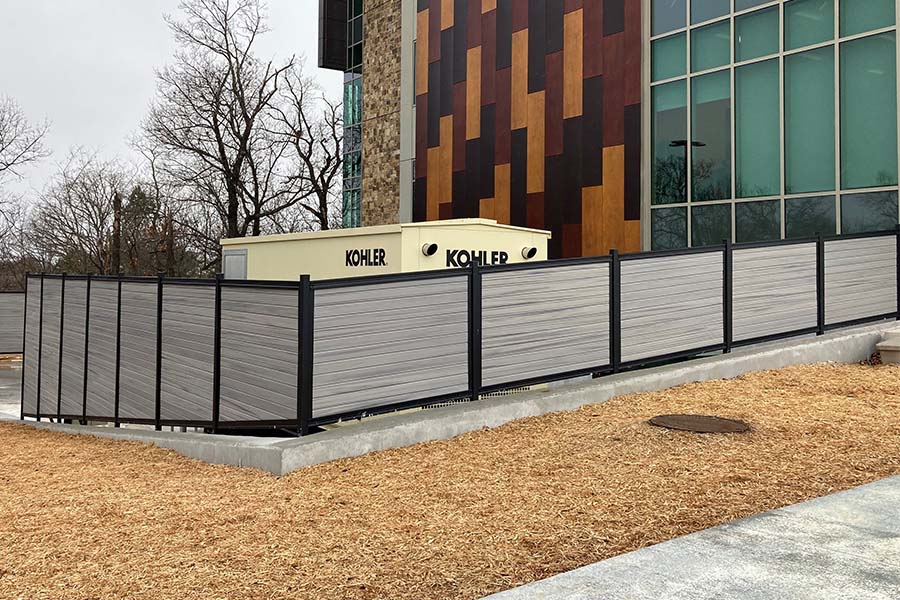
Most codes and utility providers require fencing near transformers and electrical equipment to be non-combustible. Wood and vinyl fences are typically prohibited. The fence must also maintain specific clearance distances from the equipment for safe operation and maintenance access. FenceTrac’s fire-rated system satisfies the non-combustible material requirement, and its modular design allows precise sizing to meet clearance specifications.
Why Non-Combustible Fencing Is Required Near Electrical Equipment
Electrical transformers, switchgear panels, and generators present two fire risks. The equipment itself can overheat, arc, or fail catastrophically, producing intense heat or open flame. A combustible fence within the heat radius becomes fuel that can spread fire to adjacent structures.
The second risk runs in the opposite direction. An external fire, such as a dumpster fire or wildfire, can ignite a combustible fence, and the burning fence can damage or destroy the electrical equipment, potentially cutting power to the building or creating a secondary electrical hazard.
Non-combustible fencing eliminates both pathways. It will not ignite from equipment failure, and it will not carry fire from an external source to the equipment.
Codes and Standards That Apply to Utility Equipment Fencing
Several overlapping codes govern fencing near electrical equipment. A project may need to satisfy all of them simultaneously.
National Electrical Code (NEC / NFPA 70)
The NEC establishes minimum working clearances around electrical equipment. Article 110.26 requires dedicated working space in front of equipment that is at least 3 feet deep (for systems up to 600V) and extends the full width of the equipment. Fencing must not encroach on this clearance zone. For higher-voltage equipment, clearance requirements increase.
National Electrical Safety Code (NESC / IEEE C2)
The NESC governs utility-owned equipment. It establishes clearance envelopes around pad-mounted transformers, switches, and other utility infrastructure. Fence placement must maintain the NESC-required clearance envelope on all sides, with particular attention to the side where utility crews access the equipment for servicing.
International Fire Code (IFC)
The IFC restricts combustible materials near high-risk equipment. Fencing and screening near transformers and generators are subject to the same non-combustible material requirements that apply to other fire-rated fencing applications.
Utility Provider Requirements
Individual utility companies often impose their own fencing requirements that exceed code minimums. These may specify minimum gate width for equipment access (often 10 to 12 feet for vehicle entry), minimum fence-to-equipment clearance on all sides, prohibition of any combustible material within a defined radius, and requirements for lockable access gates with utility-approved hardware.
Always contact the utility provider early in the design process. Their field representative can confirm the specific clearance and material requirements for the equipment on your property.
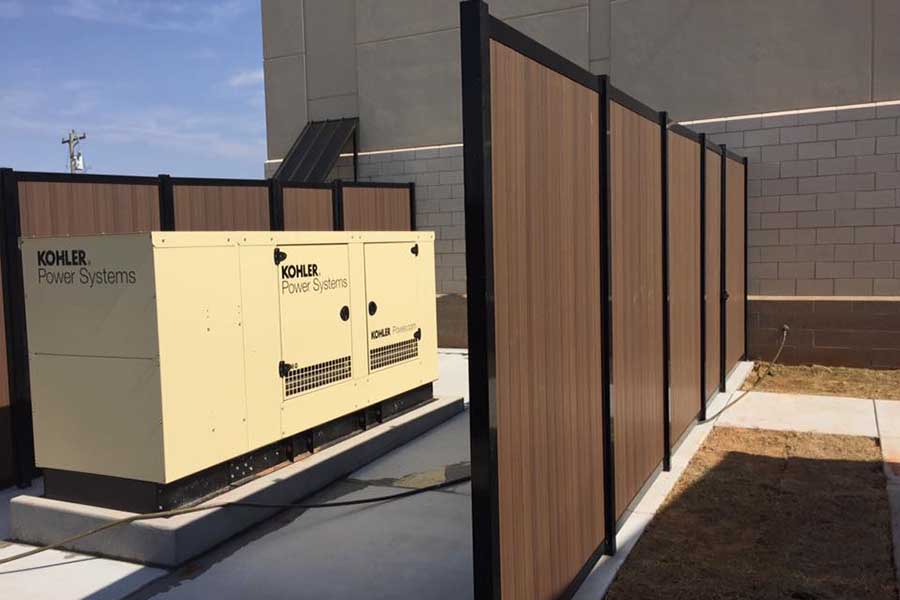
How to Design Utility Equipment Fencing with FenceTrac
FenceTrac’s modular system is well-suited for utility equipment enclosures because the panel dimensions are configurable to meet specific clearance requirements.
Panel Sizing for Clearance Compliance
FenceTrac panels are available in 6-foot and 8-foot widths and 4-foot, 6-foot, and 8-foot heights. The modular system allows the enclosure footprint to be sized precisely around the equipment, maintaining the required clearance on each side without wasting space. For irregularly shaped equipment pads, panel widths can be adjusted by the installer on site.
Gate Access for Service Crews
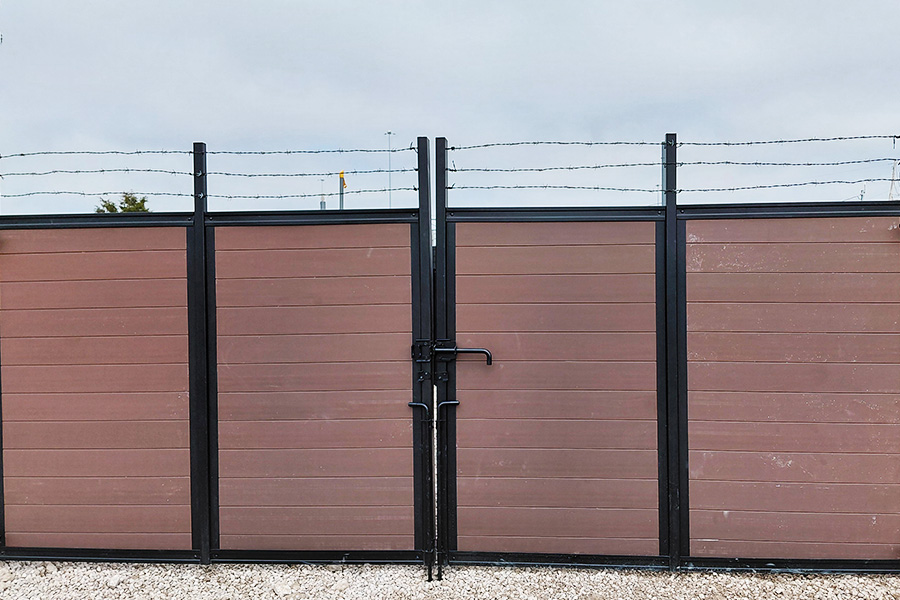
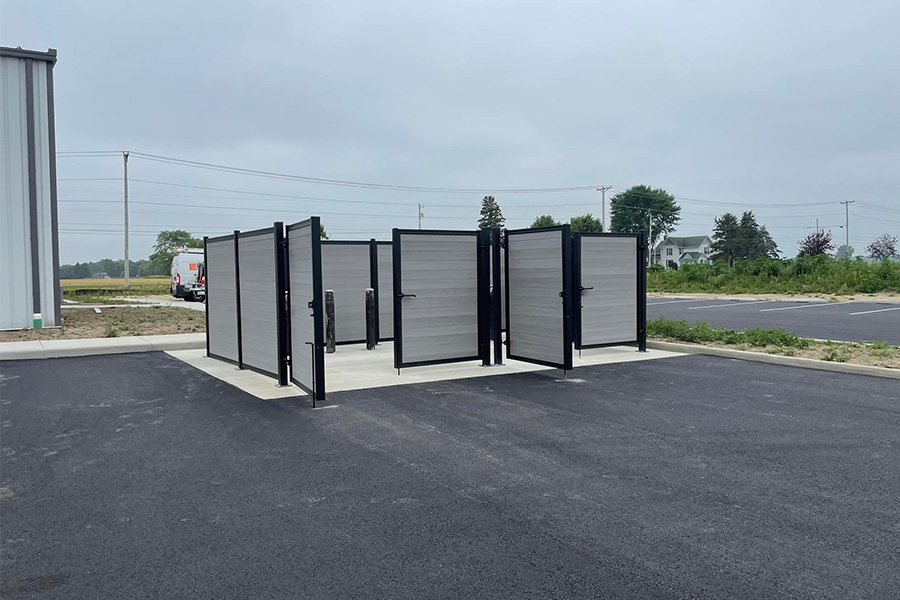
Utility equipment enclosures need gates wide enough for service vehicles and equipment dollies. FenceTrac double gate kits are available at 8-foot and 12-foot widths with commercial drop rods. For wider openings, custom steel welded gates and cantilever slide gates are available up to 32 feet wide.
Lockable Access
All FenceTrac gate kits include a lockable latch. For utility applications, the property owner and utility provider often agree on a shared lock or keyed-alike system so that both parties can access the equipment without coordination.
Transformer and Generator Fence Design Considerations
Beyond code compliance, a few practical design factors affect the performance and longevity of utility equipment fencing.
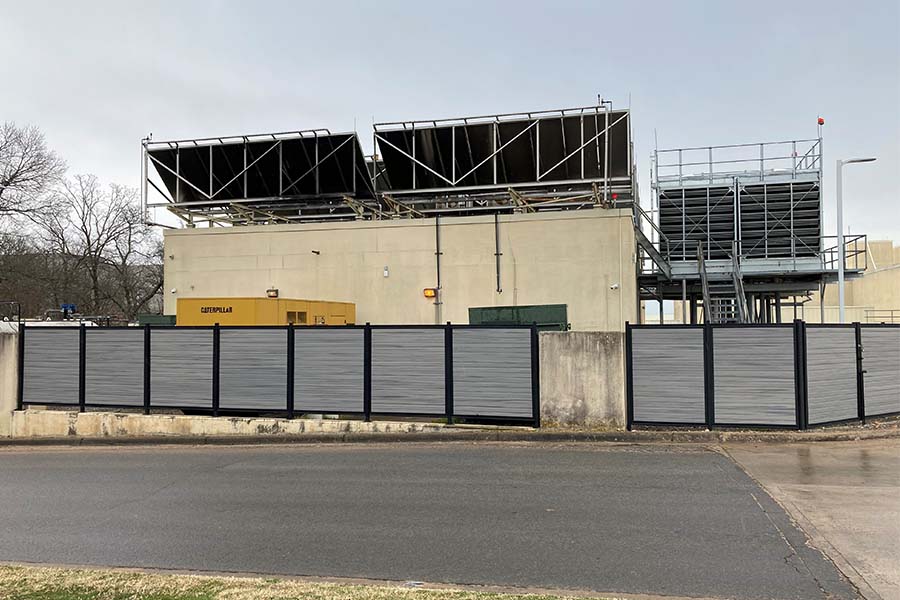
Ventilation matters. Transformers and generators produce heat during operation. A fully solid enclosure can trap heat and reduce equipment efficiency. FenceTrac’s semi-privacy fencing with aluminum slats and adjustable spacers provides airflow while still screening the equipment from view. For applications where full privacy is required and airflow is still needed, consider leaving a gap between the bottom of the fence and the ground surface.
Corrosion resistance matters. Utility equipment areas often have poor drainage, standing water, or chemical exposure from equipment maintenance. FenceTrac’s G90 galvanized steel frame with powder-coated finish and aluminum infill are both highly resistant to corrosion, moisture, and chemical exposure.
Related Questions
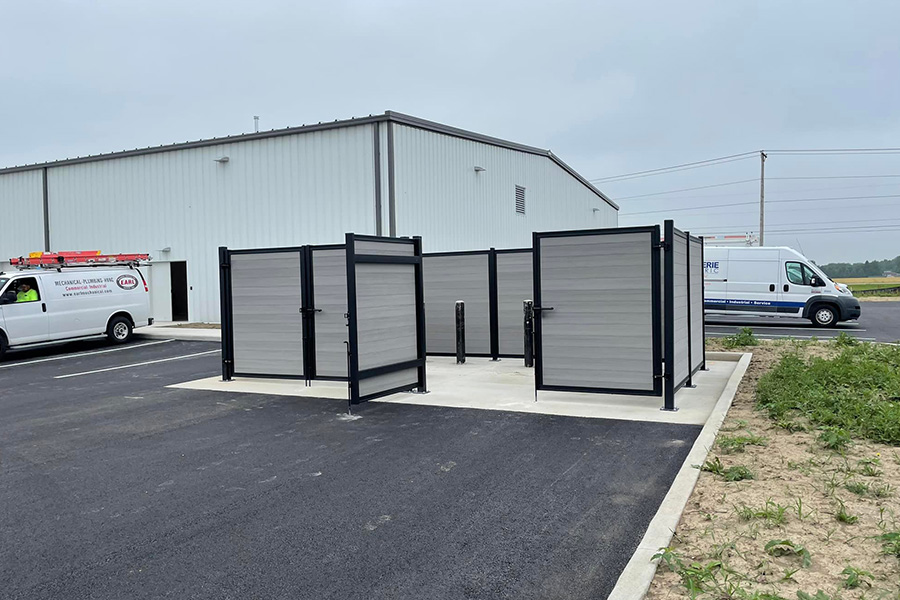
Do I need a fire-rated fence around a dumpster enclosure? Yes, in most jurisdictions where the enclosure is within 5 to 10 feet of an occupied structure. The same non-combustible material requirements that apply to utility equipment fencing also apply to dumpster enclosures.
How tall does a fire-rated fence need to be? Height requirements depend on the application and local code. Utility equipment enclosures typically range from 6 to 8 feet to provide full visual screening and deter unauthorized access.
How do you screen HVAC units with fencing? HVAC screening shares many of the same clearance and ventilation considerations as transformer fencing, with generally less restrictive fire code requirements.
See Also
How to request engineering documentation for a commercial fencing bid for information on stamped drawings and permit support. FenceTrac enclosures for product details on dumpster, utility, and equipment enclosure configurations.
Get a Quote for Your Utility Equipment Fencing Project
FenceTrac ships fence systems nationally and has been supplying contractors, property owners, and commercial buyers since 2012.
Every system carries a 20-year warranty and is engineered for long-term performance with minimal maintenance.