
FenceTrac fence systems installed on commercial, rental, or agricultural properties may qualify for tax deductions through depreciation, Section 179 expensing, or bonus depreciation, depending on the property type and how the fence is used. Residential homeowners generally cannot deduct a fence as a personal expense, but a fence does increase the property’s cost basis, which can reduce capital gains tax when the home is sold.
The Short Answer
If you install a fence on a property used for business, rental income, or farming, the IRS allows you to recover the cost through depreciation or, in some cases, an immediate deduction. If the fence is on your personal residence, it is not tax-deductible as a yearly expense, but it adds to your home’s adjusted cost basis, which lowers your taxable gain when you sell. The rules vary by property type, so consult a tax professional before claiming any deduction.

Commercial Property Fencing and Tax Deductions
A fence installed on commercial property is classified as a land improvement under IRS depreciation rules. Land improvements are depreciable over 15 years using the Modified Accelerated Cost Recovery System (MACRS).
This means a business owner who installs a FenceTrac fence system around a commercial building, parking lot, or storage yard can deduct a portion of the cost each year over 15 years. The annual deduction reduces taxable income for the business.

Section 179 Expensing
Section 179 of the IRS tax code allows businesses to deduct the full purchase price of qualifying equipment and property improvements in the year they are placed in service, rather than depreciating over time. Fencing installed on commercial property has historically qualified as a Section 179 deduction, though limits and eligibility rules change with tax law updates.
For a business investing in a commercial-grade fencing system like FenceTrac, Section 179 can potentially allow the entire fence cost to be written off in the first year. This is a significant cash flow advantage compared to spreading the deduction over 15 years.
Bonus Depreciation
Bonus depreciation allows businesses to deduct a large percentage of the cost of qualifying assets in the first year. The percentage has varied with recent tax legislation. Your tax advisor can confirm the current bonus depreciation rate for land improvements placed in service this year.
Rental Property Fencing and Depreciation
Landlords who install a fence on a rental property can depreciate the cost as a land improvement over 15 years. The fence must be installed on a property that generates rental income, and the depreciation is claimed on the landlord’s tax return, not the tenant’s.
A FenceTrac fence on a rental property serves double duty. It provides a durable, low-maintenance boundary that reduces your ongoing repair costs, and the depreciation deduction offsets rental income each year. Over the 15-year depreciation period, the fence’s galvanized steel frame is still covered by its 20-year warranty, meaning the asset is still performing long after the tax benefit is fully captured.
If you own multiple rental properties, each fence installation generates its own depreciation schedule. A property manager or real estate investor scaling a portfolio can use fence depreciation as one component of an overall tax strategy.

Farm and Agricultural Fencing
Fencing installed for agricultural use, such as livestock containment, crop protection, or property boundary marking, is generally depreciable as a farm improvement. The IRS classifies farm fencing as 7-year MACRS property, which is a shorter depreciation period than the 15-year schedule for commercial land improvements.
The shorter schedule means faster cost recovery. A rancher or farmer who installs HighPlains post and rail fencing or FenceTrac perimeter fencing can recover the cost over 7 tax years. Section 179 may also apply, allowing a full first-year deduction depending on the farmer’s total equipment spending for the year.
Residential Fence Tax Considerations
A fence on your personal residence is not deductible as an annual expense. The IRS treats it as a personal capital improvement, not a business expense or deductible maintenance cost.
However, the cost of the fence increases your home’s adjusted cost basis. When you sell the home, your taxable capital gain is calculated as the sale price minus the adjusted cost basis. A higher basis means a lower taxable gain.
This matters most for homeowners who have significant equity in their property or who are selling above the capital gains exclusion threshold ($250,000 for single filers, $500,000 for married filing jointly as of current tax rules). A FenceTrac fence system that also increases your property’s market value delivers a potential benefit on both sides: higher sale price and higher cost basis.
Home Office Exception
If you operate a qualifying home office and the fence encloses the area used for business, a portion of the fence cost may be deductible as a business expense. The deductible percentage is typically based on the ratio of business-use square footage to total property. This is a niche scenario, and the rules are strict. Talk to your tax advisor before claiming this deduction.
Fence Design Ideas That Maximize Tax Value
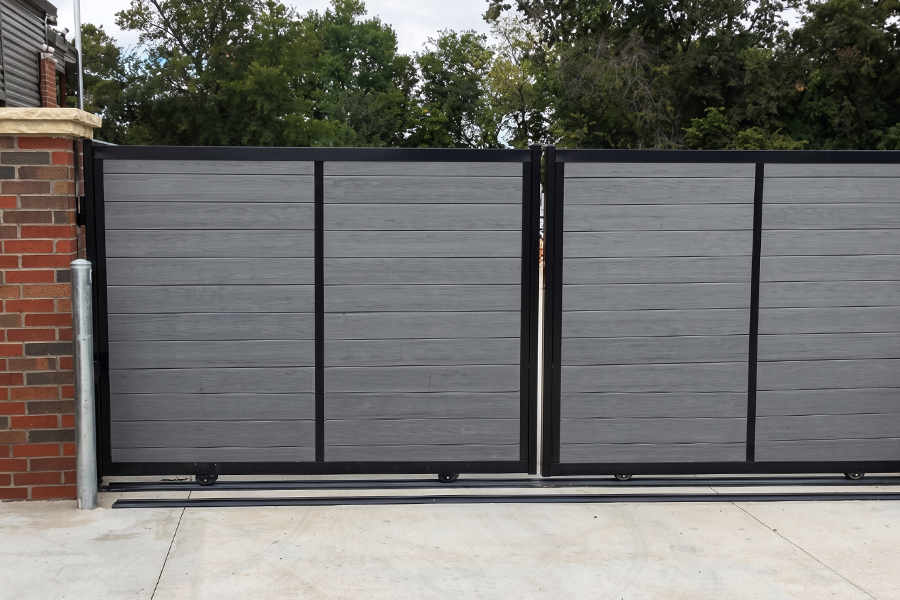
If you are installing a fence on a property where tax deductions apply, choosing a long-lasting system maximizes the return on the investment. A wood fence that needs replacement in 10 years gives you one depreciation cycle. A FenceTrac steel frame fence with LuxeCore composite infill or UltraBlend PVC infill is still performing at year 20, long after the depreciation is fully claimed.
For commercial properties, the engineered appearance and consistent finish of FenceTrac also contribute to property appeal, which supports higher lease rates and property valuations independent of the tax benefit.
Related Questions
Is a steel frame fence more expensive upfront but cheaper long-term? The tax deduction potential is one more factor that shifts the total cost of ownership in favor of a durable system.
Can I deduct a pool fence on my taxes? Only if the pool is on a rental or commercial property. A pool fence on a personal residence is a capital improvement, not a deductible expense.
See Also
FenceTrac privacy fencing for product details and system specifications.
Get a Quote for Your Fence Project
FenceTrac ships fence systems nationally and has been manufacturing engineered fencing in the USA since 2012.
Every system carries a 20-year warranty and is engineered for long-term performance with minimal maintenance.