
A galvanized steel frame privacy fence will outlast a wood privacy fence by a significant margin. The difference is not small. It is typically two to three times the functional lifespan, with far less maintenance required along the way.
The question most property owners actually want answered is not just “how long” but “why,” and whether the longer lifespan justifies the upfront cost difference. Both are worth understanding.

How Long Does a Wood Privacy Fence Last?
A well-built wood privacy fence using pressure-treated pine typically lasts 10 to 15 years before it needs major repair or full replacement. Cedar and redwood fences can last 15 to 20 years under ideal conditions.
Those numbers assume the fence receives regular maintenance. That means staining or painting every two to three years, replacing individual boards as they warp, split, or rot, and addressing post failure when the below-grade portion of a wood post decays.
Without maintenance, the timeline compresses significantly. An untreated wood fence in a humid climate can show serious deterioration in five to seven years.
The weak point on most wood fences is the post. Wood posts are set in concrete below grade, and the section of the post at the soil line is constantly exposed to moisture. This is where rot starts, and once a post fails, the entire fence section it supports becomes structurally compromised.

How Long Does a Steel Frame Privacy Fence Last?
A FenceTrac steel frame privacy fence is built on galvanized G90 steel frame rails and galvanized G90 steel posts, all powder-coated after fabrication.
Galvanized steel does not rot, warp, split, or become structurally compromised by moisture exposure. The G90 galvanization rating means the steel is coated with 0.90 oz of zinc per square foot of surface area, which provides decades of corrosion protection even before the powder coat layer is factored in.
The powder coat finish adds a second layer of protection. It seals the zinc coating from direct exposure to water, UV, and atmospheric chemicals. Together, the galvanization and powder coat create a multi-layer barrier that keeps the steel structurally sound for 25 to 40 or more years in most environments.
FenceTrac backs the system with a 20-year warranty. That warranty covers the frame, posts, and infill against material defects and premature degradation.
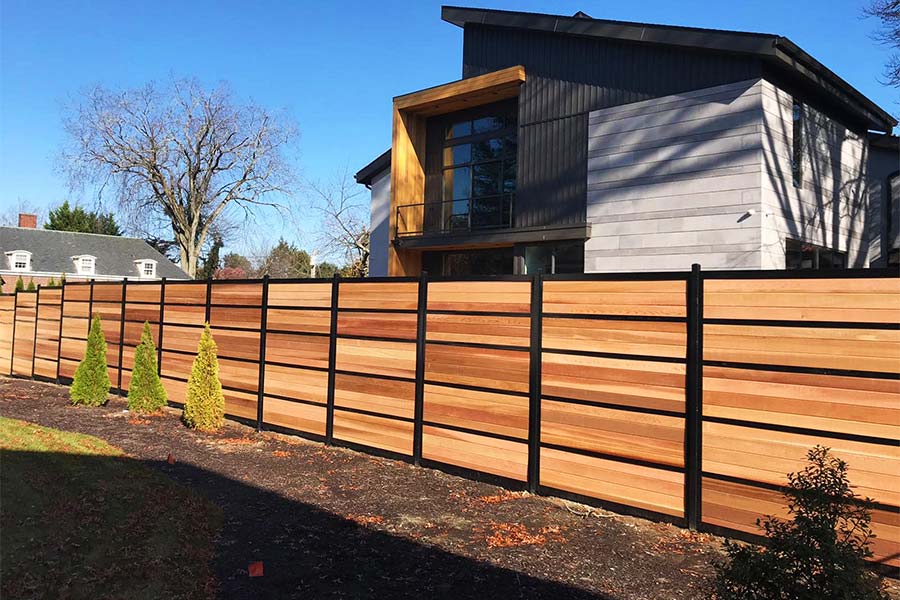
Horizontal Black Iron & Wood Slat Fence
Why Wood Fences Fail
Wood is an organic material. It absorbs water, expands, contracts, hosts insects, and decays.
Every piece of wood in a fence is in a slow process of returning to the soil. Maintenance slows that process down, but it does not stop it.
The specific failure modes are predictable. Boards warp and cup as moisture content changes with the seasons. Fasteners loosen as the wood around them expands and contracts.
Paint and stain coatings crack and peel, exposing raw wood to moisture. Posts rot at the soil line where oxygen, moisture, and organic material create ideal conditions for fungal decay.
Pressure treatment extends the life of wood, but it does not make wood permanent. The chemicals in pressure-treated lumber slow biological decay, but they do not prevent the physical warping and splitting caused by moisture cycling.
In coastal environments, high-humidity regions, or anywhere with significant annual rainfall, wood fence lifespans are on the shorter end of the range.

Why Steel Frame Fences Last Longer
Steel is an inorganic material. It does not absorb water, does not host insects, and does not decay biologically. The only threat to steel is corrosion (rust), and galvanization exists specifically to prevent that.
The FenceTrac frame holds infill boards in channel rails on all four sides. The boards are not face-screwed to posts the way wood fence boards are.
There are no exposed fastener holes for water to enter. There is no unsupported span for boards to sag across.
The powder-coated steel posts are set in concrete footings. Unlike wood posts, the steel does not absorb moisture from the surrounding soil. The below-grade section of a galvanized steel post remains structurally identical to the above-grade section for the full life of the fence.
The infill materials are also engineered for longevity. LuxeCore composite boards have an aluminum core wrapped in cellular PVC and coated in ASA resin. UltraBlend PVC boards are solid PVC encased in ASA.
Neither material absorbs moisture, and both are UV-stabilized to resist fading and surface degradation.
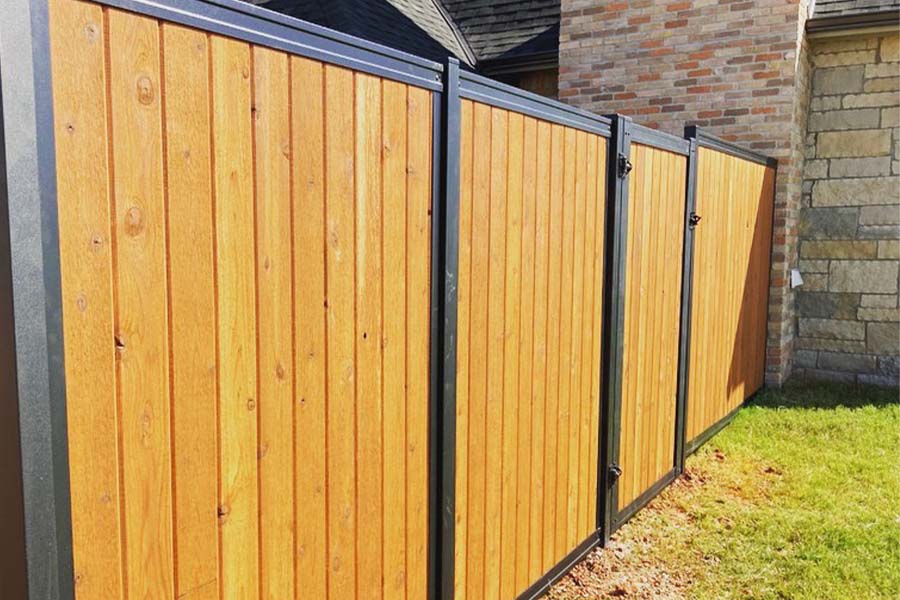
Steel Frame Fence vs. Wood Fence: Maintenance Comparison
This is where the real cost difference shows up.
| Factor | Steel Frame (FenceTrac) | Wood Fence |
|---|---|---|
| Expected lifespan | 25 to 40+ years | 10 to 20 years |
| Painting or staining | Never required | Every 2 to 3 years |
| Board replacement | None under normal conditions | Ongoing after year 5 |
| Post failure risk | Minimal (steel does not rot) | Common at soil line |
| Warranty | 20 years | Typically 1 to 5 years |
| 20-year maintenance cost | Effectively zero | Often exceeds original install cost |
A FenceTrac steel frame fence requires no painting, staining, sealing, or board replacement under normal conditions. You can wash it with a hose or pressure washer if it gets dirty.
Over a 20-year period, the cumulative maintenance cost on a wood fence frequently approaches or exceeds the original installation cost. The steel frame fence’s maintenance cost over the same period is effectively zero.

Total Cost of Ownership Over 20 Years
The upfront cost of a FenceTrac steel frame privacy fence is higher than a basic wood privacy fence. The exact difference depends on fence height, linear footage, infill material selection, and local labor rates.
But the total cost of ownership, which includes installation plus all maintenance, repair, and replacement over 20 years, almost always favors the steel frame system.
A wood fence installed for $30 per linear foot that requires $8,000 in cumulative maintenance and a partial rebuild at year 12 has a true 20-year cost far higher than its installation price suggested.
A steel frame fence installed for a higher per-foot cost but requiring no maintenance and no replacement for 20 or more years has a predictable, fixed total cost with no surprises.
For commercial property owners, this math is even more decisive. Maintenance costs are operating expenses that hit the P&L every year. A fence that eliminates those recurring costs improves operating margins for the life of the asset.
When Wood Still Makes Sense
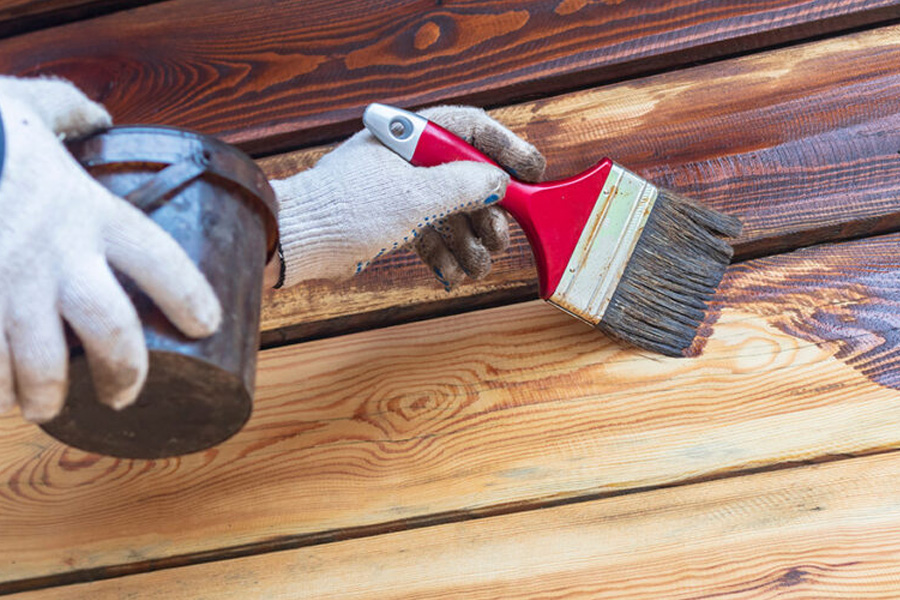
Wood fencing is not always the wrong choice. If you are on a tight upfront budget and can handle the maintenance yourself, wood gets a fence in the ground for less money today. If you are building a temporary fence that only needs to last a few years, the lower initial cost makes sense.
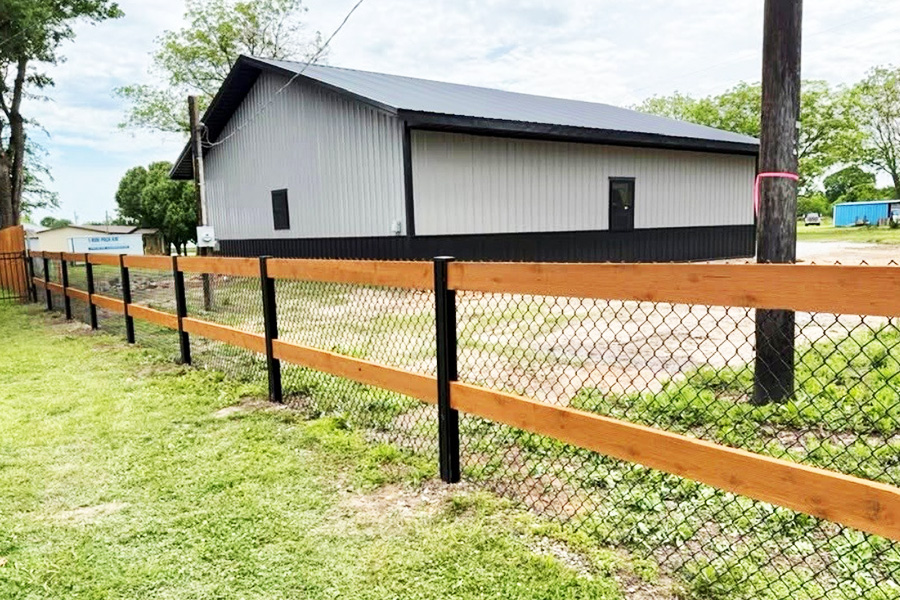
Wood also has a natural appearance that some homeowners prefer, particularly in rustic or traditional settings. The HighPlains post and rail system addresses this with rough-cut cedar rails on aluminum posts for properties that want the natural wood look with longer-lasting structural components.
For most applications where the fence needs to perform for 15 years or more, the steel frame system is the better investment.
Get a Quote for a Steel Frame Privacy Fence
FenceTrac ships fence systems nationally and has been supplying homeowners, contractors, and property managers since 2012.
Every system carries a 20-year warranty and is engineered for long-term performance with zero required maintenance.